Jessica and her family are finding ways that their dairy farm can help the farming industry adapt to the changing environment. Don't miss their inspiring story: https://t.co/5PvXaoB6xc. 🐮 🌏 (via @BBCStoryWorks) #FoodForThought
$PCT performs in the most demanding applications because the product IS virgin quality. Currently there are ZERO mechanically recycled resins that work in hinge applications (it is extremely tough!).
Like Bruckner for film, Stacktech is a gatekeeper in the injection molding space and brands look to them for assurance a product works as advertised.
Stacktech works with many of the large brands, and there is now exactly ONE resin that will meet regulatory mandates and have the product quality to work in hinge applications.
There are some hints/ interesting products listed on StackTeck’s website:
$PCT performs in the most demanding applications because the product IS virgin quality. Currently there are ZERO mechanically recycled resins that work in hinge applications (it is extremely tough!).
Like Bruckner for film, Stacktech is a gatekeeper in the injection molding space and brands look to them for assurance a product works as advertised.
Stacktech works with many of the large brands, and there is now exactly ONE resin that will meet regulatory mandates and have the product quality to work in hinge applications.
There are some hints/ interesting products listed on StackTeck’s website:
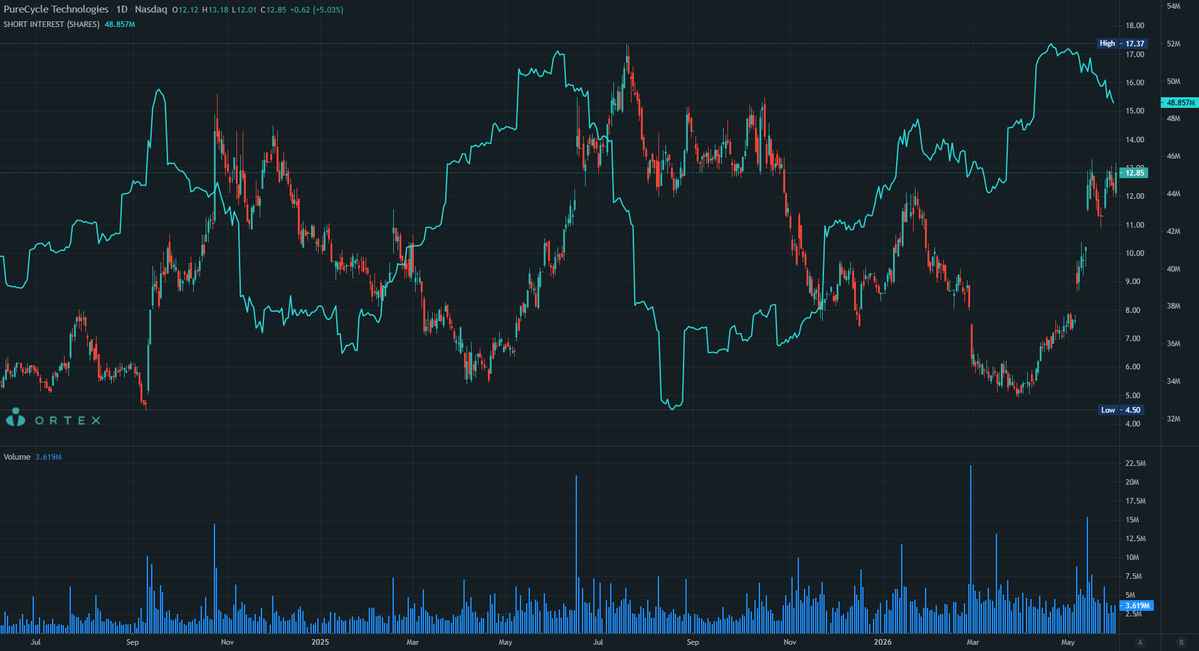
Bill, so much alpha in this statement. If I understand who's on the other side of the trade and has picked the wrong ticker, then, there is plenty opportunity there to harvest yield. $PCT
@turtlespeed2020 they only respect pain fred, the real covering will only happen higher. that has been the pattern for the last couple years. they dont do research and dont cover on weakness, only strength. amatuers.
@GavinGewecke I do. I had some fresh spinach and of course always home grown Scallions today. Turnips looked good. I do fried veggies balls with turnip.
$SBUX Starbucks is using PE for cold drinks and Seda paper lids for hot beverages in EU. There is less incentive to change when they have a favorable mix for mass balance there. rPP lids are for North America. Here they use 3% recycled plastic in customer facing packaging. They are hoping to get that to 50% in 4 years. Hell they will be knocking on Purecycle door and begging for some PureFive®. (😀IMHO)
No he is not saying that and Purecycle has not confirmed any relationship between the two. The picture he posted is just showing Denver facility recycling SBUX cups. But based on clues he has dropped over the past Quarterly reports, it is very likely Starbucks is one of the big 3 QSRs that is in trials for coffee lids.
$PCT Response from Dustin Olson to Beyond Plastics claims:
The recent discussion sparked by the Beyond Plastics report on the recyclability of Starbucks’ polypropylene (PP) cold cups raises a fundamental question for our industry: how should “recyclability” be evaluated in modern recycling systems?
Follow-up reporting from Antoinette Smith at Resource Recycling, Inc. explores some of the flaws of the original study by highlighting an important operational reality that many outside the industry may not realize. Recycling facilities are specifically designed to identify and remove contaminants like batteries, electronics, and metals from the stream. That matters because the study relied on battery-powered electronic trackers embedded inside cups to track their movement.
If a recycling system is intentionally designed to identify and remove electronics from the stream for safety and operational reasons, then the presence of a tracker can directly influence how that package moves through the system. In our Denver, PA sorting facility, we would also reject this piece of plastic with a tracker device to prevent further downstream contamination.
This doesn’t mean that we shouldn’t validate if recycling claims are true. But it should give everyone pause before jumping to conclusions based on a few isolated data points. Plastic is complex, these recycling systems are sophisticated, and cursory evaluations risk undermining the progress the industry is making.
It also reinforces a broader point. Recyclability is not determined solely by whether a single item can be traced from disposal to reuse. It depends on the system’s broader capabilities and scale. That capability grows with continued investment in sorting, processing, and end-market infrastructure. Every dollar put into recovery systems expands the set of materials that can be called “recyclable” in practice, not just in theory.
For PP, these systems and technologies are evolving rapidly. At PureCycle Technologies, we’ve seen firsthand how investments in PP recovery and processing infrastructure are expanding what’s possible. More material can be put into the recycling bin and recovered through advanced Materials Recovery Facility systems. End-market demand is growing, and brands are increasingly looking for recycled PP that can meet both sustainability and performance expectations.
Recycling is different today. It is more complex, more technical, and varies significantly by material and region. Progress isn’t a straight line, it’s bumpy, but companies like Starbucks and PureCycle are creating positive change and more should follow.
I encourage you to read Antoinette's full article that shares important commentary from fellow recyclers and key stakeholders in our industry. You’ll also see a few more of these photos with Starbucks cups being recycled by our team at PureCycle.
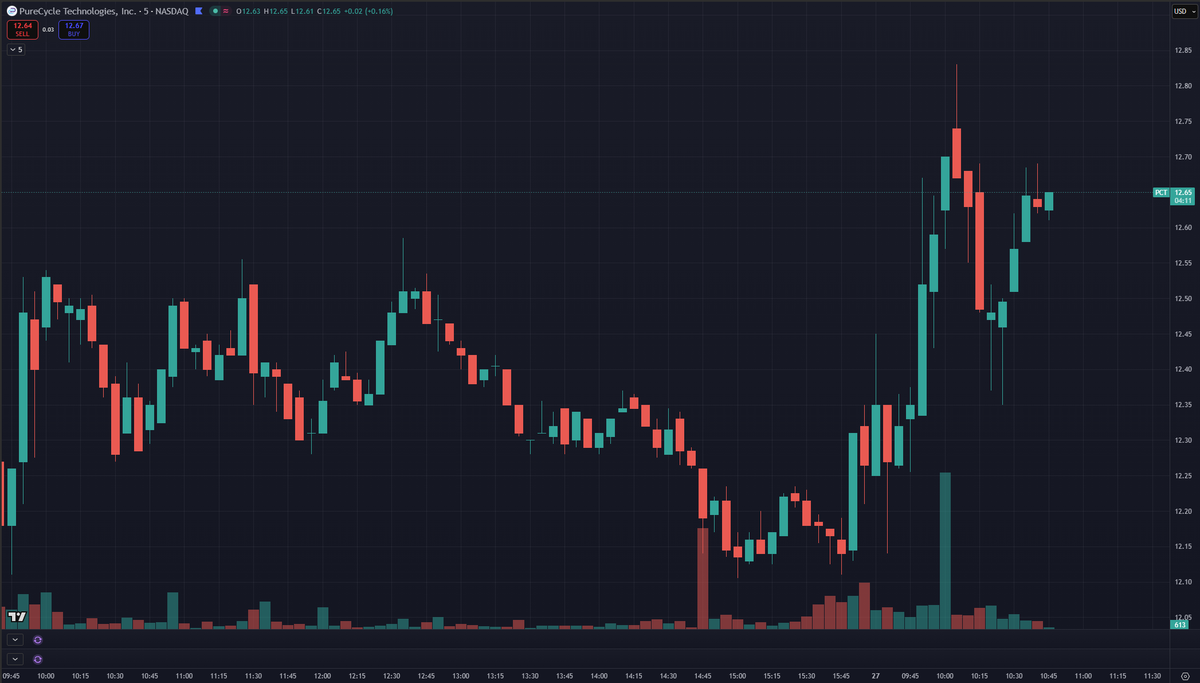
$PCT They covered some.
But daily game is in process. They borrowed some at noon. In absence of big buyers and short sellers in cardiac arrest, machines are following the script.
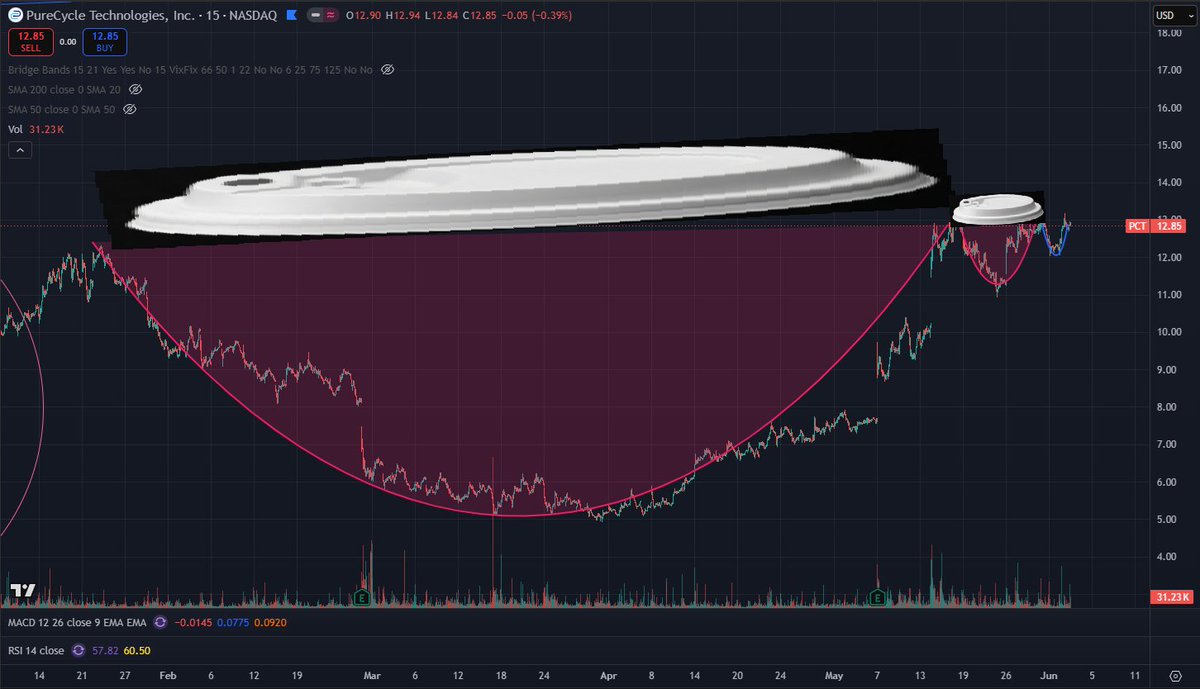
I dunno Fred, looks to me like you identified the legendary recycled PP cap to a beautiful $pct cup and handle! Break $13.50 and we appear to be going to $20 or $30 depending on whether you choose to use a linear or logarithmic y-axis. DYODD