Each day leading up to Remembrance Day, I am profiling those who served in the armed forces of Canada.
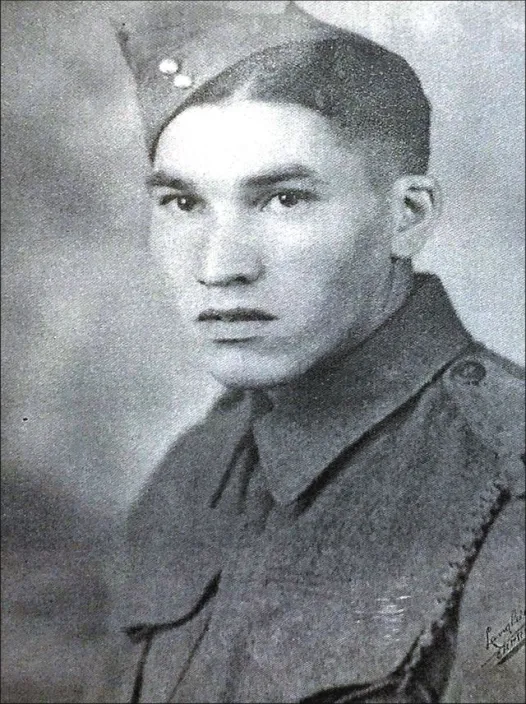
Today, it is the story of Charles "Checker" Tomkins, a Cree code-talker from Alberta who kept his oath of secrecy for decades.
🧵1/8
I hope you enjoyed that look at the life of William Barker.
If you enjoy my Canadian history content, you can support my work with a donation at 👇
https://t.co/8mGH7q2EsJ
*sources in next post*
🧵16/16
Over 50,000 people, including an honour guard of 2,000 soldiers, the Lt. Governor of Ontario, and six other Victoria Cross recipients.
An airfield in Toronto was named for him, as is an air cadet squadron in Dauphin.
🧵15/16
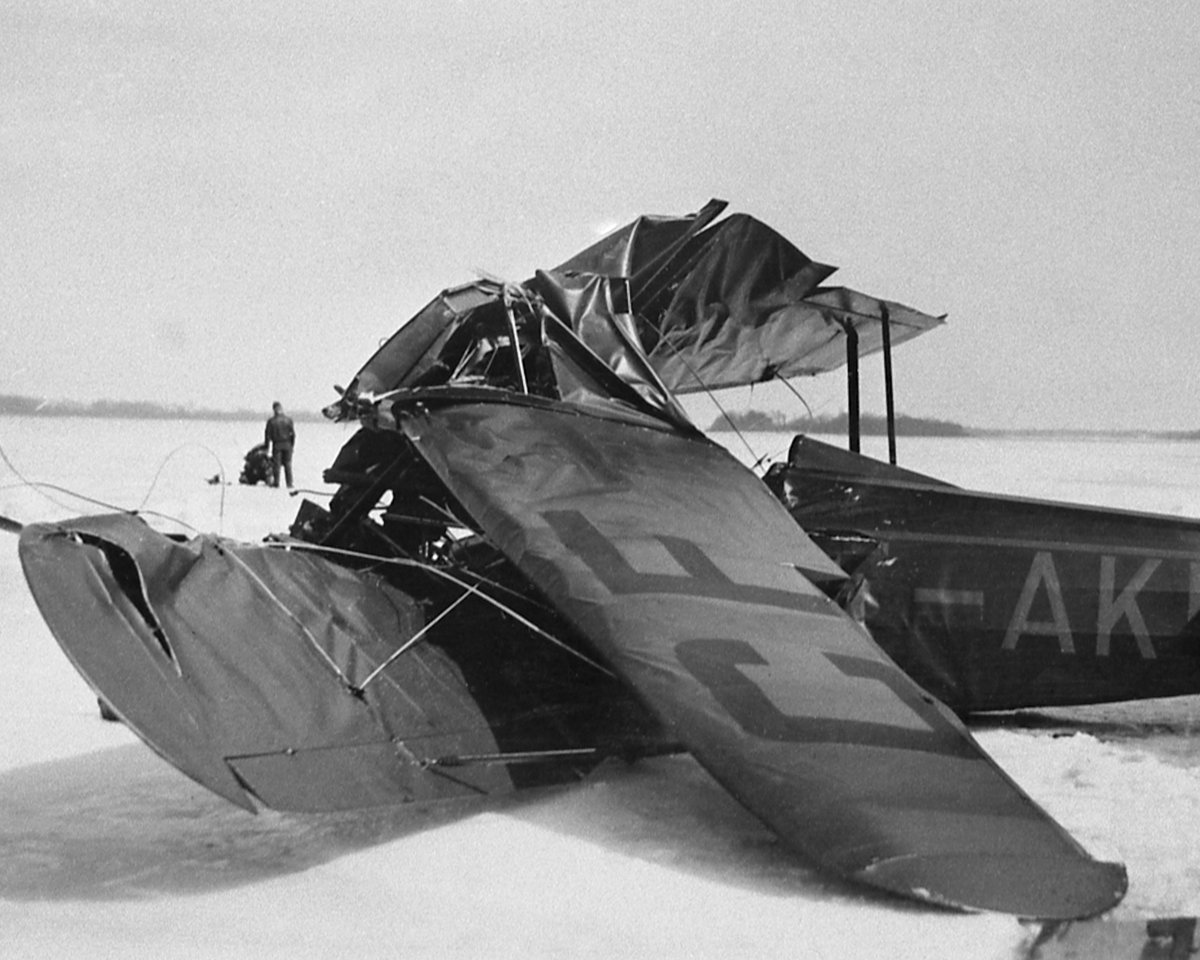
In his last years, he struggled with alcoholism. On March 12, 1930, while flying a Fairchild KR-21 biplane trainer on a demonstration flight, he lost control of the aircraft and crashed. He was killed on impact.
His funeral was one of the largest in Toronto's history.
🧵14/16
In 1924, he became the acting director of the RCAF. After he left the RCAF, he became the first honorary president of the Toronto Maple Leafs.
Unfortunately, his injuries from 1918 left his legs permanently damaged with limited mobility in his left arm.
🧵13/16
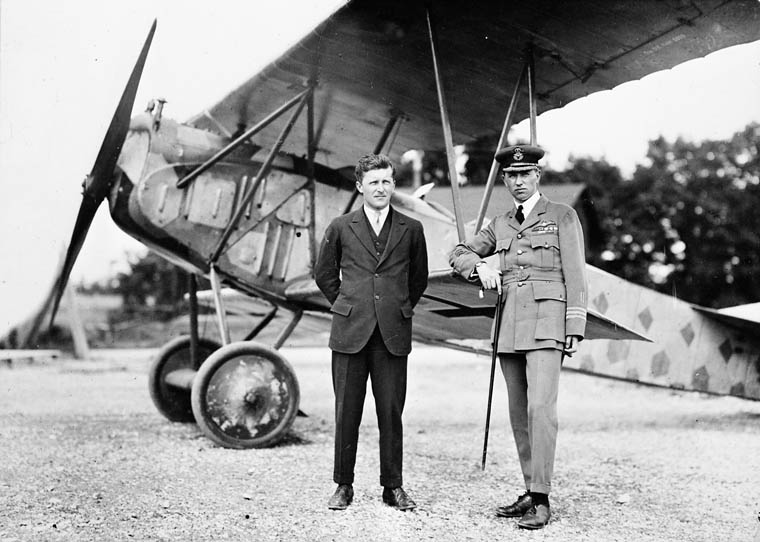
With fellow Flying Ace Billy Bishop, he formed Bishop-Barker Aeroplanes Limited. The partnership lasted three years.
In 1922, Barker joined the Canadian Air Force as a Wing Commander and Station Commander at Camp Borden. He remained there until 1924.
🧵12/16
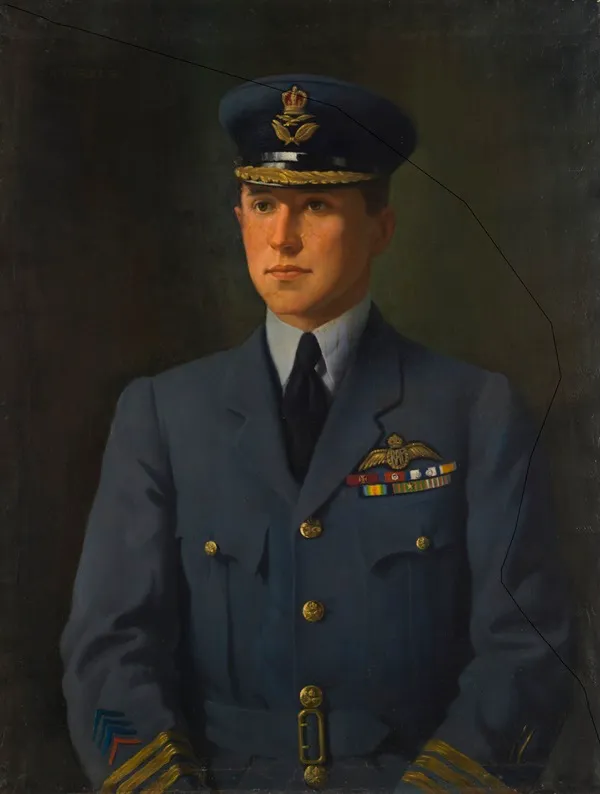
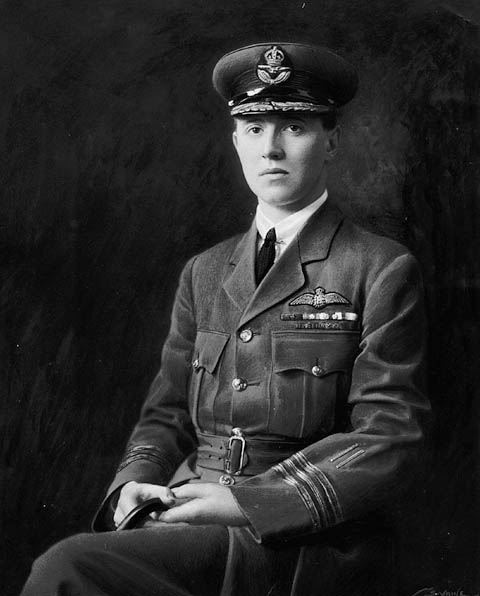
He earned the Victoria Cross, the Distinguished Service Order and Bar, the Military Cross and two Bars, two Italian Silver Medals for Military Valour, three Mentions in Despatches and the French Croix de guerre.
Now a civilian, he looked to starting a business.
🧵11/16
Barker was awarded the Victoria Cross for his actions. Still recovering, he could barely walk a few paces to receive his medal at Buckingham Palace on March 1, 1919.
Barker returned to Canada in May 1919 as the most decorated Canadian of the war.
🧵10/16
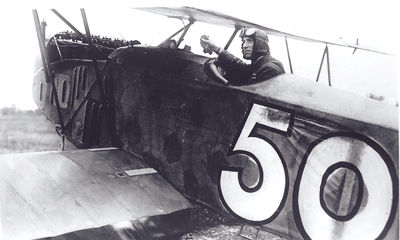
On Oct. 27, 1918, the 10th day of the roving commission, he attacked 15 German planes in a dogfight over Canadian lines. Wounded and bleeding, he crash-landed inside Allied lines after shooting down four planes. He remained in hospital until January 1919.
🧵9/16
From May 1916 to September 1918, he flew 900 combat flying hours and shot down 46 aircraft and balloons.
Transferred to RAF HQ in September 1918 to command a training school, he was given a 10-day roving commission in France to get up to date on combat techniques.
🧵8/16
This was immortalized by Ernest Hemingway in The Snows of Kilmanjaro.
In March 1918, Barker earned the Distinguished Service Order. Despite his medals, he was often passed over for squadron command due to his habit of flying unofficial patrols and ignoring orders.
🧵7/16
After he recovered, he continually requested to return to duty. He was soon transferred to the 28 Squadron. On Nov. 7, 1917, he was sent to the Italian Front. On Dec. 25, 1917, he and his wingman shot up an enemy airfield and dropped a Christmas card afterwards.
🧵6/16
His information led to the breakup of 4,000 German infantry. Barker earned the Military Cross.
In February 1917, he qualified as a pilot. In July 1917, he was awarded a Bar on his Military Cross. A month later, he suffered a head wound from anti-aircraft fire.
🧵5/16
He began as a probationary observer with 9 Squadron. In August, he was Mentioned in Despatches for the first time. He qualified as an observer on Aug. 27, 1916. On Nov. 15, 1916, he observed a concentration of German troops preparing for an attack.
🧵4/16
An excellent student and Boy Scout, he chose to enlist with the First Canadian Mounted Rifles at the outbreak of the First World War.
He arrived in France on Sept. 22, 1915 where he was a Colt machine gunner before he transferred to the Royal Flying Corps.
🧵3/16
Barker was born on Nov. 3, 1894 on his family's farm in Dauphin, Manitoba. As a young man, he spent his time riding horses, working on the farm and practicing his shooting. Using his own modified lever-action Winchester, he became an exceptional shot.
🧵2/16
Each day leading up to Remembrance Day, I am profiling those who served in the armed forces of Canada.
Today, it is William "Billy" George Barker, the most decorated serviceman in the history of Canada.
So, let's learn more about him :)
🧵1/16
Devastated to learn of the tragic loss of the Alberta Wildland firefighter who died serving the province in the Jasper area. Our heart goes out to the family and the 700 member fire-line crew for their unwavering commitment to safeguarding the region.