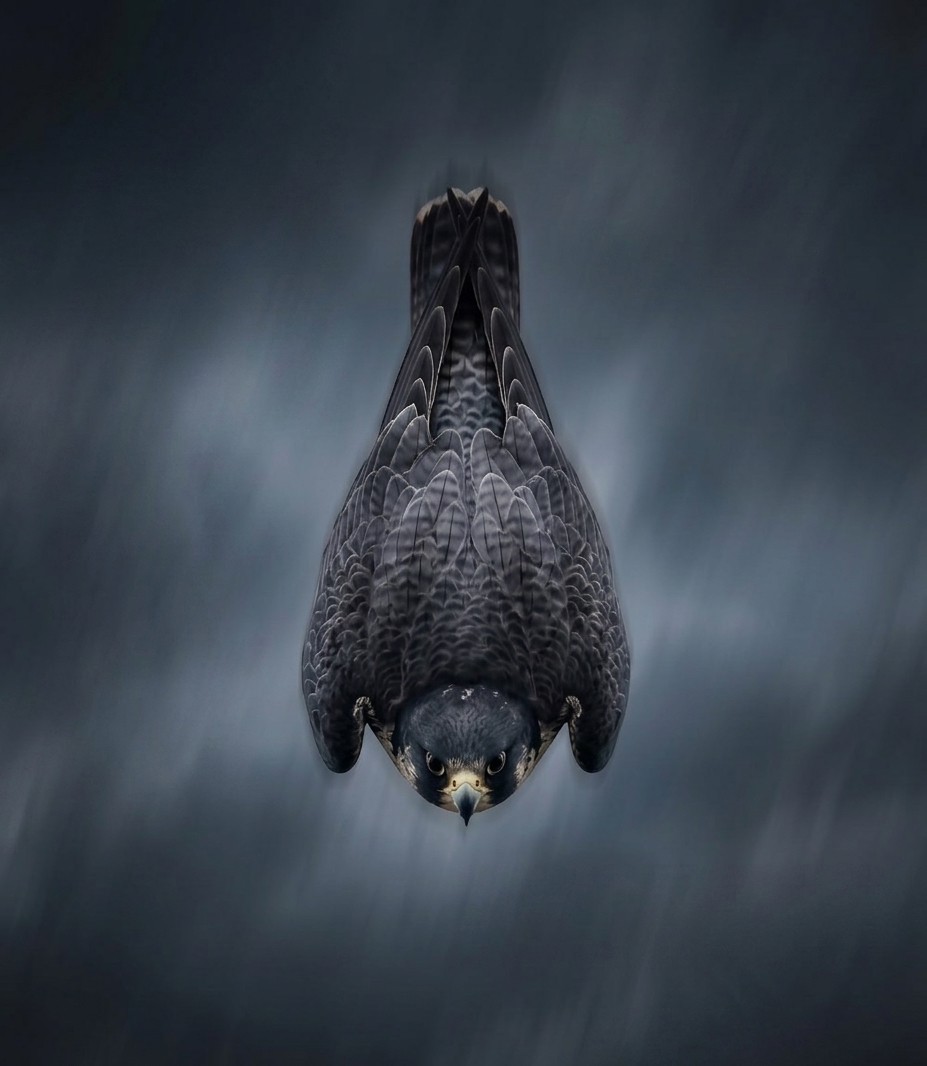
Sivi soko dostiže brzinu od 389 km/h u lovnom letu, i to je najbrža potvrđena brzina bilo koje životinje na Zemlji. Nije najbrži u ravnom letu. Ali nijedna životinja se ne kreće brže od ovoga. Falco peregrinus, sivi soko, se penje na visinu za lov, uočava metu, delimično savija krila uz telo i spušta se u kontrolisanom padu. Gravitacija ga ubrzava, aerodromski profil minimizira otpor.
Potvrđena brzina je 389 km/h (242 mph). Zabeležio ju je Ken Frenklin 2005. godine, koji je trenirao sivog sokola po imenu "Strašni“ dok nosi mali instrumentalni telesni računar koji beleži ubrzanje i brzinu. Metodologija i rezultat su prihvaćeni od strane Ginisove knjige rekorda i šire ornitološke zajednice.
Kolumbija je donela istorijsku odluku na samitu o klimi COP30, postavši prva zemlja u basenu Amazona koja je proglasila ceo svoj deo amazonske prašume "rezervatom obnovljivih prirodnih resursa”.
Ovom odlukom vlada je efektivno blokirala svih 43 naftnih projekata i 286 zahteva za rudarske projekte koji još uvek nisu započeti u tom regionu, preusmeravajući fokus ove oblasti isključivo na obnovljive i regenerativne aktivnosti. Zabrana pokriva čitav kolumbijski deo Amazona, otprilike 483.000 kvadratnih kilometara. To čini oko 42% ukupne teritorije Kolumbije, što je površina velika otprilike kao Švedska. 🇨🇴
Deset meseci provede u vazduhu da bi ovde dosla da podigne potomstvo i jebena stoka je zatvori bilbordom da mladunci pocrkaju od gladi da bi mi videli da je njegova pisa veca.
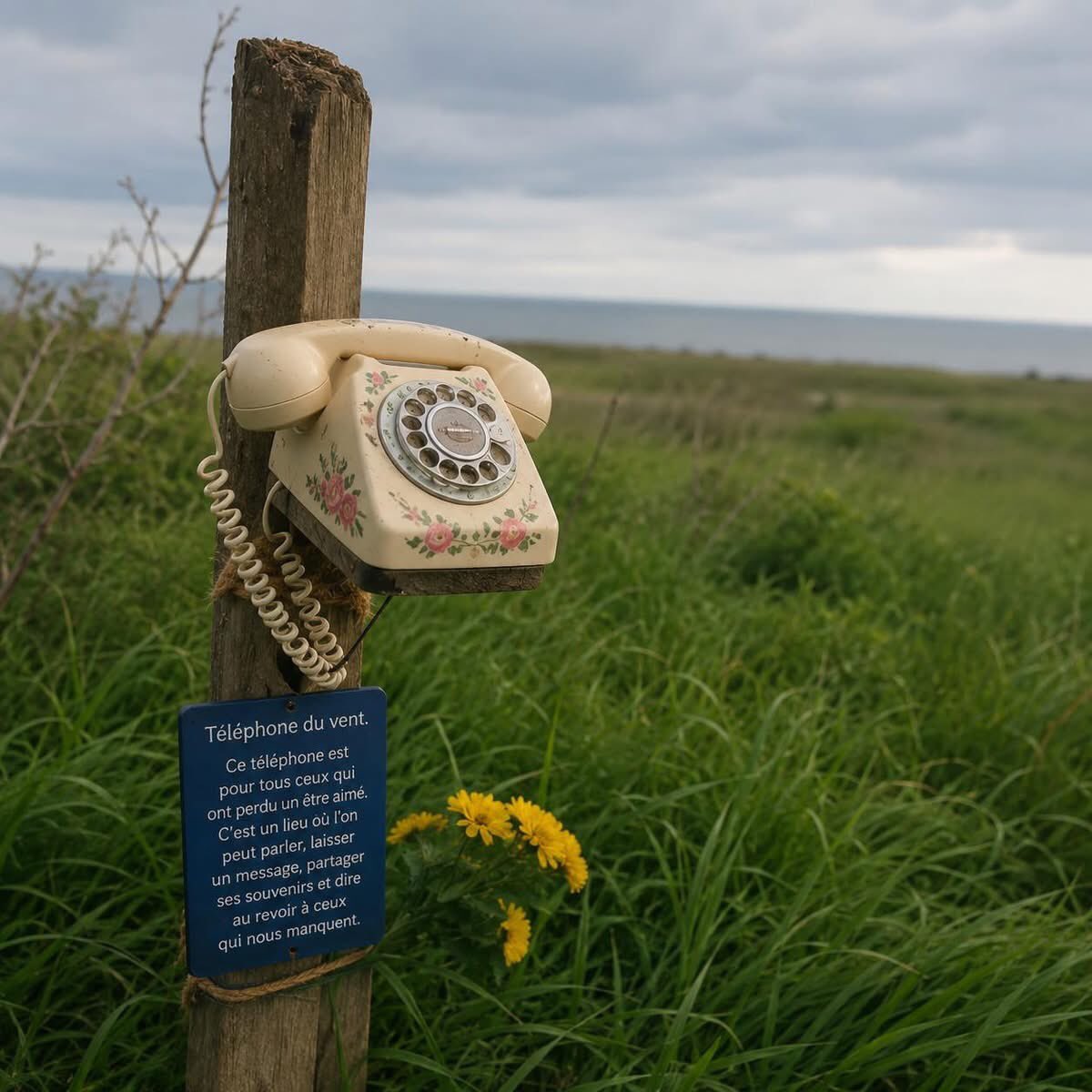
Je n’avais jamais vu ça avant…
Un “téléphone du vent”.
J’ai découvert ça sur Instagram il y a quelques jours et je trouve l’idée incroyablement touchante.
À l’origine, ce concept viendrait du Japon.
Il s’agit d’un vieux téléphone installé en pleine nature… mais il n’est relié à rien.
Les gens s’y rendent pour parler à quelqu’un qu’ils ont perdu.
Un parent. Un ami. Un amour. Quelqu’un qui leur manque encore.
Le téléphone ne fonctionne pas vraiment.
Personne ne répond.
Mais parfois, le deuil a simplement besoin d’un endroit où aller.
Parfois, l’amour a encore besoin de parler.
Et je trouve ça profondément beau.
On passe tellement de temps à faire semblant d’aller bien.
À rester fort.
À continuer d’avancer coûte que coûte.
Alors qu’au fond, manquer à quelqu’un est normal.
Continuer à lui parler dans sa tête est normal aussi.
Et quelque part, au milieu du vent…
ce vieux téléphone rappelle doucement aux gens qu’ils n’ont pas à avoir honte de leur douleur.
Franchement, je trouve ça magnifique.
Via Anonymes Dla Night
Janša si je zaželel spomenik Black Cube sredi prestolnice.
In ga je dobil.
Črna kocka bo preganjala bo vest njegovih podpornike in opozarjala, da častilec tujcev, ki rovarijo po Slovenij, ni domoljub.
Boja raja (1999)
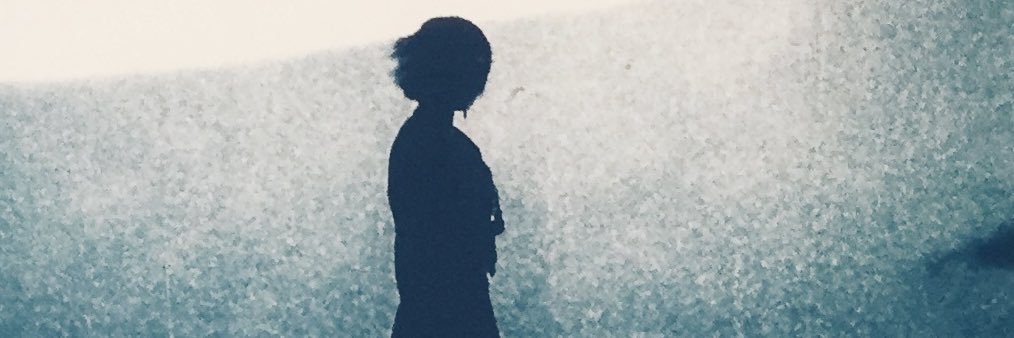
Ovaj međunarodno priznati iranski film, koji je režirao Madžid Madžidi, prikazuje mladog slepog dečaka po imenu Mohamed koji poseduje duboku empatičnu vezu sa prirodnim svetom oko sebe. U ovoj specifičnoj, emotivno nabijenoj uvodnoj sekvenci, Mohamed čuje uznemirene krike palog ptića, pažljivo ga prati kroz opalo lišće koristeći samo ruke i hrabro se penje na ogromno drvo kako bi ga bezbedno vratio u gnezdo. Da bi se osigurala maksimalna autentičnost za snažne glumačke performanse filma, reditelj je angažovao Mohsena Ramezanija, dečaka sa istinskim oštećenjem vida koji nikada ranije nije glumio, čija su stvarna osetljivost i neverovatna taktilna navigacija doneli neuporedivi nivo sirovih emocija sceni. 🎬🇮🇷
Skulptura na slici je "ADDIO", posvećena suprugama lošinjskih pomoraca. Nalazi se na ostrvu Lošinj, tačno na mestu gde su se supruge opraštale od svojih muževa koji su kretali na duga pomorska putovanja. Visoka je oko 180cm i izrađena je od bronze.
Simbolizira tradiciju, ljubav i vernost, a posvećena je Mariji Stuparić, supruzi kapetana Aldebranda Petrine. Njihova priča je posebno dirljiva jer su u 32 godine braka proveli samo 13 meseci zajedno.
Skulpturu je uradila akademska kiparica Zvonimira Obad.
Svakog Septembra, tokom festivala Losinava, ponovo se izvodi "Pozdrav kapetanu" u čast ove tradicije. 🇭🇷
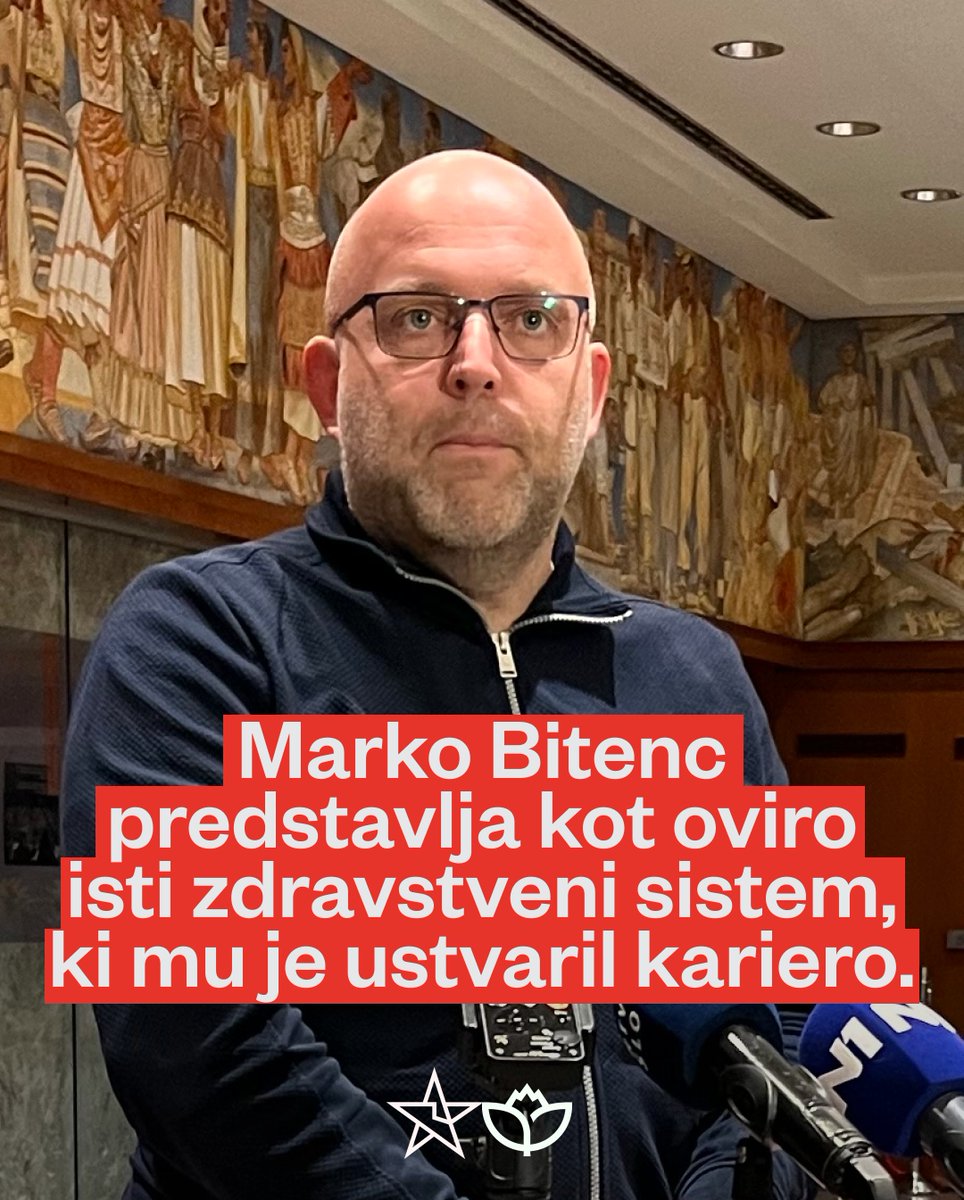
»Največji slovenski zdravstveni privatnik Marko Bitenc razlaga, kako so njegova podjetja zrasla iz garaže. Da, iz garaže javnega zavoda.
Marko Bitenc je diplomiral leta 1985, v celoti s pomočjo javnih sredstev. Nato je nadaljeval s specializacijo iz kirurgije, ki je drag in strogo organiziran proces znotraj javnega sistema.
Ampak ja, to je nova definicija garaže.
Raziskoval je raka želodca in pljuč v UKC Ljubljana, uporabljal javne laboratorije, javno opremo, delal z javnimi pacienti, pod mentorstvom javno plačanih strokovnjakov. Nič od tega ne spominja na garažo, temveč na sistem, ki ga nekateri radi imenujejo neučinkovit.
Od leta 1993 je bil torakalni kirurg v UKC, hkrati asistent na fakulteti. Imel je stabilno zaposlitev, ugled, dostop do mrež. Podjetniško tveganje? Ne, temveč javna infrastruktura, ki ustvarja vrhunske kadre, tudi za kasnejši “odhod na trg”.
Dvakrat je bil predsednik Zdravniške zbornice Slovenije, sooblikoval zdravstveno politiko in nosilec funkcij v evropskih organizacijah. Ta “kapital” ni nastal v garaži, temveč v sistemu, ki ga plačujemo vsi.
In potem? Presenečenje, leta 2005 prehod v zasebništvo. Ko je vse bistveno že zgrajeno, ko je tveganje že zdavnaj pokrila država, ko je ime že uveljavljeno, ko so vrata odprta.
Danes pa poslušamo lekcije o tem, da bi moralo zdravstvo delovati kot gospodarska dejavnost. Tudi skozi Klub slovenskih podjetnikov. Seveda, zakaj pa ne? Najprej javno financirajmo izobraževanje, raziskave, kariero, potem pa razglasimo, da je najbolj učinkovito, če se vse skupaj prepusti trgu.
To ni podjetniška zgodba, temveč učbeniški primer socializacije stroškov, privatizacije dobičkov.
In največji cinizem? Isti sistem, ki nekoga ustvari, se kasneje predstavi kot ovira. Isti javni sektor, ki omogoči kariero, se razglasi za neučinkovitega. Ista družba, ki investira, naj bi se zdaj umaknila, da lahko “garaža” končno zares zaživi.
Ne, to ni garaža, temveč javni sistem, prepakiran v podjetniški mit. In če na to pristajamo, ne razpravljamo več o reformi zdravstva, temveč o tem, koliko javnega bomo še pripravljeni podariti zasebnemu.«
Alan Medveš
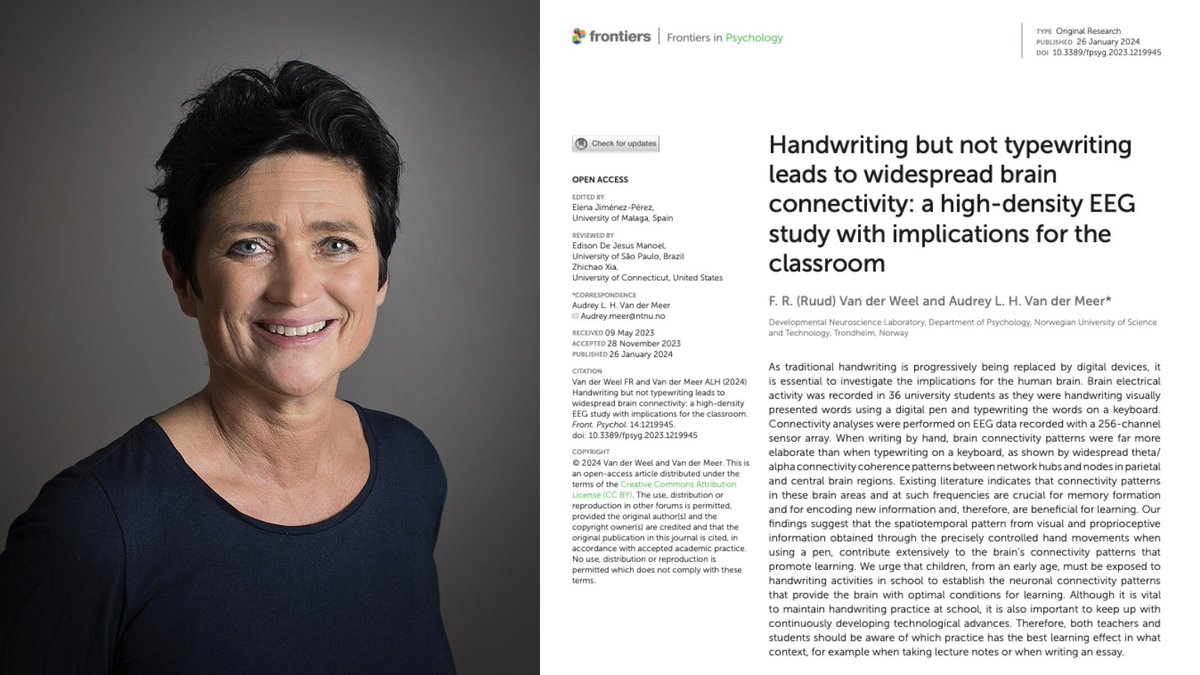
A Norwegian neuroscientist spent 20 years proving that the act of writing by hand changes the human brain in ways typing physically cannot, and almost nobody outside her field has read the paper.
Her name is Audrey van der Meer.
She runs a brain research lab in Trondheim, and the paper that closed the argument was published in 2024 in a journal called Frontiers in Psychology. The finding is brutal enough that it should have changed every classroom on Earth.
The experiment was simple. She recruited 36 university students and put each one in a cap with 256 sensors pressed against their scalp to record brain activity. Words flashed on a screen one at a time.
Sometimes the students wrote the word by hand on a touchscreen using a digital pen, and sometimes they typed the same word on a keyboard. Every neural response was recorded for the full five seconds the word stayed on screen.
Then her team looked at the part of the data most researchers had ignored for years, which is how different parts of the brain were communicating with each other during the task.
When the students wrote by hand, the brain lit up everywhere at once.
The regions responsible for memory, sensory integration, and the encoding of new information were all firing together in a coordinated pattern that spread across the entire cortex. The whole network was awake and connected.
When the same students typed the same word, that pattern collapsed almost completely.
Most of the brain went quiet, and the connections between regions that had been alive seconds earlier were nowhere to be found on the EEG.
Same word, same brain, same person, and two completely different neurological events.
The reason turned out to be something nobody had really paid attention to before her work. Writing by hand is not one motion but a sequence of thousands of tiny micro-movements coordinated with your eyes in real time, where each letter is a different shape that requires the brain to solve a slightly different spatial problem.
Your fingers, wrist, vision, and the parts of your brain that track position in space are all working together to produce one letter, then the next, then the next.
Typing throws all of that away. Every key on a keyboard requires the exact same finger motion regardless of which letter you are pressing, which means the brain has almost nothing to integrate and almost no problem to solve.
Van der Meer said it plainly in her interviews.
Pressing the same key with the same finger over and over does not stimulate the brain in any meaningful way, and she pointed out something that should scare every parent who handed their kid an iPad.
Children who learn to read and write on tablets often cannot tell letters like b and d apart, because they have never physically felt with their bodies what it takes to actually produce those letters on a page.
A decade before her, two researchers at Princeton ran the same fight using a completely different method and ended up at the same answer. Pam Mueller and Daniel Oppenheimer tested 327 students across three experiments, where half took notes on laptops with the internet disabled and half took notes by hand, before testing everyone on what they actually understood from the lectures they had watched.
The handwriting group won by a wide margin on every question that required real understanding rather than surface recall.
The reason was hiding in the transcripts of what the two groups had actually written down.
The laptop students typed almost word for word, capturing more total content but processing almost none of it as they went, while the handwriting students physically could not write fast enough to transcribe a lecture in real time, which forced them to listen carefully, decide what actually mattered, and put it in their own words on the page.
That single act of choosing what to keep was the learning itself, and the keyboard had quietly skipped the choosing and skipped the learning along with it.
Two studies. Two countries. Same answer.
Handwriting makes the brain work. Typing lets it coast.
Every note you have ever typed instead of written went into your brain through a thinner pipe. Every meeting, every book highlight, every idea you captured on your phone instead of on paper was processed at half depth.
You did not forget those things because your memory is bad. You forgot them because typing never woke the part of the brain that would have made them stick.
The fix is the thing your grandmother already knew.
Pick up a pen. Write the thing down. The slower road is the faster one.