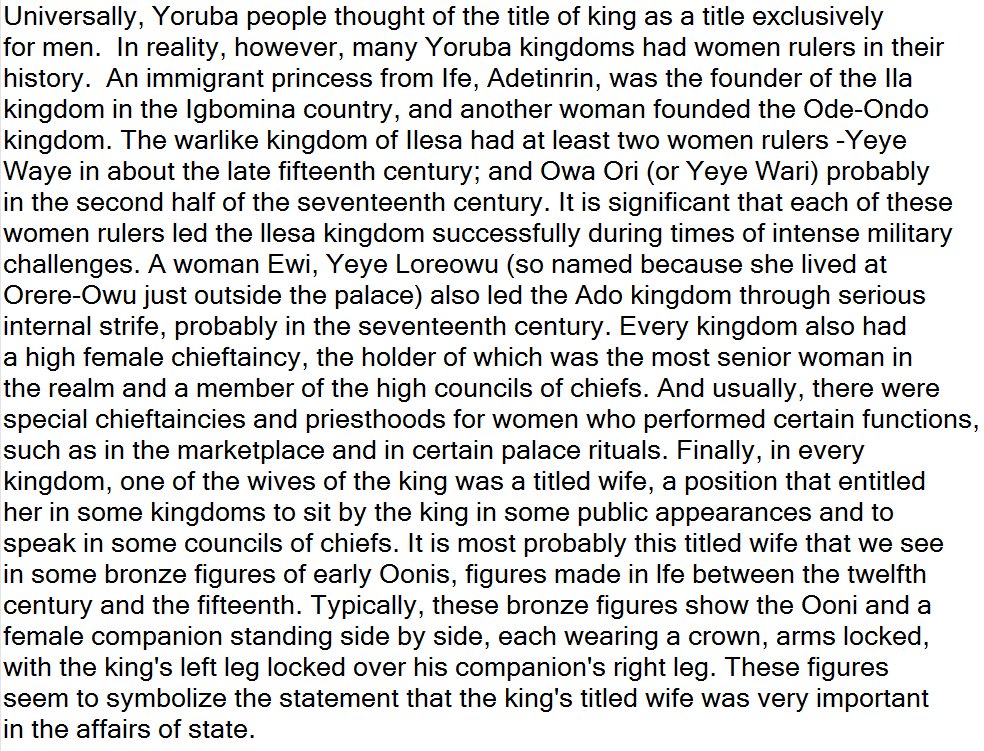
"Ile-Ife has changed the narrative about Egypt as Africa’s epicenter of science, technology, and innovation. Ile-Ife was a regional center for sophisticated indigenous West African glass making."
(Foreman Bandama, 2023)
"The glass workshops at Ile-Ife were located in an industrial park, an open space on several hectares of land in the northern section of the city, during the eleventh through fifteenth century"
"Early evidence of these architectural features was recorded at Jenné-jeno and Dia (Mali), Ulaira (now under Kanji Lake, Nigeria), and Daima (Borno, Nigeria) from about the mid-1
st millennium CE onwards"
(Bolaji Josephine Owoseni, 2023)
Medieval West African Art
(Modern day Sierra Leone ànd Liberia)
"The dates ascribed to the manufacture of these stone figurines vary. They are placed between the seventh–eighth and sixteenth centuries AD by Atherton and Kalous (1970:
315–16)"
(Timothy Insoll, 2017)
"Southern Zambezian states were spheres of cultural interaction and influence, with people sharing roughly the same culture and displaying their identities in material culture forms. Stone architecture was used for this purpose and, along with pottery"
(Innocent Pikirayi, 2013)
"The local Owo historian, Chief M. B. Ashara, says that the Owo people branched out from the main Yoruba stock about A.D. 1100, when they migrated from lle-Ife, where, as the Yoruba believe, they and all mankind were created"
(Ekpo O. Eyo, 1972)
Illustration of the medieval walled city of Djenné-Djenno, First Millennium AD.
The city was a major trading center within West Africa, along the Niger Valley.