@williamofdallas I've never really used image generation for anything until the past few days for these posts; only gemini and ai mode on free accounts, and chatgpt free. One lesson I've learned is that you have to build from the 'ground up'; otherwise it seems to go crazy.
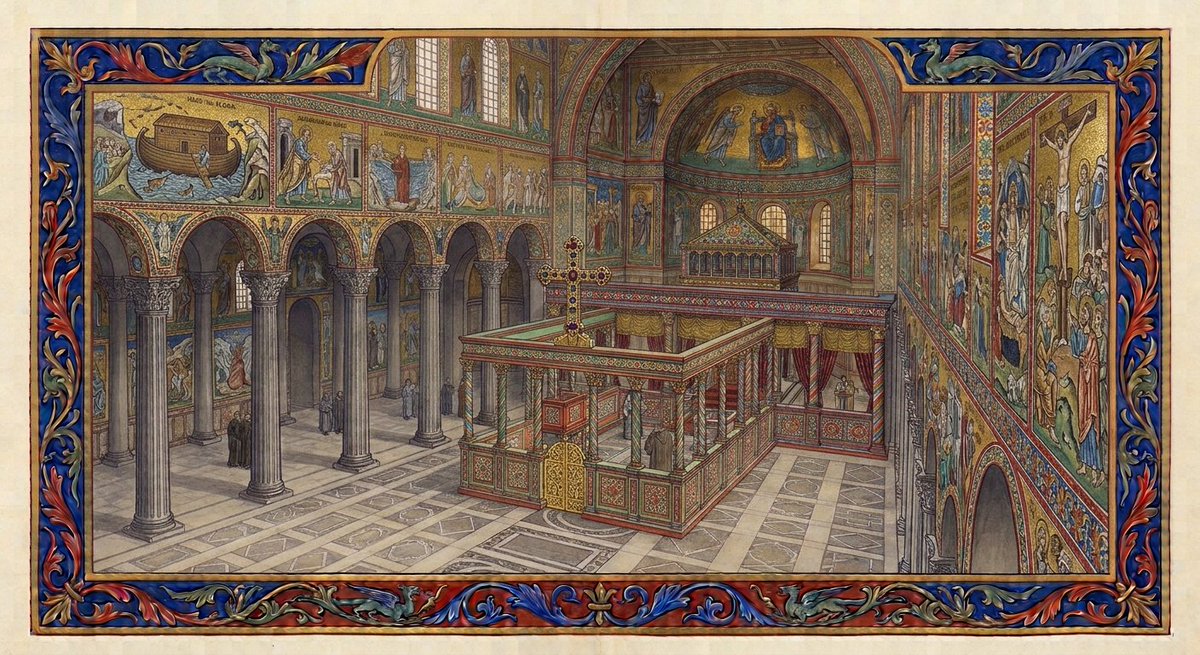
Using image generation, using Leo of Ostia's descriptions to show Monte Cassino in the 11th century.
The image doesn't seem to capture the grandeur as described:
https://t.co/SZqFDqaMsQ
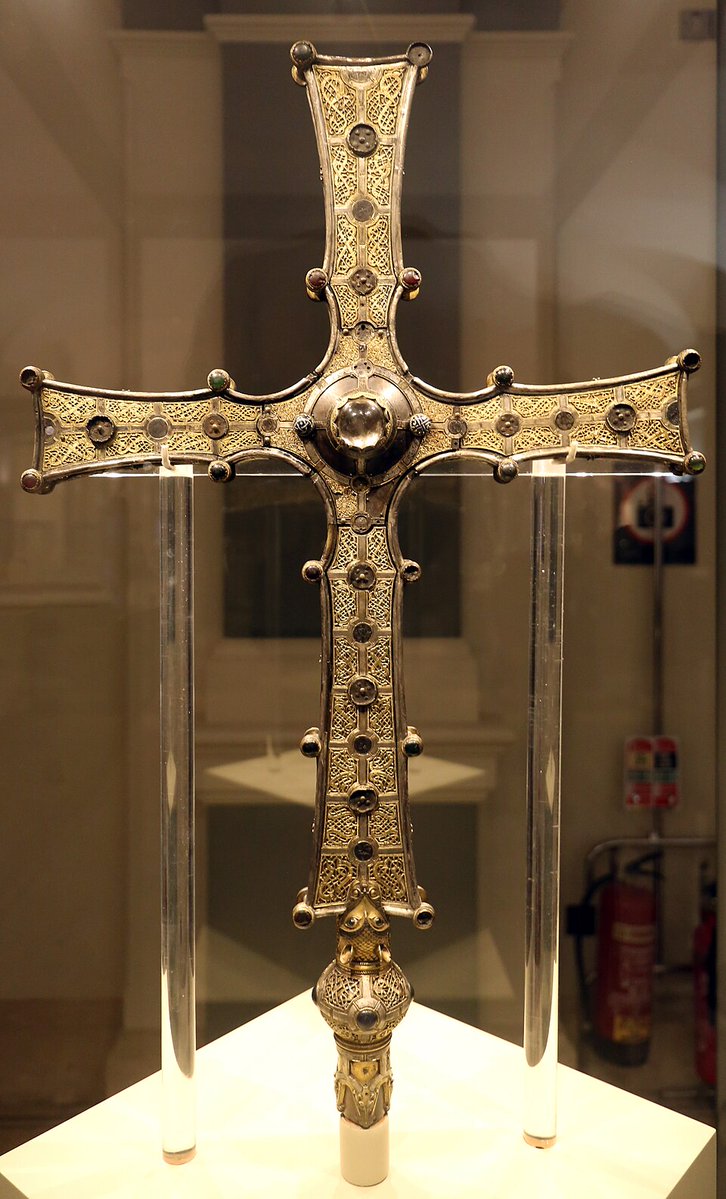
In 1123, an Irish king commissioned the Cross of Cong for a relic believed to be from Christ's cross.
Its inscriptions name the craftsman Máel Ísu and ask people to pray for him.
What a thing to leave behind. 🇮🇪
He's right. Crime is a choice our governments make on our behalf. They could do something about it, but they don't, and the simple explanation is they don't because crime benefits them.
The Palamite debates of the 14th century were largely debates over the proper understanding of the Dionysian Corpus. Everyone agreed that there was an essence-energy distinction within God, the question was mainly over whether these energies were "uncreated." Barlaam defended an extreme apophaticism under which we can only know God analogically through symbols; Palamas responded that we can have a positive knowledge of God through prayer and mystical experience.
Ironically, one of the critiques levelled against Palamas was that if the Taboric Light was indeed uncreated, then it could not be depicted, making Palamas an iconoclast!
@Deth2Compromise In the choir enclosure the schola, or the monks or clerics who are the main group of Cantors stand; ideally they are arranged around a side, double, or even rotating sides analogium (lectrum) to see the chant book (unless they have it memorized). Sitting at some parts.
Detailed and ornate illustration of Old St. Peter's Basilica by 19th century architectural historian and artist H. W. Brewer; this would be the Old Basilica at its height in the Middle Ages:
Best colourized attempt for old St. Euphemia's Basilica i could get out of image generation; this gives us some idea of what was destroyed from the 18th through 19th century, which was originally built in the early Middle Ages.
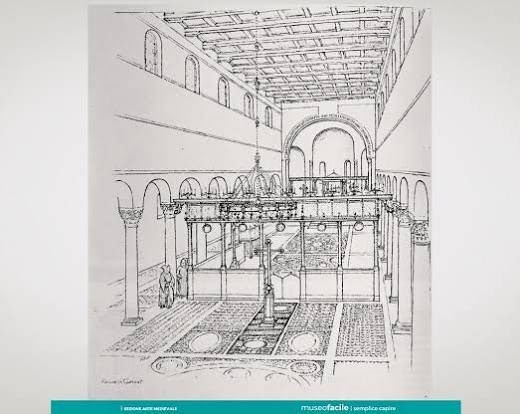
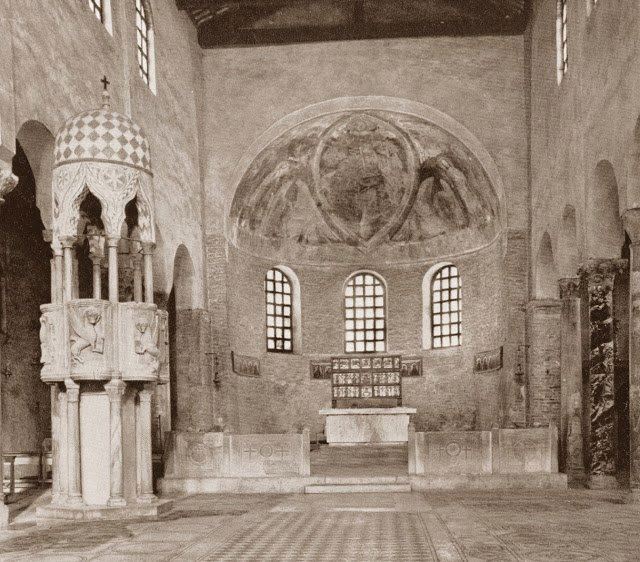
Basilica of St. Euphemia's in Grado, Italy; in the first pic, an illustration by Prof. E. Nordio (as given by Constantini in his 1916 book) showing it before the 'renovations' began in the 18th century, and the second after they were finished by the end of the 19th:
From Archbishop Macarius of Jerusalem's Letter to the Armenians (AD 335):
Q: And how shall the table of the sacrament be positioned, and the partitions also?
A: The table of expiation is behind the veil, where the Holy Spirit descends; and the font is next to it in the same compartment, and out of honour set up on the right hand. And the clergy in their several ranks shall worship (there), and the congregation outside the veil, and the catechumens at the door, listening. Lest these partitions be effaced by encroachments, let each remain in his own station irreproachable.
@ScriptoriumP "Furthermore, according to canonical authority, it must by every means be prohibited that any woman should presume to approach the altar, minister to a priest, or stand or sit within the screens." https://t.co/NpGWzdliSj
"Ecclesiastical Disciple", by Regino of Prum (+915):
For more information the Community Post:
https://t.co/Itp7VdfO0C
A lot of these 'reform' initiatives are not necessarily the work of some popular movement, they are top down impositions again ancient practices and orders of architecture, liturgy, and worship.
Basilica of St. Euphemia's in Grado, Italy; in the first pic, an illustration by Prof. E. Nordio (as given by Constantini in his 1916 book) showing it before the 'renovations' began in the 18th century, and the second after they were finished by the end of the 19th:
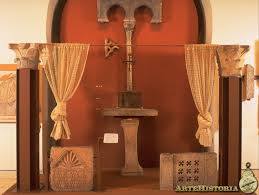
The Altar with Baldachin and Tetravela Altaris, the templon in front of the Sanctuary, the small choir, and the Rood Screen; just a version in miniature of the design of old Roman churches, descriptions I've read of ancient Monte Cassino, except for a much, much, smaller setting.
Best ai generated image I could get for the pulpitum arched screen built by Pre-Conquest Abp. Ealdred of York, as described in the Chronica Pontificum Ecclesiae Eboracensis (Chronicle of the Archbishops of the Church of York); parts are incomplete. https://t.co/5HQEJr3smE
@ScriptoriumP We can say that at least some Anglo-Saxon churches had veils that were designed to cover the Sanctuary proper. The Order for the Consecration of a Church in the Anglo-Saxon Pontificals definitetly mentions the veil "extenso velo inter eos et populum".
The Art of Medieval Spain, A.D. 500-1200, pg. 152: https://t.co/jPhwVpSdq1
1st is from the 10th century Beatus Mss., and shows the Sanctuary Arch, with parted Veils, Altar (and Chalice). 2nd, surviving church, and 3rd, attempt at reconstruction.
From an Anglo-Saxon mansucript and Utrecht Psalter, showing the sanctuary veil and the Altar. The first has either a bishop turning and giving the salutation. You can see the suspended lamp [or possibly tabernacle??] over the Altar.