Omega Girl faces returning enemies, one of whom could be the end of her identity. Who is he and how can she win? Find out in "The Adventures of Omega Girl" issue five!
https://t.co/gAaUGBggcz
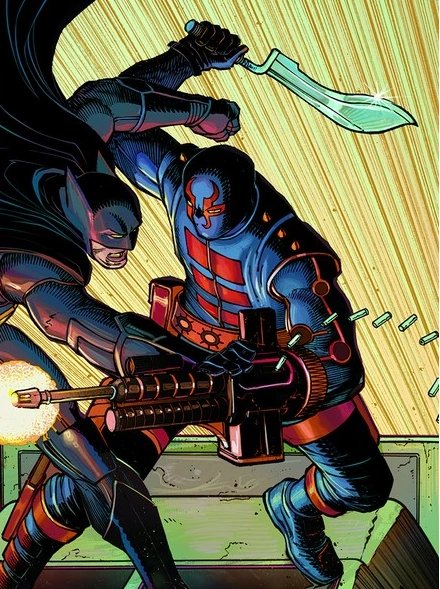
Today's Niche DC Character is Anatoli Knyazev aka KGBeast!
He was an assassin from the KGB's Hammer who went rogue following the fall of the Soviet Union.
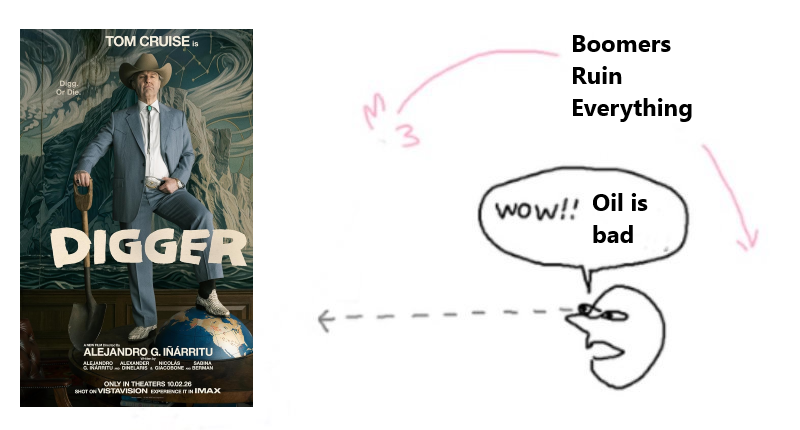
Just saw Digger.
Initial take is that it's simultaneously too much and not enough.
Definitely worth talking about though. Generational film. Literally.
What are the AI tells in fiction?
I generated three paragraphs of fan fiction (Fable 5.2), and then wrote down all the things that, in aggregate, triggered my AI radar.
I must say, each one of those things is also used by human writers, and many of them are believed to be evidence of "good writing" (compression, details, etc.).
But what makes AI writing so distinctive is the density. Imagine someone who went to way too many writing workshops, took all the advice way too literally, and started implementing all of it in every single paragraph.
That's how AI fiction sometimes feels.
There's a great little book called "How to Read Literature Like a Professor." In it, English professor Thomas C. Foster gives lay readers advice on how to enjoy literary fiction.
Chapter 12 of the book is called "Is That a Symbol?" and its first line is "Of course it is."
This is, of course, an exaggeration for pedagogical purposes. Not everything is a symbol, but students, who often arrive literal-minded, are well advised to keep in mind that writers use symbols.
AI takes that seriously: everything is either a symbol, a piece of necessary exposition, or a clean thematic statement.
A minor detail: it seems like it's now colons, not em-dashes.
She won nothing.
There's thousands of amazing indie games on steam without any of her nonsense.
All she did was pollute some of the corporate waters, which stank anyway.
There's clearly a difference between "power" of all kinds and "absolute power."
The One Ring is clearly a kind of absolute, domineering power, the kind that can bulldoze all others. It's effectiveness is tempting.
Tolkien is perfectly fine with kings, just not tyrants.
So the contrast here is that in comics, the text/narration speaks directly to the reader as opposed to an open audience.
You *can* perform a comic, but it's much easier to assemble the piece together yourself. As you mentioned, this is a more advanced kind of decoding.
@TwitlessComics Sure. The assumed narrative voice of a kids book is likely a parent. The text often coaches the parent to talk to the child while reading
Sanders's argument was that the text in picture books is constructed in a way to lend itself more to performative, collective reading rather than private mediation. The arrangement of text and image on the verso-recto as opposed to the decoupage of the comics page.
@TwitlessComics Though can children really read comics unaided? If anything they are a much more complicated form of literature. It’s not intuitively obvious what the panels and visual language signify to a young reader.
I'm not *seeing* as much plagiarism as detected by systems like @Turnitin. Of course, that's concerning because it means that students have moved to generative AI cheating.
This creates a morass of issues for administration. Checkers are unreliable, and you can't just accuse.