@NewWorldHominin@AaronGunn I can think of no better example of bubble thinking than this “prank” project. No normal person would’ve thought this was in any way funny or a good idea.
@CraigBaird In Bosnia, a tiny village was one of the first to offer condolences to Léger’s family, he was their “King Marco” who had advocated for them during his tour. They even tried to vote him as their mayor. In 2003 his widow Marley opened a community centre named after him.
@BowersWrites That beach I found to be the most heartbreaking and mindboggling. Those heights are so dominating they never had a chance. It was madness to land there.
French personnel use a knocked out Sherman tank as a step ladder while laying field telephone lines at Schweighausen in December 1944
The men are armed with M1917 Enfield bolt-action rifles
Many stave churches in Norway were built between the XII and XIII century.
They are a group of medieval churches almost only present in Scandinavia, built with wood only and without using a single nail.
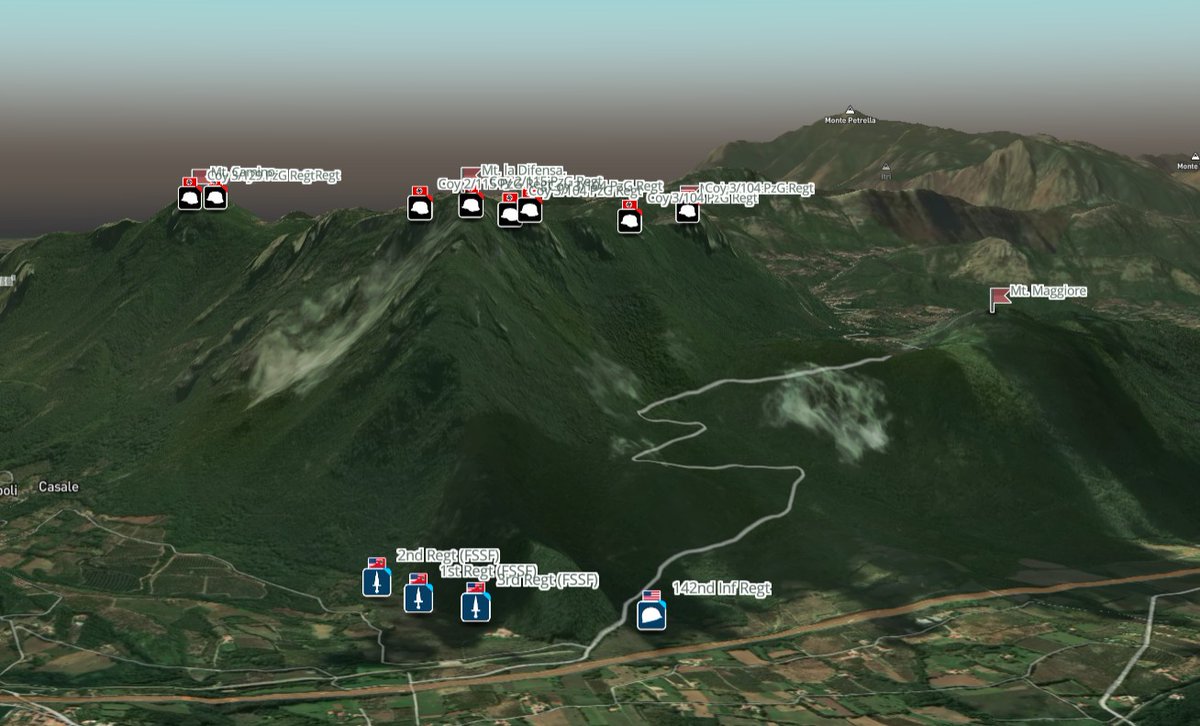
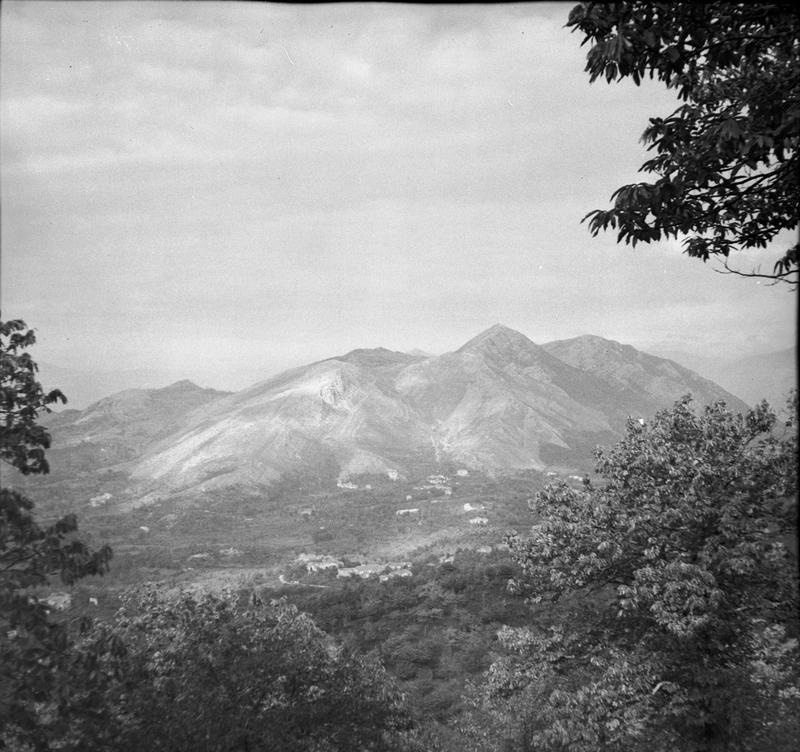
Why was Monte la Difensa so important?
By late 1943, the US Fifth Army was stalled at the Mignano Gap. Every road toward Rome ran beneath the Camino massif—Monte Camino, Monte la Difensa, Monte la Remetanea, and Monte Maggiore. From those heights, German forces of XIV Panzer Corps dominated the approaches with interlocking machine-gun fire, mortars, mines, and fortified positions carved into rock. British X Corps and US II and VI Corps had already tried to break through. The US 3rd and 36th Infantry Divisions had attacked and failed. Artillery battered the mountains, but the limestone strongpoints held. As long as those peaks remained in German hands, the advance north was impossible.
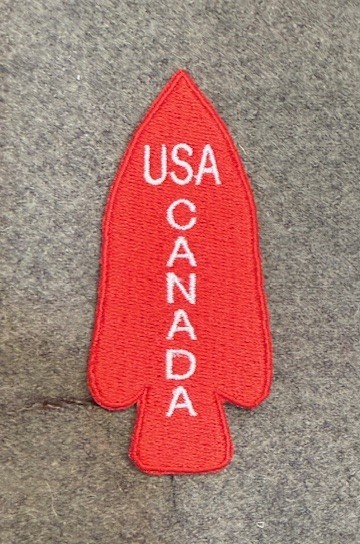
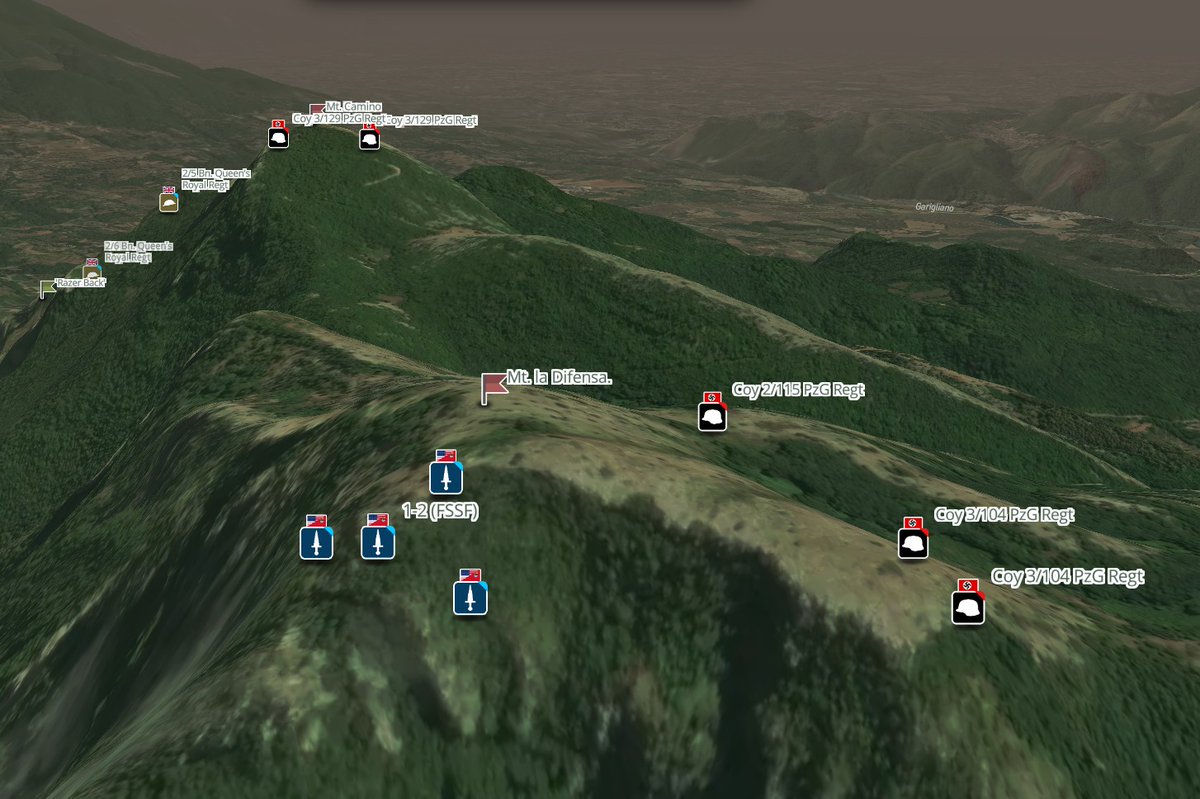
Operation Raincoat was designed to end that stalemate. Instead of another frontal push, Lieutenant-General Mark Clark placed the First Special Service Force at the centre of a renewed offensive. Their mission: take Monte la Difensa and Monte la Remetanea—ground others could not seize—and open the way through the gap. The mountain mattered because it controlled the road. Until it fell, Rome was out of reach.
Thanks to our Patreon supporters, we are mapping out the FSSF attack at Monte la Difensa in a way that has never been done before!
Brittney Shki-Giiziz, Canadian volunteer in Ukraine: My first day fighting was absolutely excellent. I destroyed a train station with a tank. Being at war was physically easier than the training the Canadian Army puts us through. It prepared me very well for war. 1/
Digitizing the First Special Service Force at Garrison Petawawa
Last week I spent two full days in the archives at the Garrison Petawawa Military Museum, working with curator Seana Jones to digitize original First Special Service Force material.
Over the course of the visit, we digitized more than 1,200 pages of documents, along with over forty original maps. These records include operational files, reports, and primary material that form the backbone of any serious reconstruction of the FSSF’s actions.
The GPMM is home to the 1st Canadian Parachute Battalion fonds and maintains a substantial archive of First Special Service Force documents, including original photographs and wartime records. These sources allow us to document where units were, when they were there, and what they were doing — based on evidence.
Projects like Project ’44 depend on this level of archival work. Mapping history properly requires primary documentation. Digitization ensures the record is preserved and can be structured, analysed, and integrated into a broader historical framework.
I have been volunteering at the GPMM since 2018, and it remains one of the most important repositories of Canadian military history in the country. The museum is open to the public five days a week at Garrison Petawawa. You do not need to be a member of the military to visit. Admission is by donation, and the collection reflects the long history of units that have trained and served from Petawawa.
The legacy of the First Special Service Force continues today. The Canadian Special Operations Regiment perpetuates the FSSF and is marking its 20th anniversary this year. Preserving and digitizing the historical record ensures that this lineage is grounded in documented history, not memory alone.
If we are going to tell the story of the First Special Service Force properly, this is where the work begins.