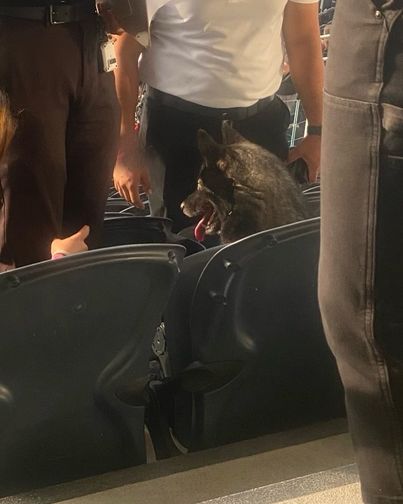
You might have heard we had a four-legged fan join us for #M72LA! Despite reports to the contrary, our friend Storm snuck out of her home adjacent to @SoFiStadium and made her way to the gig all by herself.
After a full night taking in the show with her #MetallicaFamily, Storm was safely reunited with her actual family the next day. She had a great time listening to her favorite songs, including “Barx Æterna,” “Master of Puppies,” and “The Mailman That Never Comes.”
And in case you were wondering, no. You definitely shouldn’t bring your furry friends to the #M72 World Tour. But this dog sure did have her day…
The top of the Empire State Building was originally designed to be used as a docking station for airships. In the late 1920s, there was a belief that cross-Atlantic travel would soon be carried out using zeppelins or dirigibles. Therefore, the investors behind the Empire State Building saw the top of the building as an ideal site for embarkation.
In this envisioned scenario, a dirigible would arrive and dock on top of the building at the specially constructed mooring station. The airship would be quickly secured with ropes, allowing passengers to disembark by walking single-file down a gangplank and into the tallest building in the world from its top floor. From there, they could take the elevator down and find themselves in the heart of Manhattan, a mere seven minutes after landing.
Since the idea was driven by the practical desire to make the building more profitable, the developers went as far as actually constructing a mooring mast on top of the Empire State Building. However, even the most skilled American engineers failed to devise a method to attach a zeppelin to the top of a 1,250-foot-high building that regularly experienced 50 mph winds, while also ensuring a pleasant experience for the average cross-Atlantic traveler.
The airship companies ultimately deemed the idea impractical and even dangerous, leading to a lack of interest. Despite this, the one and only actual mooring on the Empire State Building occurred in September 1931 when a privately-owned blimp managed to dock for three minutes, although no unloading took place.
"Traffic was tied up in the streets below for more than a half hour as the pilot, Lieutenant William McCraken jockeyed for position in the half gale about the tower 1,200 feet above the ground," the Times reported in 1931.
The age of trans-Atlantic zeppelins ended in 1937 with the Hindenburg disaster, when the largest craft of its type ever built burst into flames while landing in New Jersey.
A 1930s vision of the future
During the first half of the 20th century, a German company called Echte Wagner produced a series of collectible cards centered around future fantasy themes. Initially known for manufacturing margarine, Echte Wagner extensively distributed trade cards throughout Central Europe.
In 1930, True Wagner Margarine introduced a collection of sticker sets designed to be displayed in a book. Among the book's sections, there was a captivating segment titled "Future Fantasy," with no credited artist or author.
The illustrations showcased in the book were not only aesthetically pleasing but also displayed ingenious technology that was surprisingly realistic, considering the time. The book itself was titled "Echte Wagner Margarine Album Nr. 3, Serien 12 und 13" (Genuine Wagner Margarine Album No. 3, Series 12 and 13), published in Elmshorn, Holstein, Germany.
Echte Wagner produced a vast array of trading cards, numbering in the hundreds, covering a wide range of subjects such as folklore, transportation, culture, the universe, futurism, and more.
Among these cards, the most captivating ones were those that depicted visions of the future. Remarkably, many of the ideas portrayed on these cards became a reality a century later!
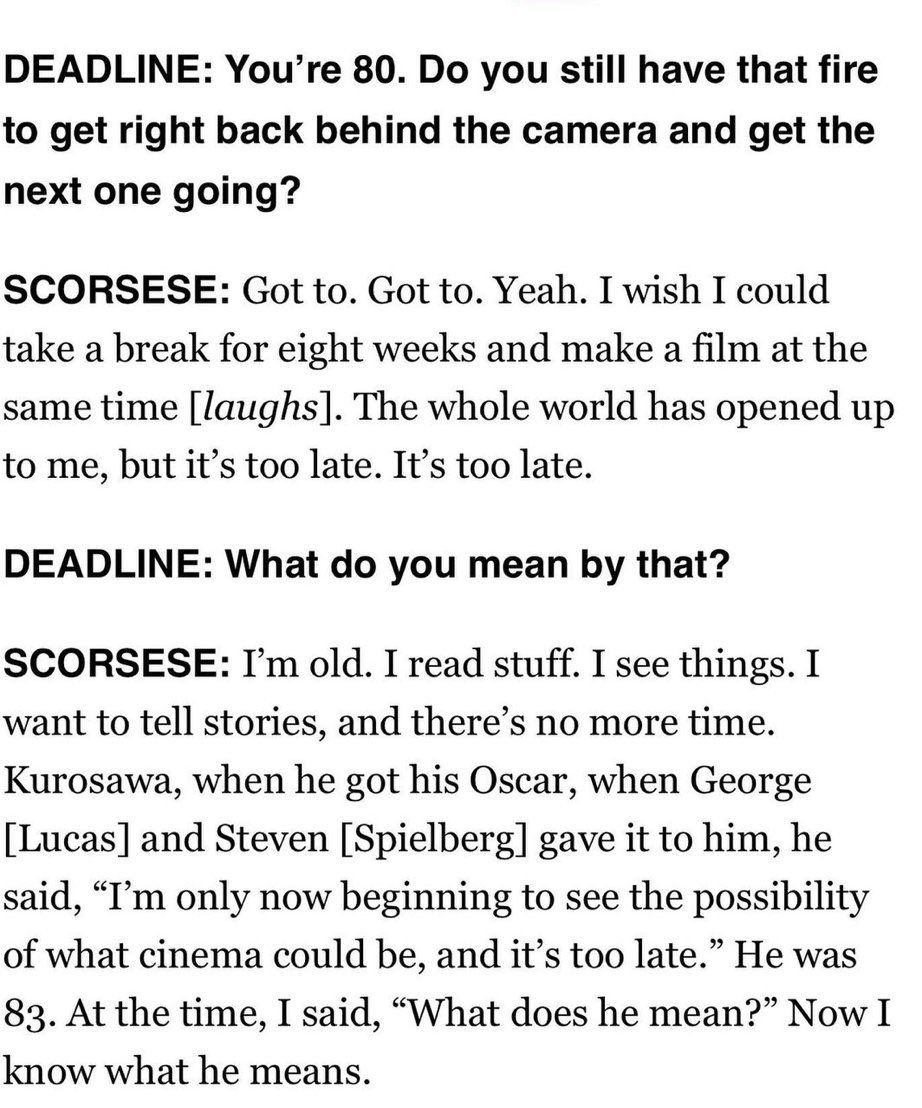
This is honestly most optimistic thing I’ve read in years. So many people have given up on life and in finding new things in it by that age and Scorsese is still learning, still motivated, still has more to say, finds it so exhilarating and worthwhile. We should all be so lucky.
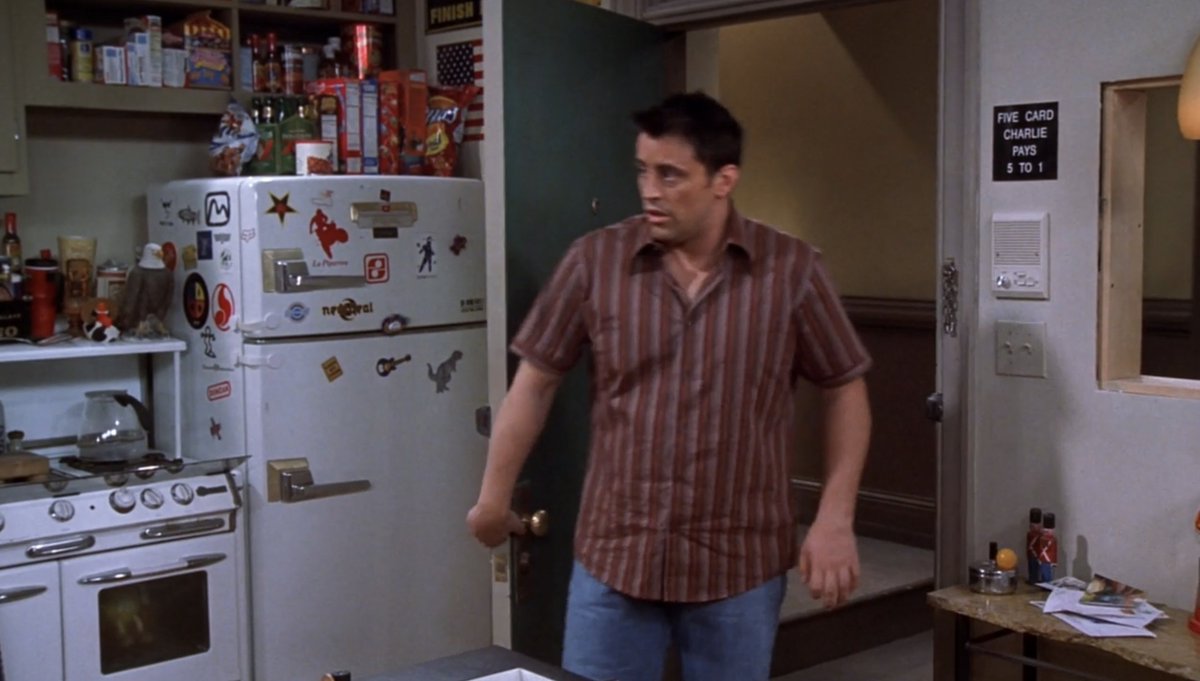
Shows like Friends, M*A*S*H and Seinfeld were shot on film and presented on TV in 4:3 aspect ratio.
For streaming, unused portions of the film negative are used to create a 16:9 widescreen image—if the reframe is sloppy, the audience sees more than was intended. "Friends" s10e01
From the @NBCNews vaults…
During the 1970s, the Hollywood sign was neglected and decaying away. In 1978 repairs were made to ensure the sign would last for years to come.
Original Air Date: Nov. 1978.
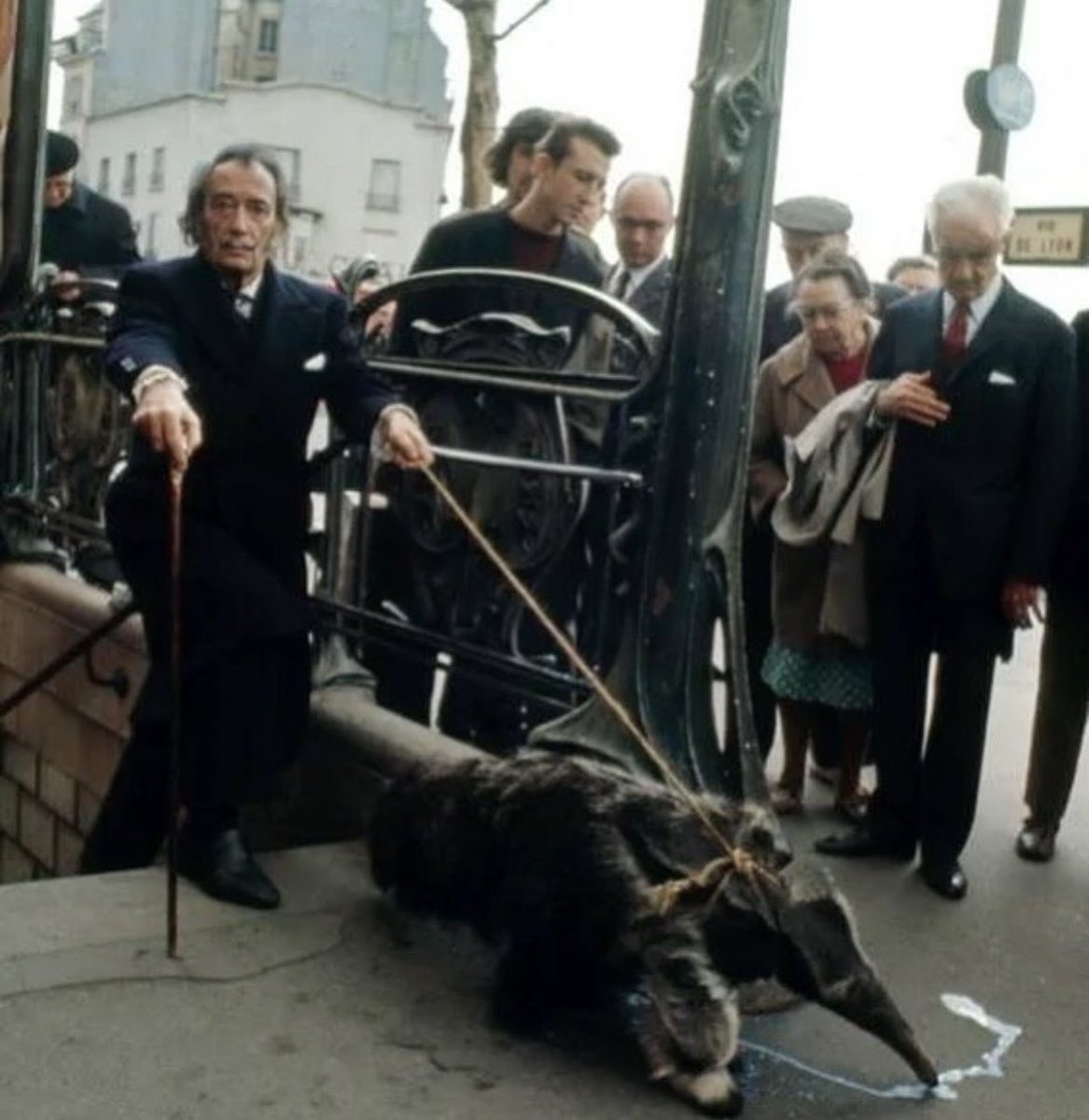
Salvador Dalí walking his pet anteater in Paris, 1969
Salvador Dalí, the renowned surrealist artist, had a penchant for the unconventional in both his artwork and personal life. One of his most peculiar choices was his pet anteater, which became a symbol of his eccentricity and creative spirit. Let's explore the unique bond between Dalí and his unusual companion.
In 1969, while residing in Paris, Dalí could be seen wandering the streets accompanied by an unlikely partner—an anteater. This unusual sight captivated onlookers and added to the enigmatic allure surrounding the artist. Dalí's avant-garde persona merged seamlessly with his unconventional choice of a pet, blurring the boundaries between reality and imagination.
Dalí's fondness for his pet anteater went beyond novelty; he genuinely adored the creature. The anteater's distinct features, such as its long snout, appealed to Dalí's surrealistic sensibilities, inspiring his artistic endeavors. The bond between the two was a testament to Dalí's ability to find beauty and inspiration in unexpected places.
Dalí's choice of a pet anteater was a deliberate act of provocation, challenging societal norms and expectations. By embracing the unconventional, he sought to ignite curiosity and stimulate imagination in others. The presence of the anteater symbolized the power of defying convention to unlock profound artistic breakthroughs.
The anteater's presence held deeper symbolism, reflecting Dalí's desire to delve into the depths of the subconscious mind. Like the anteater exploring anthills with its snout, Dalí aimed to unearth hidden truths and unravel the mysteries of existence through his art.
Dalí's pet anteater, despite its eccentricity, remains an enduring symbol of his artistic legacy. It serves as a reminder that embracing the unconventional leads to profound artistic expression. The choice of an unorthodox pet continues to inspire artists and admirers, encouraging them to push the boundaries of their own imaginations.
Salvador Dalí's pet anteater exemplified his ability to blur reality and imagination. Through this extraordinary companionship, he challenged norms, provoked thought, and left an indelible mark on the art world. The bond between Dalí and his pet anteater reminds us to embrace the extraordinary and explore new artistic territories. Salvador Dalí's name endures as an icon of surrealism and artistic innovation.
This was a fun one! Molly Shannon's Grandma Dubek disguise helped her go incognito for lunch in real life — and led to a confusing encounter with The Other Two co-star Ken Marino. https://t.co/5kU5oNT7J9
@Jarrett_Lerner Starting my first year in-person! I was a virtual 6th grade teacher last year. Will be teaching 7th / 8th ELA. These books sure would fill up some of my bookshelves! ✨
EDUCATORS and LIBRARIANS!
Want to greet your new students with new books?!
I’ve got about 120 elementary and Middle Grade books to give away—half here, half on Instagram.
To enter to win half here: follow me and RT this tweet.
Bonus entry: tag a pal who may want to enter too!
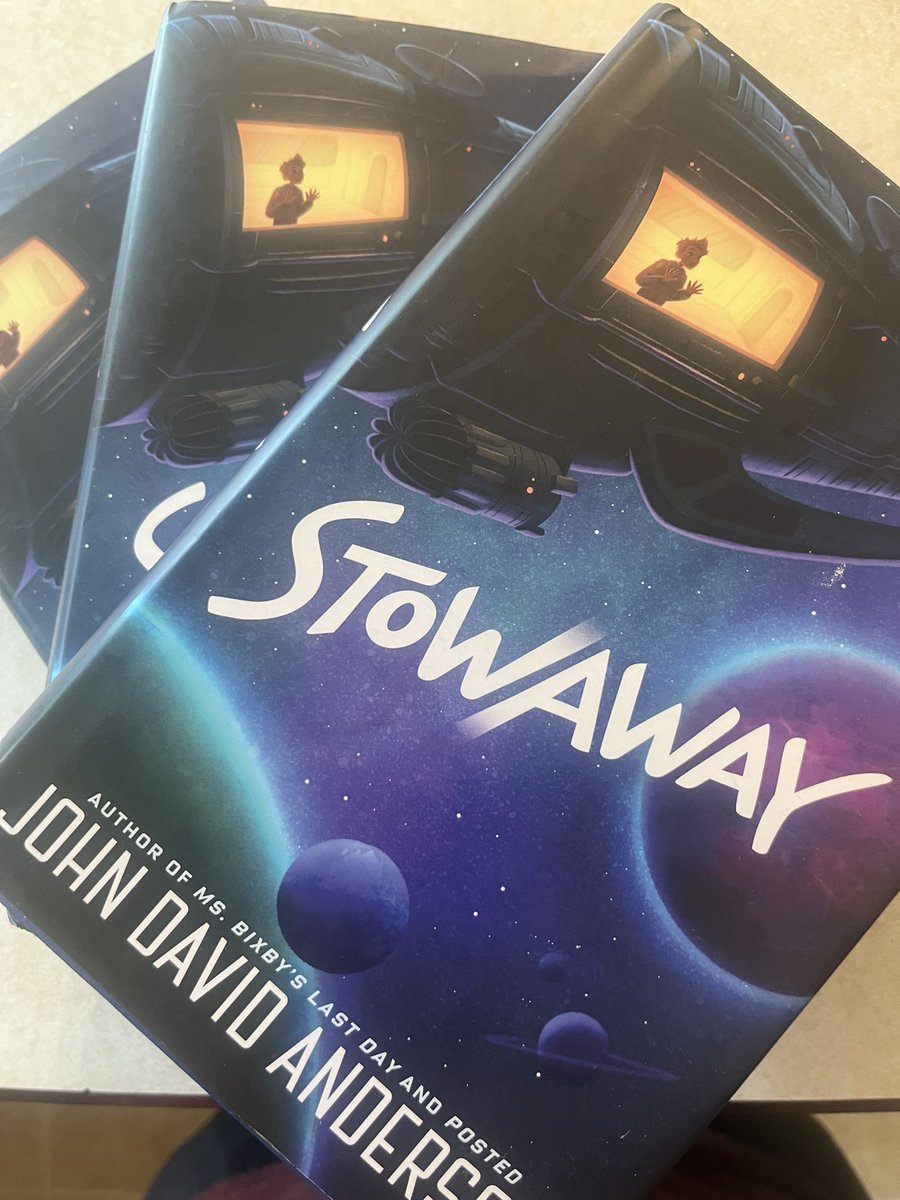
In celebration of its soon-to-be released sequel HOMEBOUND, I’m giving away three signed copies of STOWAWAY. Discover where Leo’s journey began. RT to enter. Winners picked Friday!