なに?
Reading: NANI
Meaning: what?
🧑🏫 It means "What?" in Japanese. Used to ask for clarification or express surprise. Often pronounced with rising intonation.
ごはん
Reading: GOHAN
Meaning: cooked rice
🧑🏫 It primarily refers to cooked rice🍚, a staple in Japanese cuisine. It's also used to mean "meal" in general.
ひま?
Reading: HIMA
Meaning: Are you free?
🧑🏫 It is a very casual Japanese question meaning "Are you free?" or "Do you have time?". It's often used to initiate plans or ask if someone is available to chat or hang out.
いいね!
Reading: IINE
Meaning: Nice!
🧑🏫 It is a Japanese phrase that expresses approval, agreement, endorsement or appreciation of something. It can be translated as "Okay", "Good", "Sounds good" or "Nice!"
は?
Reading: HA
Meaning: Huh?
🧑🏫 "Ha?" is a Japanese interjection used to express confusion or to request clarification when you don't understand something.
ワクワク
Reading: WAKU WAKU
Meaning: That’s exciting.
🧑🏫 It expresses excitement and anticipation for something fun or new, capturing that thrill. It's often written in katakana as it's an onomatopoeic, mimetic word imitating an excited feeling.
ググる
Reading: GUGURU
Meaning: google it
🧑🏫 "GUGURU" is a Japanese verb meaning "Google it” or search for information online using the Google search engine. It's a modern portmanteau word combining "Google" and the verb ending "ru". It has become part of daily language in Japan.
日本
Reading: NIPPON
Meaning: Japan
🧑🏫 It is the Japanese word for Japan, an island country in East Asia. It can also be read as "Nihon" and is said to be formed from "ni" (sun's origin) and "hon" (origin/source), though its exact etymology is uncertain. #japanese
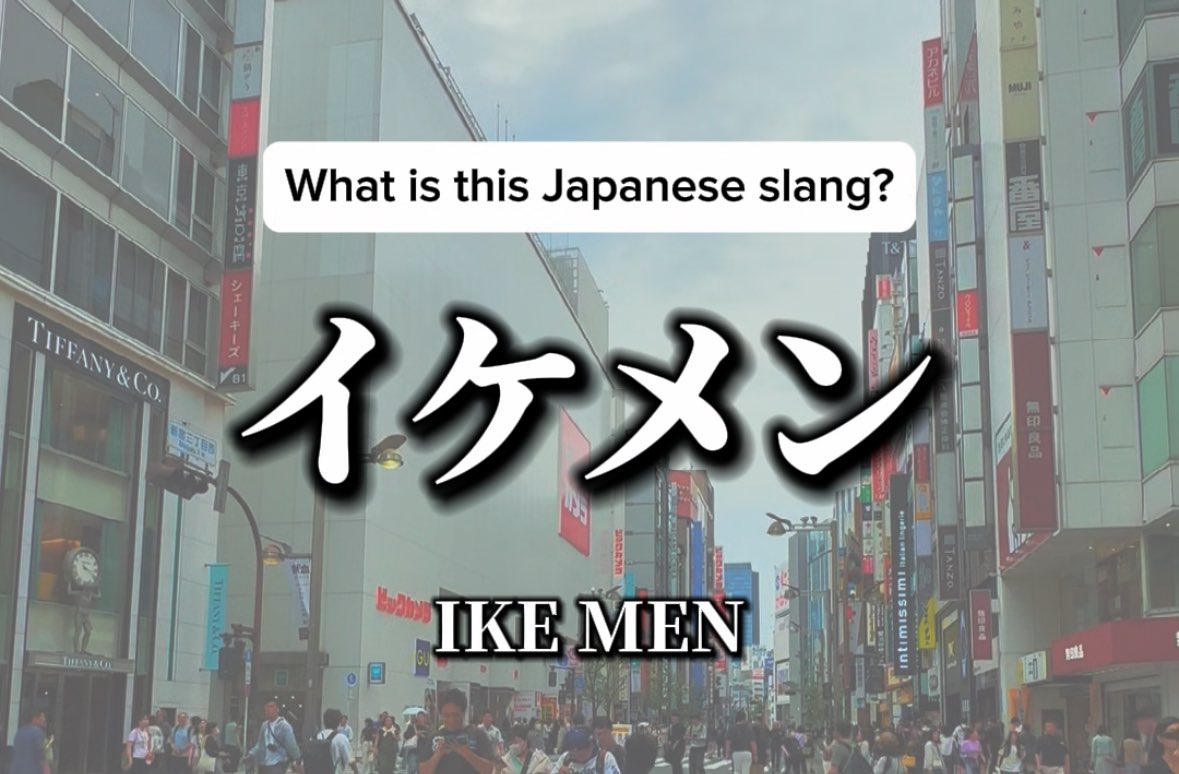
イケメン
Reading: IKE MEN
Meaning: handsome guy
🧑🏫 It is a Japanese slang term for a cool, stylish, and handsome guy, often used to describe attractive celebrities or models. It can also be used for regular people, but for some reason, no one has ever called me IKE MEN🤔
🧑🏫 It is a polite, multi-purpose Japanese expression. It can be used to get someone's attention, apologize for troubling someone, or express gratitude for their help or kindness.
SUIMASEN is an easier way to say SUMIMASEN and is often used, but it is not an official expression.