Yuval Harari unselfconsciously sharing the Silicon Valley view that limitations in understanding will soon render a large majority of humans akin to cattle. Not hard to see why this subculture is a such hothouse for race science and authoritarianism.
Elon needs to first define "consciousness," and then think about whether it's the same thing as "mind." He's edging closer to a dialogue with Nagarjuna, and maybe a conversation with Abhinavagupta. I'm sympathetic, though. We live in interesting times.
I always wonder why (some) STEM people feel the need to assert that they're smarter than everyone else. This kind of post seems to pop up on Twitter with monotonous regularity. Might be a good idea to do some "humanities stuff" kind of introspection for aforesaid STEM people.
I always wonder. Why do we expect STEM people to know humanities stuff? Yet humanities people would never be asked to learn basic physics.
I think there's a tacit agreement that humanities people are dumber, so we shouldn't ask too much of them. But this is rude to say out loud.
really? what a narrow view! Anderson did in fact write sympathetically & convincingly about girls & women; even Hemingway has a story from an adolescent girl's perspective, "Up in Michigan," that is a knockout; not to mention D.H. Lawrence, Scott Fitzgerald, Thomas Hardy & (not least) Shakespeare.
if men can't write about women, women presumably can't write about men.
educated people can't write about lesser-educated people, Black writers can't write about brown people, people from Maine can't write about people from Vermont, no one can write about anyone except the sickly face in the mirror.
I read this and I'm terrified, the situation seems intractable.
In the python ecosystem alone every cpython install, venv, UV is at risk.
Don't get my started on npm, pnpm, yarn, go, rust.
My current 2026 security posture: stay home and only connect to the internet from a trusted ISP.
The winter is coming.
https://t.co/ZYkRKcRvs8
Security called me at 6:12 AM today.
"Patch every PHP server immediately."
I asked what happened.
"Two critical vulnerabilities. Remote code execution. No authentication required."
Cool.
How many PHP servers do we have?
According to inventory: 12
According to reality:
Nobody knows.
We found one running WordPress.
Three running old internal tools.
One under someone's desk.
Two inside vendor appliances.
A forgotten employee directory from 2016.
And a server named:
PHP-OLD-DO-NOT-TOUCH
Naturally, that one runs payroll exports.
Then we found a PHP 5.6 box.
I asked who owned it.
The documentation said:
BRIAN.
Brian left in 2019.
We called Brian.
He said:
"Oh wow, that's still running?"
Excellent.
By 8 AM, leadership joined the incident call.
CEO:
"Can hackers actually get in?"
Security:
"Potentially yes."
CEO:
"Without a password?"
Security:
"Yes."
CEO:
"Then why do WE need passwords?"
Not the lesson.
Finance asked if we could wait until the weekend to patch because downtime affects revenue.
Security explained that the alternative was letting strangers execute code on our servers.
Finance asked for a cost comparison.
At 9:17, someone suggested temporarily taking the vulnerable websites offline.
Marketing refused.
"Our campaign is live."
So for the next hour, the company officially decided maintaining a landing page for 20% off webinar registration was more important than preventing remote server takeover.
We finally patched everything we could find.
Then our scanner discovered another PHP server.
Hostname:
TEMP-PHP-2014
Uptime:
4,512 days.
Nobody knows what it does.
Nobody owns it.
Nobody can shut it down.
But every time we block network access, the warehouse stops printing shipping labels.
Security has classified it as critical infrastructure.
It is running PHP 5.4.
The vulnerability has existed longer than half our employees.
The emergency patch took four hours.
Finding out what PHP actually runs took eleven.
The internet isn't held together with code.
It's held together with servers everyone is afraid to turn off.
Good god. This "Sanskrit as coding language" thing will never die. No, Sanskrit has never been used at NASA as a programming language. Rick Briggs was a researcher associated with NASA. He was not a "NASA scientist." He pointed out in one paper that Sanskrit has been formally defined by Pāṇini (a truly dazzling feat). But normal spoken and written Sanskrit is as amenable to ambiguity as any other language in the world. The philosophers of the Navya-Nyāya school created a whole new meta-language to try to get rid of this ambiguity. That meta-language is what Briggs was referring to. Nobody has written code in that very specialized version of Sanskrit. Modern programming languages are artificial formal languages based on natural languages, so that they have diction and syntax similar to those languages. The Navya-Nyāya language is similarly based on Sanskrit. Pāṇini's work is ground-breaking and astonishing and truly influential, but this NASA thing is a complete fantasy. If you're interested in knowing how Pāṇini's formal system works, please read this essay. https://t.co/V1myUNoJkE
Chinese bride gifts her partner a flagship GPU at wedding — he breaks down in tears
She handed him an ASUS ROG Astral RTX 5090 that costs around $12,000
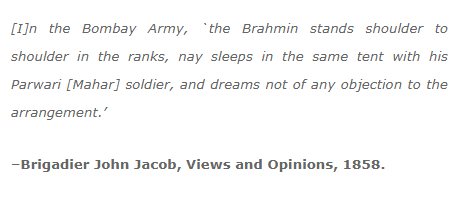
.@ShreeHistory The "Bombay Army" that Jacob is talking about is one of the three Presidency armies of British East India Company. Jacob is contrasting the Bombay Army with the Bengal Army, in which the soldiers were recruited from Brahmins and Rajputs from Avadh and Bihar. There, the Company deliberately accomodated their discriminatory jati-related rules. The recruiting practices varied by region. In fact, Jacob is arguing here that indulging the Bengal a soldiers' silly caste prejudices made them harder to command. Units filled with Brahmins and Rajputs with their purity norms wouldn't serve or mess with other castes. Jacobs is trying to work out how the Brits should deal with pre-existing jati/varna practices. It's exactly the opposite of what you are saying. As for jati in pre-British India, take a look at Peshwa rule. The evidence for the discriminatory practices in this image are the records of the Peshwa state itself, the judgements and proclamations put down in the official daftar diaries. To say that discrimination didn't exist before the arrival of the British is just... inaccurate in the worst way.
@ShreeHistory Naukri does *not* change jati. See the Constable paper above. Sidnak Mahar was a warrior. He still remained--in the eyes of his fellow soldiers--a Mahar and therefore an untouchable.
Come on, man. You just told me to read the Constable paper. Now you are telling me that you don't trust it.
They didn't "become kshatriya" by joining the army, any more than the Brahmin soldiers of the Bengal Army became Rajputs by joining up. A naukri doesn't mean a change of jati, as we well know from caste practices today. Castes had to claim kshatriya status as a whole and invent convoluted histories of descent to claim higher status. The Marathas had to so this themselves.
Constable himself shows you in the very paper you are citing again that Sidnak Mahar, an extraordinary practitioner of war, was thought to be an untouchable by his own comrades. Sarkari Naukri or not, you still aren't seen as an equal.
It seems like there's a weekly deluge of LLMs I can use locally (via Ollama, etc.). How do people keep track of what is available, what's new, what different models are good for? Is there a model review newsletter I should subscribe to? One that's not overly technical would be perfect.
The soldiers of the "Bengal Army" were recruited heavily from Awadh, which wasn't under British rule until 1856. Jacob wrote this commentary in 1850, so the Bengal Army's caste practices were not the product of a century of British rule.
In the same note, he writes, "In the Bombay army, on the contrary, the native officer is invaluable, and his authority is respected, though he be the lowest of the low in caste; because the practice in Bombay is for the European officers to make the Hindoos SOLDIERS; instead of, as in Bengal, the sepoys making the European officers half Hindoos."
Note that he is arguing that it's European officers who squash caste prejudice in the Bombay Army.
Recruiting people of different castes into the same army doesn't mean that people don't discriminate.
In the very Constable paper that (I think) you are referring to, we have this: "Among Mahar warriors in Maratha times, Sidnak Mahar gained special legendary status. At the time of the killing of Sambhaji by Aurangzeb in February 1688, Sidnak Mahar had raised an independent Mahar platoon between 1683 and 1707 in the service of the Maratha state and was honored for his service by Sambhaji's son, Shahu, with the post of patil of Kalambi village, Tasgav taluka, Satara (Shinde 1933, 158). Sidnak Mahar's grandson, also called Sidnak Mahar, fought so valorously on horseback for Madhavrao Peshva at the Battle of Kharda in 1795, that the Peshvai army commander Hiroji Patankar refused to have the Mahar force separated from the main camp when the brahman and Maratha kshatriya sardars protested about the Mahars' untouchability. It was strongly felt in nineteenth- and twentieth-century Mahar culture that his reply, "this is not a dinner party, but a party of warriors," confirmed Mahar kshatriya naukari heritage and was a criticism that also aptly applied to nineteenth-century British military attitudes, which had allowed Hindu religious and ritual concerns into military affairs."
Good on Hiroji Patankar, but the very fact that he had to make this ruling demonstrates the presence of untouchability and discrimination. Please note the very specific use of "Mahars' untouchability" by Constable.
The Peshwa state's own records show it barring "untouchables" from the Vithoba temple at Pandharpur (see Uma Chakravarti's work on the Peshwa daftar). That's pre-British evidence, not a colonial invention.
The 1874 Act codified watan duties that already existed under Maratha village organization. It froze an existing system rather than creating one.
"Caste is not something that is difficult to conceptualize..there's a deliberate forgetting& a suppression of the questions of caste& race in India,..I would like to come to the term 'diversity' and what in diversity does not capture the question and the urgency of equality.."