NEW: Google is now paying Elon $920M a month for compute.
SpaceX and xAI merged in February. The combined entity has 110,000 Nvidia GPUs that Google needed badly enough to sign a $30 billion deal through 2029.
Last month, Anthropic did the same. $1.25 billion a month to SpaceX for compute.
That puts SpaceX at over $2 billion a month from just two companies, roughly $26 billion a year.
Now watch what happened to Nvidia.
In 2022, Nvidia's annual revenue was $27B. By 2025, data center revenue alone hit $115B, in roughly two years, because the world needed GPU compute faster than anyone could build new infrastructure.
SpaceX is in that exact position now. AI labs can't build clusters fast enough, and SpaceX already has them. Google and Anthropic are paying the premium because they have no better option.
These two deals are just the opening. Every AI lab and enterprise running inference at scale will hit the same compute wall. More deals are coming in the next 12 months.
SpaceX is already at $26B a year in contracted compute revenue. Nvidia's inflection took two years. The next one is already here.
My dear front-end developers (and anyone who’s interested in the future of interfaces):
I have crawled through depths of hell to bring you, for the foreseeable years, one of the more important foundational pieces of UI engineering (if not in implementation then certainly at least in concept):
Fast, accurate and comprehensive userland text measurement algorithm in pure TypeScript, usable for laying out entire web pages without CSS, bypassing DOM measurements and reflow
WebMCP is available for early preview → https://t.co/bZMcANfg37
WebMCP aims to provide a standard way for exposing structured tools, ensuring AI agents can perform actions on your side with increased speed, reliability, and precision.
¡Aquí tiene un mes de servicio de Starlink gratuito! La conexión a internet de alta velocidad de Starlink es ideal para streaming, videollamadas y juegos, incluso en los lugares más remotos de la Tierra. https://t.co/UURVB77vrQ
I'm Boris and I created Claude Code. Lots of people have asked how I use Claude Code, so I wanted to show off my setup a bit.
My setup might be surprisingly vanilla! Claude Code works great out of the box, so I personally don't customize it much. There is no one correct way to use Claude Code: we intentionally build it in a way that you can use it, customize it, and hack it however you like. Each person on the Claude Code team uses it very differently.
So, here goes.
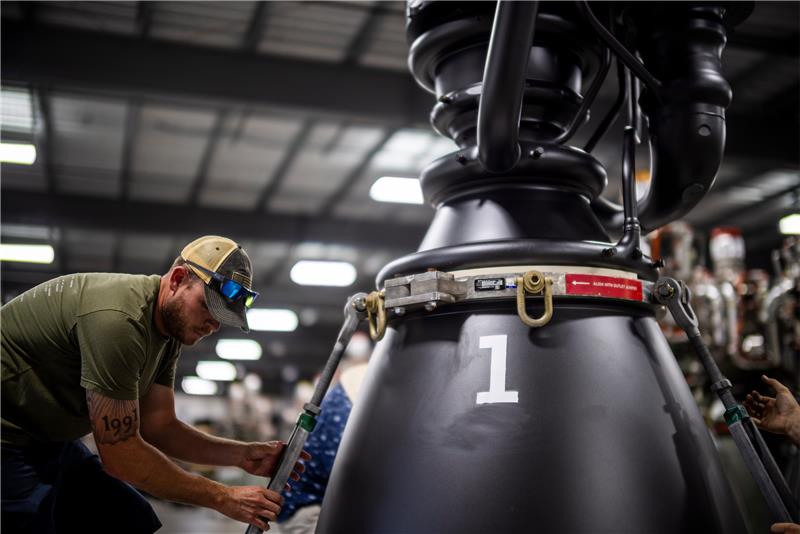
Today, SpaceX shared a new picture (on left) of its next-generation Raptor 3 rocket engine, the most advanced rocket engine ever made.
• Almost 2x the thrust of Raptor 1
• Costs 4x less
• Much lighter. Will save 2,425 lbs of weight per engine, or 94,575 lbs (42.9 metric tons) per launch
• No heat shield
• Optimized for manufacturability
It will first fly aboard Starship Version 3, with the first launch currently targeted for Q1 2026.
(New photo on left from SpaceX's new quarterly impact report)
Elon Musk: “Anyone who wants to make more than they take has my respect”
Elon is asked for his advice for entrepreneurs, to which he responds:
“I’m a big fan of anyone who wants to build. Anyone who wants to make more than they take has my respect. That’s the main thing you should aim for: to make more than you take and be a net contributor to society.”
He compares it to the pursuit of happiness:
“If you want to create something valuable financially, you don’t pursue that. It’s best to pursue providing useful products and services. If you do that, money will come as a natural consequence of that rather than pursuing money directly. You can’t pursue happiness directly. You pursue things that lead to happiness — fulfilling work, study, friends, loved ones.”
Elon continues:
“It sounds very obvious, but generally if somebody is trying to make a company work, they should expect to grind super hard and accept that there’s a meaningful chance of failure. Then just focus on having the output be worth more than the input. Are you a value creator? That’s what really matters: making more than you take.”
Video source: @nikhilkamathcio (2025)
Apple JUST quietly announced something that’s a lot BIGGER than it looks: "the Mini Apps Partner Program"
Apple is admitting that the future of software is embedded, lightweight, vertical mini-apps distributed inside bigger app
For founders who want to make $$ building apps:
1. Apple just legitimized the “superapp” model for the West.
China has WeChat mini-programs. India has PhonePe Switch. The West has… nothing. Apple just opened the door. You can now run HTML/JS mini-apps inside a native host and earn 85% on qualifying purchases. That’s Apple-sanctioned platform piggybacking.
2. Distribution arbitrage becomes real again.
You don’t need to convince users to download your app. Just partner with a host app and drop in a mini-app. This is a cheat code for early traction. Think: travel apps hosting niche tools, fitness apps hosting mini workouts, marketplaces hosting micro-utilities.
3. Apple is creating a new economy layer: “embedded SaaS.”
Imagine: CRM mini-apps inside vertical tools. Math solver mini-apps inside education apps. Calendar mini-apps inside productivity apps. The TAM for tools that don’t need standalone installs just went vertical.
4. Developers get an 85% revenue share.
This is Apple basically saying: “We want this ecosystem to grow, and we’re willing to cut our take rate.” When Apple lowers its cut, I pay attention because they see a platform shift coming.
5. AI makes this 10× more important.
LLM-powered micro-apps (calculators, planners, agents, coaches, niche utilities) are tiny by design. They’re perfect mini-apps. Apple just created infrastructure for AI-native micro utilities to live inside bigger apps with built-in commerce.
6. Host apps become new “distribution landlords.”
If you own an app with traffic, you become a platform. You can host mini-apps, take a cut, and build a developer ecosystem around you.
It’s a new monetization model for existing apps with audiences.
7. This unlocks a wave of second-order opportunities.
- Agencies helping apps become mini-app hosts
- Mini-app dev shops
- “Shopify for mini-apps” toolkits
- Mini-app marketplaces
- Analytics for mini-app performance
- Discovery engines for mini-apps
- I'll be dropping mini app ideas on @ideabrowser and @startupideaspod
TLDR;
Apple just turned every high-traffic app into a potential superapp and every indie developer into a potential platform partner.
The App Store is becoming modular, composable, and layered. The next decade of consumer apps will look less like standalone products and more like ecosystems stitched together with mini-apps.
This is quietly one of the biggest distribution unlocks in years.
We’re about to drop something big 👀
Vision AI in retail is one of the hardest real-world CV problems: tiny items, occlusions, weird lighting, countless actions. Most models break.
We pushed @roboflow RF-DETR to its limits, alongside @ultralytics models + other OSS baselines.
¡Aquí tiene un mes de servicio de Starlink gratuito! La conexión a internet de alta velocidad de Starlink es ideal para streaming, videollamadas y juegos, incluso en los lugares más remotos de la Tierra. https://t.co/JuNC0Nxmfk