Blind students don’t see graphs, they feel them. Tactile graphs make data accessible, yet most materials still assume vision. Time to rethink how we present info.
Read our first #TheWorldInYourHands post: https://t.co/yDaKuDh3K2
#Accessibility#TactileEducation#STEMforAll
Tactile tech is the future of education for blind students, but most classrooms still rely on outdated, inaccessible materials. At uDot, we’re working to change that. Because learning should be tactile, interactive, and inclusive. #AccessibleEd@blindiephoenix
🔍 Help shape the future of STEM education for visually impaired students!
Educators, students, parents—share your insights on tactile resources in this quick survey. Your input is key to building an inclusive tactile library!
📋 Take the survey: https://t.co/9lQUY6FLHe
🔍 Help shape the future of STEM education for visually impaired students!
Educators, students, parents—share your insights on tactile resources in this quick survey. Your input is key to building an inclusive tactile library!
📋 Take the survey: https://t.co/9lQUY6FLHe
This push is highly commendable. Special educators might sound like a hit to pride but in reality they are instrumental to helping students exceed the expectations set by society and reach new heights in education. These accommodations are one of many basic rights.
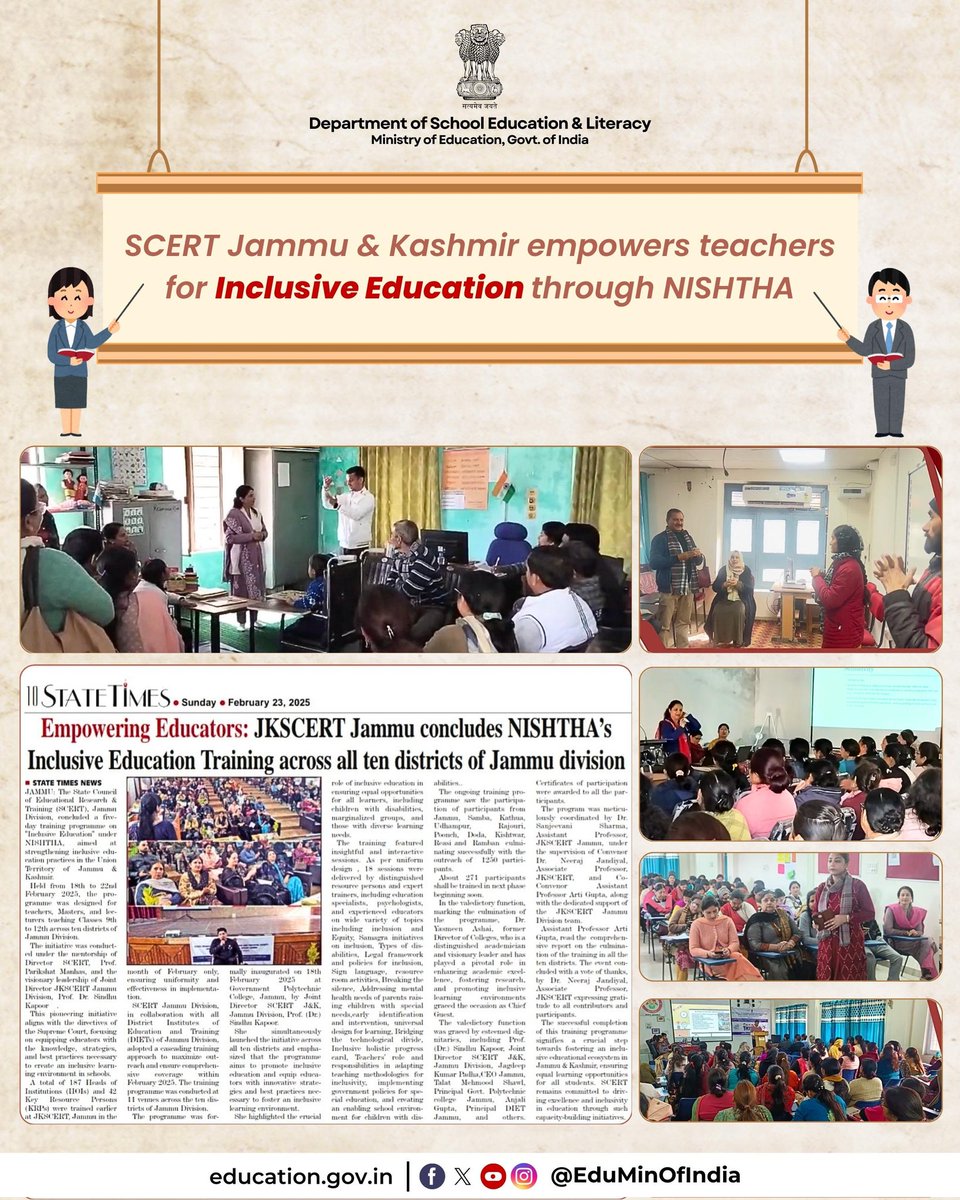
The National Education Policy (NEP) 2020 highlights the need for special educators for Children with Special Needs (CwSN) and specific learning disabilities at the middle and secondary school level, requiring subject-teaching knowledge and relevant skills for understanding the special requirements of children. (NEP 5.21) In accordance with this vision, SCERT, Jammu & Kashmir, organized a five-day training programme under NISHTHA to strengthen inclusive education across all ten districts of Jammu Division.
This initiative focused on the educators of classes 9 to 12, equipping them with inclusive pedagogical strategies, assistive technologies and adaptive assessment techniques to aid CwSN. This initiative represents a significant milestone in the pursuit of an inclusive and accessible education system aligned with #NEP2020, garnering the enthusiastic support of educators throughout the region.
#NEP2020SuccessStories #SchoolEducation #Education4All #InclusiveEducation #CwSN
Reality: Thanks to screen readers and specialized coding environments, blind programmers can code as well as sighted programmers. Tools like VS Code and JAWS have features that make it easier to navigate through code, detect syntax errors, and debug effectively.
Myth Busters: Disability Edition!!
Myth: Blind People Can't Play Sports.
Reality: Blind and visually impaired people participate in various sports, such as running, cricket, swimming, judo, goalball, and skiing.
Adaptive techniques and specialized equipment make sports accessible and competitive.
A perfect illustration of this is #ShekharNaik. He is an Indian national blind cricketer and a former captain of the India national blind cricket team.
Myth Busters: Disability Edition!!
Myth 6: Blind People Can’t Enjoy Visual Arts.
Reality: Blind people can experience art in various ways, such as through tactile versions of paintings, audio descriptions, or by creating art using other senses.
Not only can blind people live independently, but they can also raise a family, have a meaningful career, play sports, travel, and more. Multiple training programs teaches skills and strategies so a person who has lost vision can live the life they want to.
#Independence#Myth
Myth Busters: Disability Edition!
Myth: People who are blind can’t live independently.
Fact: People who are blind can do almost anything. They do it differently. With the right support & accommodations, individuals with blindness can lead fulfilling and productive lives.
Myth Busters: Disability Edition!!
Myth: People who are blind can’t use most technology.
Reality: Technology is a way of life for people who are blind. Many people who are blind say technology has revolutionized their lives.
Advancements in assistive technology have made it possible for individuals who are visually impaired to access and utilize a wide range of digital tools and devices.