As of today, BattleChain testnet is LIVE.
The pre-mainnet, post-testnet blockchain, where whitehats legally attack your smart contracts before they reach production.
Deploy. Get attacked. Ship stronger.
Here's why we built it, what it is, and how you can get involved 🧵
Alex Gluchowski (@gluk64), co-founder of @zksync, on why banks are finally moving to blockchain after a decade of resistance.
"They can't compete on speed with 1970s infrastructure."
"Stablecoins are taking so much value away from the banking system. The banks feel this pressure."
"Banks were caught between privacy regulation and the need for speed. Zero-knowledge proofs resolved the conflict."
Hey @etherscan@blockscout can you please show some love for @solx_compiler ? It's a gas-efficient Solidity compiler, drop in replacement for solc, and we need your support to verify contracts
10-20% lower gas cost
smaller contract bytecode
-66% compile time
What's not to like?
This is the closest we’ve come to a unified chain UX for L2s and mainnet.
Fast proofs from Airbender make L2↔L1 feel like one system, without intents or bridges, true native interop.
The missing piece for making L1 and L2 finally feel like one chain.
How it works under the hood:
- Assets are withdrawn in minutes to an aliased account on Ethereum.
- An interop transaction bundle is prepared and executed depositing funds into Aave on Ethereum and borrowing GHO.
- Optionally, users can bridge the borrowed tokens back to the L2
Identity and permissions remain consistent.
One system, two layers, zero friction.
🤯 two 5090s now prove every L1 EVM block 🤯
The @zksync Airbender team pulled off something insane ahead of tomorrow's https://t.co/cTmas4QhBE demo. Mainnet proofs on two gaming GPUs. One box, ~1kW—basically a toaster.
Props to @robik, Michael Carrili, @MarcinM02, @Shamatar.
The L1 gas limit is going higher. So much higher.
Beast mode. Gigagas L1. Believe in something.
Institutions want to build on Ethereum and leverage its incorruptibility, hard finality, and global liquidity.
But many financial use-cases can’t be run on a chain where everything is public by default.
Here’s how Prividium extends Ethereum for enterprises:
"With Prividiums, it's now possible for Institutions to build and operate private systems as part of the global Ethereum network, with all the control and compliance they require."
@anthonykrose, Product @zksync, writes for @ethereum about Privacy & Incorruptible Finance.
Airbender isn't just the fastest, it's also extremely efficient.
It beats the next fastest prover while using half the cores and a fraction of the memory:
16 cores vs 32 cores
128GB RAM vs 1024GB
Airbender enters the @eth_proofs leaderboard as the fastest zkVM!
Airbender proves ZKsync chain blocks in ~1 second, and is now proving @ethereum blocks in under 50 seconds on a single GPU, helping push the Lean Ethereum roadmap forward.
@shafu0x scripts. Also, now v3 is the default which brings solidity tests, uses forge-std so you can write the exact same tests as in foundry (AFAIK) and the new node is as fast as anvil. So v3 has the best of HH v2 and Foundry
Fast speeds. Less hardware. More customizability to meet the compliance needs of governments around the world.
ADI Chain is the first chain built using @ZKsync’s Airbender, the world’s fastest Risc-V prover.
That’s Different.
Coming soon.
Yesterday I tried this early version of the next evolution of @solx_compiler.
My compile time benchmarks:
solc (legacy): 34secs
solc (via-ir): 1m34secs
solx (mlir): 4.7secs
solx is evolving. Here is a sneak peak of what’s coming 👀
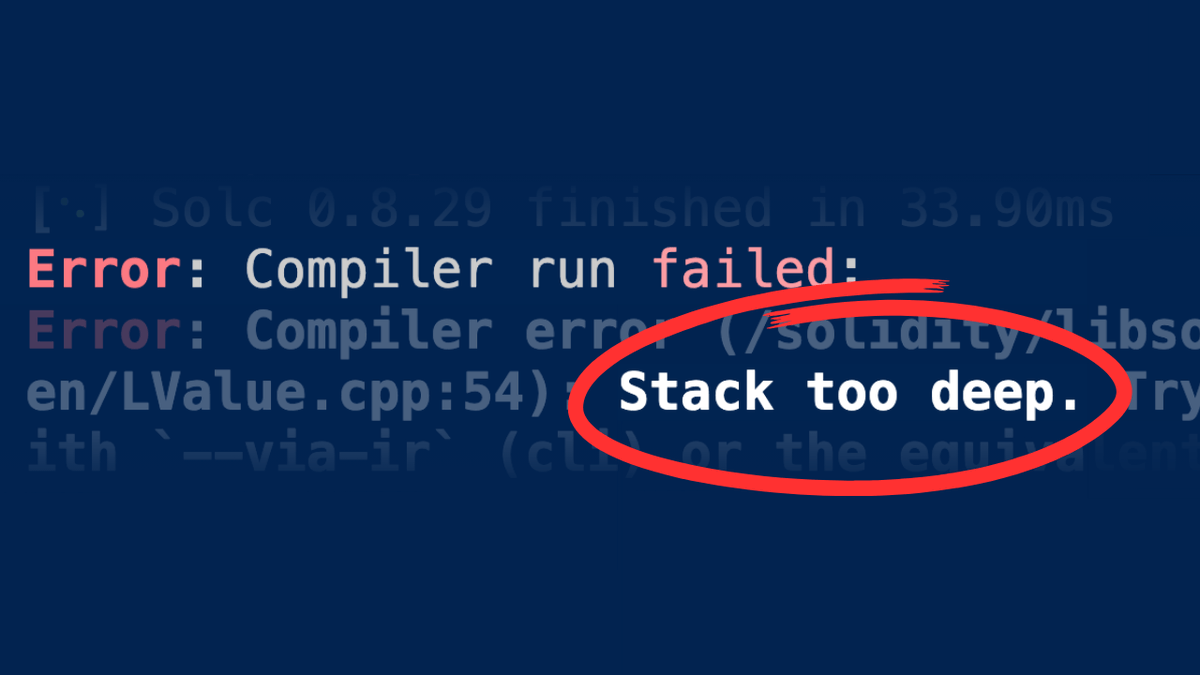
Today, solx already fixes stack-too-deep and cuts gas.
Next: with MLIR, solx will also redefine compilation speed. See how 👇