What if a synthetic child patient could help us explore leukemia treatment scenarios before reaching the clinic? 🧬🤖
This is the core idea behind STING DSS.
I am excited to announce that the STING Decision Support System is now live on the Web! 🚀🌐
Developed in my TÜBİTAK 1001 project, STING focuses on one of the most challenging and meaningful intersections of today’s research:
Childhood acute leukemia, drug repositioning, digital twins, synthetic patients, and explainable artificial intelligence.
STING DSS is designed as a browser-based AI decision-support research platform for pediatric acute lymphoblastic leukemia. It brings together multiple AI/ML modules into a sequential and interactive pipeline:
🧠 Bi-LSTM-based drug repositioning
💊 Candidate drug assessment, including Copanlisib and Novobiocin
🩸 Patient-specific pharmacokinetic/pharmacodynamic ODE simulations
⚙️ Genetic algorithm-based dose optimisation
🌐 GNN-driven digital twin prediction
🔍 Explainable AI with SHAP, permutation importance, counterfactual explanations, and GEMEX
🧬 CTGAN-based synthetic patient cohort generation
📊 5-class pediatric ALL risk stratification: LR / SR / IR / HR / VHR
But beyond the technical pipeline, the real purpose is bigger:
Can we make biomedical AI research more accessible, interactive, reproducible, and ethically scalable?
Can synthetic patients help researchers explore treatment dynamics before moving toward more sensitive real-world settings?
Can digital twins and AI-based simulations support the future of precision medicine in pediatric oncology?
STING DSS is one step toward answering these questions. ✨
🎥 In the video below, you can see the system in action.
🔗 Project Website: https://t.co/kcWcvHRfLx
🔗 GitHub Repository: https://t.co/ldIAeHWdCd
We are also opening a participation channel for researchers and students who would like to receive an account and contribute to the STING ecosystem.
📝 Participation Form: https://t.co/XmrSOrEknt
If you are working on AI in healthcare, leukemia research, digital twins, synthetic patient modeling, explainable AI, drug repositioning, computational biology, or clinical decision support systems, I would be very happy to connect and hear your thoughts. 🌟
Your feedback, ideas, and collaborations can help shape the next steps of STING.
#STING #TUBITAK #ArtificialIntelligence #DigitalTwin #SyntheticPatients #PediatricALL #AcuteLymphoblasticLeukemia #LeukemiaResearch #ChildhoodLeukemia #DrugRepositioning #ClinicalDecisionSupport #DecisionSupportSystem #DeepLearning #MachineLearning #GraphNeuralNetworks #ExplainableAI #XAI #GEMEX #CTGAN #ODE #ComputationalBiology #BiomedicalAI #AIinHealthcare #PrecisionMedicine #PediatricOncology #HealthTech #OpenScience #Research #GitHub #SuleymanDemirelUniversitesi
What if a synthetic child patient could help us explore leukemia treatment scenarios before reaching the clinic? 🧬🤖
We are excited to announce that the STING Decision Support System is now live on the Web! 🚀🌐
📝 Participation Form: https://t.co/4mLyk49RAw
#sting#ai#dss
What if a synthetic child patient could help us explore leukemia treatment scenarios before reaching the clinic? 🧬🤖
This is the core idea behind STING DSS.
I am excited to announce that the STING Decision Support System is now live on the Web! 🚀🌐
Developed in my TÜBİTAK 1001 project, STING focuses on one of the most challenging and meaningful intersections of today’s research:
Childhood acute leukemia, drug repositioning, digital twins, synthetic patients, and explainable artificial intelligence.
STING DSS is designed as a browser-based AI decision-support research platform for pediatric acute lymphoblastic leukemia. It brings together multiple AI/ML modules into a sequential and interactive pipeline:
🧠 Bi-LSTM-based drug repositioning
💊 Candidate drug assessment, including Copanlisib and Novobiocin
🩸 Patient-specific pharmacokinetic/pharmacodynamic ODE simulations
⚙️ Genetic algorithm-based dose optimisation
🌐 GNN-driven digital twin prediction
🔍 Explainable AI with SHAP, permutation importance, counterfactual explanations, and GEMEX
🧬 CTGAN-based synthetic patient cohort generation
📊 5-class pediatric ALL risk stratification: LR / SR / IR / HR / VHR
But beyond the technical pipeline, the real purpose is bigger:
Can we make biomedical AI research more accessible, interactive, reproducible, and ethically scalable?
Can synthetic patients help researchers explore treatment dynamics before moving toward more sensitive real-world settings?
Can digital twins and AI-based simulations support the future of precision medicine in pediatric oncology?
STING DSS is one step toward answering these questions. ✨
🎥 In the video below, you can see the system in action.
🔗 Project Website: https://t.co/kcWcvHRfLx
🔗 GitHub Repository: https://t.co/ldIAeHWdCd
We are also opening a participation channel for researchers and students who would like to receive an account and contribute to the STING ecosystem.
📝 Participation Form: https://t.co/XmrSOrEknt
If you are working on AI in healthcare, leukemia research, digital twins, synthetic patient modeling, explainable AI, drug repositioning, computational biology, or clinical decision support systems, I would be very happy to connect and hear your thoughts. 🌟
Your feedback, ideas, and collaborations can help shape the next steps of STING.
#STING #TUBITAK #ArtificialIntelligence #DigitalTwin #SyntheticPatients #PediatricALL #AcuteLymphoblasticLeukemia #LeukemiaResearch #ChildhoodLeukemia #DrugRepositioning #ClinicalDecisionSupport #DecisionSupportSystem #DeepLearning #MachineLearning #GraphNeuralNetworks #ExplainableAI #XAI #GEMEX #CTGAN #ODE #ComputationalBiology #BiomedicalAI #AIinHealthcare #PrecisionMedicine #PediatricOncology #HealthTech #OpenScience #Research #GitHub #SuleymanDemirelUniversitesi
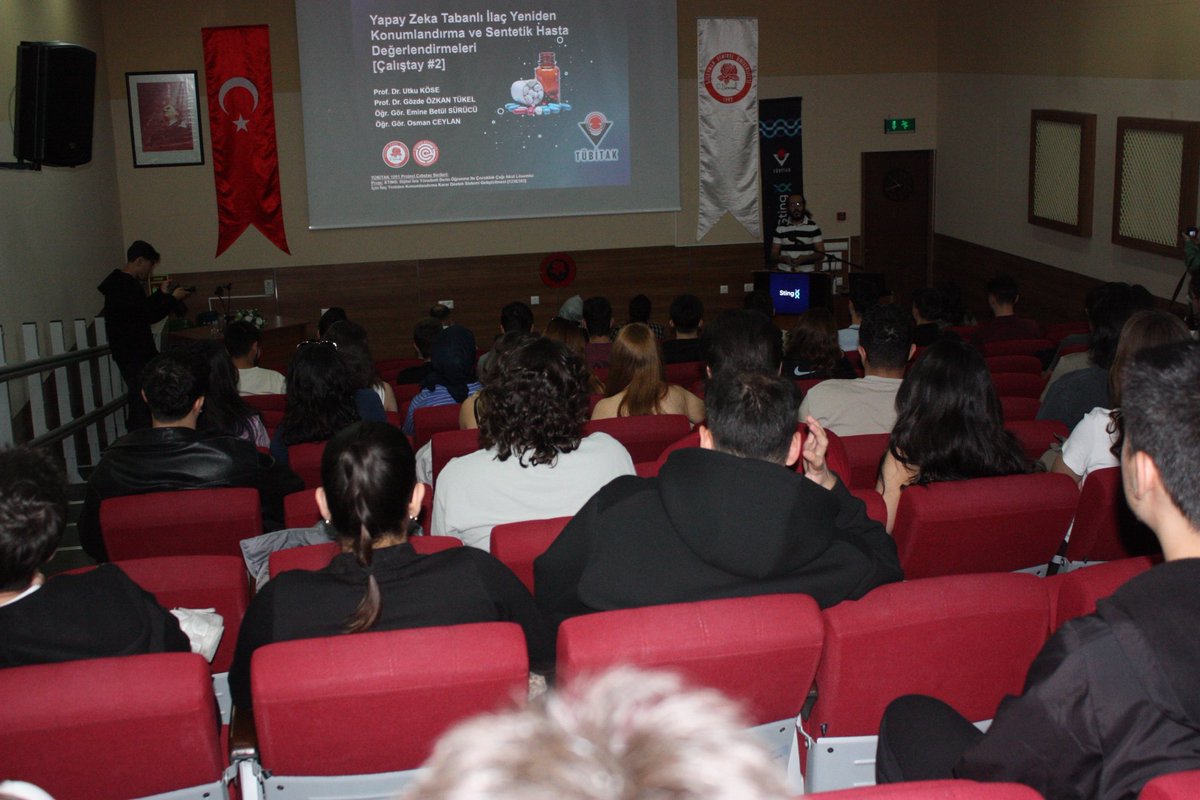
🦾💊 Digital Twins and AI in Action: STING DSS for Cancer Treatment Analysis on Synthetic Patients (Turkish below)
Today, we successfully held the 2nd Workshop & Progress Meeting of the TÜBİTAK 1001 project where I serve as the Principal Investigator (PI):
🧬 STING: Development of a Drug Repositioning Decision Support System for Childhood Acute Leukemia by Digital Twin-Oriented Deep Learning
✨ Highlights from the workshop:
🎤 Prof. Dr. Utku Köse (PI)
Presented the overall progress and delivered a live system demo, showcasing how the project achieved drug repositioning and further drug treatment modeling on synthetic digital twin patients supported with AI-driven backend.
🎤 Prof. Dr. Gözde Özkan Tükel
Explained numerical methods for differential equations and their application to PK/PD drug modeling, including Pegaspargase and 6-MP simulations.
🎤 Lect. Betül Şen Sürücü
Presented adaptive dose optimization using Genetic Algorithms and how patient-response patterns are leveraged via Graph Neural Networks (GNNs).
🎤 Lect. Osman CEYLAN
Discussed GAN-based synthetic patient generation and introduced a harmonized risk classification framework integrating multiple international risk standards.
Grateful to all team members and participants for their valuable contributions.
🚀 We continue moving forward toward establishment of this novel DSS platform.
⸻
🇹🇷 Dijital İkiz ve Yapay Zeka ile Sentetik Hastalar Üzerinde Kanser Tedavisi Analizi
Bugün, yürütücüsü olduğum TÜBİTAK 1001 projesinin 2. Bilgilendirme ve İlerleme Çalıştayını başarıyla gerçekleştirdik:
🧬 STING: Dijital İkiz Yönelimli Derin Öğrenme ile Çocukluk Çağı Akut Lösemisi İçin İlaç Yeniden Konumlandırma Karar Destek Sistemi Geliştirilmesi
✨ Çalıştaydan öne çıkanlar:
🎤 Prof. Dr. Utku Köse (Proje Yürütücüsü)
Projenin genel ilerleyişini aktardı ve canlı sistem demosu ile ilaç yeniden konumlandırmadan dijital ikiz hastalar üzerinden karar destek çıktılarının oluşumuna kadar sistem yapılanmasını açıkladı.
🎤 Prof. Dr. Gözde Özkan Tükel
Diferansiyel denklemler ve PK/PD ilaç modelleme süreçlerini (Pegaspargase, 6-MP) detaylandırdı.
🎤 Öğr. Gör. Emine Betül Sürücü
Genetik algoritmalar ile adaptif doz optimizasyonu ve bu verilerin GNN tabanlı tahmin modellerine aktarımı üzerine çalışmalarını sundu.
🎤 Öğr. Gör. Osman Ceylan
GAN tabanlı sentetik veri üretimi ve uluslararası sistemleri birleştiren risk sınıflandırma yaklaşımını paylaştı.
Katkı sağlayan tüm ekip arkadaşlarıma ve katılımcılara teşekkür ediyorum.
🚀 Yenilikçi sistemimizin nihai sürümüne doğru ilerlemeye devam ediyoruz.
@tubitaksting@sdurobotik@gamze_lab
#ArtificialIntelligence #YapayZeka #DigitalTwin #DijitalIkiz #HealthcareAI #DrugRepositioning #IlacYenidenKonumlandirma #Leukemia #Losemi #DeepLearning #DerinOgrenme #GNN #GAN #AIinHealthcare #SagliktaAI #TUBITAK
🚀 Advancing AI-Driven Healthcare with Synthetic Patients & Digital Twin Oriented DL (Turkish below 🇹🇷)
I am pleased to announce that we will be holding the 2nd Information and Progress Workshop of our TÜBİTAK 1001 project:
🧠 “STING: Development of a Drug Repositioning Decision Support System for Childhood Acute Leukemia by Digital Twin-Oriented Deep Learning”
This workshop represents an important milestone in our journey, where we focus on:
🔬 Synthetic (digital) patient modeling
🧬 AI-driven drug repositioning strategies
🧠 Digital twin-based treatment evaluation
📊 Data-driven decision support systems
Our work aims to simulate and evaluate treatment outcomes on synthetic patients, enabling more efficient, ethical, and personalized therapeutic strategies — a key step toward the future of precision medicine.
📍 Date: April 21, 2026
📍 Location: Süleyman Demirel University, Faculty of Engineering and Natural Sciences
🕥 Time: 10:30
We look forward to insightful discussions, collaborations, and sharing our progress with the academic community. 🦾
⸻
🇹🇷 Sentetik Hastalar ve Dijital İkiz Yönelimli Derin Öğrenme ile Sağlıkta Yeni Bir Dönem
Yürütücüsü olduğum TÜBİTAK 1001 projesi kapsamında,
🧠 “STING: Dijital İkiz Yönelimli Derin Öğrenme ile Çocukluk Çağı Akut Lösemisi için İlaç Yeniden Konumlandırma Karar Destek Sistemi Geliştirilmesi”
projemizin 2. Bilgilendirme ve İlerleme Çalıştayını gerçekleştireceğiz.
Bu çalıştayda özellikle:
🔬 Sentetik (dijital) hasta modelleme
🧬 Yapay zeka destekli ilaç yeniden konumlandırma
🧠 Dijital ikiz tabanlı tedavi değerlendirme
📊 Veri odaklı karar destek sistemleri
üzerine elde ettiğimiz gelişmeleri paylaşacağız.
Amacımız, sentetik hastalar üzerinde tedavi süreçlerini simüle ederek daha etkili, etik ve kişiselleştirilmiş sağlık çözümlerine katkı sağlamaktır. Bu yaklaşım, geleceğin hassas tıp (precision medicine) anlayışı için kritik bir adımdır.
📍 Tarih: 21 Nisan 2026
📍 Yer: Süleyman Demirel Üniversitesi, Mühendislik ve Doğa Bilimleri Fakültesi
🕥 Saat: 10:30
İlgili herkesi bekleriz! 🦾
@tubitaksting@sdurobotik@gamze_lab
#ArtificialIntelligence #SyntheticPatients #DigitalTwin #HealthcareAI #DrugRepositioning #PrecisionMedicine #TUBITAK #DeepLearning #AIinHealthcare #DigitalHealth #AcademicResearch #Innovation 🚀🧠💡
🚀 Introducing GEMEX (Geodesic Entropic Manifold Explainability) — a novel approach to Explainable AI (XAI) grounded in Riemannian Information Geometry! (Turkish below 🇹🇷👇)
🔍 What makes GEMEX different?
GEMEX treats AI models not just as black boxes, but as geometric structures — navigating their internal behavior through:
✨ Fisher Information Matrix (FIM)
✨ Geodesic Sensitivity Fields (GSF)
✨ PTI Holonomy (explanation dynamics over loops)
✨ Ricci Scalar curvature (RST)
✨ Feature Attribution Scores (FAS)
✨ Bias & Trust Decomposition (BTD)
📐 In simple terms:
GEMEX helps us understand how model decisions flow and evolve over a curved information space — not just static importance scores, but dynamic, geometry-aware explanations.
💡 Why does this matter?
Because next-generation AI systems — especially in healthcare, finance, and autonomous systems — require:
✔ Trust
✔ Transparency
✔ Robustness
⚙️ Check GEMEX pages:
🔗 GitHub: https://t.co/geYa7LNmfs
📦 PyPI: https://t.co/rMtbo99777
👉 Install easily with:
pip install gemex
Your feedback, contributions, and ideas are all welcome! 😎 🙌
🇹🇷 Türkçe (Turkish below):
🚀 GEMEX (Geodesic Entropic Manifold Explainability) adlı yeni Açıklanabilir Yapay Zeka (XAI) yöntemimi sunmaktan mutluluk duyuyorum!
🔍 GEMEX'in sunduğu farklılıklar neler?
GEMEX, yapay zeka modellerini sadece bir “kara kutu” olarak görmek yerine, onları geometrik bir yapı olarak ele alır ve model davranışlarını şu kavramlar üzerinden analiz eder:
✨ Fisher Information Matrix
✨ Geodesic Sensitivity Field
✨ PTI Holonomy
✨ Ricci Scalar
✨ Feature Attribution Score
✨ Bias & Trust Decomposition
📐 Basitçe söylemek gerekirse:
GEMEX, modelin kararlarını sadece “hangi özellik önemli?” sorusuyla değil, kararların manifold üzerindeki geometrik akışıyla açıklar.
💡 Bu neden önemli?
Çünkü özellikle sağlık, finans ve otonom sistemler gibi alanlarda:
✔ Güvenilir
✔ Şeffaf
✔ Sağlam AI sistemlerine ihtiyaç var
⚙️ GEMEX sayfaları:
🔗 GitHub: https://t.co/geYa7LNmfs
📦 PyPI: https://t.co/rMtbo99777
👉 Doğrudan kurulum:
pip install gemex
Geri bildirimlerinizi, katkılarınızı ve görüşlerinizi her zaman beklerim! 😎 🙌
@tubitaksting@sdurobotik@gamze_lab
#AI #ExplainableAI #XAI #MachineLearning #DeepLearning #TrustworthyAI #ResponsibleAI #DataScience #ArtificialIntelligence #Innovation #OpenSource #Python #Research #AcademicResearch 🚀📊🧠
[ENG] I am honored to be invited to teach during the Spring 2026 term at Universidad Panamericana, Mexico! 🇲🇽👏 🦾
🎓 Starting March 9, 2026, I will be delivering a course covering Explainable Artificial Intelligence (XAI) in healthcare with trust, transparency, and responsible aspects through theory and practice. 🦾
Bringing together students from engineering, health sciences, and business, this technology-enhanced course will explore how AI systems can be designed, evaluated, and deployed in ways that are trustworthy, transparent, and accountable.
Throughout the term, we will focus on:
🔹 Foundations of trustworthy AI and transparency
🔹 Python-based hands-on implementations
🔹 Explainability and model interpretability techniques
🔹 Integrating XAI into real healthcare workflows
🔹 Ethics, regulation, and governance in health AI
As AI becomes deeply embedded in healthcare systems, trust and accountability are no longer optional — they are essential. Addressing this important topic within an interdisciplinary learning environment will be crucial for the growing field of human-AI collaboration. 😎 🌍
[TR] 2026 Bahar dönemi kapsamında, Meksika’daki Universidad Panamericana’da ders vereceğim. 🇲🇽👏 🦾
9 Mart 2026 itibariyle başlayacak ders sürecinde sağlık alanı özelinde Açıklanabilir Yapay Zekâ (XAI) mekanizmalarını teoriden pratiğe; güven, şeffaflık ve sorumluluk boyutlarıyla ele alacağım.
Mühendislik, sağlık bilimleri ve işletme alanlarından öğrencileri bir araya getiren bu teknoloji destekli derste, yapay zekâ sistemlerinin güvenilir, şeffaf ve hesap verebilir biçimde nasıl tasarlanıp uygulanabileceğini irdeleyeceğiz.
Dönem boyunca odaklanacağımız başlıca konular:
🔹 Güvenilir yapay zekâ ve şeffaflık temelleri
🔹 Python tabanlı uygulamalı çalışmalar
🔹 Açıklanabilirlik ve model yorumlanabilirliği
🔹 XAI’nin gerçek sağlık iş akışlarına entegrasyonu
🔹 Etik, regülasyon ve yönetişim boyutu
Sağlıkta yapay zekâ uygulamaları yaygınlaşırken, güven ve hesap verebilirlik performans kadar kritik hale geliyor. Disiplinler arası öğrenme ortamında bu önemli konu kapsamını ele almak yükselen insan-yapay zeka işbirliği açısından önemli olacak 😎 🌍
#ExplainableAI #TrustworthyAI #HealthcareAI #ResponsibleAI #DigitalHealth #XAI #AIethics #HealthTech #ArtificialIntelligence #AçıklanabilirYZ #GüvenilirYZ #SağlıktaYZ #SorumluYZ #DijitalSağlık #YZetik #SağlıkTeknolojileri
2026-2027 dönemi için IEEE Türkiye Şubesi Başkanlığı’na adayım! 💼✨
📅 Seçim Takvimi:
🗳️ 12 Ocak – IEEE vTools üzerinden oy verme başlıyor
⏳ 18 Ocak 23:59 (TR Saati) – Oy verme sona eriyor
📊 19 Ocak – Sonuçlar incelenip tüm üyelerle paylaşılıyor 
Uzun yıllar IEEE’de görev almış gönüllülerden oluşan aday belirleme komisyonu tarafından yürütülen bu süreç, adil ve şeffaf bir seçim taahhüdünü temsil ediyor. 
Eğer seçilirsem; üyelerimizin yenilik, iş birliği, profesyonel gelişim ve etki odağında ilerlemesi için çalışacağım. 💡🤝📈
IEEE Türkiye’nin geleceğini birlikte şekillendirelim! 🌟
🔗 Resmî duyuru için: https://t.co/qUWNkXEcTG
[TR] 🎬 Minds of AI – YouTube’da Yayında!
Süleyman Demirel Üniversitesi Artificial Intelligence Application and Research Center (AIARC) tarafından düzenlenen Minds of AI webinar serimizin ilk konuşması artık YouTube’da!
🧠 Dr. Paniel Reyes Cárdenas ile
📌 Parallelism Between Psychopathy and AI
başlıklı zihin açıcı sunumumuzu kaçırdıysanız, şimdi tamamını izleyebilirsiniz! 👇
📺 YouTube Linki:
https://t.co/iSxN0jxZv7
Bu konuşma, yapay zekânın etik, psikoloji ve insan davranışıyla kesiştiği sınırları mercek altına alıyor — her disiplinden izleyici için zengin bir perspektif şekillendiriyor.
👉 Akademisyenler, öğrenciler, AI meraklıları ve eleştirel düşünce severler için güçlü bir kaynak!
🔁 Paylaşmayı unutmayın 😊
⸻
[ENG] 🎬 Minds of AI – Now on YouTube!
The first talk from the Minds of AI webinar series, organized by Süleyman Demirel University’s Artificial Intelligence Application and Research Center (AIARC), is now available on YouTube!
🧠 Featuring Dr. Paniel Reyes Cárdenas
📌 Parallelism Between Psychopathy and AI
📺 Watch the full session here:
https://t.co/iSxN0jxZv7
This talk explores deep and interdisciplinary questions at the intersection of AI, ethics, psychology, and human behavior — a must-watch for thinkers from all backgrounds.
👉 Ideal for academics, students, AI enthusiasts, and anyone curious about the future of technology and the mind.
🔁 Feel free to share! 😊
#MindsOfAI #AIARC #YapayZeka
#AIEthics #AIandSociety #AIWebinar
#YouTube #SDÜ #SuleymanDemirelUniversity
🧠🤖 Minds of AI Webinar Serisi Başlıyor!
Süleyman Demirel Üniversitesi
Artificial Intelligence Application and Research Center (AIARC) bünyesinde başlattığımız Minds of AI Webinar Series ile yapay zekânın teknik sınırlarının ötesine geçiyor, felsefi, etik ve insani boyutlarını birlikte tartışıyoruz.
🎤 İlk konuşmacımız:
Dr. Paniel Reyes Cárdenas
📌 Oblate School of Theology (ABD)
📌 University of Sheffield (İngiltere)
🧩 Konuşma Başlığı:
Parallelism Between Psychopathy and AI
📅 29 Aralık 2025
⏰ 15:00 (GMT+3)
💻 Online | Zoom
Bu webinar; yapay zekâ, etik, bilinç, karar verme ve insan davranışları arasındaki paralellikleri farklı bir perspektiften ele almak isteyen herkes için kaçırılmayacak bir buluşma olacak.
🎯 Akademisyenleri, öğrencileri ve AI meraklılarını bekliyoruz!
🔗 Katılım bilgileri görselde yer almaktadır.
___
🧠🤖 Minds of AI Webinar Series Is Launching!
We are excited to announce the launch of Minds of AI Webinar Series under the
Artificial Intelligence Application and Research Center (AIARC) at Süleyman Demirel University.
This series aims to explore artificial intelligence beyond algorithms — focusing on its ethical, philosophical, and human dimensions.
🎤 Our first speaker:
Dr. Paniel Reyes Cárdenas
📌 Oblate School of Theology, USA
📌 University of Sheffield, UK
🧩 Talk Title:
Parallelism Between Psychopathy and AI
📅 December 29, 2025
⏰ 15:00 (GMT+3)
💻 Online | Zoom
This webinar will offer a thought-provoking discussion on AI, ethics, decision-making, and human behavior through an interdisciplinary lens.
🎯 Open to academics, students, and everyone interested in AI & society.
🔗 Participation details are available on the event poster.
#MindsOfAI #AIARC #ArtificialIntelligence
#AIEthics #AIandPhilosophy
#HumanCenteredAI #AIWebinar
#SuleymanDemirelUniversity
🚀 Just before the end of 2025, I have just crossed 6k citations in Google Scholar! I am grateful for the inspiring collaborations, dedicated students, and colleagues who made this possible over the years 👏🏻🦾
Thank you to everyone who has contributed, cited, challenged, and supported this work along the way. 🙏✨
@tubitaksting@gamze_lab
#Grateful #AcademicLife #ResearchImpact #GoogleScholar
#ArtificialIntelligence #BiomedicalEngineering #Optimization
#HigherEducation #LifelongLearning #Science #Collaboration
🎤 Keynote Talk at ICTP 2025
On December 19, 2025, I had the honor of delivering a keynote speech titled
“Digital Twin Era and Healthcare Networks of the Future” within the scope of the 6th IEEE International Conference on Telecommunications and Photonics.
In this talk, I discussed how Digital Twin technologies, combined with AI-driven healthcare networks, are reshaping the future of medicine — from predictive health modeling and personalized treatment pathways to resilient, data-driven healthcare ecosystems.
The session emphasized:
🔹 The convergence of Digital Twins, AI, and networked healthcare systems
🔹 Development and service-oriented aspects for Digital Twins and networked healthcare solutions
🔹 Open problems considering present and future challenges
It was a great pleasure to share insights with an inspiring international audience and to exchange ideas on how emerging technologies will redefine healthcare in the coming decade. 🌍🤖🩺
Many thanks to the organizers and participants for the stimulating discussions and warm hospitality!
@tubitaksting
#ICTP2025 #IEEE #KeynoteSpeaker #DigitalTwin #HealthcareNetworks #AIinHealthcare #FutureOfHealthcare #SmartHealth #HealthTech #Telecommunications #Photonics #UtkuKose
Our recent papers have just been indexed in the IEEE Xplore database!
Check them out!
https://t.co/nXlAy4ISkB
https://t.co/MGgrzUEDsy
#ieee#sting#proceeding#papers#6mp
As part of the STING project, we developed an extended personalised chemotherapy response model, now published in the ESCI-indexed BRAIN – Broad Research in Artificial Intelligence and Neuroscience. 
Full text can be reached out here:https://t.co/i8fzpV0BNK
#brain#esci#wos
🚀 ÜNİDES KALKAN Two-Week Project Sessions and Ideathon Completed! 🌍⚙️
As the @sdurobotik, we successfully completed our overnight ideathon within the ÜNİDES KALKAN Project.
Student teams developed and defended technology-driven solutions for earthquake scenarios, evaluated by our jury panel.
🏆 Awards were presented to the top teams of the ideathon and the top teams overall across the two-week program.
📘 All project ideas will be published in an open-access, ISBN-registered e-book.
Proud of all our teams for turning ideas into impact! 💡👏
@gamze_lab@tubitaksting
#UNIDES #KALKAN #Ideathon
#DisasterTech #EarthquakeInnovation
#Robotics #StudentInnovation
#TechForGood #OpenAccess 📘🚀










![u_kose's tweet photo. [ENG] I am honored to be invited to teach during the Spring 2026 term at Universidad Panamericana, Mexico! 🇲🇽👏 🦾
🎓 Starting March 9, 2026, I will be delivering a course covering Explainable Artificial Intelligence (XAI) in healthcare with trust, transparency, and responsible aspects through theory and practice. 🦾
Bringing together students from engineering, health sciences, and business, this technology-enhanced course will explore how AI systems can be designed, evaluated, and deployed in ways that are trustworthy, transparent, and accountable.
Throughout the term, we will focus on:
🔹 Foundations of trustworthy AI and transparency
🔹 Python-based hands-on implementations
🔹 Explainability and model interpretability techniques
🔹 Integrating XAI into real healthcare workflows
🔹 Ethics, regulation, and governance in health AI
As AI becomes deeply embedded in healthcare systems, trust and accountability are no longer optional — they are essential. Addressing this important topic within an interdisciplinary learning environment will be crucial for the growing field of human-AI collaboration. 😎 🌍
[TR] 2026 Bahar dönemi kapsamında, Meksika’daki Universidad Panamericana’da ders vereceğim. 🇲🇽👏 🦾
9 Mart 2026 itibariyle başlayacak ders sürecinde sağlık alanı özelinde Açıklanabilir Yapay Zekâ (XAI) mekanizmalarını teoriden pratiğe; güven, şeffaflık ve sorumluluk boyutlarıyla ele alacağım.
Mühendislik, sağlık bilimleri ve işletme alanlarından öğrencileri bir araya getiren bu teknoloji destekli derste, yapay zekâ sistemlerinin güvenilir, şeffaf ve hesap verebilir biçimde nasıl tasarlanıp uygulanabileceğini irdeleyeceğiz.
Dönem boyunca odaklanacağımız başlıca konular:
🔹 Güvenilir yapay zekâ ve şeffaflık temelleri
🔹 Python tabanlı uygulamalı çalışmalar
🔹 Açıklanabilirlik ve model yorumlanabilirliği
🔹 XAI’nin gerçek sağlık iş akışlarına entegrasyonu
🔹 Etik, regülasyon ve yönetişim boyutu
Sağlıkta yapay zekâ uygulamaları yaygınlaşırken, güven ve hesap verebilirlik performans kadar kritik hale geliyor. Disiplinler arası öğrenme ortamında bu önemli konu kapsamını ele almak yükselen insan-yapay zeka işbirliği açısından önemli olacak 😎 🌍
#ExplainableAI #TrustworthyAI #HealthcareAI #ResponsibleAI #DigitalHealth #XAI #AIethics #HealthTech #ArtificialIntelligence #AçıklanabilirYZ #GüvenilirYZ #SağlıktaYZ #SorumluYZ #DijitalSağlık #YZetik #SağlıkTeknolojileri](https://pbs.twimg.com/media/HCORsRlX0AAz4nO.jpg)

![u_kose's tweet photo. [TR] 🎬 Minds of AI – YouTube’da Yayında!
Süleyman Demirel Üniversitesi Artificial Intelligence Application and Research Center (AIARC) tarafından düzenlenen Minds of AI webinar serimizin ilk konuşması artık YouTube’da!
🧠 Dr. Paniel Reyes Cárdenas ile
📌 Parallelism Between Psychopathy and AI
başlıklı zihin açıcı sunumumuzu kaçırdıysanız, şimdi tamamını izleyebilirsiniz! 👇
📺 YouTube Linki:
https://t.co/iSxN0jxZv7
Bu konuşma, yapay zekânın etik, psikoloji ve insan davranışıyla kesiştiği sınırları mercek altına alıyor — her disiplinden izleyici için zengin bir perspektif şekillendiriyor.
👉 Akademisyenler, öğrenciler, AI meraklıları ve eleştirel düşünce severler için güçlü bir kaynak!
🔁 Paylaşmayı unutmayın 😊
⸻
[ENG] 🎬 Minds of AI – Now on YouTube!
The first talk from the Minds of AI webinar series, organized by Süleyman Demirel University’s Artificial Intelligence Application and Research Center (AIARC), is now available on YouTube!
🧠 Featuring Dr. Paniel Reyes Cárdenas
📌 Parallelism Between Psychopathy and AI
📺 Watch the full session here:
https://t.co/iSxN0jxZv7
This talk explores deep and interdisciplinary questions at the intersection of AI, ethics, psychology, and human behavior — a must-watch for thinkers from all backgrounds.
👉 Ideal for academics, students, AI enthusiasts, and anyone curious about the future of technology and the mind.
🔁 Feel free to share! 😊
#MindsOfAI #AIARC #YapayZeka
#AIEthics #AIandSociety #AIWebinar
#YouTube #SDÜ #SuleymanDemirelUniversity](https://pbs.twimg.com/media/G9ct38YXAAAvIXA.jpg)


