Bridge China's cutting-edge AI to the world. We deliver first-hand insights on foundational & vertical LLMs, Robotics/Agents, and AI apps for a global developer
Free Trial! Premium Fast Deployment DeepSeek-OCR
On OmniDocBench, it outperformed GOT-OCR 2.0 with just 100 visual tokens (256 tokens per page) and outperformed MinerU 2.0 with fewer than 800 visual tokens (an average of nearly 7,000 tokens per page). In a production environment, DeepSeek-OCR can generate more than 200,000 pages of training data per day on a single A100-40G GPU, supporting large-scale document understanding and multimodal model training.
What is contextual optical compression?
Technical Architecture: Two Core Components
The DeepSeek-OCR architecture consists of two parts: DeepEncoder, a visual encoder designed for high-compression, high-resolution document processing; and DeepSeek3B-MoE, a lightweight mixture-of-experts language decoder.
DeepEncoder adopts the dual-structure design of Sam + clip, achieves high-fidelity visual understanding through local window attention combined with global attention, and significantly reduces the number of vision tokens with a double-layer 16 × convolution compression module.
At the decoding end, DeepSeek adopts the self-developed DeepSeek3B-MoE architecture, and only 6 expert modules are activated during inference, with a total number of activation parameters of about 570 million. This “on-demand activation” mechanism allows the model to have strong expression capabilities while maintaining low latency and high energy efficiency, which is ideal for scenarios such as document OCR and graphic generation.
Practical application value
In financial research reports, DeepSeek-OCR can automatically extract structured information from charts in documents, which is particularly important for the field of finance and science.
Important data expressions in the financial and scientific fields
In book and thesis scenarios, deep parsing patterns can generate rich descriptions for natural images in documents. With just one hint, the model automatically recognizes the image type and outputs the desired result.
Generate rich descriptions for natural images in books and articles
For the chemical literature, the model not only identifies the chemical structural formula, but also translates it into the smiles format, demonstrating the potential application value in stem (science, technology, engineering and mathematics) fields.
Model identifies chemical structural formulas
In addition to focusing on document parsing, DeepSeek-OCR also retains a certain degree of general visual understanding, including image description, object detection, target positioning (grounding) and other tasks. After providing the appropriate prompt, the model can describe the image content in detail, locate specific objects, and even perform OCR recognition tasks in images containing text.
Log in to UModelVerse for free
Platform address:
https://t.co/5F4gmk3mr6
Step 2: Real-name authentication
The user needs to complete real-name authentication before using the model service.
Step 3: Try it for free
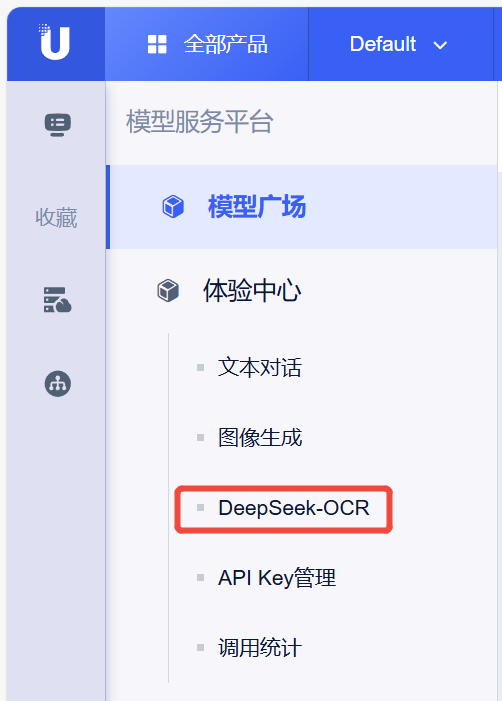
Click to experience DeepSeek-OCR for free.
Log in to Your Cloud Smart Computing Free Experience
Platform address:
https://t.co/F1HmSjC4an
Step 2: Real-name authentication
The user needs to complete real-name authentication before using the model service.
Step 3: Try it for free
Click to experience DeepSeek-OCR for free.
Hot Posts Review
Youkui must join hands with Haiguang Information to build a domestic AI computing power ecology
Excellent has signed a strategic agreement with the Global AI Center of Excellence to build a new international ecosystem of sovereign AI and cloud computing
Good news! Youjie won the Shanghai Intellectual Property Innovation Award
Going out and introducing, you have to work with alliance partners to explore the global market
https://t.co/PQtKvIx3ri
#WeChat #AI #Tech #LongForm
National Day of Domestically Made Large Model Collective! The most powerful domestic programming model was born, and the Cambrian Moorish threads were adapted at high speed.
Wisdom Things
Smart Industry New Media!Wisdom focuses on the development of cutting-edge technologies led by artificial intelligence, and the industrial upgrading of thousands of industries brought about by technological applications.Focus on smart change and service industry upgrading.
5032 pieces of original content
Official Account
Wisdom Things
Smart Industry New Media!Wisdom focuses on the development of cutting-edge technologies led by artificial intelligence, and the industrial upgrading of thousands of industries brought about by technological applications.Focus on smart change and service industry upgrading.
5032 pieces of original content
Official Account
Wisdom Things
Smart Industry New Media!Wisdom focuses on the development of cutting-edge technologies led by artificial intelligence, and the industrial upgrading of thousands of industries brought about by technological applications.Focus on smart change and service industry upgrading.
5032 pieces of original content
Official Account
Wisdom Things
Smart Industry New Media!Wisdom focuses on the development of cutting-edge technologies led by artificial intelligence, and the industrial upgrading of thousands of industries brought about by technological applications.Focus on smart change and service industry upgrading.
5032 pieces of original content
Wisdom Things
Smart Industry New Media!Wisdom focuses on the development of cutting-edge technologies led by artificial intelligence, and the industrial upgrading of thousands of industries brought about by technological applications.Focus on smart change and service industry upgrading.
5032 pieces of original content
Wisdom Things
Smart Industry New Media!Wisdom focuses on the development of cutting-edge technologies led by artificial intelligence, and the industrial upgrading of thousands of industries brought about by technological applications.Focus on smart change and service industry upgrading.
5032 pieces of original content
Wisdom Things
Smart Industry New Media!Wisdom focuses on the development of cutting-edge technologies led by artificial intelligence, and the industrial upgrading of thousands of industries brought about by technological applications.Focus on smart change and service industry upgrading.
5032 pieces of original content
Smart Industry New Media! Wisdom focuses on the development of cutting-edge technologies led by artificial intelligence, and the industrial upgrading of thousands of industries brought about by technological applications. Focus on smart change and service industry upgrading.
5032 pieces of original content
https://t.co/datkvmb73J
#WeChat #AI #Tech #LongForm
The new DeepSeek model is open source, and the new architecture is bright! Domestic AI chip collective carnival
▲Performance of DeepSeek-V3.1-Terminus (left) vs. DeepSeek-V3.2-Exp (right) on information retrieval tasks (source: Wisdom Stuff)
▲Know what blogger @ toyama nao says about DeepSeek-V3.2-Exp
▲DeepSeek-V3.2-Exp Architecture Diagram
In terms of training, DeepSeek-V3.2-Exp adopts the "continue pre-training + post-training" approach. Continued pre-training is divided into two phases: first, the indexer is briefly trained in dense mode to keep its output consistent with the standard attention; then, a sparse selection mechanism is introduced to gradually adapt the model to the new calculation method.
After completing the pre-training, DeepSeek-V3.2-Exp underwent post-training through expert distillation and mixed reinforcement learning. The idea of expert distillation is to train specialized expert models for different fields such as mathematics, programming, and reasoning, and then compress the knowledge of these models into general models.
Hybrid reinforcement learning unifies reasoning, agent ability, and human alignment training in one RL phase, avoiding the forgetting problems that traditional multi-stage methods are prone to.
The technical report shows that DeepSeek-V3.2-Exp performs basically the same on most evaluation tasks as its predecessor, with a slight decrease in test scores related to individual reasoning, but the main reason is that fewer inference tokens are generated, and the gap narrows if an intermediate checkpoint is used.
In contrast, efficiency gains are particularly pronounced. In the test environment of the H800 GPU, the overhead of long sequence inference is significantly reduced, which proves that DSA has strong practicality in real deployment.
At the same time, the stability of the training curve is similar to that of the previous model, which also shows that there is no additional risk in the convergence of this architecture.
https://t.co/wn9JpAIVVl
#WeChat #AI #Tech #LongForm
Reveal the top AI big bulls and join Ali Tongyi! It's about the next generation of big models.
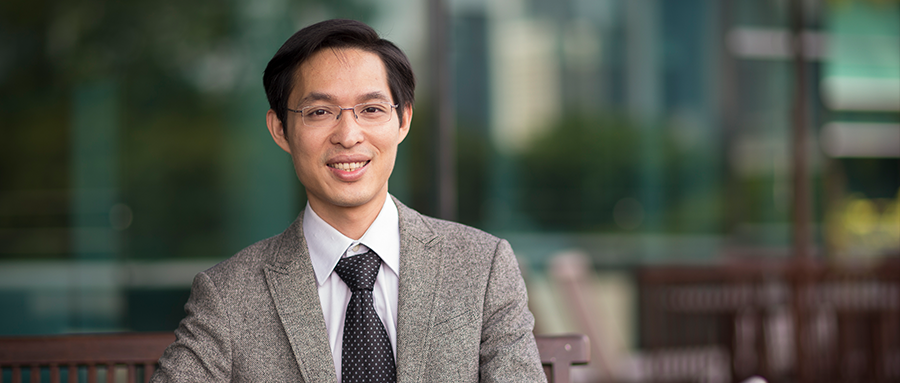
▲Xu Zhuhong
▲Xu Zhuhong explains multi-modal large model application scenarios with quark as an example
▲Xu Zhuhong is explaining the development of the unified multimodal model industry
https://t.co/Tukc5wdjo2
#WeChat #AI #Tech #LongForm
DeepSeek-V3.2-Exp released, training inference efficiency, API synchronous price reduction
Today, we are officially releasing the DeepSeek-V3.2-Exp model, an experimental version. As an intermediate step towards a new generation of architectures, V3.2-Exp introduces DeepSeek Sparse Attention (a sparse attention mechanism) on the basis of V3.1-Terminus, which exploratively optimizes and verifies the training and reasoning efficiency of long text.
At present, the official app, web terminal, and applet have all been synchronously updated to DeepSeek-V3.2-Exp. At the same time, the price of the API has been greatly reduced, and the majority of users are welcome to experience the test and give us feedback.
For the first time, DeepSeek Sparse Attention (DSA) implements a fine-grained sparse attention mechanism, which greatly improves the efficiency of long-text training and reasoning on the premise that the output effect of the model is almost unaffected.
To critically assess the impact of introducing sparse attention, we have specifically aligned the DeepSeek-V3.2-Exp training setup with V3.1-Terminus. DeepSeek-V3.2-Exp performed roughly the same as V3.1-Terminus on publicly available test sets in various domains.
The DeepSeek-V3.2-Exp model is now open source with Huggingface:
HuggingFace:
https://t.co/m12MQs2pKg
ModelScope:
https://t.co/bLMVIzQS6E
Papers have also been published simultaneously:
https://t.co/sOTpsZ0jtR
In the process of researching new models, many new GPU operators need to be designed and implemented. We use the high-level language TileLang for rapid prototyping to support deeper exploration. In the final stage, use TileLang as a baseline for accuracy and gradually use the underlying language to achieve a more efficient version. Therefore, the main operators of this open source include TileLang and CUDA. We recommend that the community use a TileLang-based version when conducting research experiments to facilitate debugging and rapid iteration.
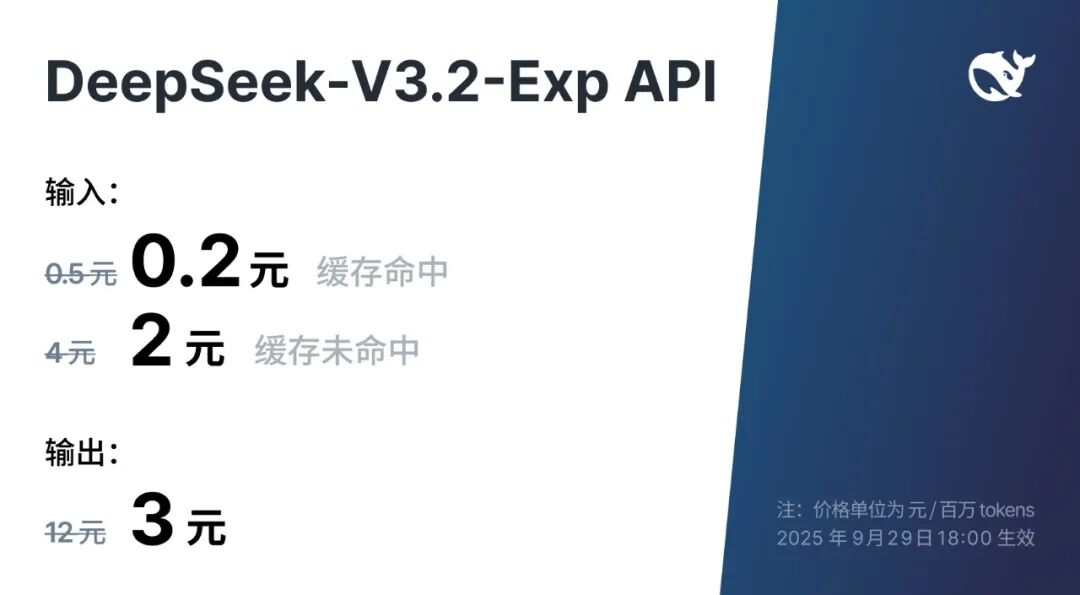
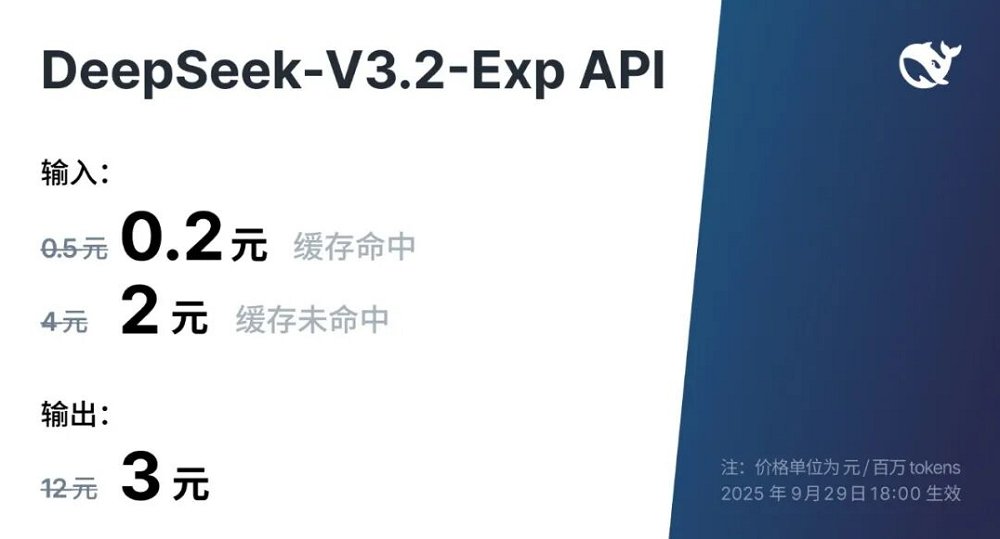
Thanks to the significant reduction in the service cost of the new model, the official API price has also been reduced accordingly, and the new price will take effect immediately.
Under the new pricing policy, the cost for developers to call the DeepSeek API will be reduced by more than 50%.
The current model version of the API is DeepSeek-V3.2-Exp, and the access method remains unchanged. Welcome to DeepSeek's official API service.
As an experimental version, DeepSeek-V3.2-Exp, although it has been validated on the public review set, still needs to be tested in a wider range and on a larger scale in the real use scenarios of users to rule out the possibility of poor performance in some scenarios. To facilitate user comparison testing, we have temporarily reserved an additional API provider for DeepSeek-V3.1-Terminus. Users can access V3.1-Terminus for the same price as V3.2-Exp by modifying base_url = "https://t.co/KtZl2pi1Kh". The interface will remain until October 15, 2025 Beijing time 23:59, please refer to the official document https://t.co/BKIceMA0RT for more detailed instructions.
We sincerely hope that the majority of users will provide us with valuable feedback in the comparison test, feedback link:
https://t.co/MqnTiLWEF1
https://t.co/Dhniv4vU4r
#WeChat #AI #Tech #LongForm
The volcano engine finally hit the MaaS explosion
Wen | Pennsylvania
From contempt to failure to catch up, what has MaaS gone through?
Of course, MaaS is only one of the tracks of the AI cloud. Based on the different statistical caliber, Alibaba Cloud and Baidu Cloud can also get another first place at IaaS, PaaS and other tracks. However, in terms of gold content, MaaS is the best barometer to prove the development of the large model industry.
Because MaaS calls are large and direct, the evaluation set of whether the model is good to use and how to change is information that can only be obtained through calls. Selling GPUs does not get this kind of data, so the volcano engine has regarded MaaS as the core goal of the AI cloud from the beginning, which is also helpful for the beanbag of the brother department:
"A large amount of use can polish a good model and greatly reduce the unit cost of model reasoning."
The popularity of AI in the application layer may not be as expected
I was saying a few months ago that based on Google's Q2 earnings report, the number of Tokens calls in Google Cloud in May was 480 trillion, rising to 980 trillion in July, which is not only a very high increase, but also equivalent to 8 times the total number of calls to China's public cloud last year in a single month.
But after aligning the comparison object, you will find that if you let the bean bag "fight", it can even be frontal with Google in terms of scale:
Volcanic Engine disclosed at a conference in June that as of May 2025, the average number of calls to Tokens in the bean bag model was 16.4 trillion per day, which is more than 50 billion per month, which is only a lot more than Google in the same period.
In other words, this industry has not yet reached the stage of sprint, but the head of the big model manufacturers have run out of the sprint speed, the growth rate is more frightening than one day, one year on the cloud, I feel faster.
You can also participate in the prediction, half a year later, when IDC announces the tokens call volume of China's large model public cloud in 2025, what magnitude will appear?
https://t.co/ZOuAvGrCC6
#WeChat #AI #Tech #LongForm
Qualcomm Group Bureau, Yushu Wang Xingxing told a bunch of big truths
Wang Xingxing's big truth was fully explained in this situation saved by Qualcomm.
All terminals have been given new imagination by AI and Agents, because they are new enough, and realizing intelligence has become the field that has been most affected. However, because it is new enough, there will inevitably be many controversies and challenges under the hustle and bustle of intelligence.
Yushu Technology, a star player who has stood in the spotlight for a long time, directly opens up many difficult problems in the industry at this moment.
Perhaps not for anything else, but this bureau saved by Qualcomm is too rare. 2025 Snapdragon Summit · China, gathering core players in the domestic and foreign terminal fields, covering the upstream and downstream industry chains. Issues discussed openly and openly here may soon become the industry's most concerned hotspot, which can be solved faster.
Not only Wang Xingxing, but also players from the hardware, model, operating system and other levels also speak freely and should talk about it:
Hou Jilei, Qualcomm's global head of AI R&D, had a conversation with them.
In order to fully reflect your thoughts and understanding, we have sorted out the contents of the conversation without changing the original intention, and we hope you can learn something from it.
The ultimate imagination of Agent landing terminal may be intelligent.
Wang Xingxing, founder, CEO and CTO of Yushu Technology, said that their goal is to have general-purpose AI on general-purpose robots to do all kinds of work, whether in factories or at home.
When a robot can complete a task in an unseen environment with natural language instructions, it is the robot's ChatGPT moment.
He breaks this goal down into phases:
1. Fixed motion demonstration → has been realized (such as dance, martial arts).
2. Real-time generation of arbitrary actions → is expected to be realized as soon as the end of this year/early next year.
3. Performing tasks in unfamiliar scenes → is expected to be able to do so around the end of next year (such as taking water and organizing tables).
4. High success rate and fine operation → will take years. The goal is to achieve a success rate of close to 99.9%, which can complete detailed tasks such as disassembling and assembling mobile phones.
If you want robots to be able to do this, a very critical issue is the real-time understanding and processing of the physical environment and natural language instructions, which has higher requirements for the communication capabilities of end-side AI.
Wang Xingxing said that communication is very important.
At present, I think that including many robot manufacturers or chip manufacturers, they have a little overlooked the importance of chips for robots.
Just like new energy vehicles, the biggest change in the last decade is that the number of cables has decreased a lot with the emergence of new communication protocols. In the early years, the number of cables in a gasoline truck was very exaggerated, perhaps 100 kilograms of cables in a car.
The same is true in the field of robotics, where a communication cable is 4 or 5 wires, sometimes it takes a lot of time and effort to reduce the number of wires. Because the performance of a robot is getting better and better, and the robot is getting more and more reliable, it is important to reduce the number of cables. By far, the most common failure of industrial robots is cable failure, which may account for 60-70%.
For a robot, the biggest problem in reducing the number of cables is to improve the overall communication protocol and improve the quality of communication.
I believe that the ultimate imagination of future robots is that there is only one cable on each arm, there is nothing else, how clean and tidy, and there is still a lot of work to be done to achieve this goal, but it is very worth doing.
In addition, on the underlying chip, Wang Xingxing mentioned the difficulty of deploying large-scale computing power at the terminal.
The space of the robot itself is so large that many times chips with high computing power cannot fit in it; at the same time, the battery capacity and heat dissipation are difficult problems for such a large robot.
He felt that the computing power deployed on the smart body in the future, the peak power consumption is best controlled within 100W, the average normal power consumption may be as long as 20-30W, which may be equivalent to the power consumption of several mobile phones.
Too big is no good. I think it is very imaginative for mobile phone chips and similar chips to be used on robots.
Currently on the eve before dawn, the eve is rather troublesome. The biggest problem is that the various technology routes in the industry are very different and have their own ideas, which will lead to a very lively field, but the overall progress is not so fast.
At this stage, we can still maintain a more open attitude. Anyway, the model we have made can not be deployed, so it is better to be open.
Some time ago, Yushu open-sourced a world model based on video generation, not only the weight parameters, including the model itself, the dataset, the training source code, and the deployment source code.
Wang Xingxing said that this model can not be used directly in the factory or in life, so it is better to open source it. This is a bit like the early years of OpenAI, because the commercial value of large models or a little far from landing, GPT-1 and GPT-2 are open source.
We also hope that more open source will allow us to work together to promote common progress in this field.
As for the problem between the VLA model and the world model, which is always discussed nowadays, it is difficult to say very clearly, because even the VLA model and the world model themselves have many varieties. Our company will keep an open mind and try various models, including our own development and cooperation with third parties.
I personally feel that in the field of AI, we should maintain a humble attitude, always have smarter and more open people to do better things, and we should maintain a humble attitude to learn.
Sometimes I also hope that I should try to forget the things of the past many years and not be limited by my logic by the past.
Our goal is to make robots truly useful in homes and factories. I think that whether it is the chip, the communication protocol, the computing power, the communication architecture, or even the entire wireless communication architecture, it may require some adjustments.
Including security issues. Now bots are selling more and more, and some hackers specialize in hacking our bots, which makes us very big.
Before the field of robotics is so mature, you can learn from many other fields, including mobile phones, new energy vehicles, etc., to carry out more standardized system construction, data collection, model training, etc.
This is a field that is really new, and we face some new challenges and problems all the time, and this is not something that can be solved by a single company. We also hope that more people will participate in solving problems. For example, there are many vulnerabilities in the Linux system itself that we generally use. We need to completely solve the underlying vulnerabilities when developing, which is still relatively time-consuming. If there is a third-party company that can solve these problems, we are also very willing to cooperate. This is a very valuable thing.
Agent is basically the application form of the large model. At present, the form of Agent is more oriented to the cloud, but with the gradual advancement of the landing trend, end-to-end cloud collaboration will be inevitable.
Li Dahai, CEO of FaceWall Intelligence, believes that end-cloud collaboration is now an industry consensus, which can provide a better user experience. Compared to the end-side, the cloud can provide nearly unlimited computing power and resources to solve complex problems; the end-side is closer to the user, and it needs to be very responsive and protect user privacy.
There is a very important advantage on the end side, which is "always online", which can continuously perceive the world, achieve contextual understanding based on device privacy, and organize and orchestrate different Agent zones in the cloud to complete complex tasks.
Specifically on the actual terminal, such as in the car cockpit, there should be a relatively strong end-side model, which can understand user needs and then communicate with the cloud side model.
Take a simple example. For example, if you perceive that the child behind you is crying through the end-side model in the cockpit, you can turn on a relatively strong language interaction model in the cloud first through the end, and say whether you want to chat together, distract yourself, and tell him a story. But this opening process must be judged by the end side, rather than letting the cloud side have a model at any time to observe what we are doing in the cockpit. This is a very large exposure to privacy.
I think the end-side model of the terminal is actually the core orchestrator of the entire Agent system in the future.
So what is the demand for end-side models in the AI industry in the future?
Li Dahai believes that it is always necessary to improve the knowledge density of end-side models.
Because the end-side model is deployed in various hardware devices, enters thousands of households, and interacts with different user scenarios, it needs to have good autonomous learning capabilities, especially self-iteration and personalized development based on exploration content. Therefore, it is very important for the end-side model to increase the knowledge density, and the facial wall intelligence puts forward the idea that...
https://t.co/i0pzFgfMp6
#WeChat #AI #Tech #LongForm
DeepSeek-R1 reached the top of Nature, 8 experts strictly examined and passed, and the big model "delivery moment" has arrived.
Xinzhiyuan Report
A glimpse of the big global models! Celebrating the 10th Anniversary of Xinzhiyuan, the 2025 ASI Frontier Trend Report was launched on page 37
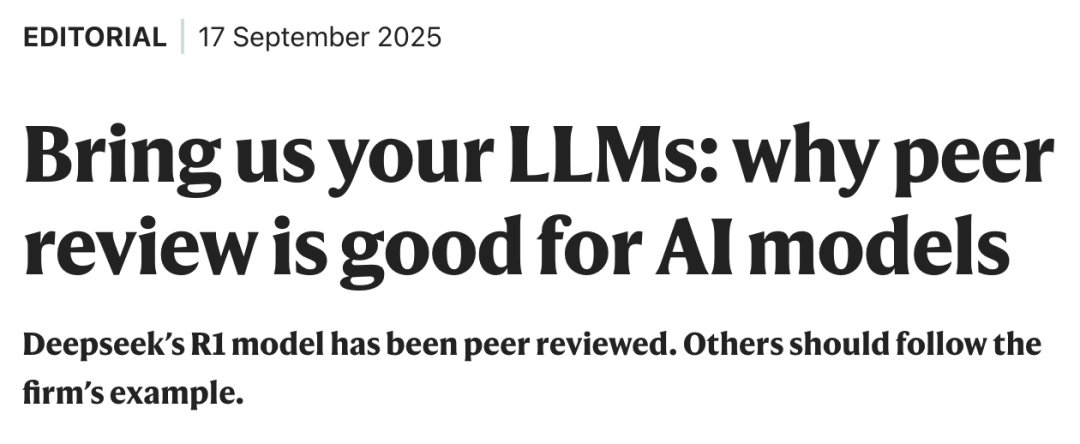
Recently, DeepSeek-R1 appeared on the cover of Nature, marking the top certification of Chinese AI technology from international sources.
Nature highly praised DeepSeek-R1, saying that it has passed peer review, breaking the international practice of mainstream big models without independent peer review.
At the same time, Nature also encourages other companies in the editorial to send large models for peer review.
Nature believes that besides DeepSeek-R1, almost none of the current mainstream large models have been independently peer-reviewed in scientific journals.
This absence is already evident in the AI industry.
“Peer review can help clarify how these models work and help determine if they really work as advertised.”
DeepSeek is changing everything, and it has officially published the details of the R1 model in Nature.
As an open weight model, users cannot get all the source code and training data of R1, but they can freely download, use, test, and even redevelop based on it.
Since its launch on Hugging Face in January of this year, R1 has been well received and loved by users on the platform. The latest data shows that R1 has been downloaded nearly 420,000 times in the last 30 days.
Today, the model has been reviewed by eight experts to assess its innovativeness, methodology, and robustness.
These reviews, along with the authors' responses, are a key step towards greater transparency and reproducibility in the AI industry.
This practice is particularly valuable in the current state of the industry, which is rife with untested hype.
The DeepSeek-R1 paper has undergone a major revision compared to the first edition published earlier this year.
Including the first disclosure of the training cost of R1, the technical details of the training, the addition of a safety evaluation of R1, and external queries about the "distillation method" in response to the initial release phase.
Peer review is a more open way to promote.
It creates a more transparent, objective and credible way to discuss and promote, while promoting industry exchanges and progress, but also make the company's innovation results more acceptable to more people.
For example, in R1's paper, DeepSeek highlights how they trained R1 to “reason.”
The research team adopted an efficient and automated reinforcement learning method: the process of “trial and error plus rewards”.
In the process, the model learns reasoning strategies such as “self-verifying ideas” and does not rely on established human methodologies.
Previously, DeepSeek published a preprint paper describing their training methods and model performance against various benchmarks.
Large model manufacturers often introduce large model training methods and model performance on various evaluation benchmarks through official technical blogs, evaluation reports, and system cards. However, the amount of information and transparency of such technical documents are often uneven.
Peer review is a good remedy for this shortcoming. It is not a unilateral output of information disclosure, but an open and interactive process.
It is an interactive process organized by an independent third party (e.g. journal editor, researcher, etc.).
In the process, the external experts of the third party can challenge the author (developer) and request additional information, thus prompting the other party to further demonstrate their opinions or additions.
This process will greatly enhance the clarity and credibility of the paper.
This also means that the achievements of AI developers can be better accepted by all walks of life.
Peer review avoids the tendency of developers to subjectively exaggerate such as "scratch the list" and "score yourself", such as specifically selecting benchmarks that are conducive to their own models for display.
What's more, some evaluations can also be “tainted by training data” - for example, by exposing the model to test questions that affect its assessment of real-world abilities. This is tantamount to cheating.
During the review process of R1, review experts also questioned whether there was a problem of "training data contamination" in R1.
In this regard, DeepSeek provided corresponding precautionary instructions, and also supplemented the additional evaluation of the benchmark test published after the release of the model.
In addition, peer review contributed to some key revisions of the DeepSeek-R1 paper. Among them, an important change is to add a description on the safety of the model.
R1's reviewers noted that the original paper lacked information about safety testing, such as not assessing the ease with which the model could be misused.
To address this issue, DeepSeek adds details, including a section dedicated to model safety assessments and comparing them to other models.
In addition, in response to peer review comments, DeepSeek also reduced personalization in descriptions and added clarification of technical details, including the type of data used in model training and its security.
External review, which adds “transparency” to the AI industry, also provides a healthier environment for the development of the industry.
This is gradually becoming the consensus of more and more AI companies.
Last month, OpenAI and Anthropic tested each other's large models and found problems that the original team had not noticed.
In July, Mistral AI also teamed up with an external consultancy to assess the environmental impact of its models, hoping to improve reporting transparency in the industry.
With the rapid development of AI and its growing impact, this positive industry transformation is undoubtedly very important.
Nature said that most of the current practices still lack the independence of peer review, and peer review is still the most reliable verification mechanism at present.
Lewis Tunstall of Hugging Face, one of the reviewers of the DeepSeek-R1 paper, believes that DeepSeek-R1 is the first large LLM to go through the peer review process, which is a very good precedent:
“Without disclosing most of the R&D process, it is difficult to assess whether these systems pose a risk.”
Huan Sun, an AI researcher at Ohio State University, said going through a rigorous peer review process helps validate the model's effectiveness and practicality, and called on other companies to do the same.
Will peer review reveal trade secrets?
The investment in large model training is extremely high, and many AI companies are worried that if trade secrets are copied by competitors, they will be at a disadvantage.
But in the case of Google's Med-PaLM model published on Nature, even a closed-source model is perfectly acceptable for peer review.
Moreover, peer review is an effective means to promote the return of the AI industry to rationality and resist hype.
Nature believes that exaggerated propaganda that cannot be verified is a real risk to society. Therefore, Nature advocates that more AI companies will have the courage to submit their models to the academic publishing process for review in the future.
Peer review is not the same as revealing company secrets, it is a necessary procedure for verifying the company's innovation results.
It makes all our claims have to be empirically baptized, rather than relying on mere subjective assumptions.
https://t.co/SqYXCWUoqF
#WeChat #AI #Tech #LongForm