Buddhadeb Bhattacharya did not resign after shooting people in Nandigram.
Mamata Banerjee did not resign after the R.G.Kar incident.
Rajiv Gandhi did not resign after the Bofors scandal.
Indira Gandhi did not resign after losing the election.
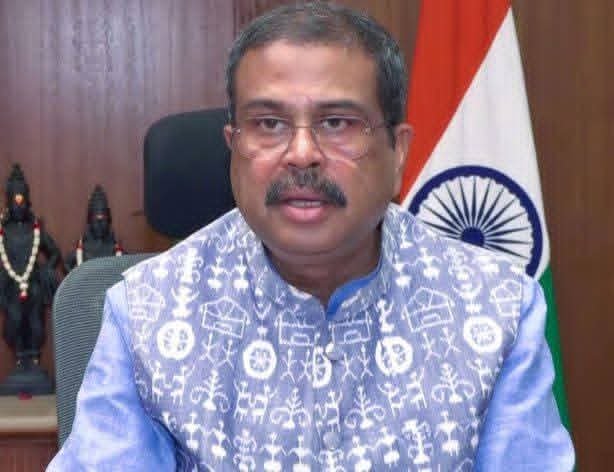
But Dharmendra Pradhan, after the question paper leak, resigned even after taking the re-examination, clearly, just to maintain the stability of the country.
Not everyone can take responsibility.
Not everyone can give up the illusion of power.
Dharmendra Pradhan Ji, salute to you.
It is only after the arrival of Tukaram Mundhe Ji that i have understood the true purpose and duties of the FDA. Prior to this, their visits were strictly for वसूली in Restaurants .
Congratulations Mundhe ji .
Congratulazioni a @narendramodi che oggi diventa il Primo Ministro eletto più longevo nella storia dell’India.
È stato un piacere ritrovarci a Roma nelle scorse settimane e lanciare assieme un Partenariato Strategico Speciale che guarda al futuro per creare nuove opportunità per le nostre Nazioni e i nostri popoli.
There is one mistake silently costing Indian retail investors ₹34,000 per year on every ₹10 lakh they invest.
No bad stock picks. No market crash.
Just one mental error repeated, every single time.
MUST READ🧵
Respected @nsitharaman ji and @FinMinIndia,
Suggestion 3 of 3 for strengthening India's capital markets:
Securities Transaction Tax (STT) should be abolished.
STT was introduced as a simplified transaction tax to facilitate easier collection of taxes from capital market transactions. However, over time, it has effectively become an additional layer of taxation alongside other market-related levies.
A simplification measure should not evolve into permanent duplication.
In addition to brokerage, investors already bear multiple statutory and regulatory charges including exchange transaction charges, GST on transaction-related charges, SEBI turnover fees, stamp duty and STT.
Unlike income tax, STT is payable irrespective of whether an investor makes a profit or a loss. The investor pays the tax simply for participating in the market.
Capital markets play a vital role in channeling household savings into productive enterprises, supporting entrepreneurship, generating employment and strengthening India's economic growth. Transaction costs and multiple layers of taxation discourage participation, particularly among long-term retail investors.
India's equity markets have matured significantly since the introduction of STT. The time has come to review its original purpose and reconsider its continued relevance.
Abolishing STT would simplify market taxation, improve capital market efficiency and encourage greater participation in India's growth story.
Respectfully submitted.
Respected @nsitharaman ji and @FinMinIndia,
Suggestion 2 of 3 for strengthening India's capital markets:
Dividend income on listed equities should not be subjected to double taxation.
A business can raise capital in only two ways: debt or equity.
When a company raises debt, the interest paid to lenders is treated as a business expense and deducted before tax. The lender may then pay tax on the interest received.
However, when a company raises equity capital, dividends are paid out of profits that have already suffered corporate tax. The shareholder is then taxed again on the same stream of income.
More importantly, equity capital bears far greater risk than debt capital. A lender has a contractual right to interest and principal repayment. A shareholder has no such guarantee. Dividends are discretionary, capital is fully at risk, and the shareholder stands last in line if a business fails.
If debt providers receive tax-deductible compensation despite bearing lower risk, there is a strong case for more favourable treatment of equity providers who supply the permanent capital that fuels entrepreneurship, innovation, employment and economic growth.
India needs to encourage long-term risk capital and greater participation in equity markets. Tax policy should reward those who provide patient equity capital to Indian enterprises rather than place them at a relative disadvantage compared to debt capital.
Respectfully submitted.