Alle deutschen Milliardäre zusammen besitzen rund 750 Mrd. €.
Selbst bei ihrer vollständigen Enteignung könnte man nicht einmal ein Jahr den deutschen Sozialstaats finanzieren.
Die Frage ist nicht, wie man Vermögen einmalig verteilt, sondern wie man es langfristig vermehrt.
Socialism is the only idea that can fail spectacularly for over a century and still attract new followers. Millions suffer the consequences, historians document the results, economies collapse, and someone always says, “That wasn’t real socialism.”
Repeating the same experiment and expecting a different outcome isn’t idealism. It’s denial.
Sozialismus funktioniert genau so: Man bestraft die Fleißigen, belohnt die Faulen – und am Ende versagt die ganze Gesellschaft.
Wer den Ertrag seiner Arbeit nicht behalten darf, hört auf, zu arbeiten. Freiheit und Privateigentum sind keine „Ungerechtigkeit“ – sie sind der Motor von Wohlstand und Fortschritt.
Rechtsradikal ist man beim „Spiegel“ im Handumdrehen, Ex-Terrorist nicht einmal nach einer Verurteilung zu 13 Jahren. Da bleibst du immer „mutmaßliche RAF-Terroristin“. Man weiß ja nie, vielleicht haben sich alle geirrt, auch die Unterstützer, die „Freiheit für Daniela“ rufen.
Javier Milei: “No tengo nada en contra de los artistas. Yo mismo tuve una banda de rock. Mi problema es que si necesitas una subvención del gobierno para hacer arte, ya no eres un artista, eres un empleado público.”
Milei es un número uno.
Umverteilung - ganz was Neues. Es gibt keine Aufstiegserzählung, keinen Aufbruch, keine neuen politischen Ideen. Wenn Politik nur noch Abstieg verwalten ist, muss man sich über die Stimmung nicht wundern.
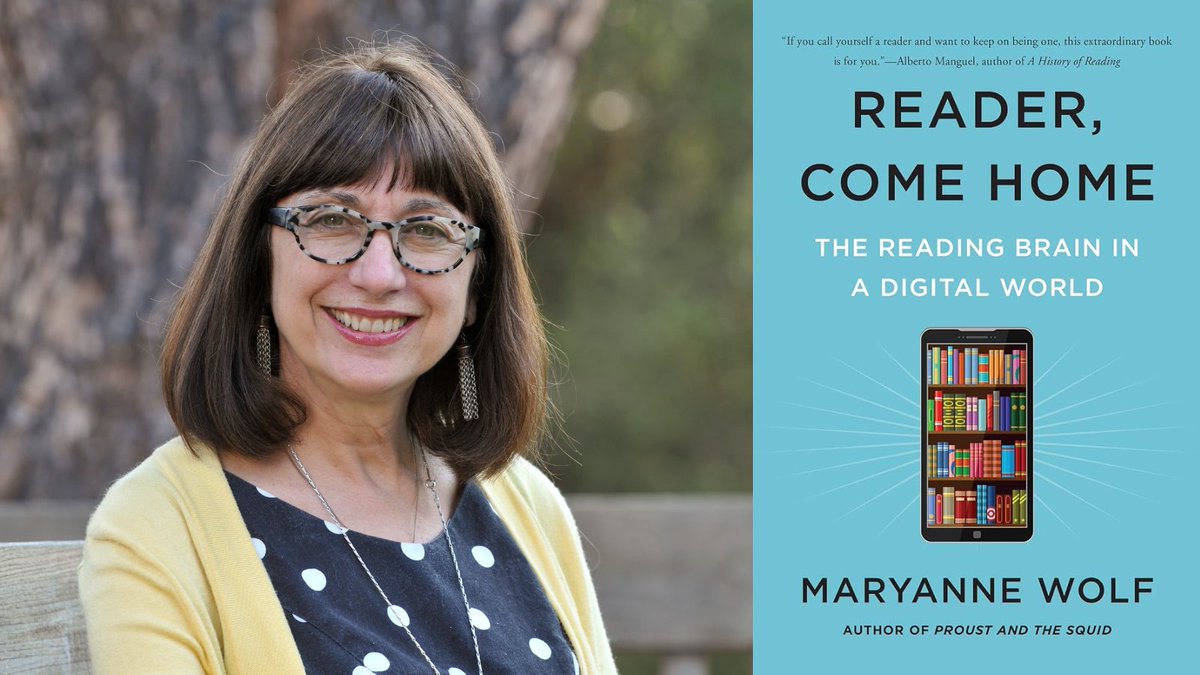
A neuroscientist who spent 20 years proving that reading on screens damages your brain sat down to read her favorite novel and discovered that the damage had already happened to her.
Her name is Maryanne Wolf.
She runs the Center for Dyslexia at UCLA and is one of the most cited reading scientists alive. The experiment she ran on herself is sitting inside a book she published in 2018.
Here is the one fact that breaks how most people think about reading.
Humans were never born to read. Yes, you read that right. There is no reading center in the brain. There is no gene for literacy. Every reader builds a custom circuit inside their own skull by repurposing brain regions that originally evolved for vision, language, and recognizing objects.
Wolf calls it the reading brain circuit. The circuit is not a given. It is built by use. And because it is built by use, it can be unbuilt by disuse.
The circuit she spent her career mapping is not the one that just turns letters into sounds. Sitting on top of that is something she calls the deep reading circuit. Both hemispheres firing. Multiple lobes coordinating.
The visual system, the language regions, the memory centers, the emotional and motor systems all firing in a choreographed sequence that takes the brain a few seconds longer to run than skimming does.
Those few extra seconds are where everything important happens. Background knowledge pulls up. Analogies form. Inferences fire. The mind takes the perspective of the character. Critical analysis runs in the background while emotion runs in the foreground. New thoughts get generated on top of the author's thoughts. The decoding is the entry ticket. The deep circuit is the show.
Skimming does not fire this circuit. There is no time.
In 2018 Wolf ran a private experiment on herself. She decided to reread Hermann Hesse's Magister Ludi, a dense novel she had loved as a young woman. She was the world's leading expert on the reading brain. She assumed her own circuit was intact.
It was not.
She opened the book and could not get through it. Her words, not mine. She wrote that she hated the book. The sentences felt like snakelike constructions that confuse meaning instead of revealing it. 6She described the experience as someone pouring thick molasses over her brain every time she picked it up. She wrote one sentence that should haunt anyone who reads it. "I now read on the surface and very quickly, in fact, I read too fast to comprehend deeper levels."
The woman who built her entire career on the deep reading circuit had quietly lost access to her own.
The mechanism is brutal in how simple it is. Eye-tracking research from Ziming Liu at San Jose State shows that when people read on screens, almost all of them fall into the same pattern. They read the first line. Then their eyes word-spot down the page in an F shape. They sample. They do not read. Whatever you stop using, your brain stops maintaining.
The data is the part most people have never seen. In 2018 Pablo Delgado ran a meta-analysis of 54 studies covering more than 170,000 participants. Same text. Half on paper. Half on screen. The screen group lost by 0.21 standard deviations. Replicated by Clinton at 0.25. Replicated by Kong at 0.21. Researchers gave it a name. They call it the screen inferiority effect.
The worst part is what happened over time. The gap has grown larger in studies done after 2010, not smaller. Digital natives do not outperform older readers. They underperform them on the same texts. More exposure makes it worse, not better.
Screen readers are also more confident they understood than paper readers. They think they got more out of the text than they actually did. The skimmer does not know they are skimming. They believe they are reading.
The stakes Wolf keeps coming back to are not academic. The deep reading circuit is the same circuit your brain uses to take another person's perspective. To weigh complex civic information. To read a contract, a ballot question, a medical disclosure and notice what is actually being said underneath what is written.
If the circuit atrophies, those capacities go with it. Not metaphorically. Structurally.
You are not getting dumber. You are not losing intelligence. You are quietly losing access to a specific circuit that takes longer to fire than your phone is willing to wait for.
The expert who spent 20 years warning the world ran the experiment on herself and barely made it back.
Most people are not running the experiment at all.
Warum koppelt man die Veränderung bei den MdB-Diäten nicht ans Wirtschaftswachstum? 2% Wachstum gibt 2% Diätenerhöhung. 0,4% (wie wohl dieses Jahr) gibt nur 0,4%. Und minus 0,5% gibt dann entsprechend eine Diätenkürzung. Dann kämen endlich die dringend nötigen Reformen.
Biarritz a taxé à 60% les résidences secondaires.
Résultat : -1 million d'euros de recettes.
La mairie parle de "fraude massive".
Non. C'est de l'économie de niveau CE2. Déroulons.
Principe premier : un être humain agit pour améliorer sa situation. Quand vous augmentez le coût d'un comportement, il y a moins de ce comportement. Ce n'est pas une opinion. C'est une tautologie.
Donc quand vous taxez à 60% le fait de déclarer une résidence en secondaire, vous obtenez mécaniquement moins de résidences déclarées comme secondaires. Le fisc vient de découvrir, en 2026, l'existence de la courbe de Laffer. Félicitations.
La mairie appelle ça "inverser sa déclaration pour échapper à la taxe". Le vocabulaire est intéressant. "Échapper" suppose que l'argent appartenait déjà à la commune. Avant même qu'elle l'ait perçu. Avant même que le contribuable ait agi. La taxe n'est pas un prélèvement, c'est une dette pré-existante que le citoyen aurait l'indécence de ne pas honorer.
Ce glissement sémantique est tout le logiciel. L'État ne prend pas votre argent. Il récupère le sien que vous déteniez à tort.
Deuxième observation : la mairie est "surprise". Elle a voté une taxe punitive en pensant que les gens allaient docilement payer. Elle n'a pas modélisé la réaction. Elle n'a pas anticipé l'élasticité. Elle a appliqué la méthode de planification soviétique : décréter un résultat et attendre qu'il se produise.
Le planificateur ne voit jamais les humains. Il voit des unités fiscales. Des chiffres dans un tableur. Quand les chiffres bougent, ce n'est pas que le modèle est faux, c'est que les unités se comportent mal.
Troisième observation, et c'est là que ça devient drôle : la mairie "dénonce une fraude" tout en "reconnaissant la difficulté à prouver l'occupation réelle".
Traduction : nous accusons les gens d'un crime que nous sommes incapables de définir, encore moins de constater. Mais ils sont coupables. Parce que les recettes n'ont pas augmenté comme prévu dans notre tableur.
C'est le moment Brejnev. Le plan n'a pas marché. Donc le peuple a saboté le plan.
Quatrième niveau. Pourquoi les gens "fraudent" ? Parce qu'ils possèdent un bien immobilier qu'ils ont acheté, légalement, avec de l'argent déjà taxé, et qu'on leur explique maintenant que le simple fait de le posséder leur coûtera 60% de plus. Ils ajustent. Ils déménagent administrativement. Ils font ce que n'importe quel agent rationnel ferait face à une ponction confiscatoire.
Le mot "fraude" suppose qu'il existe un usage légitime de leur propriété, défini par la mairie, auquel ils dérogent. Or la propriété, par définition, c'est précisément le droit d'en disposer librement. Si la mairie décide à votre place de l'usage de votre bien sous peine fiscale, vous n'êtes plus propriétaire. Vous êtes locataire de la commune.
Cinquième point. Le bilan comptable est exquis. Recettes espérées : positives. Recettes réelles : -1 million d'euros. Coût administratif des "contrôles renforcés avec le fisc" annoncés : non chiffré, mais croissant. Coût pour l'attractivité de Biarritz : non chiffré. Message envoyé aux propriétaires qui hésitaient encore à investir : limpide.
La commune a réussi l'exploit de perdre de l'argent en augmentant un impôt, de détériorer son image, et de criminaliser ses propres administrés. Triple performance.
Sixième point, le fond. Cette histoire n'est pas une anomalie. C'est le fonctionnement normal d'un système qui croit que la richesse est un stock à redistribuer plutôt qu'un flux à produire. Quand vous croyez ça, taxer plus paraît toujours rationnel. Les gens ne sont que des contenants. Vous appuyez sur le contenant, l'argent sort. Sauf que les contenants ont des jambes. Et un cerveau. Et un comptable.
Mises l'a écrit il y a un siècle : tout interventionnisme appelle un interventionnisme supplémentaire pour corriger les effets du précédent. La surtaxe n'a pas marché ? Renforçons les contrôles. Les contrôles ne marcheront pas ? Créons un registre. Le registre sera contourné ? Imposons une déclaration trimestrielle. Et ainsi de suite, jusqu'à ce qu'il ne reste plus personne à taxer parce que tout le monde est parti à Saint-Sébastien.
Dernier point. Le plus important. Cette histoire est instructive parce qu'elle est petite. Une ville, un million d'euros, une taxe locale. À cette échelle, l'absurdité est lisible. À l'échelle d'un pays, elle devient invisible. Mais c'est exactement le même mécanisme.
À chaque fois qu'on entend "il faut taxer X pour financer Y", il faut entendre : "nous allons décréter que les gens se comporteront comme dans notre modèle, et nous serons stupéfaits quand ils ne le feront pas".
Biarritz vient de produire la démonstration en miniature. Encadrez-la. Elle resservira.
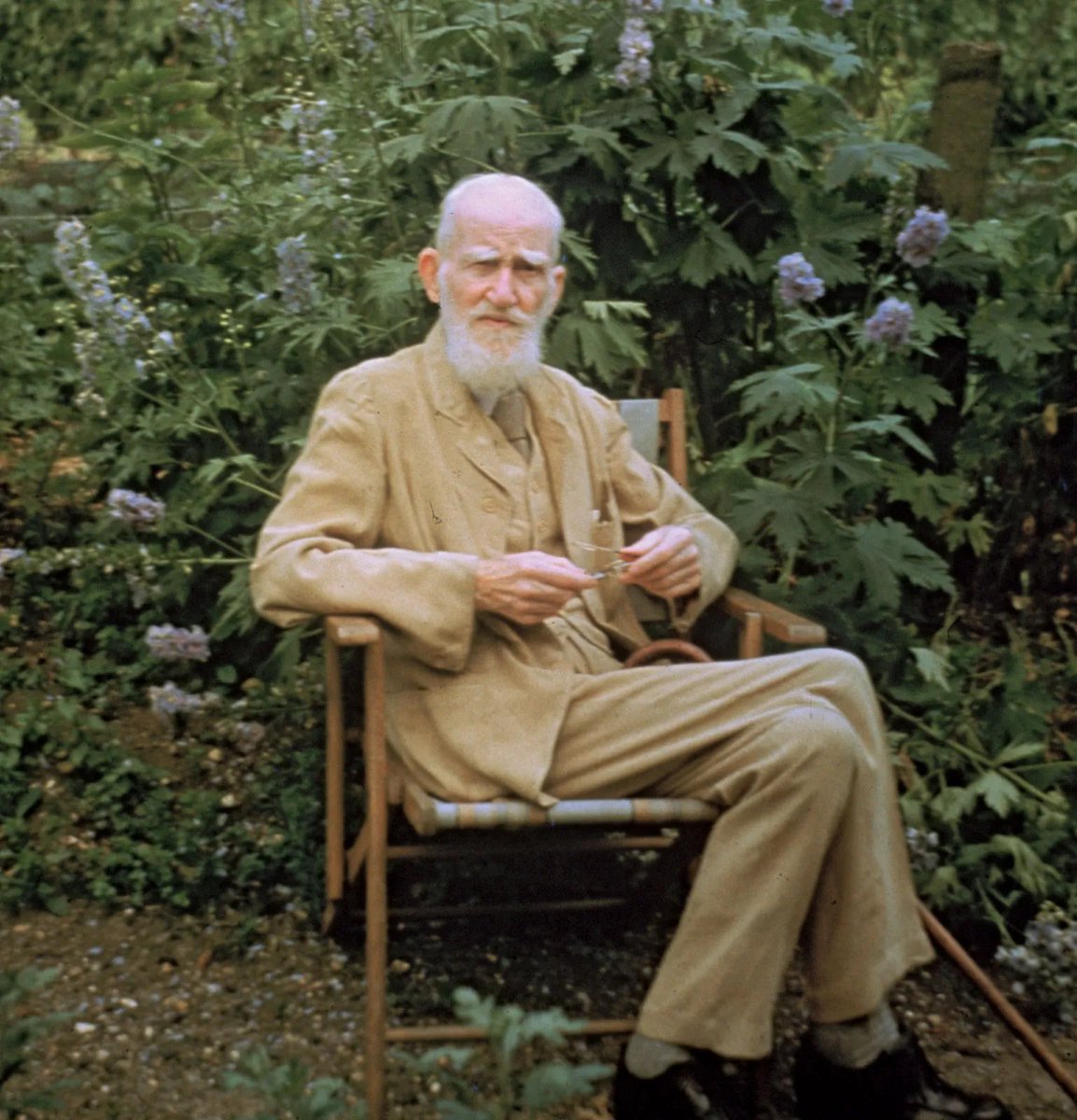
George Bernard Shaw stood in Stalin's USSR in 1931, watching millions starve to death, and declared there was no famine at all. The Nobel Prize-winning playwright didn't just stay silent about the horror unfolding around him. He actively promoted the lie that would help Stalin cover up one of history's greatest atrocities.
Shaw toured Ukraine during the height of the Holodomor, when Soviet grain requisitions had stripped peasants of every scrap of food. Conservative estimates put the death toll at 3.5 million Ukrainians. Shaw saw the empty villages, the skeletal survivors, the mass graves. Then he signed a public letter praising Stalin's "remarkable progress" and told Western journalists that reports of famine were capitalist propaganda.
Why would an intelligent man become Stalin's useful idiot? Shaw believed in central planning with religious fervor. He thought brilliant intellectuals like himself could design society better than millions of individuals making their own choices. When confronted with central planning's inevitable result (mass death), he chose to lie rather than admit his ideology killed people. Shaw preferred beautiful theory to ugly facts.
Shaw deliberately used his celebrity status to give Stalin cover while Ukrainian children died of starvation. He returned to Britain and spent years defending Soviet policies, even as refugee testimonies and photographic evidence exposed the genocide. The man who wrote about moral awakening in "Pygmalion" had abandoned his own moral compass entirely.
Free market economists warned that socialist calculation was impossible, that without prices and property rights, economies would collapse into chaos and death. Shaw dismissed these warnings as bourgeois nonsense while standing ankle-deep in their vindication.
Thank you Germany 🇩🇪and Britain 🇬🇧 for sacrificing your economies to save the planet.
China appreciates you exporting your manufacturing to provide jobs for their citizens.