The FCSI is a state-wide institute dedicated to advancing our understanding of the chemical senses and how these senses are accomplished across all ranges.
If you suddenly lose your sense of smell or taste, this could be a sign of COVID-19 infection, even without other symptoms. If you experience sudden smell or taste loss, contact your physician immediately.
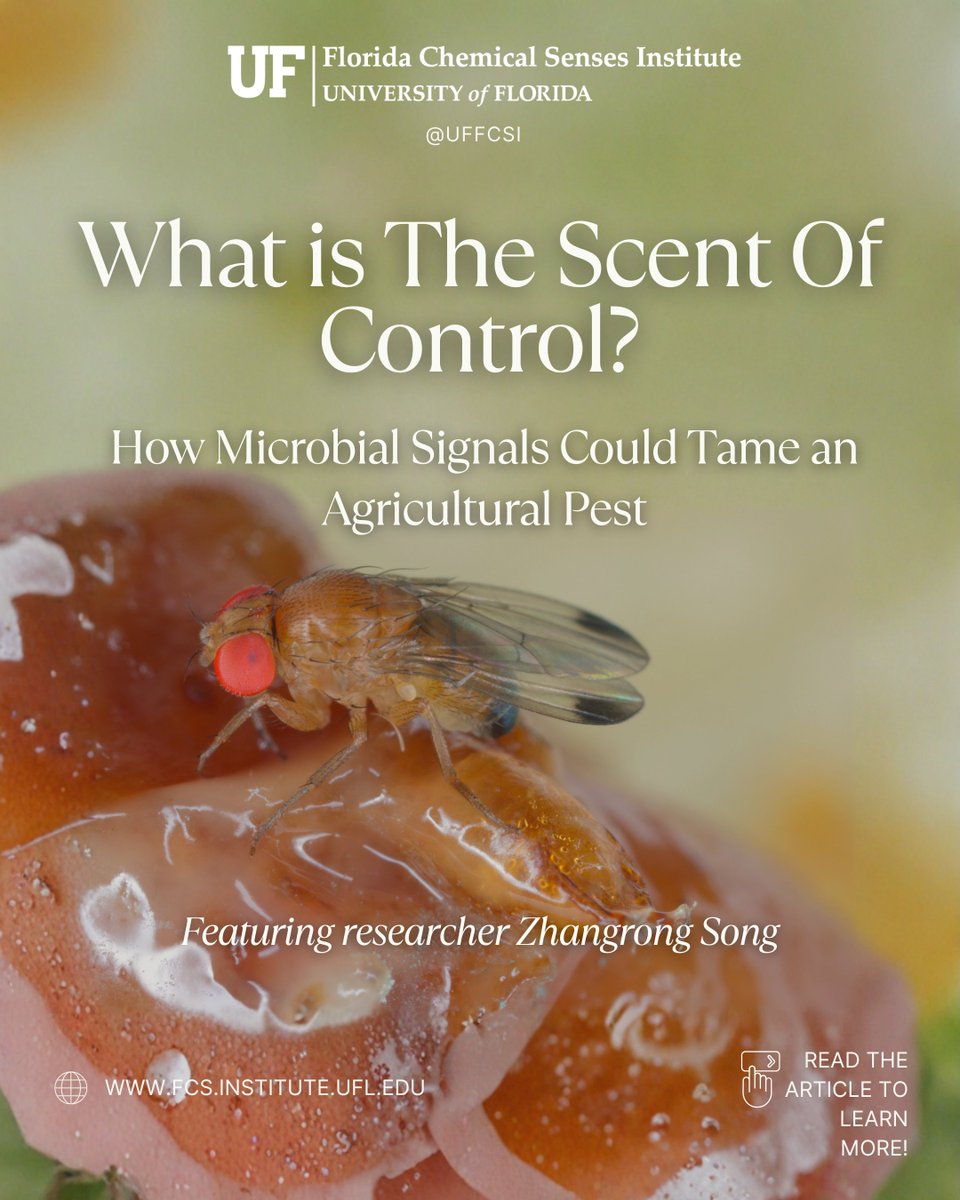
Please join us in welcoming our new member, Zhangrong Song, to the Florida Chemical Senses Institute! Based in FCSI member Dr. Adam Wong's lab in the department of Entomology, Song studies the invasive drosophila suzukii and the impacts these pests have on agriculture. Welcome!
The German roach has evolved a behavioral resistance known as "glucose aversion." For decades, humans used sugar-sweetened poison baits to control these pests. In response, roaches evolved a simple but effective defense: glucose now tastes bitter to them. https://t.co/96XpOCa0m7
Please join us in welcoming Dr. Matthew DeGennaro to the FCSI! We are excited to have him on board and look forward to the innovative work we will accomplish together.
A warm welcome to the team, Dr. DeGennaro!
Researcher Zhangrong Song is decoding the "invisible language" of microbes to create eco-friendly ways to trap and repel the invasive spotted-wing drosophila (Drosophila suzukii) without heavy pesticides.
Full story: https://t.co/nXV6h5Myrm
#Entomology#Agriculture#PestControl
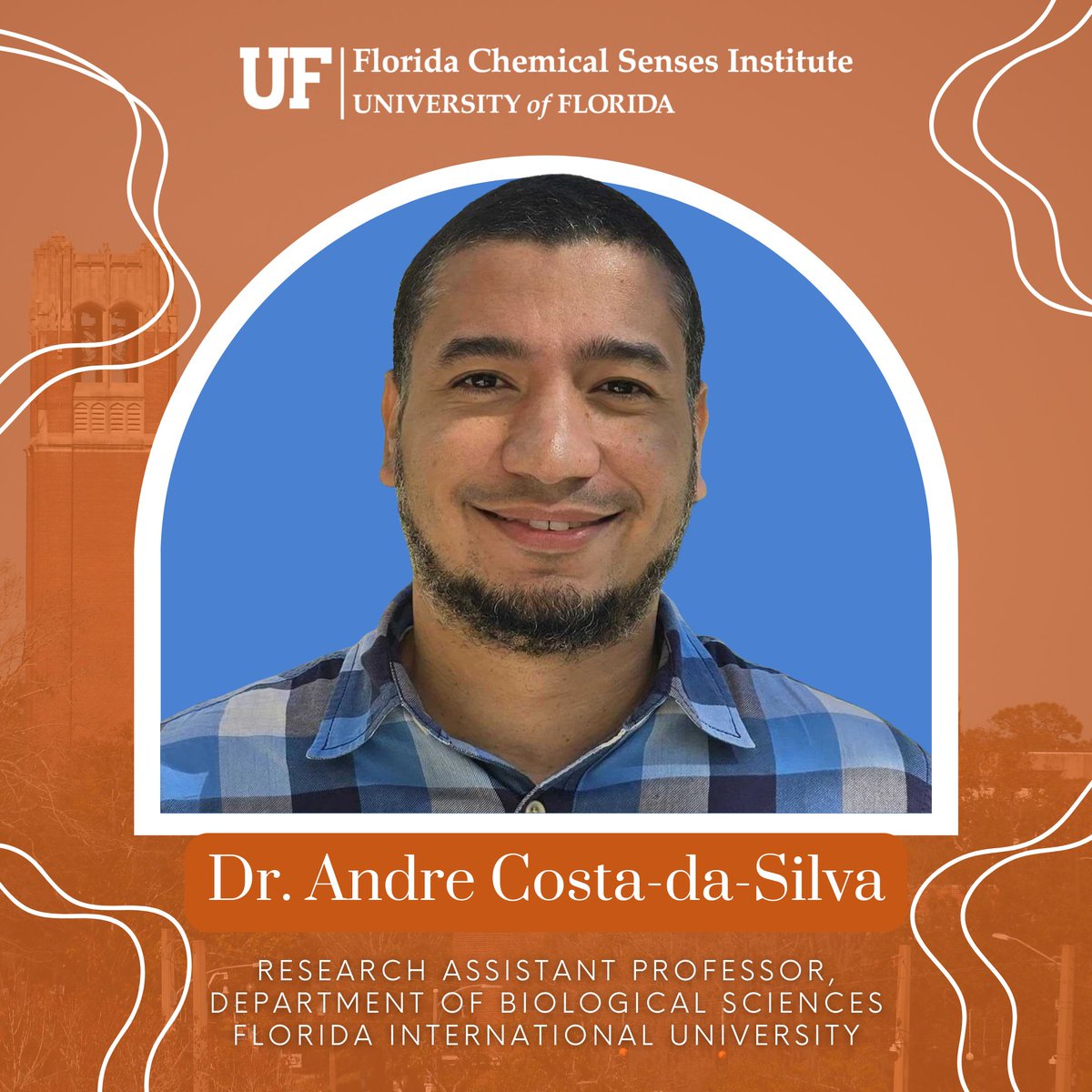
Welcome to our newest member of the FCSI! Dr. Costa-da-Silva joins us from @FIU, where he serves as a Research Assistant Professor in the Department of Biological Sciences. We are excited to collaborate & look forward to the expertise he brings. Welcome Dr. Costa-da-Silva!
March is Brain Injury Awareness Month! 🧠
An often-overlooked consequence of Traumatic Brain Injury (TBI) is the loss or alteration of smell & taste.
Because the olfactory nerves are delicate & located near the front of the brain, they are particularly vulnerable during impact.
Flavor is a multisensory illusion. When you taste wine, your brain combines signals from all of your senses: the sight of its color, its aroma, the feel of the liquid in your mouth, and the basic tastes on your tongue.
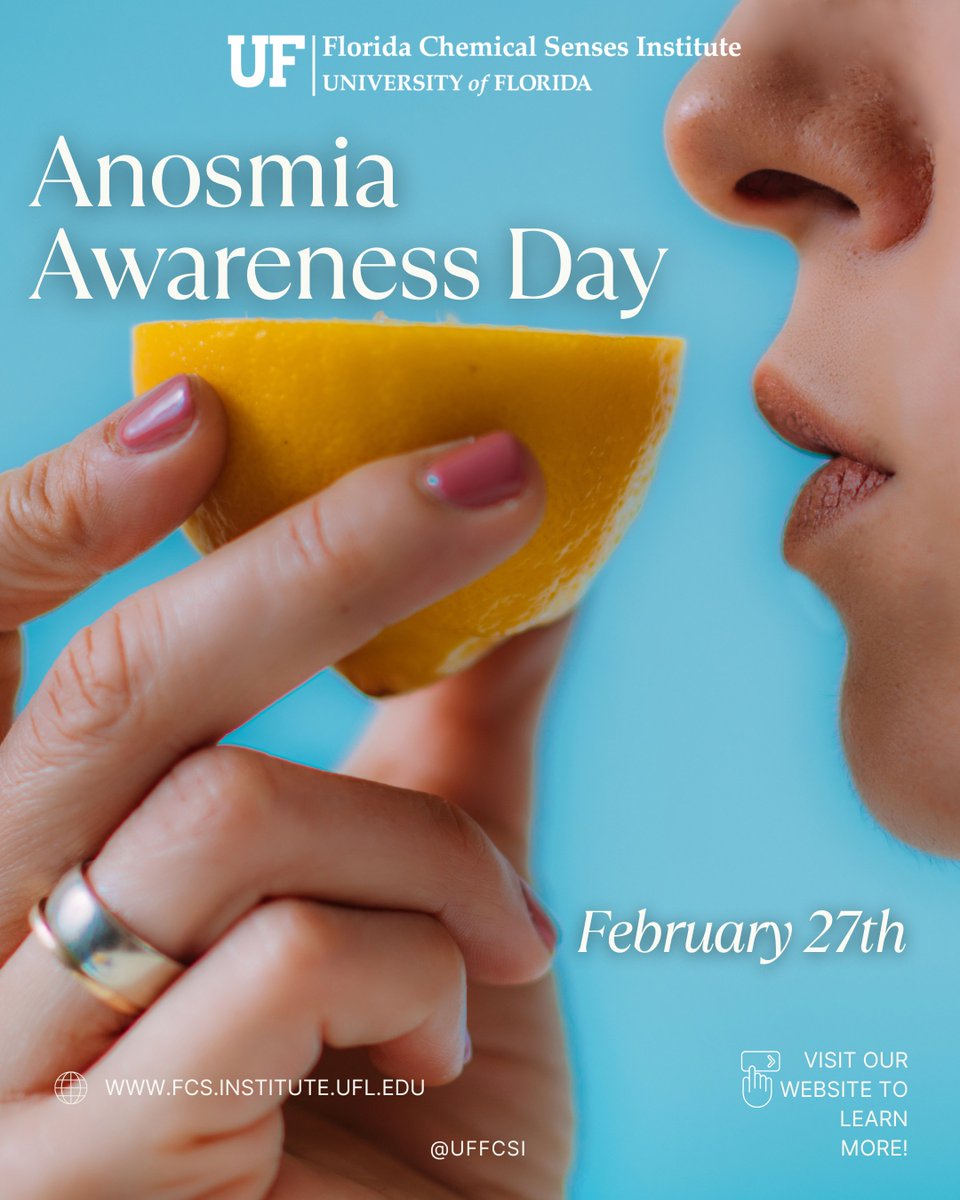
Imagine not being able to smell a gas leak, spoiled food, or even your morning coffee. Today, February 27, is #AnosmiaAwarenessDay, dedicated to the loss of smell. Anosmia significantly impacts safety, nutrition, & emotional well-being, often leading to feelings of isolation.
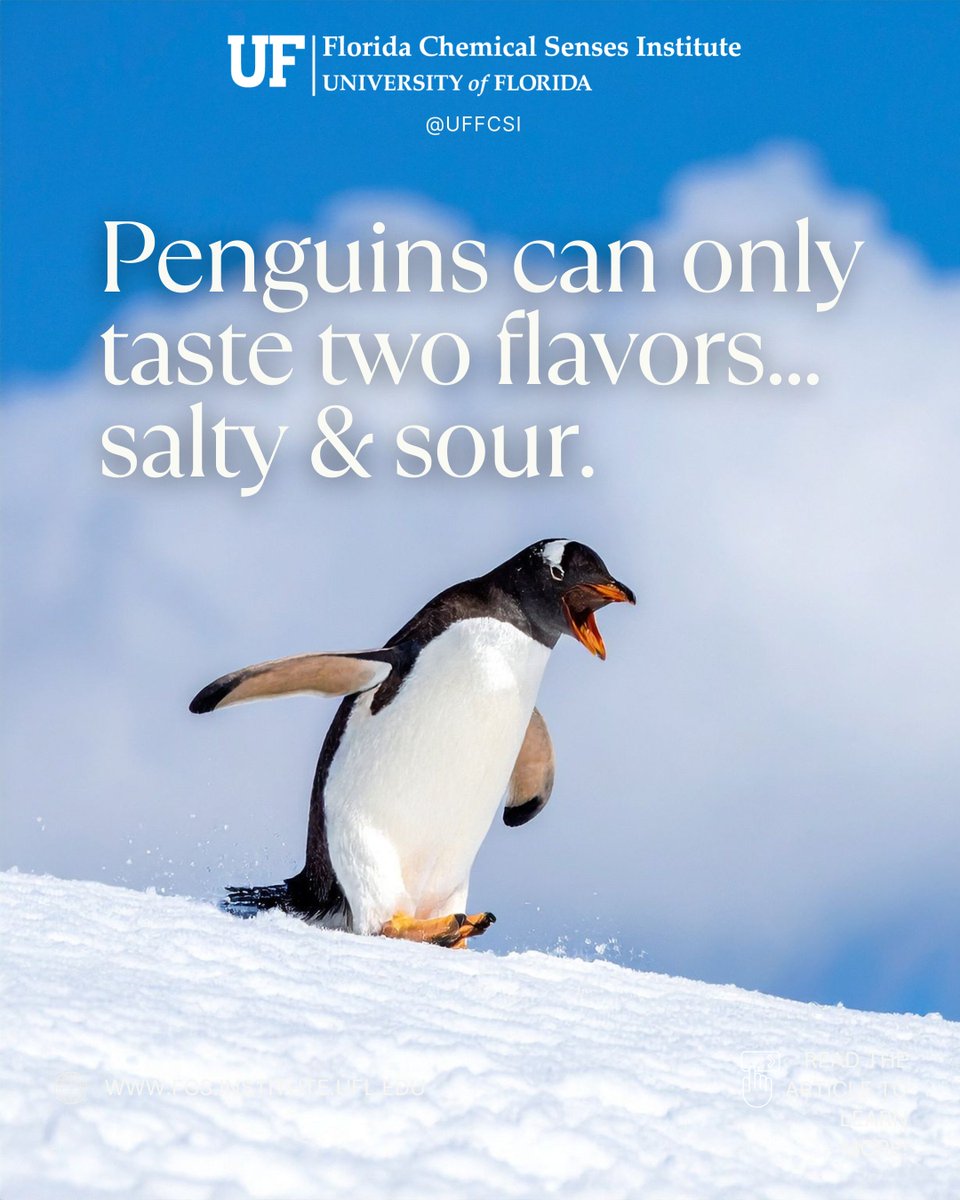
While humans enjoy 5 types of taste, a study found that penguins may have lost the ability to detect sweet, bitter, & savory flavors millions of years ago as penguins evolved in the frigid Antarctic. 🐧
https://t.co/ytxGUOPlzM
https://t.co/1OHo4mqF7Y
#Taste#Penguin#Research
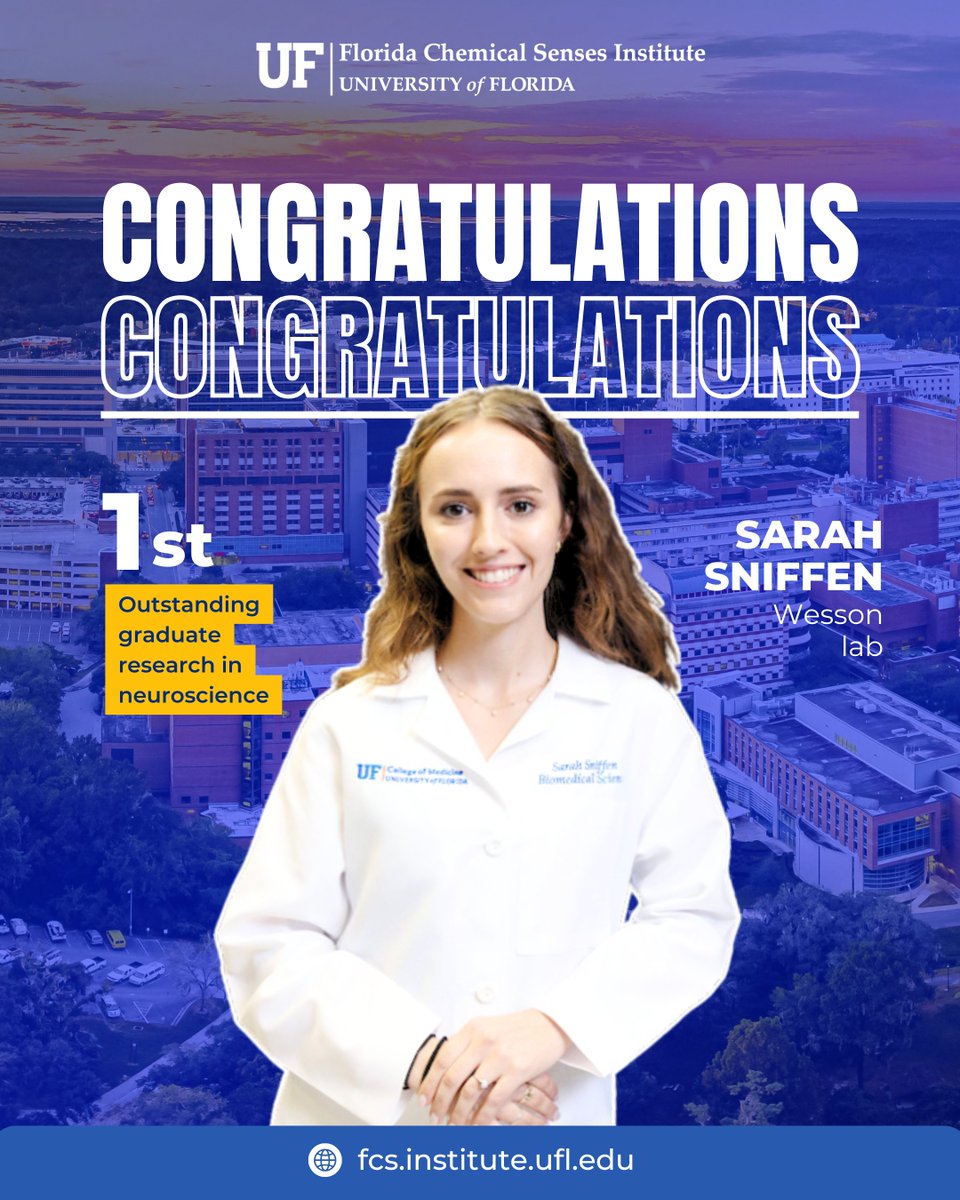
A major congratulations to FCSI member Sarah Sniffen, who has won the 1st place prize in the 2026 Luttge Awards for her outstanding graduate research project, "Neural circuit mechanisms directing emotional responses to odors." Great job, Sarah!
#Neuroscience#Research#UF#Award
The gene OR6A2, can make some sensitive to compounds in cilantro called aldehydes, causing them to perceive a soapy flavor. However, this genetic predisposition isn't necessarily permanent. With positive exposures & experiences, your brain can learn to overcome this aversion.
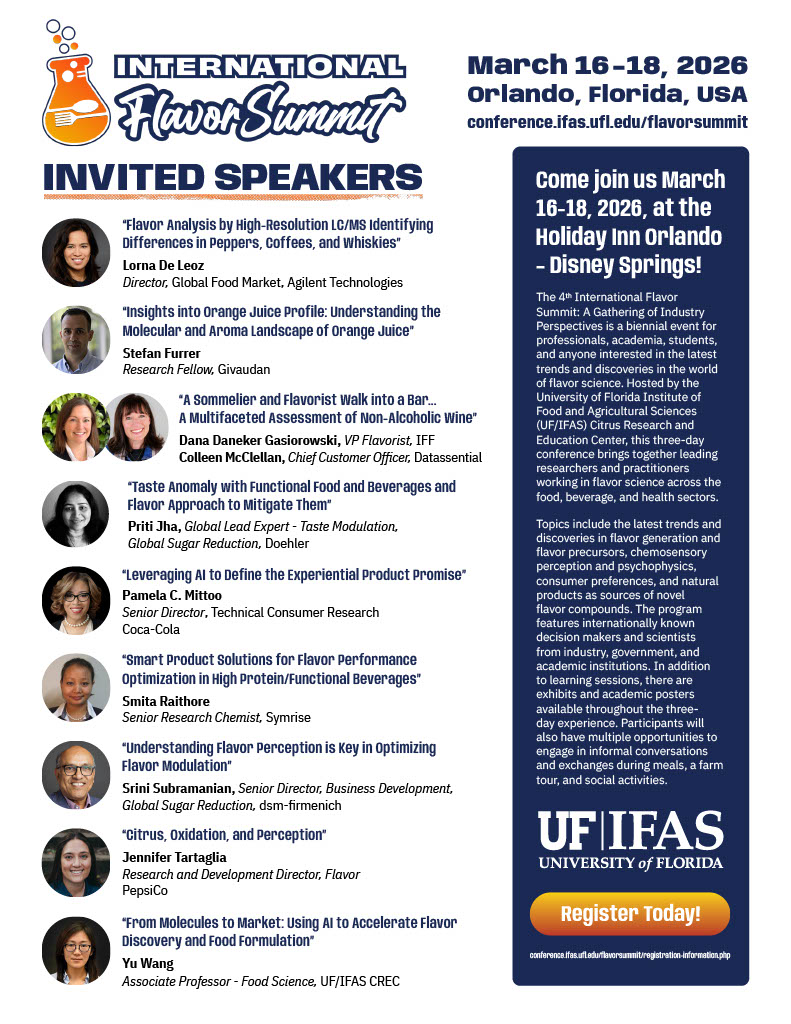
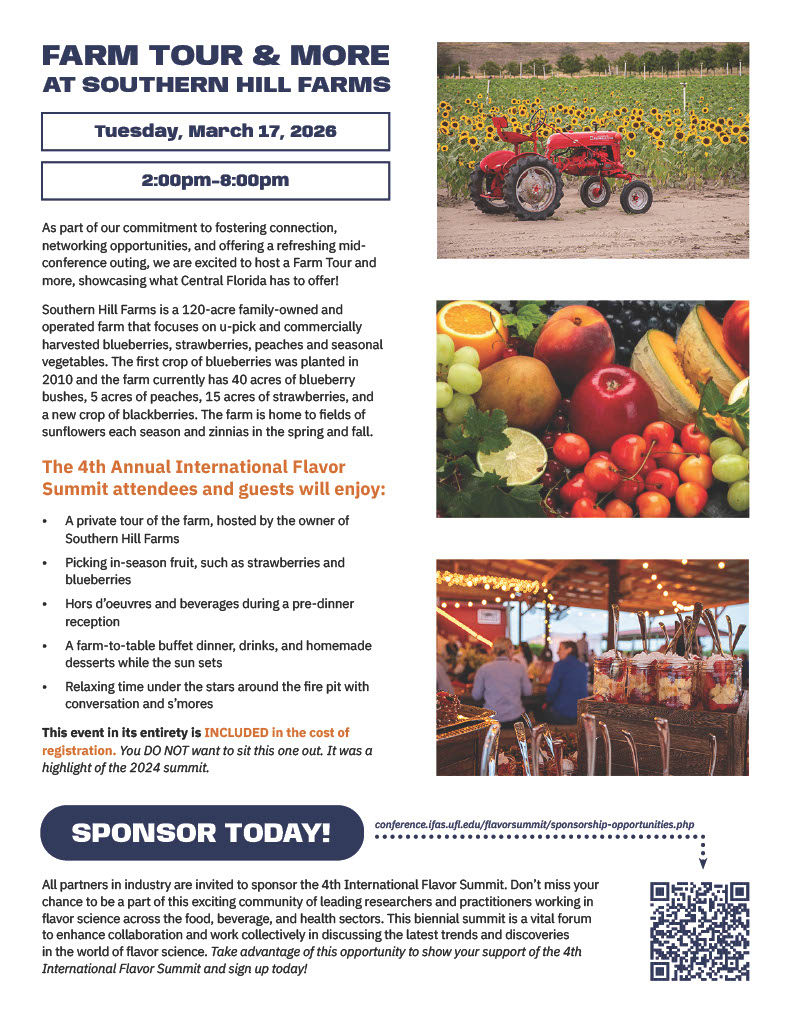
The 4th International Flavor Summit: A Gathering of Industry Perspectives, hosted by @UF_IFAS Citrus Research and Education Center, welcomes all professionals, academia, students, and anyone interested in the latest trends and discoveries in the world of flavor science.
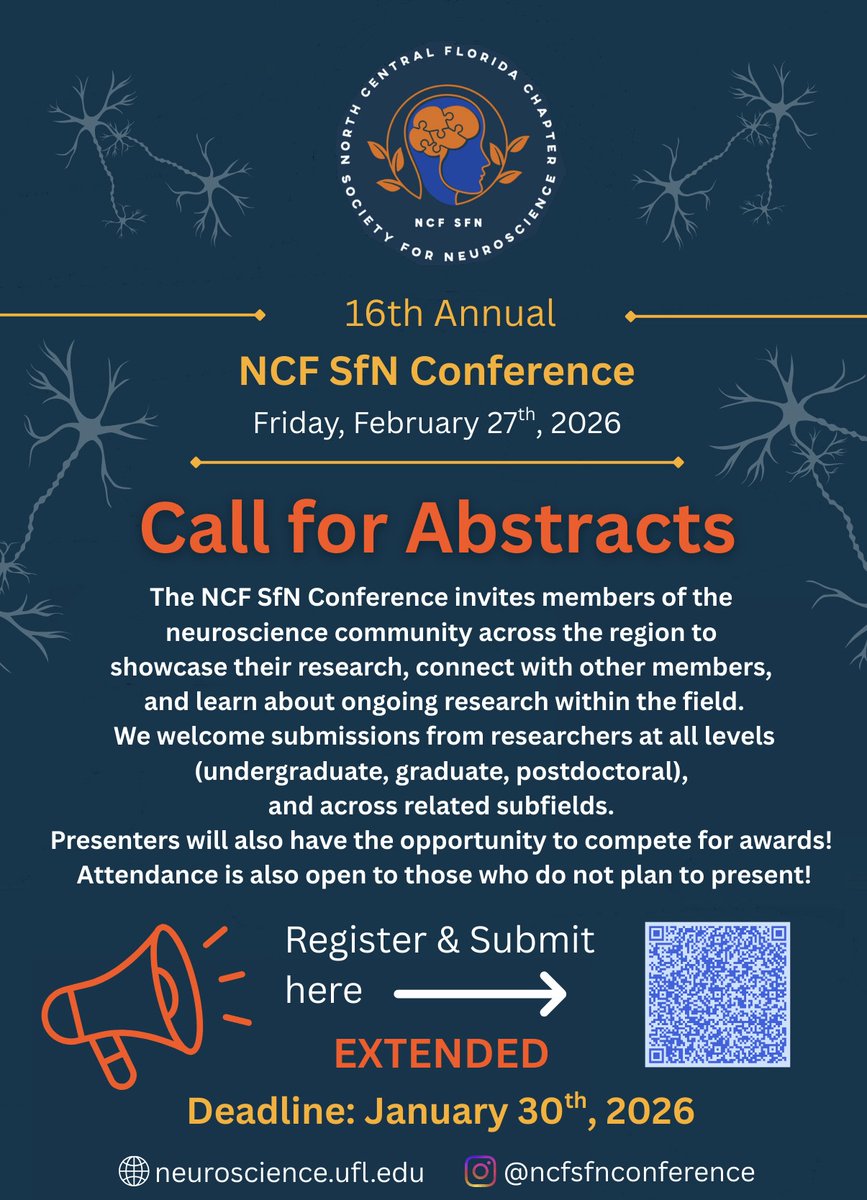
📢 DEADLINE EXTENDED!
Calling all neuroscientists! The abstract submission deadline for the 16th Annual NCF SfN Conference has been extended to TODAY, January 30th, 2026.
Don't miss out and submit your abstract today!
#Neuroscience#Conference#Science#Research#Networking
The 4th International Flavor Summit is coming our way in Orlando, FL!🍊
If you’re interested in flavor, analytics, consumer insights, & experiencing Florida’s specialty crops with an incredible group of professionals, we’d love to see you this March. https://t.co/WXLGidWd61
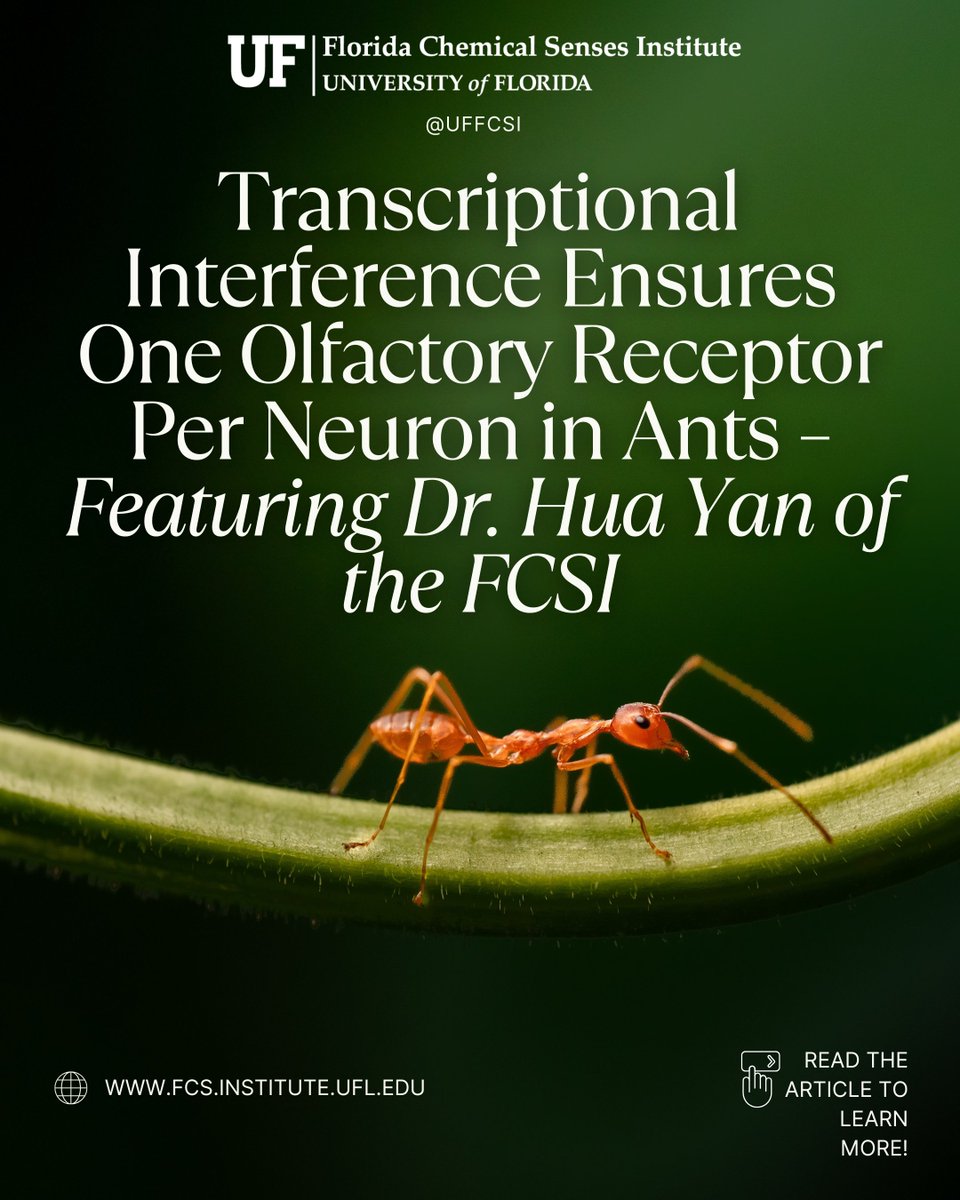
A new study published in Nature unveils how ants maintain a precise sense of smell despite having a large number of olfactory receptor genes. Dr. Hua Yan played a key role in this discovery. Read more on our site!
#UFFCSI#Neuroscience#Ants#Genetics#Chemosensation#Research
While many of us learned about the "tongue map" in school, the idea that different parts of the tongue are reserved for specific tastes is a long-standing myth.👅 To read more about the science of smell & taste, check out our website: https://t.co/7946YskEEF
#UFFCSI#Taste
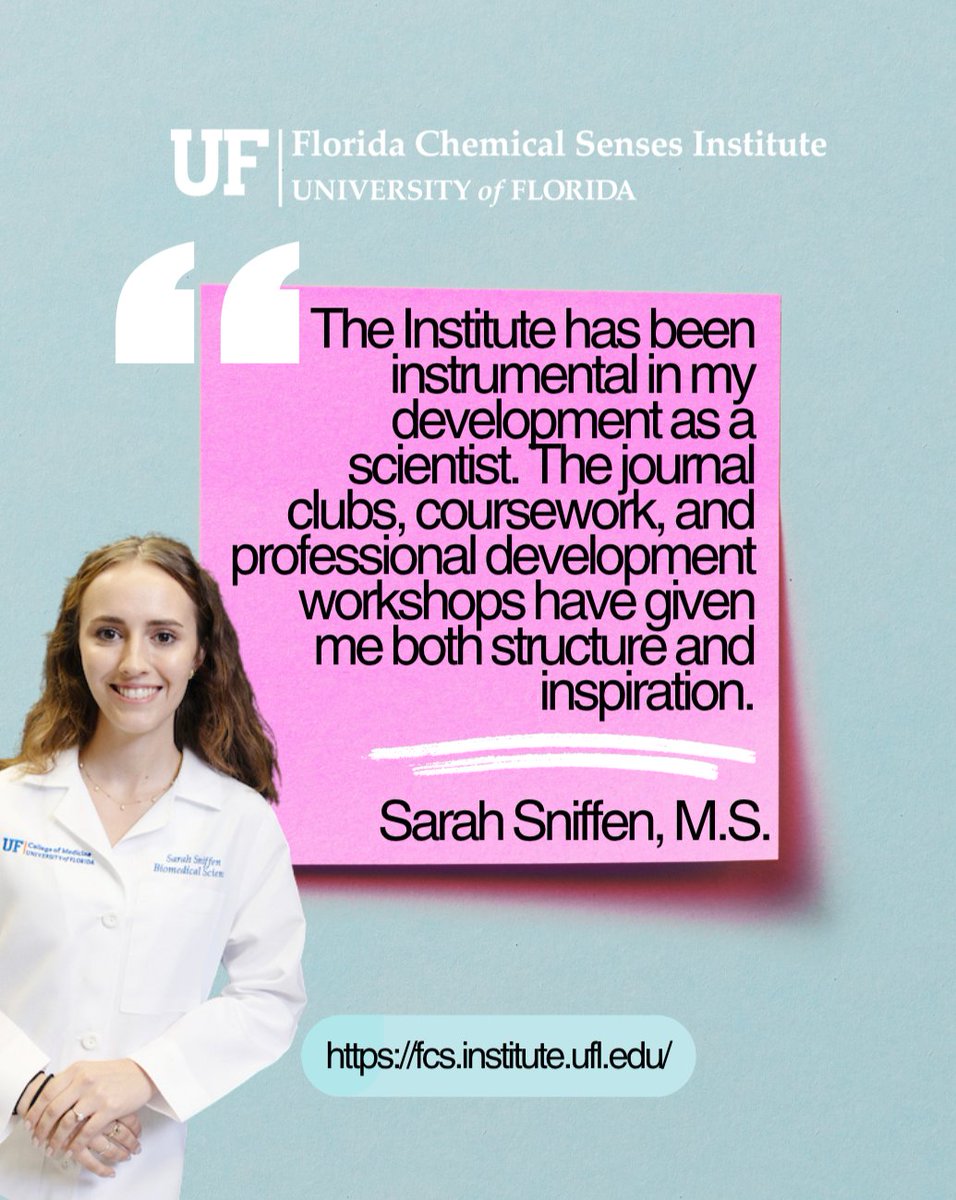
Ready to take your scientific career to the next level? The FCSI is pivotal in the professional development of our members, offering the structure and inspiration needed to excel. Join a community dedicated to your growth. Visit our website and apply today. #UFFCSI 👃👅🐊
A 'pretty epic failure' in a clinical trial can lead to a potential breakthrough for millions suffering from smell loss. 💡
Read the full article to learn how this setback paved the way for groundbreaking new research: https://t.co/qoCubFcqeo
#UFFCSI#SmellLoss#Anosmia#VitaminD
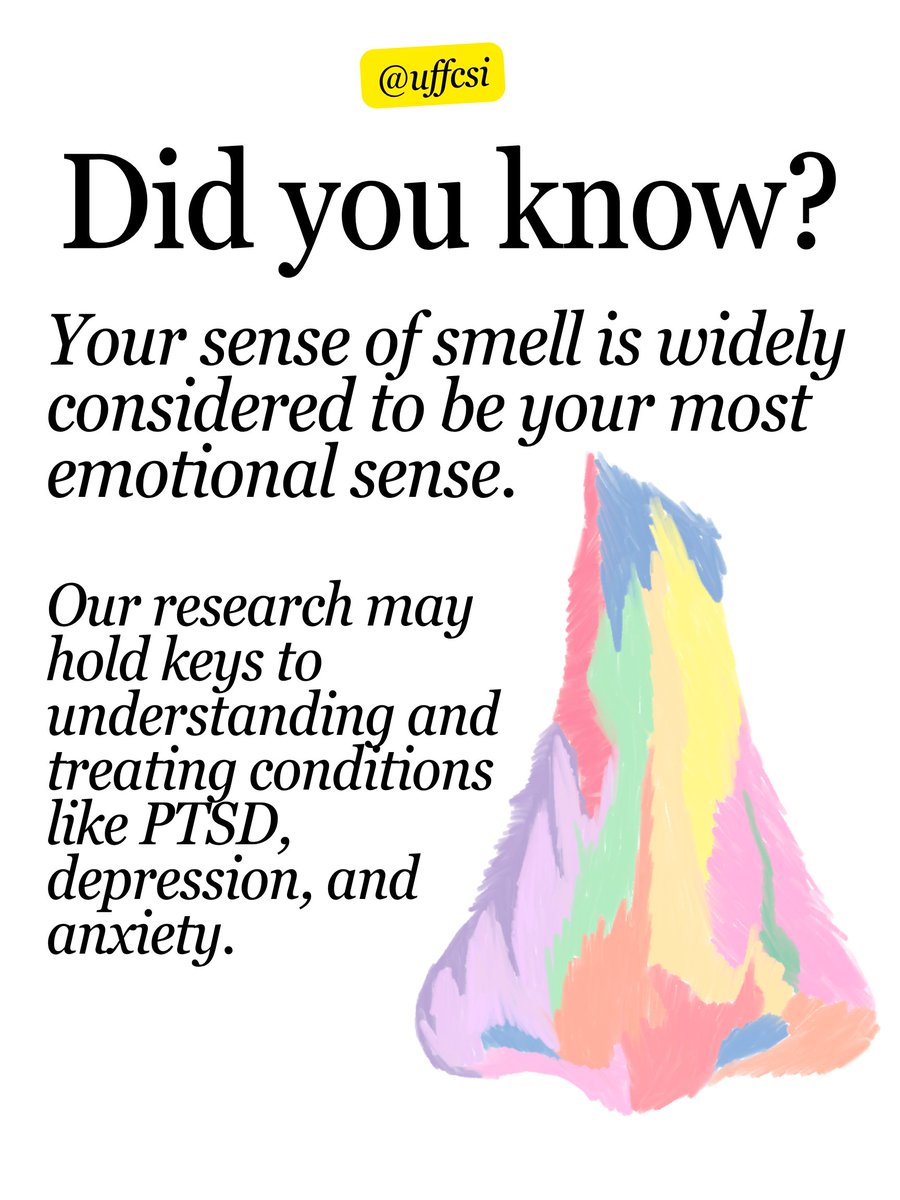
Why is our sense of smell so powerfully tied to our emotions and memories?
Read more about UF's doctoral candidate Sarah Sniffen's fascinating research into the brain's emotional response to odors & her journey as a rising star in neuroscience: https://t.co/9j4QHFl3bw
#UFFCSI