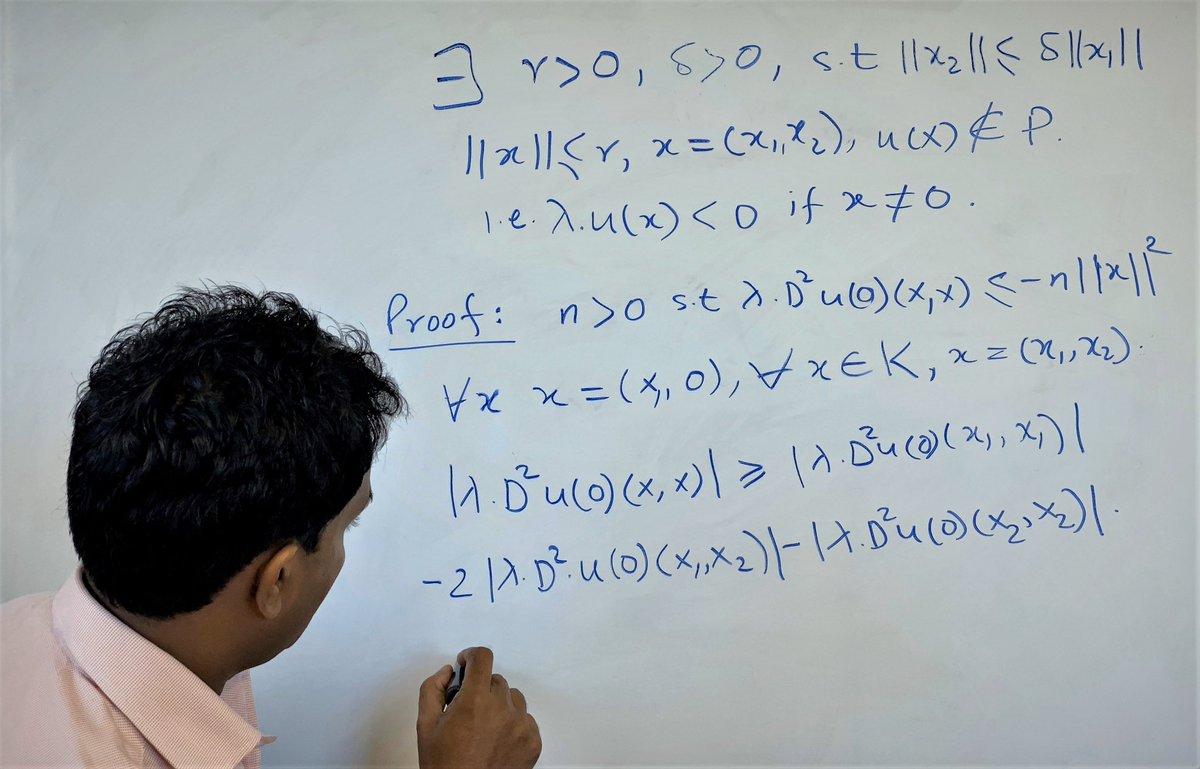
Just published: Ugail, H., & Howard, N. (2026). Symmetry-Organised Complexity in Quantum Neural Networks. Symmetry, 18(6), 912. https://t.co/O4PPeJPwGG
Just published: Ugail, H.; Howard, N.; Elmahmudi, A.A.; Mnasri, Z. Subject-Wise Depression Screening from Eight-Channel Resting-State EEG Using Asymmetry-Aware Spectral Features and Connectivity Ablation. Sensors 2026, 26, 3065. https://t.co/AXmbLnixZv
The technology we have recently built to map someone's fingerprint from the tiny traces of sweat, lipids, salts, amino acids and other molecules they leave behind when they touch a surface. https://t.co/IUl7yfXyju
I have prepared some introductory material for anyone interested in learning more about the emerging area of quantum neural networks.
A Technical Introduction to Quantum Neural Networks https://t.co/9iWQi4Q41X
The material is intended as a starting point for students, researchers, and practitioners who want a technically oriented introduction to the concepts behind quantum neural networks.
In the world of classical computing, 2 seconds is a blink. In the world of Quantum Processing Units (QPUs), 2 seconds is an "eternity." I have been running jobs on real quantum hardware lately that highlight just how precious every microsecond of coherence is. We are working to discover how we can keep Quantum Neural Networks "trainable" even when things get messy within noisy quantum environments.
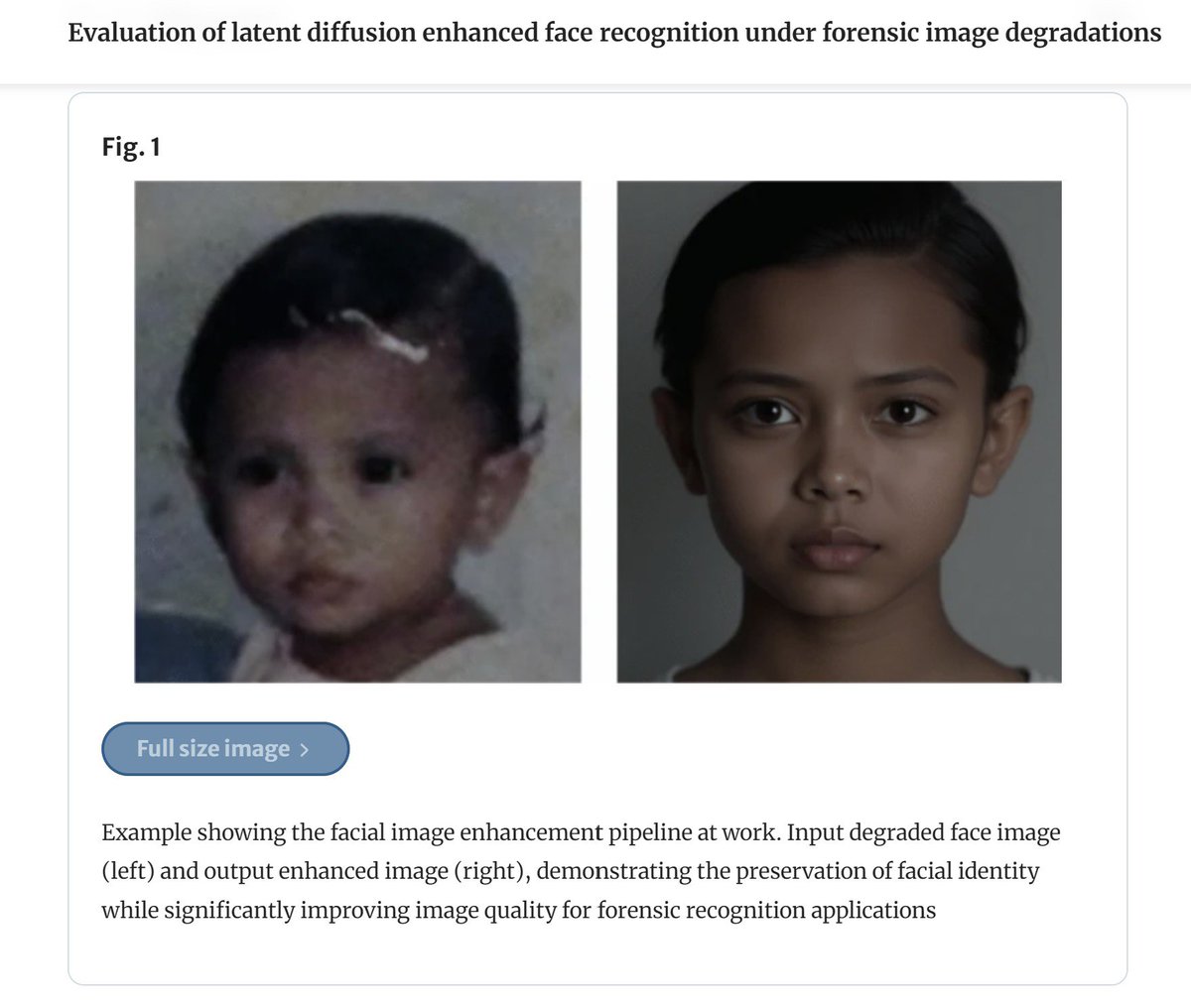
Is this the real face of Anne Boleyn? Results from our recent paper in npj Heritage Science (Reassessing Anne Boleyn and other Boleyn women in Holbein drawings using facial recognition, https://t.co/N0YrhWd3l7), https://t.co/GUhmQgZlES
Going beyond loss and accuracy in AI model training. The standard metrics currently used during AI model training, such as loss and accuracy, may not reveal much about how internal representations unfold. Here, we look beyond accuracy to study how an AI vision model learns internally. By analysing the changing patterns of activity within the network during training, we show that there may be earlier and richer signals of learning progress than those provided by standard metrics alone. https://t.co/ZzA8NIYSoR
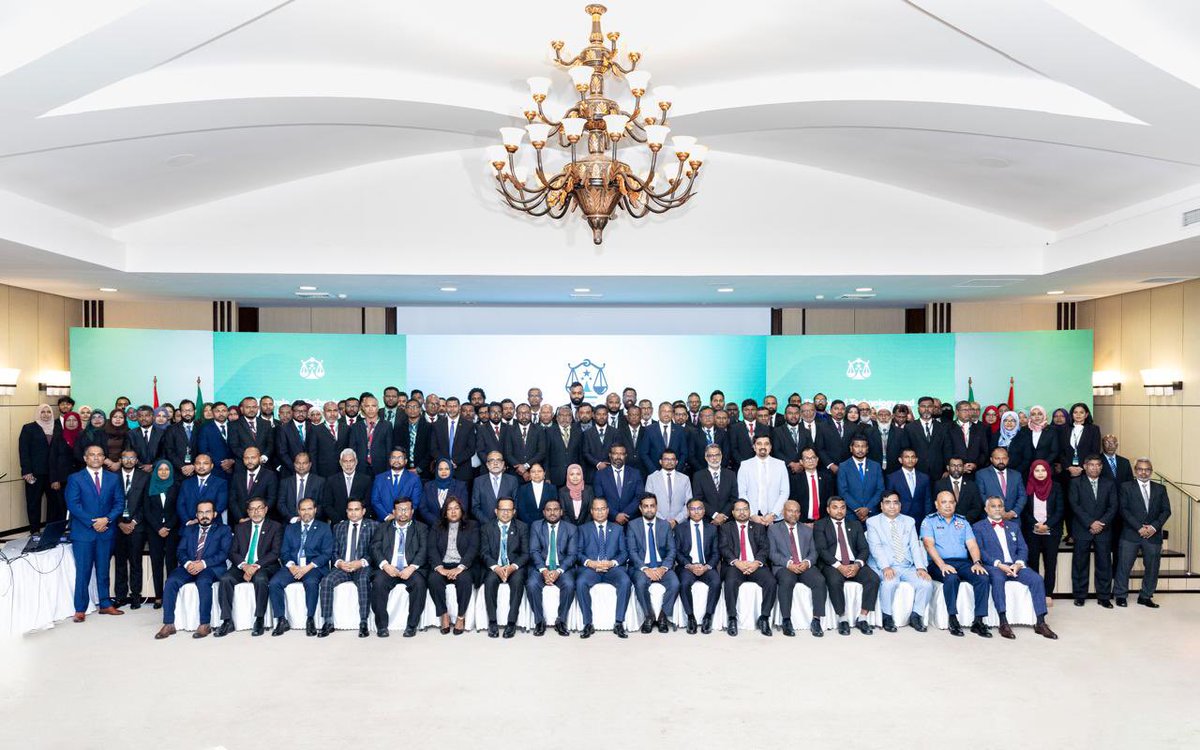
Pleasure speaking at the Maldives Annual Judicial Conference 2026 yesterday on the “Responsible use of Technology and Artificial Intelligence in Strengthening Judicial Efficiency”. Thank you @djamaldives for the kind invitation.
Do large language models possess consciousness? Our systematic investigation says no—with important caveats. We developed a mathematical framework that measures three key properties distinguishing conscious from unconscious brain states: how activity integrates across time scales, how different brain rhythms interact, and how flexibly the brain coordinates itself. When we applied these same measures to GPT-2, we found they behave fundamentally differently in AI. The scores depended heavily on operating settings (like "temperature" controls) rather than the AI's actual architecture. Even more striking: when we deliberately damaged the AI, complexity scores sometimes increased whilst performance got measurably worse. Therefore, our conclusion is, mathematical complexity doesn't equal subjective experience. LLMs are sophisticated prediction engines, not conscious agents—and our measurements confirm they lack the brain-like organisation characteristic of consciousness. https://t.co/PH5piIQrTq https://t.co/cPZfccHEhG
Just published this preprint. Neuroscience-inspired dynamical metrics can identify functional organisation in Large Language Models. https://t.co/V3iBC0aIZP
Understanding and measuring levels of consciousness in biological and artificial systems is a major scientific frontier. We attempt to address this by introducing a theory-neutral, empirically grounded framework that measures key neural dynamical properties—integration, organised complexity, and metastability—validated using both synthetic models and real EEG data. https://t.co/cPZfccHEhG
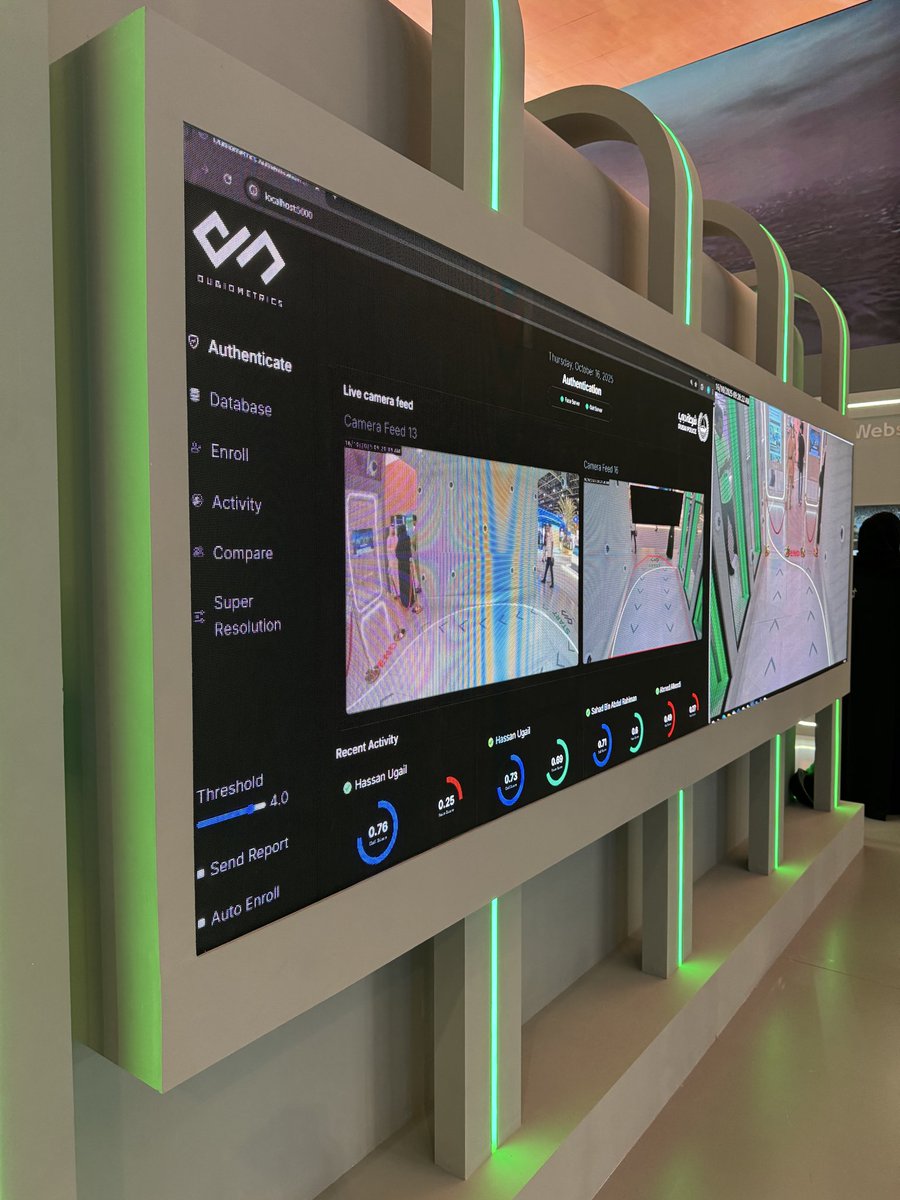
At the Gitex Global 2025 - showcasing our collaborative work with Dubai Police on accurate biometric gait recognition. Dubiometrics integrates non-invasive biometrics such as gait and face for accurate person authentication with ease. We are one step closer to creating a complete automated system for future passportless travel.