As a result, 12% of the papers in the review pool were desk rejected. Pulling this off in a timely manner was not easy, and was only possible thanks to our wonderful and dedicated reviewers and ACs!
Interested in a paid PhD position in the Netherlands? Join me, Annemarie van Dooren, and @AriannaBisazza on a project to develop computational models of modal verb acquisition. A job ad will be out soon, but here's a preview: https://t.co/JNdnkyXDrW
📕⬇️ My thesis on 🚫unargmaxable outputs is online! Check it out if you want to learn more about how output layers constrain what neural networks can and cannot predict 👉 https://t.co/qr6NrsEHxy
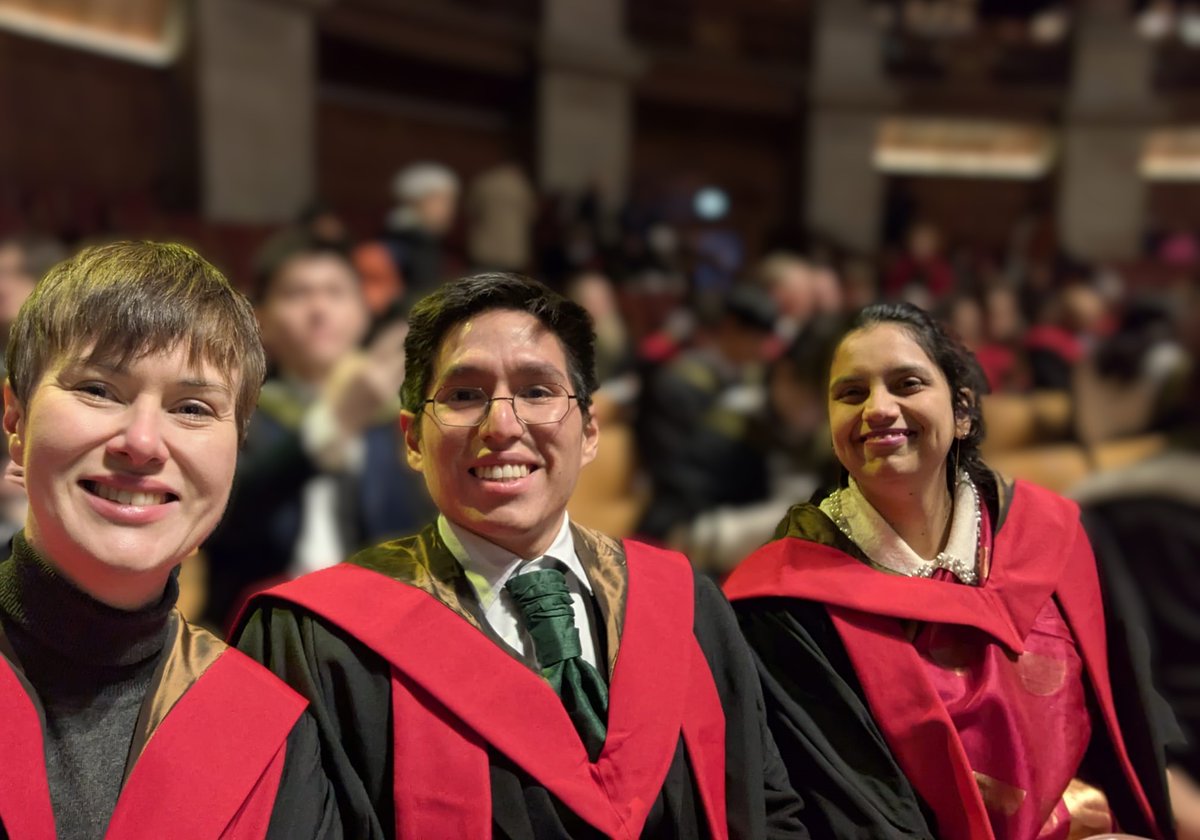
🏆🥳🙌Congratulations to (l-r) Dr Burchell @very_laurie, Dr Cardenas and Dr Moghe @nikita_moghe on their recent graduation from the UKRI CDT in NLP @InfAtEd ! All the very best in your respective careers! 🌠 🏆
The Linear Representation Hypothesis is now widely adopted despite its highly restrictive nature. Here, @robert_csordas, Atticus Geiger, @chrmanning & I present a counterexample to the LRH and argue for more expressive theories of interpretability: https://t.co/wMQsuMum7O
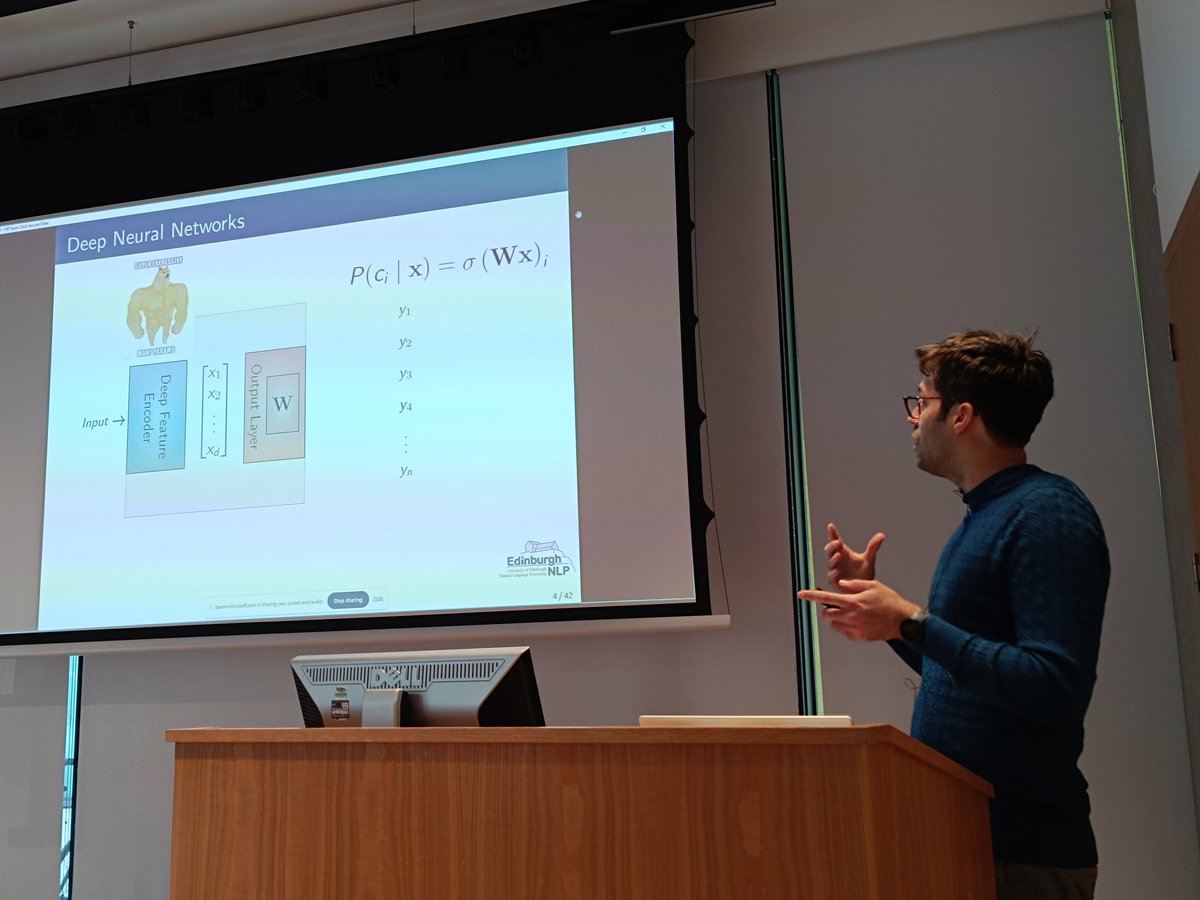
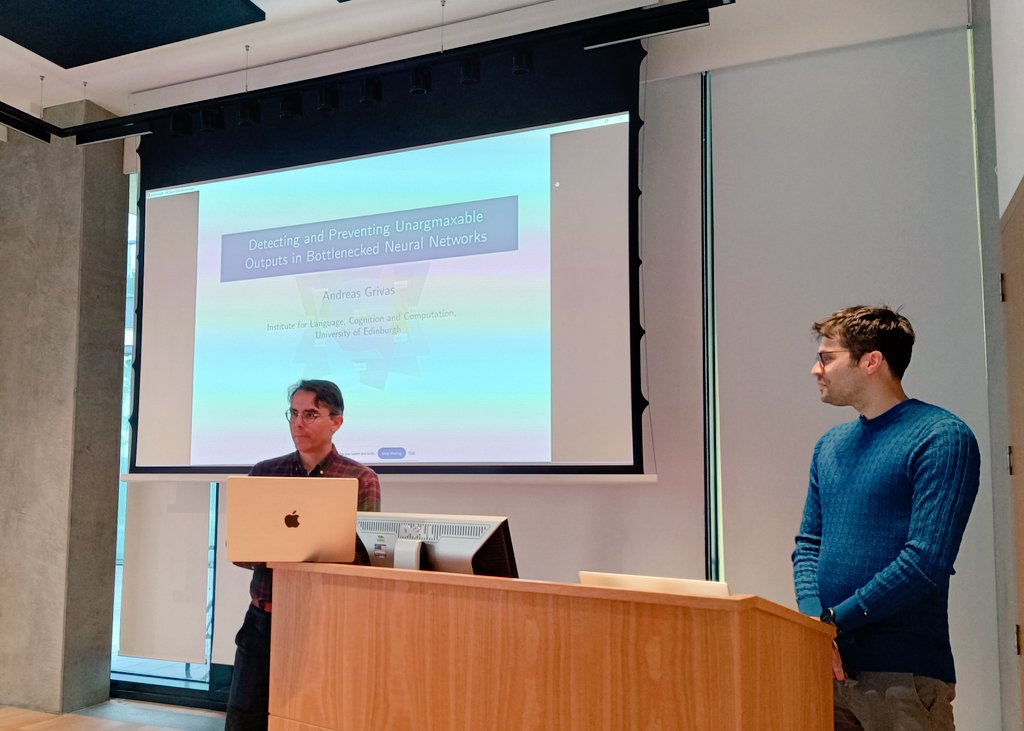
Congrats to Dr. @andreasgrv who just defended his #PhD thesis on unargmaxability and constraints in deep learning, examined by Vlad Niculae and @driainmurray 🎉
A pity you could not (yet) see Andreas' beautifully designed thesis!
In the meantime, some pics from the pre-viva 👇
✨ Do current neural speech models show human-like linguistic biases in speech perception?
We took inspiration from classic phonetic categorization experiments to explore whether & where sensitivity to phonotactic context emerges in Wav2Vec2 models 🔍
📑 https://t.co/66XPdRPKcV
Paper with @larryniven4, Naomi Feldman, and Sharon Goldwater to appear in CogSci 2024: "A predictive learning model can simulate temporal dynamics and context effects found in neural representations of continuous speech" https://t.co/Nz4y1Rhrsh (1/7)
Paper with @larryniven4, Naomi Feldman, and Sharon Goldwater to appear in CogSci 2024: "A predictive learning model can simulate temporal dynamics and context effects found in neural representations of continuous speech" https://t.co/Nz4y1Rhrsh (1/7)
However, we found evidence that the effectiveness of these generalizations depends on the specific contexts, which suggests that this analysis alone may be insufficient to support the presence of context-invariant encoding. (6/7)