16 years ago, Stephen Strasburg had arguably the most electric debut we’ve ever seen from a starting pitcher.
Nationals and Pirates. Both last place teams. Didn’t matter. Sold out crowd of 40,315. Oh, and Strasburg struck out 14 over 7 IP.
16 years ago, Stephen Strasburg had arguably the most electric debut we’ve ever seen from a starting pitcher.
Nationals and Pirates. Both last place teams. Didn’t matter. Sold out crowd of 40,315. Oh, and Strasburg struck out 14 over 7 IP.
“It was one of the most monumentally unselfish things one group of people did for another.”
-#DDay veteran Andy Rooney on the young 🇺🇸 🇨🇦 🇬🇧 soldiers who stormed the beaches of Normandy 82 years ago.
Required watching for every young person today!
NEWS: 5⭐️ Ryan Hampton has committed to Kentucky, source told @Rivals. The 6-6 shooting guard is the No. 6 overall recruit in the 2027 class.
https://t.co/ExBy5Aj4pK
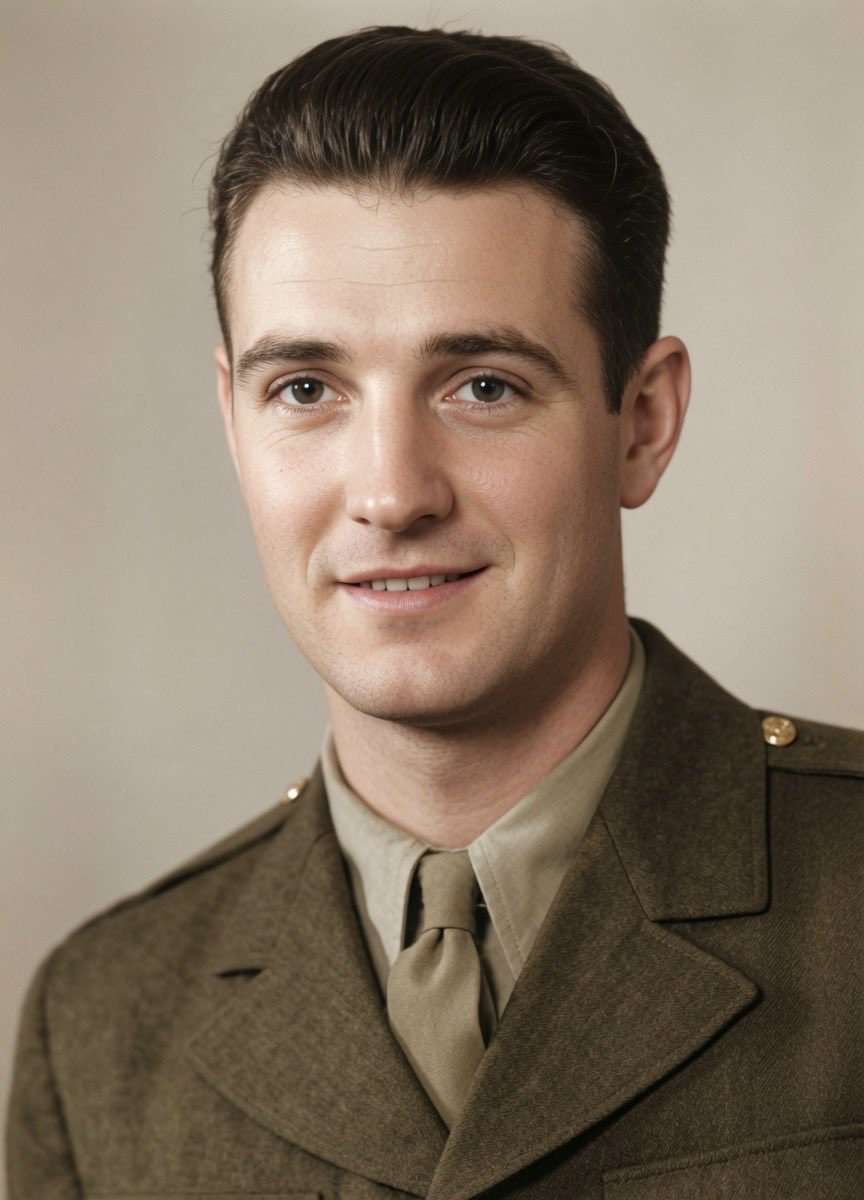
🇺🇸 Most Badass Americans You Don’t Know D-Day Edition: John J. Pinder Jr.
Technician Fifth Grade John J. Pinder Jr. landed on Omaha beach on his birthday. He didn’t make it off.
Born June 6, 1912, in McKees Rocks, Pennsylvania, Joe Pinder was the oldest of three children. His father worked in the steel industry.
He graduated as valedictorian of Butler High School in 1931.
Pinder spent the next several years as a right-handed pitcher in the minor leagues.
He played six seasons in the farm systems of the Cleveland Indians, New York Yankees, Washington Senators, and Brooklyn Dodgers.
In 1941 he won 17 games and was still chasing a shot at the major leagues when the war came.
He entered the Army in January 1942 after Pearl Harbor.
Assigned as a radio operator with the 16th Infantry Regiment, 1st Infantry Division, he fought in North Africa and Sicily.
In Sicily he earned a Bronze Star for staying at an observation post under fire.
On June 6, 1944, Pinder landed with the first waves on Omaha Beach on his birthday.
Communications were shattered. His job was to get a working radio ashore.
He made it off the landing craft. They were 100 yards off the beach.
Then he was hit. A round tore into his face after only a few steps off the boat.
Pinder held the torn flesh of his face together with one hand, carried the radio with the other, and delivered the radio to his unit, while wading thru waste deep water.
That should have been enough. It wasn’t.
Weakened and bleeding, he turned around and went back into the surf and fire three more times to salvage communication equipment.
He even recovered another workable radio.
On the third trip machine gun fire hit him again, this time in the legs.
Still he kept going.
Weakening but exposed on the beach, he helped get the radios working so the men around him could call for support.
While doing so, he was hit for the third time and killed.
Medal of Honor. Posthumous.
It was presented to his father on January 26, 1945.
Pinder was initially buried in Normandy.
In 1947 his family brought him home to Grandview Cemetery in Burgettstown, Pennsylvania.
He was the only professional baseball player awarded the Medal of Honor in World War II.
John Pinder is an American Badass
Thank you, John! 🫡🇺🇸
Ray’s Rock - Omaha Beach
On the morning of June 6, 1944, 23 year old Staff Sergeant Arnold “Ray” Lambert came ashore with the first wave of the 1st Infantry Division on the eastern side of Omaha Beach. At this small patch of concrete he saved nearly 20 lives:
The division came under intense fire from several German bunkers surrounding the entrance to the Colville Draw (one of two exits off Omaha Beach). Ray, a medic, immediately went to work.
He was shot in the arm. Moments later he was hit by shrapnel in the leg, but Ray kept pulling men to safety. He pulled nearly 20 wounded soldiers to cover behind this 8ft wide obstacle, treating each soldier before going out in search of others.
After several hours under fire, while pulling a wounded soldier from the ocean, he was struck by a landing craft. It dropped its ramp on top of him, breaking his back. He fell face down in the water, drowning. The craft backed up and nearby soldiers pulled an unconscious Ray to safety, eventually evacuating him off the beach.
Remarkably, Ray had already earned two Silver Stars and three Purple Hearts in Sicily and North Africa, prior to landing in France. But here in Normandy his war would end.
He awoke in a hospital back in England a day later. In the next bed over was his brother, who had also been wounded at Omaha.
When asked about his work on D-Day, Ray simply said, “I did what I was called to do.”
Ray Lambert passed in 2021 at 100 years old. He exemplified the best of American grit and why remembering this day is so important.