programming without math keeps you at the surface.
you can build apps.
write APIs.
move data around.
but the deeper systems need math.
graphics
cryptography
compression
machine learning
simulations
optimization
signal processing
math for programming by ronald t. kneusel
is about the math hiding underneath real software.
not math as classroom decoration.
math as machinery.
vectors tell objects where to move.
matrices transform space.
probability handles uncertainty.
logic structures computation.
calculus tracks change.
number theory secures communication.
the better your math gets,
the more software stops looking like syntax
and starts looking like systems.
🇨🇳 Un estudiante chino programó una web que mapea 5000 objetos del Museo Británico que se robaron de 99 países. Te muestra de dónde los sacaron y cómo quedaría el museo si devolvieran todo lo que "encontraron" por ahí.
🇨🇳Encontré un artículo bastante interesante sobre Fu Shou Yuan (1448 en Hong Kong) y el nuevo Reglamento de Gestión Funeraria que compartí para el Club de https://t.co/rrqBmhoRec
> ¡Dale Like y Repost a este twit y te lo envío por privado!
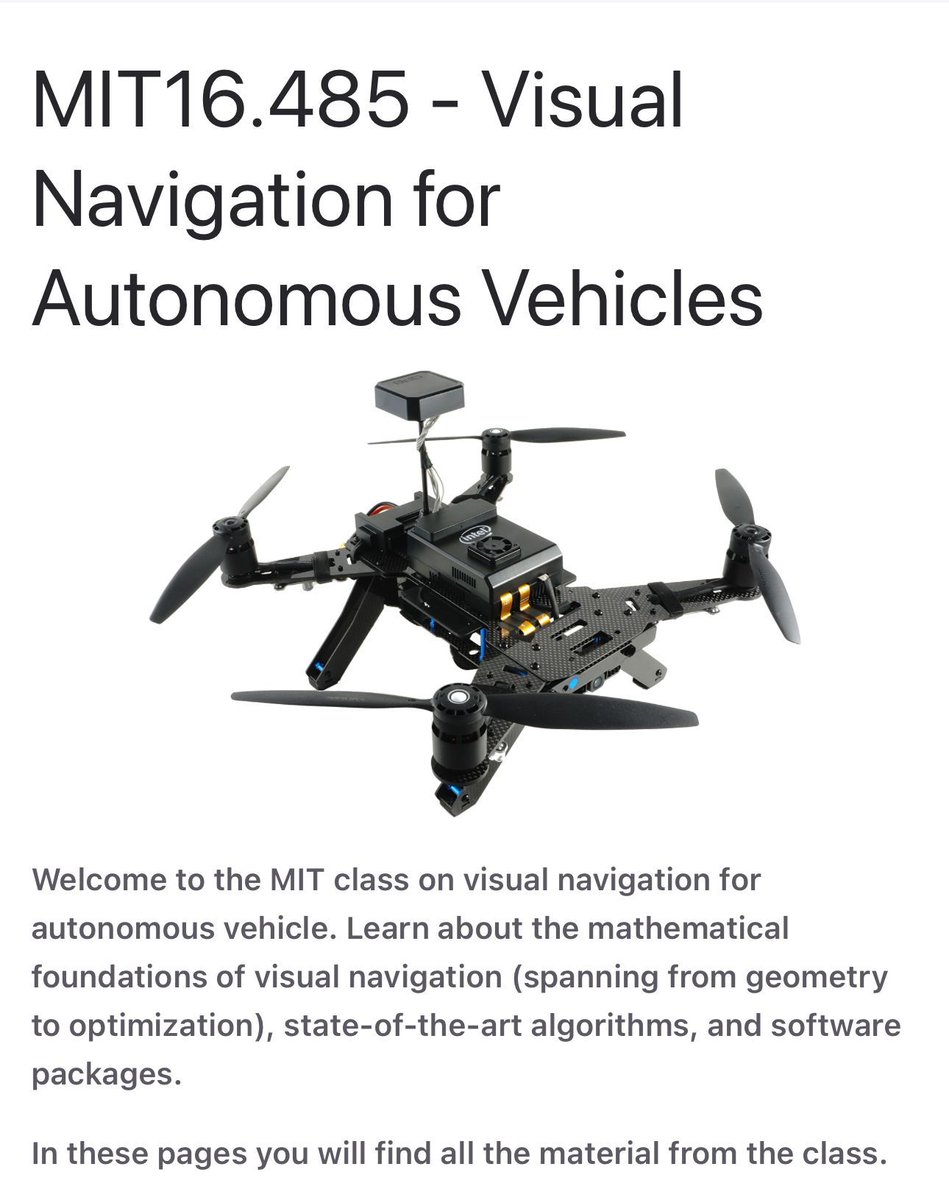
A full MIT course on visual autonomous navigation.
If you work on robotics, drones, or self-driving systems, this one is worth bookmarking‼️
MIT’s Visual Navigation for Autonomous Vehicles course covers the full perception-to-control stack, not just isolated algorithms.
What it focuses on:
• 2D and 3D vision for navigation
• Visual and visual-inertial odometry for state estimation
• Place recognition and SLAM for localization and mapping
• Trajectory optimization for motion planning
• Learning-based perception in geometric settings
All material is available publicly, including slides and notes.
📍https://t.co/HxdJKYIgsf
If you know other solid resources on vision-based autonomy, feel free to share them.
—-
Weekly robotics and AI insights.
Subscribe free: https://t.co/dsa6wcvq6n
study discrete math.
because the modern world is discrete.
software runs on graphs, not calculus.
networks, trees, sets, logic, combinatorics.
discrete math trains:
rigorous thinking
proof over intuition
structure over vibe
it teaches you how systems are built,
why algorithms work,
and where complexity explodes.
continuous math models nature.
discrete math models machines.
we live with machines.
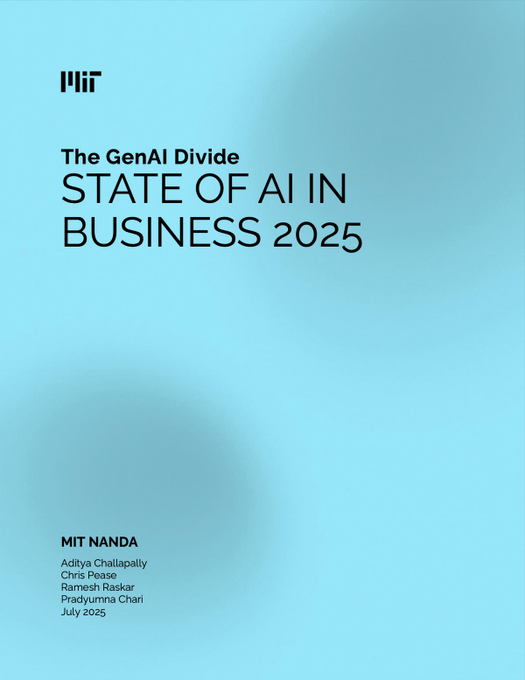
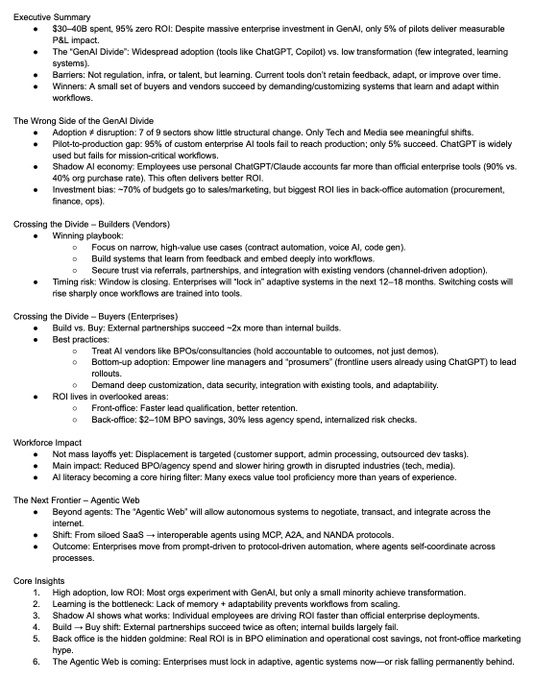
🚨 El MIT acaba de publicar un informe de 26 páginas sobre el uso real de la IA en empresas.
Revela cómo se está adoptando, los fallos más comunes y cómo lograr una transformación efectiva.
Te dejo el informe aquí 👇
how to start in robotics;
the only way that actually works: with your hands in the hardware.
not courses.
not playlists.
not frameworks.
hardware.
the path is blunt and linear:
step 1: buy a microcontroller. any. arduino, esp32, stm32.
step 2: blink an led.
step 3: read sensors. imu, ultrasonic, encoder, whatever you can afford.
step 4: drive actuators. dc motor, servo, stepper. make something move with code you wrote.
step 5: close the loop. add feedback. make the movement precise, repeatable, predictable.
step 6: build small robots. line follower, balancing bot, rover, whatever forces you to merge sensing + actuation + control.
step 7: break things. fry boards. miswire motors. debug for hours. that’s where the real learning happens.
step 8: scale complexity. add slam, add pid, add localization, add planning. but only after you’ve built a body that actually listens.
you don’t learn robotics by watching.
you learn robotics by soldering, wiring, tuning, burning your fingers, cursing your code, and then watching a machine obey you for the first time.
that feeling teaches you more than any lecture ever will.
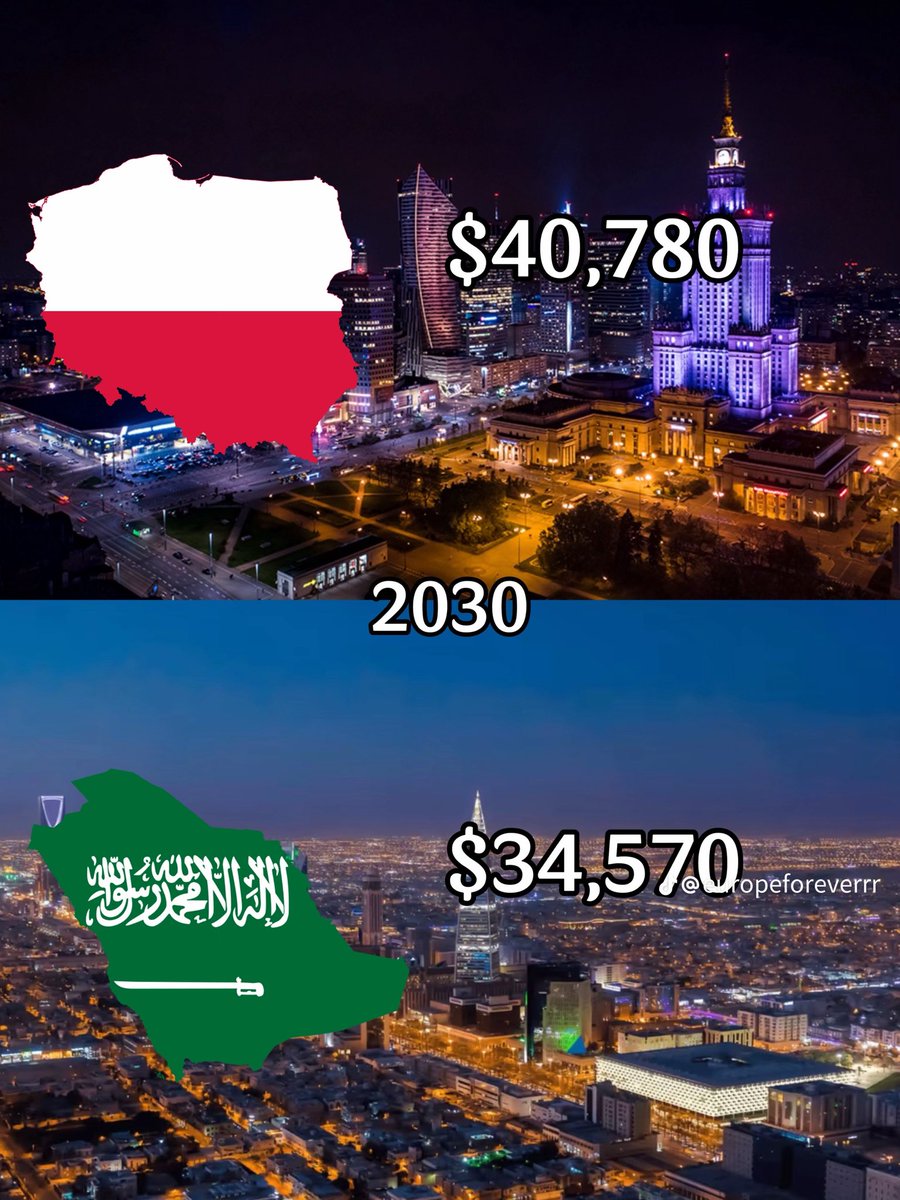
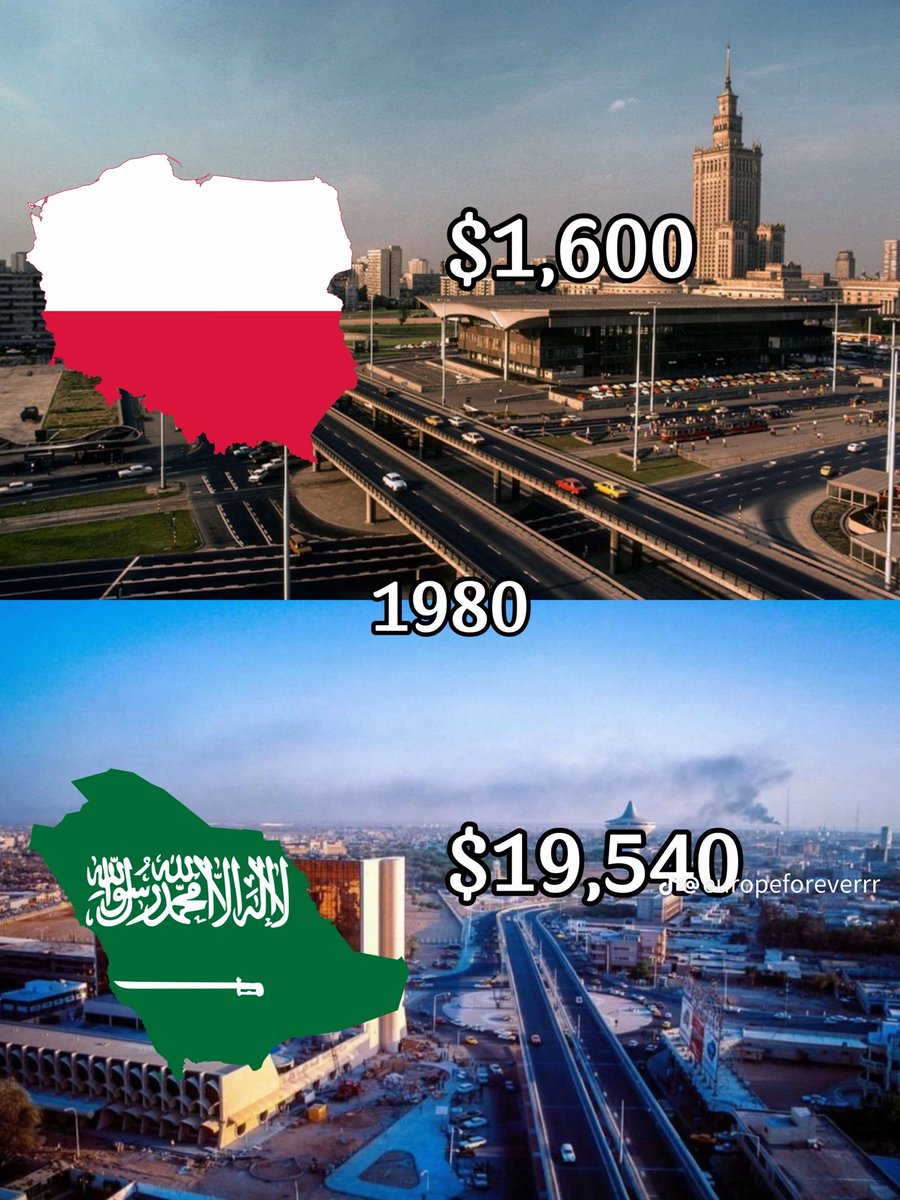
Poland vs Saudi Arabia GDP per capita.
The economic explosion of Poland, since socialism was removed, should be studied by the entire world.
This happened with nearly zero incoming migration.