>be Emin Gün Sirer
>born in Istanbul, Turkey
>get crammed into 50+ kids public-school classroom
>fight your way into Robert College, elite bilingual high school
>discover computers
>decide broken systems are not acceptable
>make it your mission to fix them
>move to the US
>study computer science at Princeton
>go to University of Washington for PhD
>master operating systems, distributed systems, networking
>write thesis on secure, efficient, manageable virtual machines
>think about scale + security long before “web3” existed
>stack the Ws
>join Cornell Computer Science faculty
>get National Science Foundation CAREER Award for distributed systems and P2P
>win Cornell’s top teaching award
>be named one of Popular Science’s “Brilliant 10”
>2003
>build Karma, a proof-of-work virtual currency for P2P networks
>mint coins with computation
>reward contributors, punish freeloaders
>do all this five years before Bitcoin
>2013
>publish “Majority is not Enough: Bitcoin Mining is Vulnerable”
>show that miners with <33% hashpower can break Bitcoin with selfish mining
>force the entire industry to rethink Bitcoin’s security model
>2016
>co-create Bitcoin-NG
>separate leader election from transaction propagation
>show how to scale throughput while keeping Bitcoin-like trust
>prove that blockchains can be way faster without sacrificing decentralization
>build the highlight reel
>rack up over 20,000 citations of your academic papers
>see your h-index grow to 55+
>achieve patents in secure code rewriting, data indexing, and consensus
>be the systems professor that other professors read
>2018
>drop “Snowflake to Avalanche: A Novel Metastable Consensus Protocol”
>sign it “Team Rocket”
>describe probabilistic, leaderless, metastable consensus
>nodes randomly sample peers, preferences avalanche toward finality
>reveal Team Rocket as You + Kevin Sekniqi + Ted Yin
>found Ava Labs with those guys
>turn Avalanche consensus into a real, production L1
>create a live network for anything & everything onchain
>2020
>Push Avalanche mainnet live in September 2020
>achieve sub-second finality
>show that a modern L1 can be fast, flexible, and still decentralized
>2021-2024
>invent a new paradigm: horizontal scaling through connected chains
>allow others to create sovereign blockchains with their own validators, rules, and virtual machines
>watch Avalanche tech power it all
>prove the model in gaming, institutional, enterprise, DeFi
>watch dozens of application-specific chains go live
>2025 and beyond
>Make Avalanche the home for real-world adoption
>watch web2 giants and web3 natives both choose Avalanche
>expand what’s possible in loyalty, payments, stablecoins, tokenization
>introduce blockchain to retail users & global institutions
>build one powerful architecture that serves countless uses
Inspiring.
From humble beginnings to architecting Avalanche, shout out to @el33th4xor for creating the best blockchain solution the world has ever seen.
5/5:
It could become a major inflection point for the broader Bitcoin market. The strategy may appear stable today, but late entrants are walking into a significantly riskier landscape.
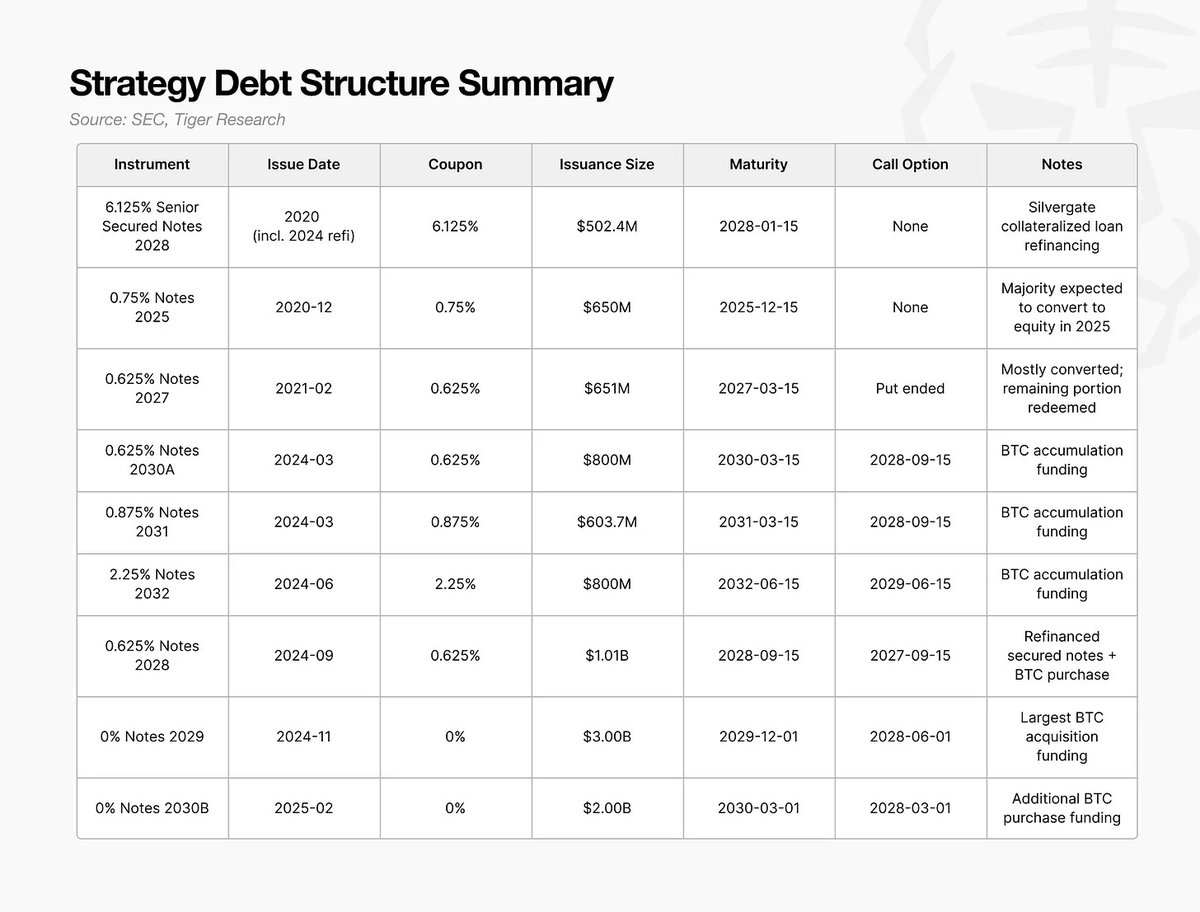
1/5: Strategy’s static bankruptcy threshold is expected to climb to ~$23,000 in 2025, nearly double the ~$12,000 level in 2023 a signal of rising structural pressure.
4/5:
A liquidation of that size "especially over a short time window" would almost certainly apply heavy downward pressure on Bitcoin’s price and spark ecosystem-wide volatility. Bottom line: 2028 isn’t just a defining year for Strategy’s survival.
1/2 Companies that sell shovels earn "industry existence tax," while companies that pan for gold earn "time window dividends" they must seize users' minds within a short window of opportunity, or they will be abandoned.
There’s talk that OpenAI might IPO at close to a $1T valuation, with a user base said to be 20× bigger than the whole crypto ecosystem.
If this is true, what does it say about where real adoption and value are moving in tech?
#X402: Client requests data ➡️ API returns status code and data
Status code 200 = OK (request successful);
Status code 404 = Not Found (resource not found);
Status code 402 = Payment Required (payment required);
#X402#AIAGents
7/7:
ERC-8004 = the trust layer for autonomous agents.
Identity → Reputation → Contract → Settlement
All on-chain.
This is how the agent economy becomes real, not just chatbots, but verifiable market participants.
1/7 Most “agent frameworks” today (A2A, MCP, etc.) let AI agents talk to each other — but none let them trust each other.
🔄Messaging ≠ Identity
🔄Messaging ≠ Reputation
🔄Messaging ≠ Verifiability
🔄That’s the missing piece ERC-8004 adds.
6/7:
The short-term impact is small in fintech, but massive in markets.
Because once a proxy can prove:
🧑🦱Identity
🪪Creditworthiness
💰payment history
It becomes a self-sovereign API that doesn’t need a platform in the middle.