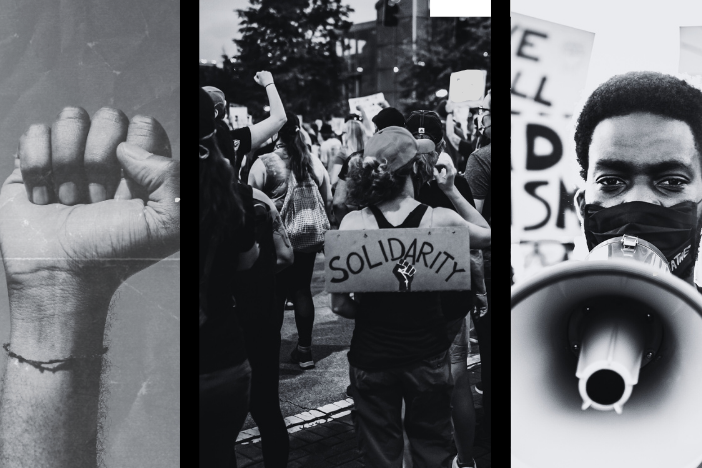
What kind of world are we leaving behind? Unfortunately, it is a world distorted by war and war-like language. This pollution of reason comes from the geopolitical sphere and invades every social relationship. Any simplification that creates enemies must be corrected, especially in universities, through complexity of thought and wise exercise of memory.
He wasn't masturbating. What actually happened to his body is significantly worse than any joke.
When the fourth pyroclastic surge hit Pompeii, it arrived at 300°C. That's 572°F. The thermal human survival threshold is 200°C. This man died in a fraction of a second. His brain stopped before a single pain signal completed its circuit.
What you're looking at is cadaveric spasm. It's a rare form of instant muscular stiffening that only occurs during sudden violent death by extreme heat. The 300°C surge cooked the proteins in his muscle fibers so fast that his body locked into whatever position it was in at the exact moment of impact. Arms, legs, fingers, toes all contracted simultaneously. 73% of Pompeii's victims were found frozen in "life-like" stances mid-action. Running. Crawling. Shielding children. This man was probably just lying down.
The flexed limb position you're laughing at appears in nearly every Pompeii body. It's called the pugilistic attitude. Heat shrinks tendons faster than bone, curling arms and legs inward. Boxers after a fire look the same way. The position has zero connection to what the person was doing. Pure thermodynamics.
For centuries, archaeologists assumed these people suffocated on ash. A 2010 study proved they were wrong. Researchers heated modern human bone samples to various temperatures, compared them to Pompeii victims, and found the color and cracking patterns matched exposure to 250-300°C. Death was instantaneous. There was "no time to suffocate."
This isn't even his body. It's a plaster cast of the void he left behind. His flesh decomposed inside the hardened volcanic ash. In 1863, Giuseppe Fiorelli poured liquid plaster into the hollow cavity. What you see is the shape of absence.
9.4 million people looked at a man who was incinerated alive in a quarter-second and the main reaction was a punchline. The science of how he actually died is one of the most disturbing findings in modern archaeology.
It’s brutal in academia right now. A lot is out of our control, but it doesn’t cost anything to remember that there are humans behind papers and grants. Reviewers, program officials and funders can be more empathetic in the face of all the chaos in the US scientific enterprise.
My father Stephen Lewis is spectacularly uninterested in social media, so I’m posting this myself (though he has read it and is prepared to suffer the indignity of all I'm about to reveal).
When he was Canada’s ambassador to the UN from 1984-88, Dad was truly shocked by the regularity of open, vitriolic antisemitism in the cocktail parties and ambassadorial receptions that surround that crucial but flawed institution.
For this reason (among others) he’s always been the one in our family with the deepest atavistic fear of antisemitism. He was sympathetic to the idea of Israel as a refuge longer than the rest of us.
This is no longer the case. Like so many Jews who for decades adopted the dominant narratives of Zionism, he can no longer defend the current actions of the state of Israel.
He now regards Israel as a rogue state, committing genocide and other crimes against humankind, which ought to be opposed by every tool and tactic in Canada's diplomatic arsenal.
To return to the personal, seven years ago my Dad was diagnosed with a vicious cancer and was given as little as 3 months to live. It’s a sublime understatement to say that he’s a fighter - but he has persevered in life with a tenacity familiar from his political, diplomatic and humanitarian pursuits.
Which brings us to this morning, when at 87 years old, he spent an hour standing at the side of the road in his old riding of Scarborough West. Standing up as a Jew against genocide. Standing up for justice for Palestine. Standing up on the right side of history, where the vast majority of humanity currently stands.
I’ve never been prouder, never more humble before the stubborn principle and insistent moral clarity of the guy I’m so lucky to call Dad.
People of Canada: don’t stop talking about Palestine.
Starvation as collective punishment can never be forgiven.
Burning and burying children alive can never be defended.
Stand up against genocide until we make it stop!
Thanks Dad.
And special thanks to @CharlieAngusNDP for shining his spotlight on Ted Schmidt and the other excellent folks who gather every Thursday at 8 am at the corner of Victoria Park and Kingston Road in Scarborough.
Institutions often decide what counts as “knowledge” long before students arrive...what learning the system can’t see or measure and why that remainder matters for justice in education. https://t.co/gA7nIBqA4v
Graduate students increasingly use artificial-intelligence tools to draft, code and search — but many fear it could erode the very skills a doctorate is meant to build
https://t.co/VhWQavdI7h
Calling them “woke breeding grounds of toxic indoctrination,” U.S. Secretary of War Pete Hegseth listed 22 colleges & universities the U.S. will no longer partner with for military fellowships. Among them is #Queens University in #Kingston.
#YGK
More: https://t.co/d9qap13Zml
Join us on April 17, 10 a.m. – 2 p.m. at OISE for the 4th Annual Equity Symposium!
This year’s theme, “Equity in (Re)connection and Action,” celebrates the many community members across OISE whose work brings equity to life.
Register here:
https://t.co/H09TpbqWQQ
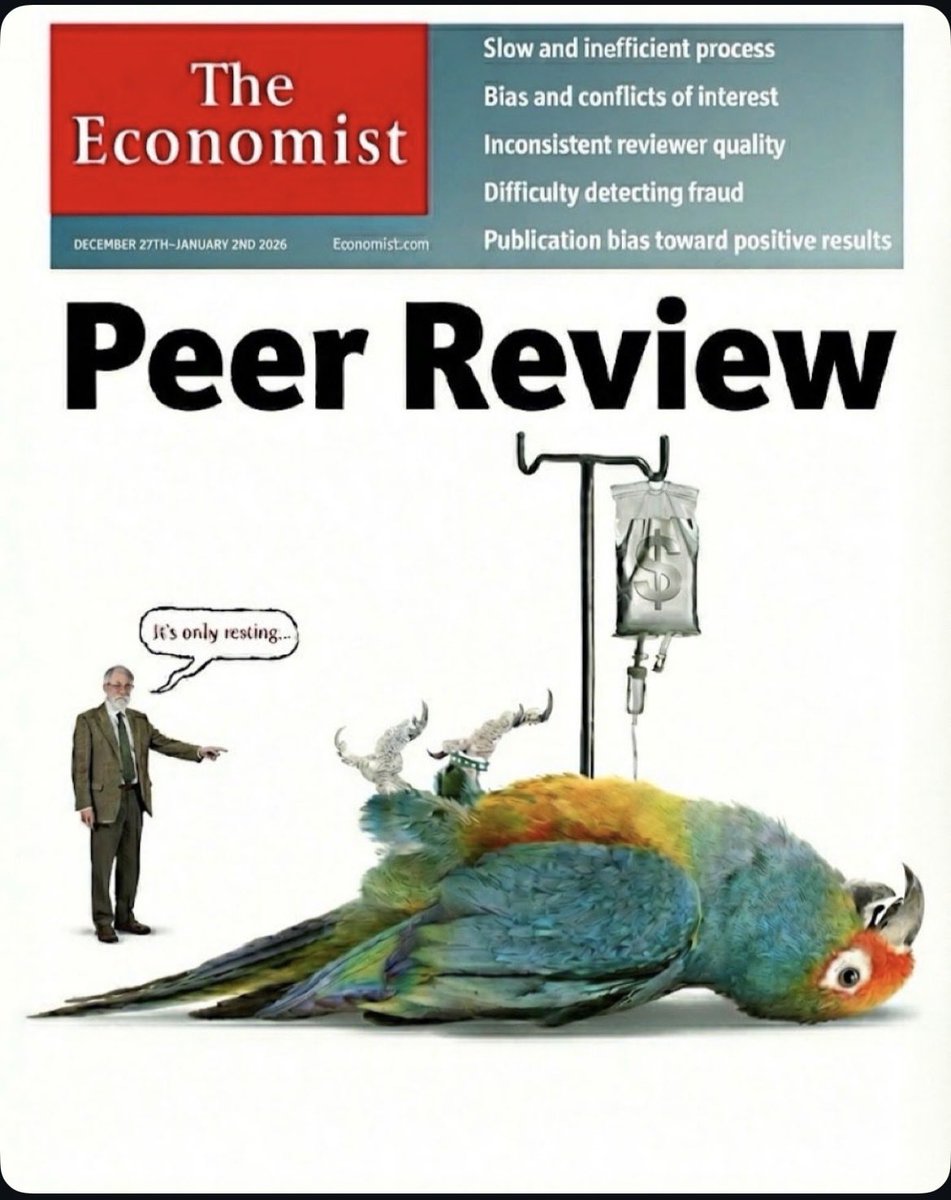
For decades, peer review has been treated as the gold standard of scientific validation.
Yet many scientists know the reality: the system is far from perfect. Peer review is broken and sometimes even corrupted.
The process can be slow, inconsistent, and vulnerable to bias. Reviewers are sometimes asked to judge work outside their true expertise. In other cases, they may be evaluating ideas that challenge the very paradigm in which they were trained. And occasionally, reviewers are simply competitors.
Ironically, the most prestigious journals can also be the most conservative. Truly new ideas are often met with skepticism, while safer work that fits the current narrative moves more easily through the system.
Increasingly, papers are judged less by the originality of the idea and more by the volume of data, the sophistication of statistics, and the beauty of the figures. Science risks becoming data-rich but idea-poor.
But there is an important reality to remember: journals do not ultimately decide the impact of scientific work. Impact is decided later, by the community. By the scientists who read it, test it, debate it, and cite it.
In the end, citations and ideas determine the legacy of a paper, not the impact factor of the journal that first published it.
Science has always advanced by questioning assumptions. Perhaps it is time we also question the system that filters scientific ideas.