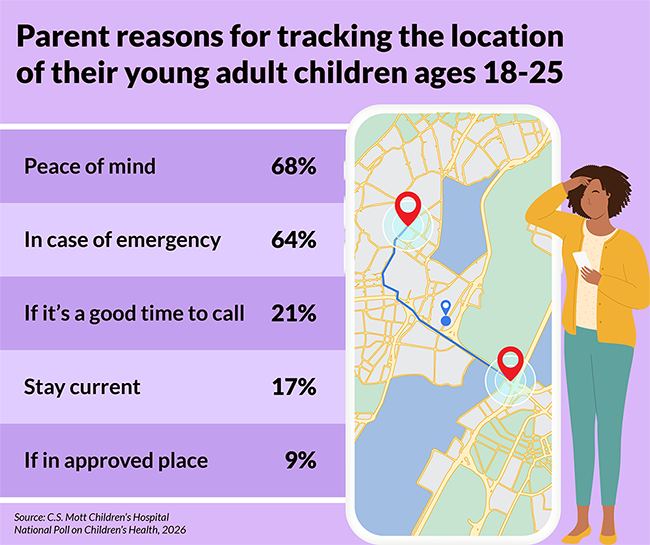
Digital technology has created new options for parents to stay informed about their children's whereabouts, even as those children reach adulthood.
Next week we'll look at parents' usage and attitudes toward location tracking of their young adult children ages 18-25.
About half (52%) of parents report tracking their young adult child’s location using a cell phone or similar device. Tracking is more common among parents of young adults 18-20 compared to age 21-25, and more common for daughters than sons.
https://t.co/qNgNo29eOB
While 95% of parents who track their young adult child’s location say it helps them worry less, 23% acknowledge it sometimes makes them more anxious than reassured.
Latest Mott Poll report: https://t.co/qNgNo29ME9
Only 54% of parents say they gave their young adult child the option to not have them track their location. Parents of young adults age 21-25 are more likely than parents of children 18-20 to say they gave the option to not track (61% vs 47%).
https://t.co/qNgNo29ME9
Does location tracking provide peace of mind or fuel more anxiety? And when should parents stop tracking their kids?
Our @csmottpoll finds that 1/2 of parents track young adults ages 18-25. 1 in 4 trackers say it sometimes makes them MORE anxious: https://t.co/kyfxA7vAU1
Nearly all parents who track their young adult child’s location (96%) indicate that their child is aware the parent is tracking them; however, only 54% of parents say they gave their young adult child the option to not have them track their location.
https://t.co/qNgNo29eOB
📄New from @JeremyAdlerMD & @SamirGadepalli
Findings on antibiotic stewardship for Crohn's Disease related PFC from SETON (Standardization of Evaluation to Treatment of pediatric perianal CD & improving Outcomes through Networking).
🔗https://t.co/2Hbw1nKpVj
@UM_IHPI@MottDocs
📄New from Kao-Ping Chua, MD, PhD
Results of this study suggest that patients who switch to a HDHP may experience heightened barriers to buprenorphine use.
🔗https://t.co/zlMqnOBtQi
@UM_IHPI@MottDocs@JAMANetworkOpen@kaopingchua
Join us Tuesday, June 2nd at 9:00 AM with Folafoluwa Olutobi Odetola, MB ChB, MPH!
📆 Register for this Seminar: https://t.co/BiuSYPCjSg
📨 Subscribe to our ListServ: https://t.co/iX7phqIgP9
🌐 More Events: https://t.co/K0VEy5Zbx2
@MottDocs@MottChildren@UM_IHPI
Most parents see value in confidential teen health visits, but many still struggle to step back, our national @csmottpoll suggests.
That hesitation may create barriers for teens seeking care for sensitive health concerns.
More from today's report: https://t.co/678vfIiYzF
Preventive care visits are an important time for healthcare providers to listen to concerns and questions about their patients’ health and to offer guidance.
Next week we'll look at parent views on healthcare confidentiality for their teens age 13-17.
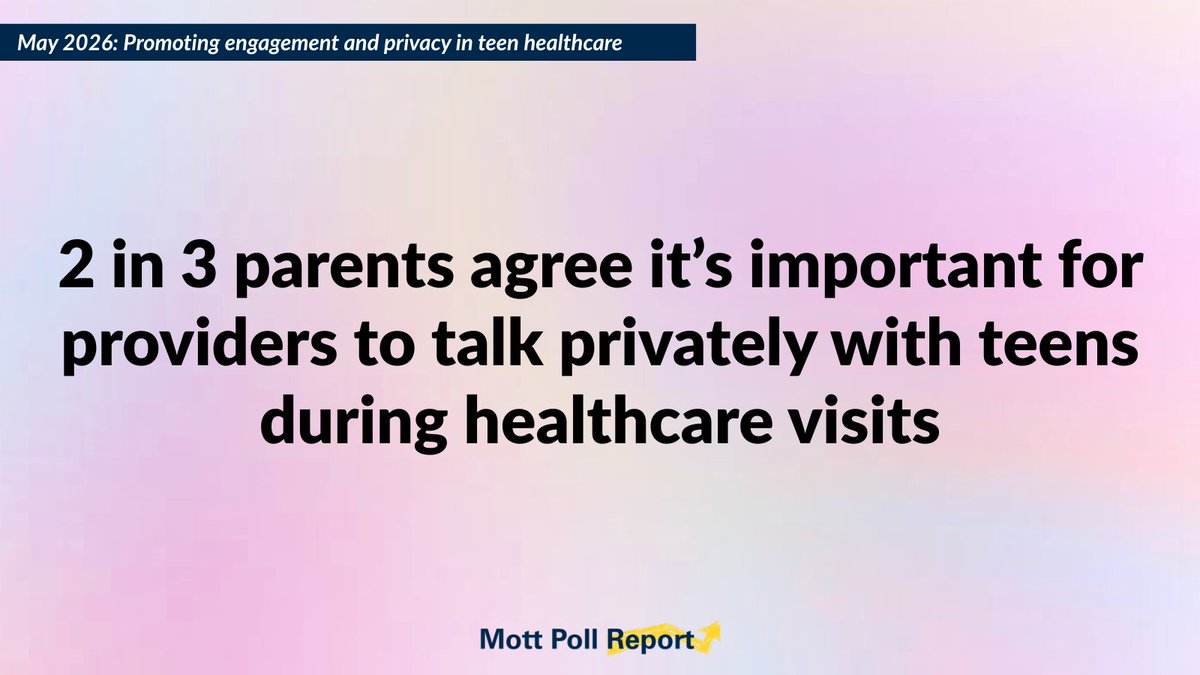
2 in 3 parents agree it’s important for providers to talk privately with teens during healthcare visits.
Latest Mott Poll report: https://t.co/h2SMzucH39
Among parents who attended their teen’s most recent preventive care visit, only 35% say the provider talked privately with the teen, without the parent in the room.
Latest Mott Poll report: https://t.co/h2SMzucH39
Only 21% of parents recall healthcare providers talking with them about confidential services for adolescents, and only 11% recall discussion about limits on information parents are allowed to see on their teen’s patient portal.
Latest Mott Poll report: https://t.co/h2SMzucH39
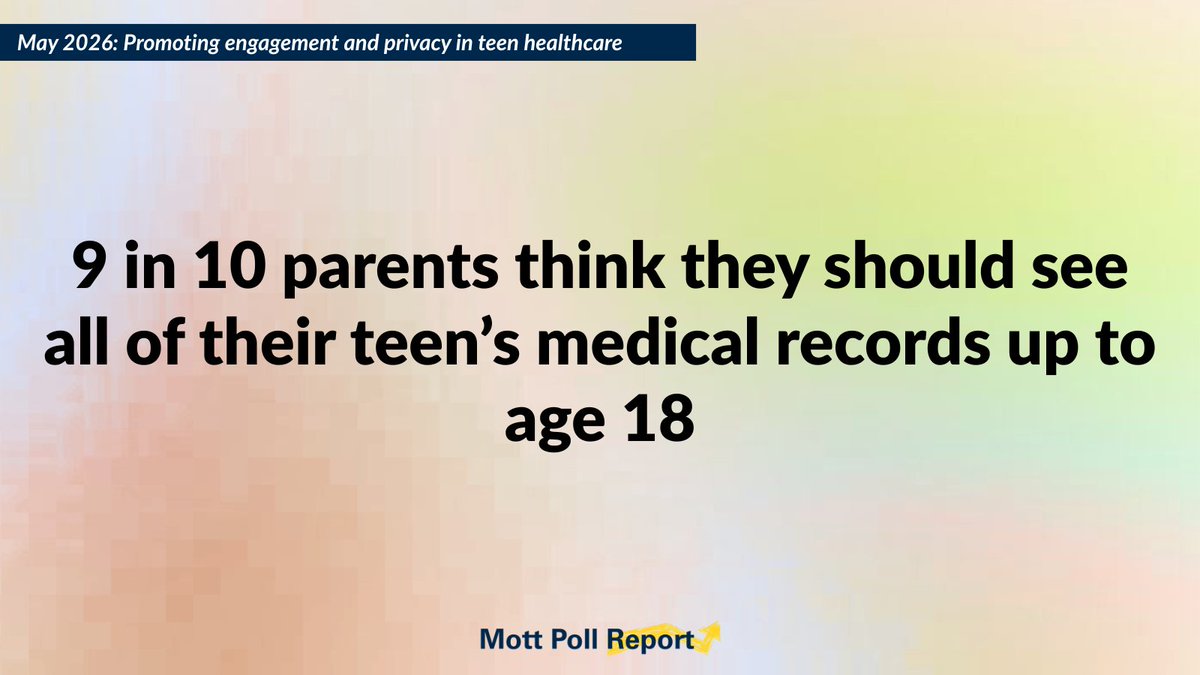
Nearly all parents (92%) think they should have a right to see all of their teen’s medical records up to age 18.
Latest Mott Poll report: https://t.co/h2SMzucH39