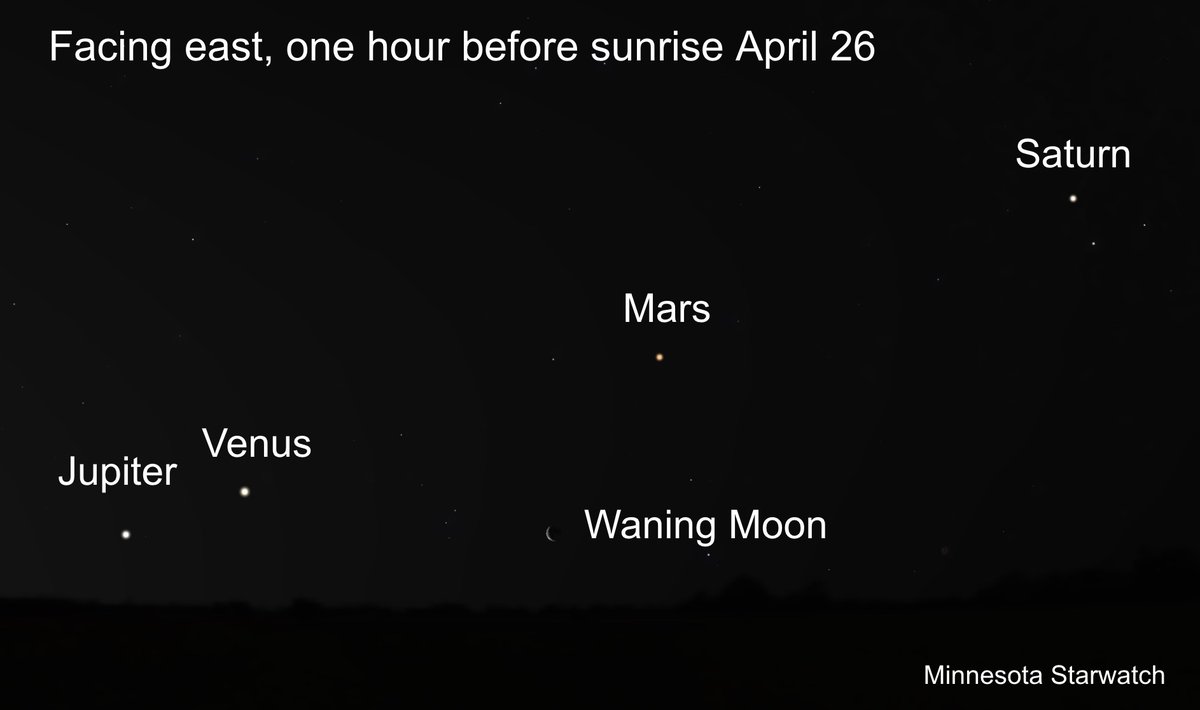
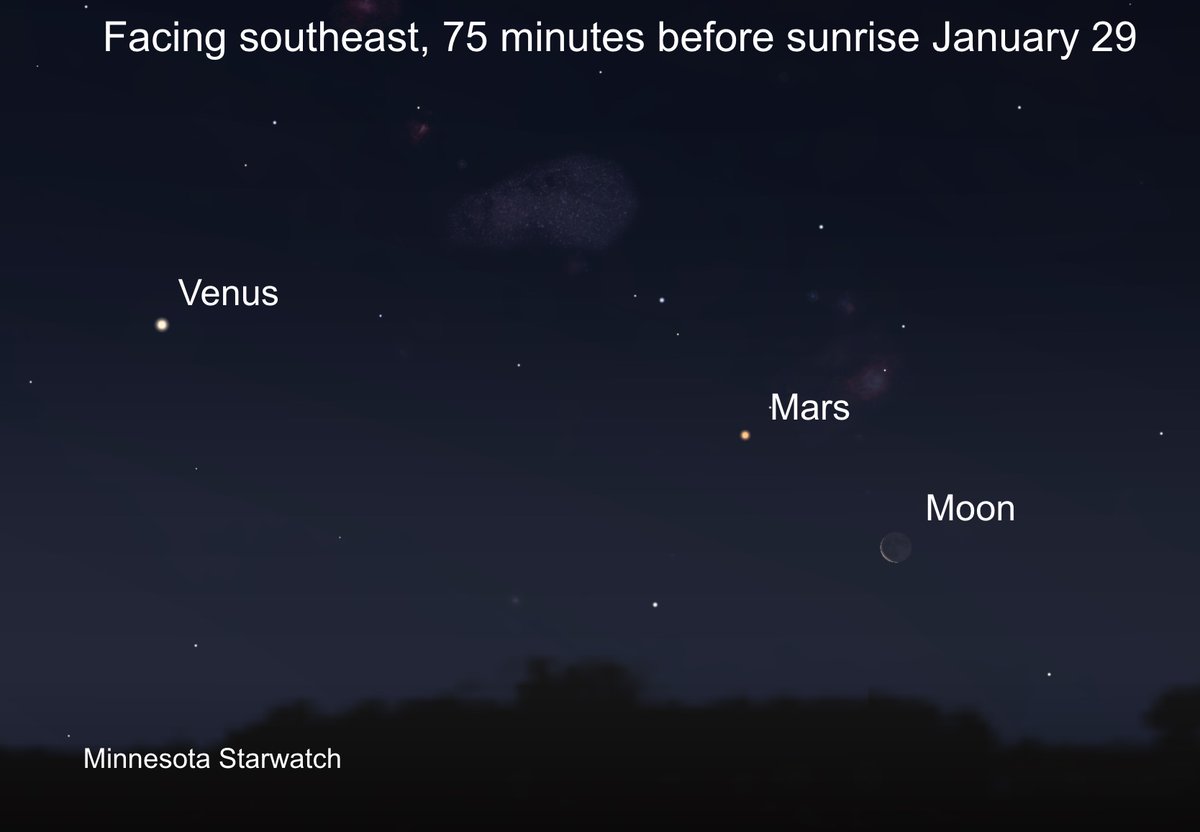
Minnesota Starwatch April 2022🌠🔭
As April opens, the stage is set for some serious planetary action in the morning sky.
Read more at https://t.co/RopkN74fiE to find out about the interesting sights you can expect🌌
Map: Stellarium
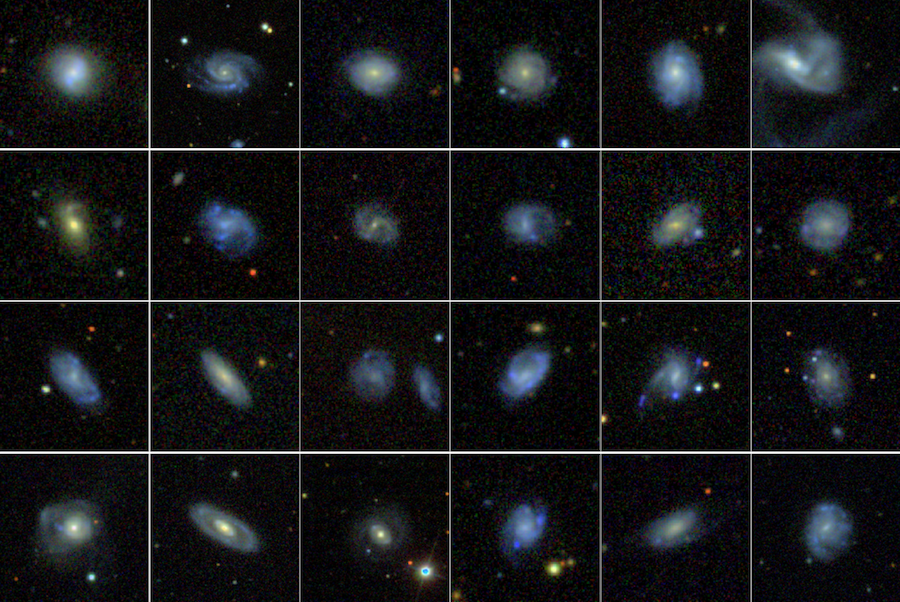
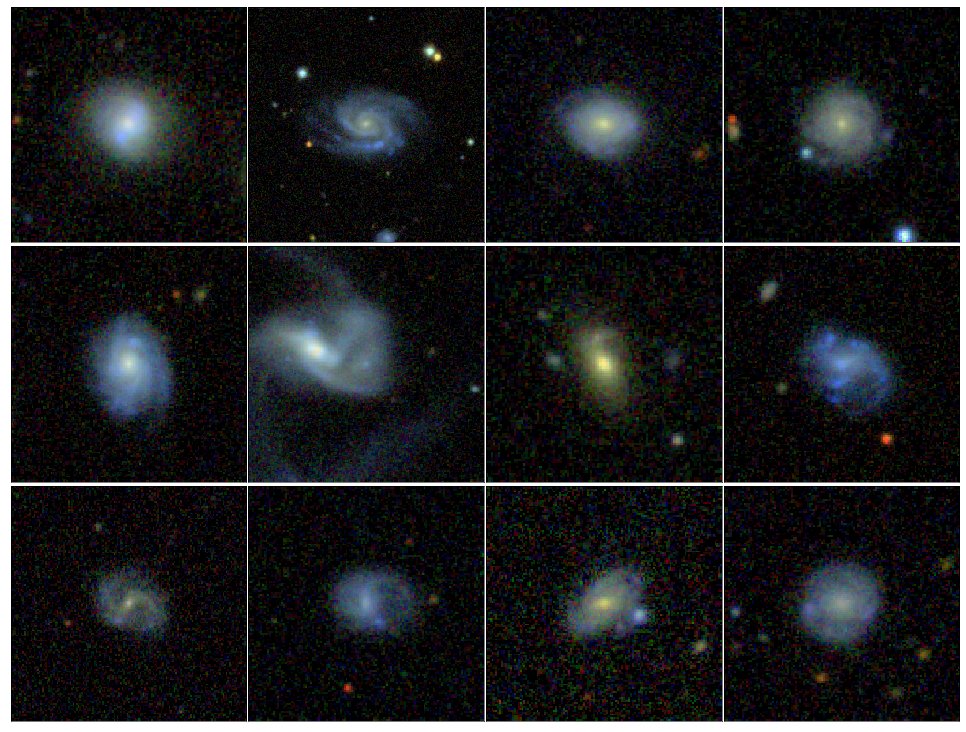
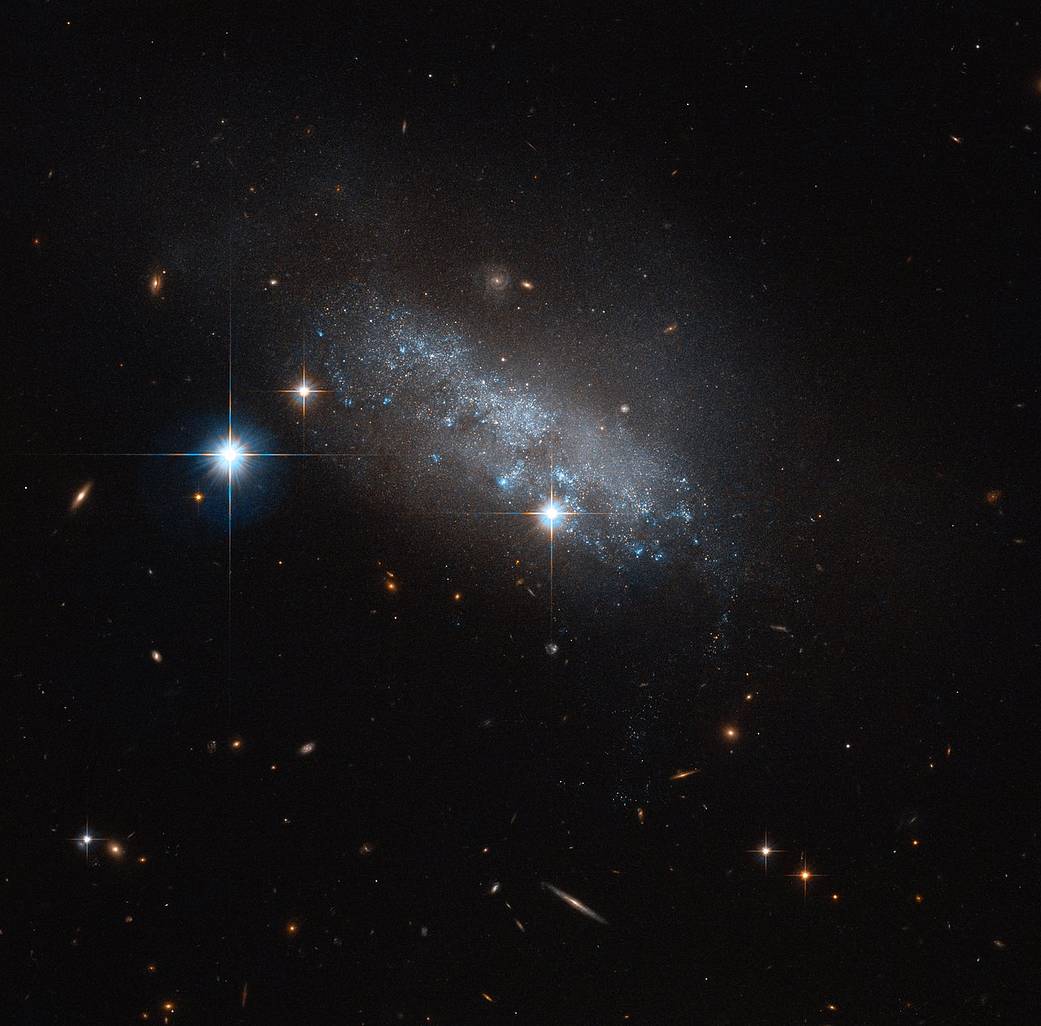
With the help of citizens, a study from @UMNCSE found significantly fewer "clumpy galaxies", or galaxies with dense, star-forming regions, than expected in the universe. This paves the way for future research on how galaxies evolve over time.
Read more: https://t.co/PRNwakSeRw
Register for the @umnmifa public webinar "Comets: The Rosetta Stone of the Solar System" Tuesday, March 22, 7 p.m. Robert Gehrz will describe comet origins & relationship to the formation & evolution of the solar system. More info and registration: https://t.co/pK5oSTU02I
Minnesota Starwatch Feb 2022🌠🔭
Curious what the February skies have to offer? Read more at https://t.co/RopkN74fiE to find out what to look for in the night sky🌌
Map: Stellarium
Astro Tweets: please help me publicize this position at @umnmifa to work on a number of new and exciting HST and JWST projects: https://t.co/BLdpNjhBMs
With the help of citizen scientists, a #UMN-led research team has completed the largest-ever search for "clumpy" galaxies in the modern Universe, giving insight into how galaxies form and evolve over time. https://t.co/yfH2bPDDT7. @UMN_SPA @umnmifa@UMNResearch@the_zooniverse
Minnesota Starwatch Jan 2022🌠🔭
Curious what the Jan skies have to offer? Read more at https://t.co/RopkN7lQac to find out what to look for in the night sky🌌
Map: Stellarium
We also host a great NSF-funded program in Data Science in Multi-Messenger Astrophysics. You can read more here:
DSMMA program: https://t.co/7F9iv4BnMZ
[2/2]
The deadline for the Astrophysics PhD program at the University of MN is not until January, but to be considered for a 3yr fellowship the deadline is tomorrow.
MN Institute for Astrophysics: https://t.co/JVlZCLPyRo Apply here: https://t.co/t6d8CJojSU [1/2]
Join us today, 14th Dec, at 7PM for our last Universe@Home event of the semester, where we will discuss the fascinating science of irregular galaxies and why we should pay more attention to them!
YouTube Livestream: https://t.co/3k2IjGG0jk
We are hiring at @umnmifa. Broad topic: plasmas of the Sun, its heliosphere, and related topics such as the plasma physics of exoplanets and stars, or the interaction of space plasma with the upper layers of Earth’s atmosphere. https://t.co/E0meOMKCWS Please retweet!
Join us for our Universe@Home event today, 30th Nov at 7 PM, where we will give an overview of exoplanets, the current census of their discoveries, and the transit and radial velocity methods of detection.
YouTube Livestream: https://t.co/kqf1A7TfG2
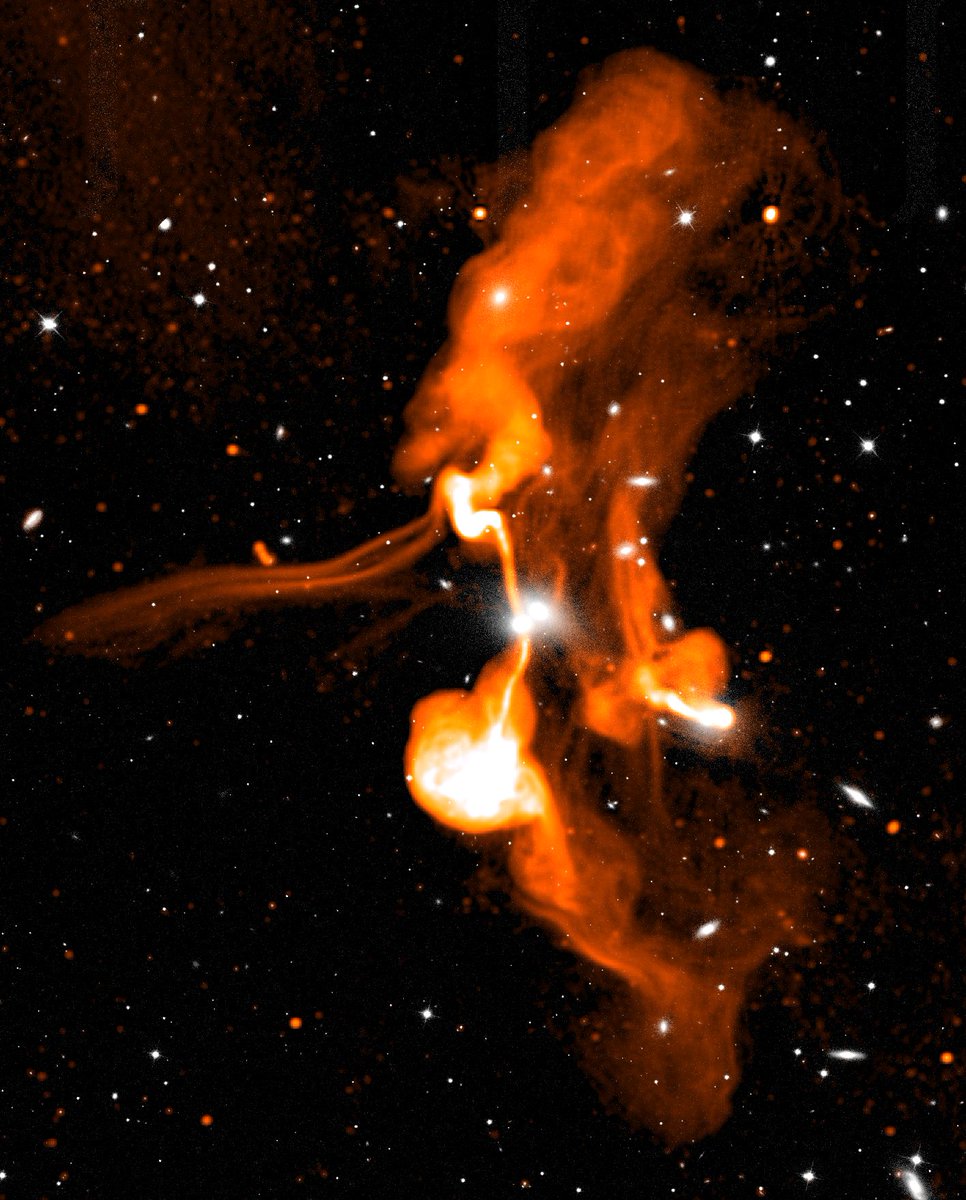
#UMN researchers are part of the MeerKAT Galaxy Cluster Legacy Survey data release that has revealed beautiful cosmic puzzles giving new clues to the formation of galaxies. https://t.co/WLQpoI0wVn @SKA_Africa @UMN_SPA @UMNresearch
Like Earth, many planets in our solar system have moons. In our next Universe@Home event on 16th Nov at 7 PM, we will discuss these moons' many interesting characteristics, including their formation, atmospheres, and potential to host life.
Live stream: https://t.co/3n13OrccDO
Join us for the MIfA Public Lecture on November 3rd from 7pm - 8pm at the Coffman Memorial Union Theater or via Zoom.
The lecture will be presented by Professor Michael Coughlin on the topic, "New Science from Merging Neutron Stars".
Read more & register: https://t.co/xh8kDnUBLC
Supernovae, violent explosions that occur at the end of stars' lives, are some of the most energetic, transient processes in our universe. Attend the next Universe@Home event today, Oct 12th at 7 PM to learn more about them: https://t.co/nBoDJWLLCc
Image: Remnant of a star, NASA
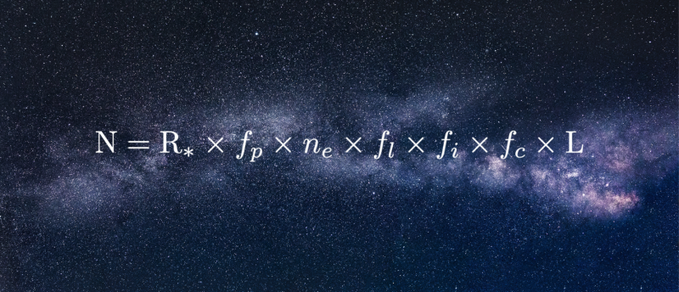
Interested in learning about the Drake equation, a famous method used to estimate the number of extraterrestrial civilizations that could exist in the Milky Way Galaxy? Attend this semester's first Universe@Home event on Oct 5th at 7 PM: https://t.co/8BhNiAo3xY
Image: Medium
Minnesota Starwatch October 2021🌠🔭
October’s darkening skies provide a backdrop for planetary maneuvers and the unending stream of stars across the celestial stage.
Read more at https://t.co/4CsFNGds3V
to find out how you can view them🌌
Map: Stellarium
Join us for the MIfA Public Lecture on November 3rd from 7pm - 8pm at the Coffman Memorial Union Theater or via Zoom.
The lecture will be presented by Professor Michael Coughlin on the topic, "New Science from Merging Neutron Stars".
Read more & register: https://t.co/xh8kDnUBLC