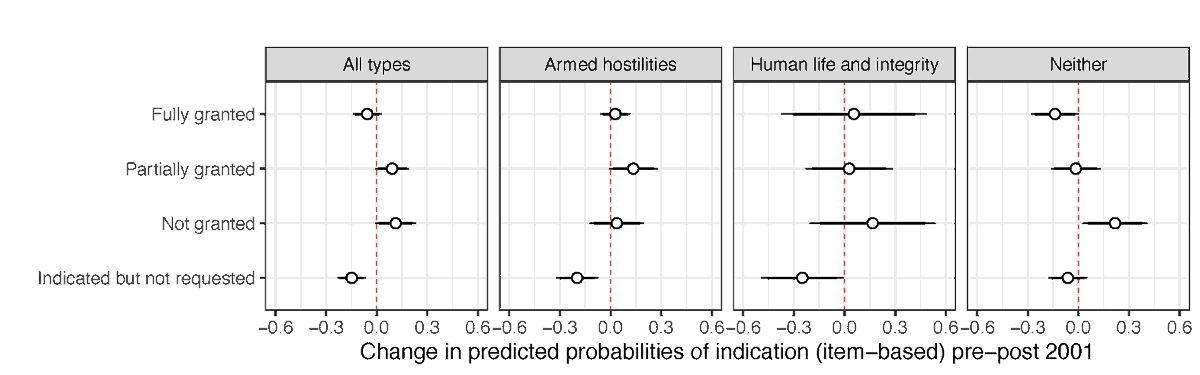
Our evidence is on the whole consistent with the idea that LaGrand changed both the demand for and the supply of ICJ provisional measures: States ask for more; the Court treats requests with greater caution.
Our codebook and data are available here: https://t.co/pvQnfO2fwi 6/6
Happy to see this new article out (open access) with Phil Saengkrai in @JournalOfIDS: https://t.co/tTka1vl8oB
We study how the ICJ’s LaGrand judgment may have changed the behaviour of litigating states and the Court. A thread 🧵1/6
We also find that the Court indicates fewer measures that are wholly different from what the parties request.
Together, these patterns are consistent with a more cautious treatment of requests after 2001. 5/6
If you’re a PhD student or postdoc working on law and courts using social science methods, consider applying to this workshop for early career scholars.
Where: UCL (Bloomsbury), London
When: 29–30 June 2026.
Apply by April 29 using this link: https://t.co/nNhflgjSUj
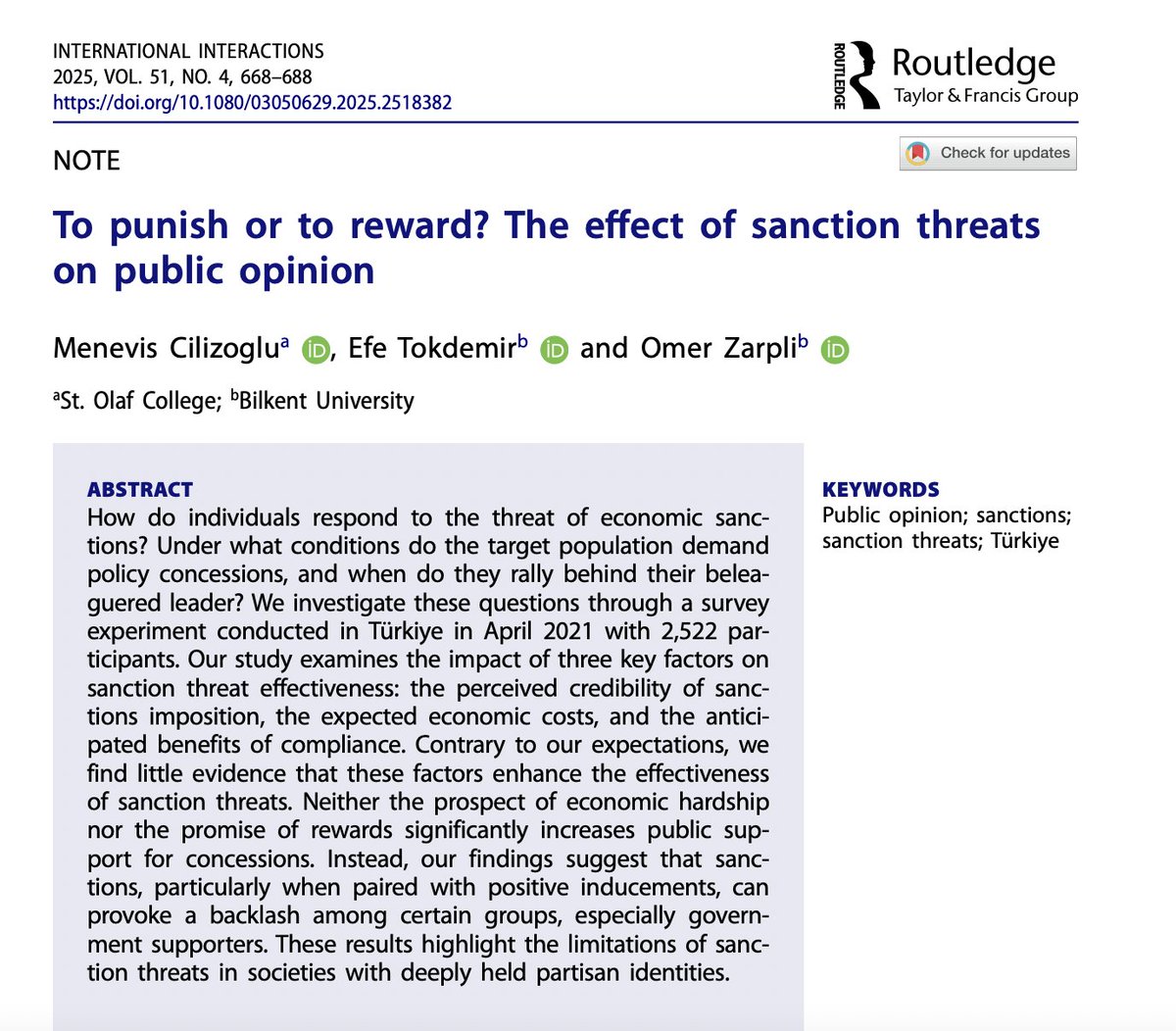
🚨In a new paper with great @menevisc & @efetokdemir, we find that sanction threats--even when credibly backed--do not increase public support for concessions in the target (🇹🇷case). Moreover, positive inducements provoke backlash among some groups.
https://t.co/EXwixjVIho
My paper with Hein Goemans and @miweintraub83 is officially “just accepted” at @The_JOP! See what prospect theory can (and can’t) explain about territorial disputes: https://t.co/PDXw265Iur
Check out the papers of the 17th PEIO (@The_PEIO , Harvard University, Jan 23-25) at https://t.co/R0pz3aEOwu. Please save the date for our next PEIO, hosted by IE University in Segovia, Spain, on January 29-31, 2026. Thanks to Nikitas Konstantinidis for hosting us there!
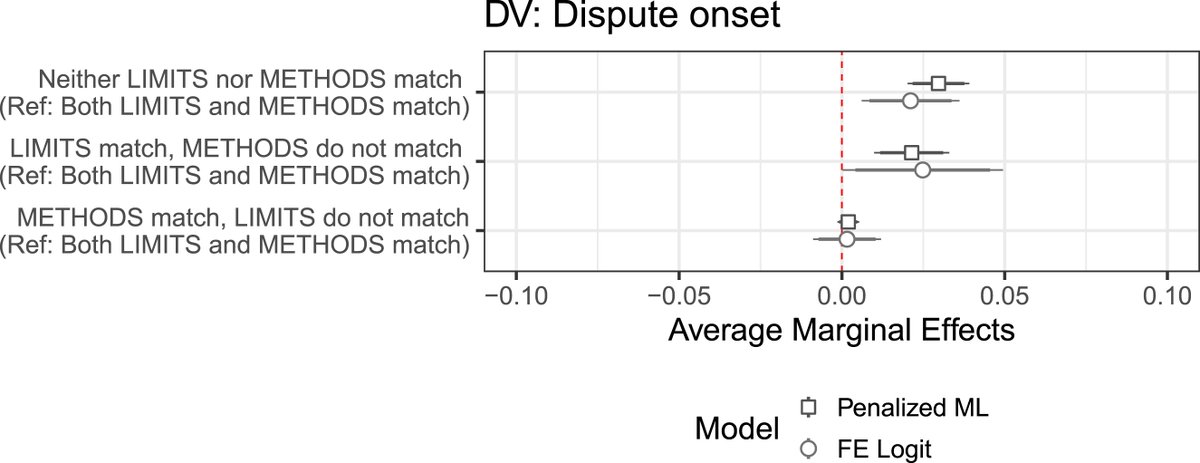
The main takeaway is that international lawmaking can often contribute to the generation of disputes in the very areas it seeks to regulate. This plausible effect invites further theorization, as well as empirical study in fields like trade, human rights, and armed conflict. 9/9
Excited to share my article, now out in the Journal of Conflict Resolution! 🎉 I explore how international lawmaking can sometimes contribute to generating new disputes rather than help prevent them. Available OPEN ACCESS here: https://t.co/ldwR58Ei5g. A thread 🧵1/9
These findings survive various robustness checks and the mechanism sustaining them—that uncertainty leads states to adopt different positions (wrt maritime limits and delimitation methods), & different positions encourage disputes—finds quantitative and qualitative support. 8/9