NGC 3169 looks pretty dusty.
This galaxy's spiral arms are full of cosmic dust, which is made up things like the leftovers of star and planet formation, and molecules modified by interactions with starlight.
For more on this #HubbleClassic view: https://t.co/VKNPx0O6YT
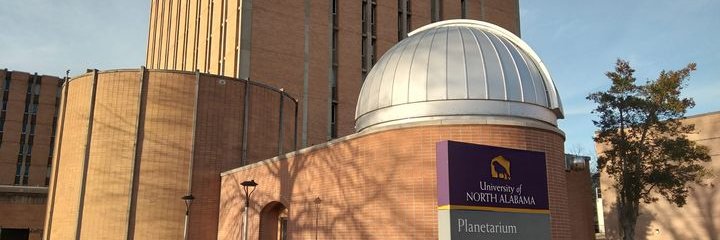
This is a shot taken outside the observatory while doing a weather check on Monday evening. We use red light because it does not affect dark adaptation as much. It also creates a cool vibe!
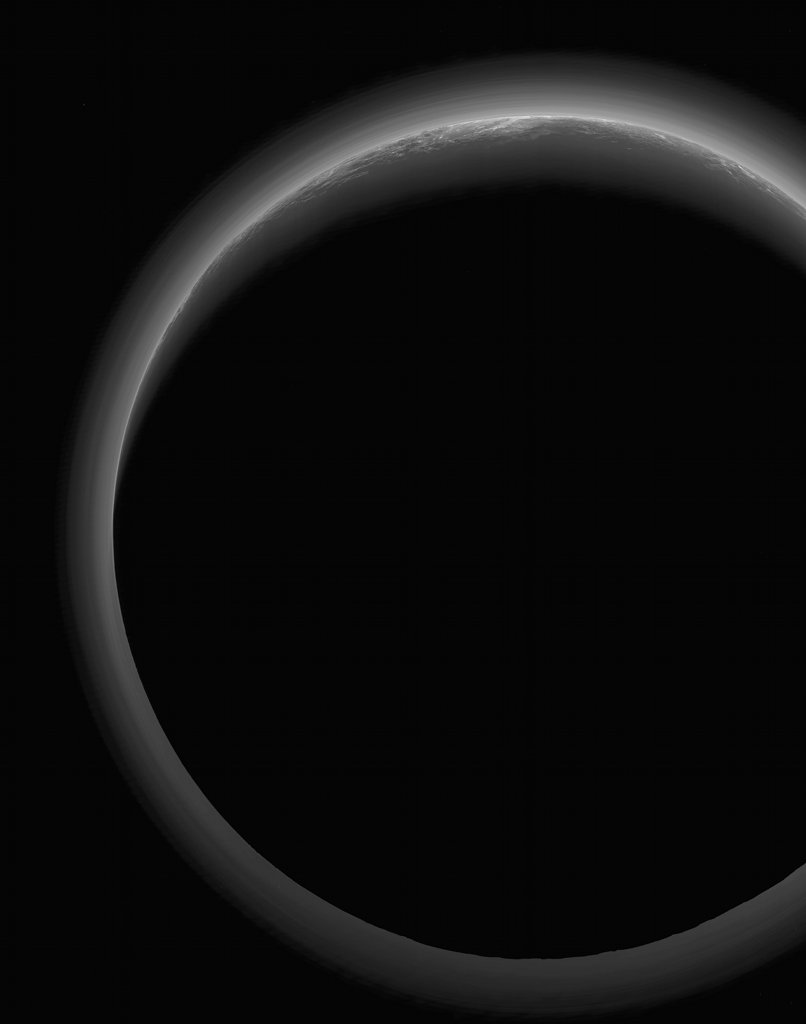
The night side of Pluto spans this shadowy scene. In the stunning spacebased perspective the Sun is 4.9 billion kilometers (almost 4.5 light-hours) behind the dim and distant world. It was captured by far flung New Horizons in July of 2015 when the spacecraft was at a range of some 21,000 kilometers from Pluto, about 19 minutes after its closest approach. A denizen of the Kuiper Belt in dramatic silhouette, the image also reveals Pluto's tenuous, surprisingly complex layers of hazy atmosphere. Near the top of the frame the crescent twilight landscape includes southern areas of nitrogen ice plains now formally known as Sputnik Planitia and rugged mountains of water-ice in the Norgay Montes.
Image Credit: NASA, Johns Hopkins Univ./APL, Southwest Research Institute
A great nebulous region near bright star omicron Persei offers this study in cosmic contrasts. Captured in the telescopic frame the colorful complex of dust, gas, and stars spans about 3 degrees on the sky along the edge of the Perseus molecular cloud some 1000 light-years away. Surrounded by a bluish halo of dust reflected starlight, omicron Persei itself is just left of center. Immediately below it lies the intriguing young star cluster IC 348 recently explored by the James Webb Space Telescope. In silhouette against the diffuse reddish glow of hydrogen gas, dark and obscuring interstellar dust cloud Barnard 3 is at upper right. Of course the cosmic dust also tends to hide newly formed stars and young stellar objects or protostars from prying optical telescopes. At the Perseus molecular cloud's estimated distance, this field of view would span about 50 light-years.
Image Credit & Copyright: Ashraf Abu Sara
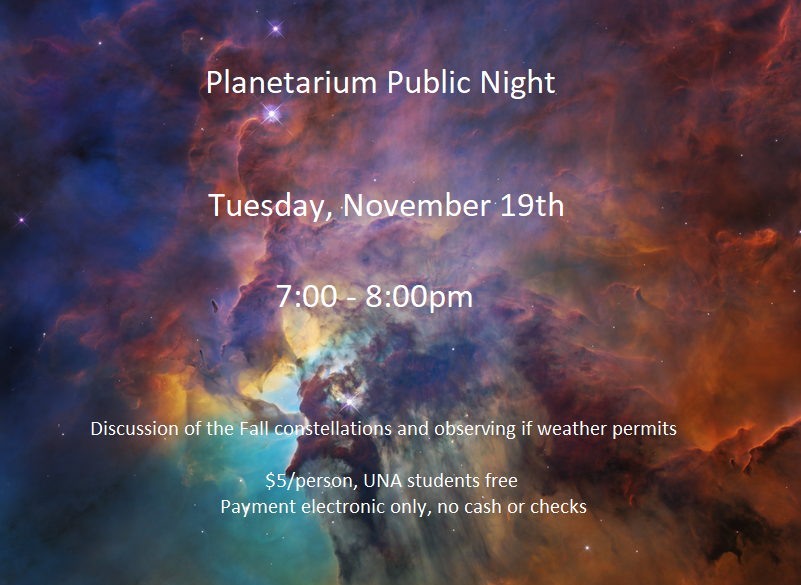
Join us for our public program tonight, Oct 29, at 7pm. We will discuss the fall sky and observe if weather permits. $5/person, UNA students free. We are now cashless; electronic payment only.
UNA Planetarium and the UNA chapter of the American Chemical Society will host a special Chemistry Week program on Wednesday, Oct 23rd at 7pm. We will show the planetarium program "Cosmic Recipes", discuss astrochemistry and observe with weather allows.
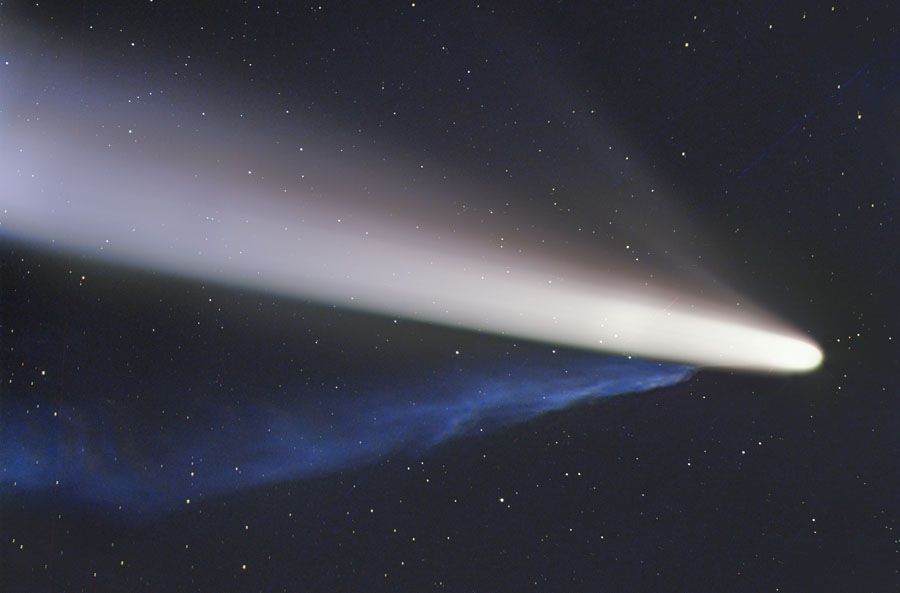
Tsuchinshan-ATLAS is now visible in the west after sunset. It was very easy to spot, so if you are in a dark sky location it should be no problem seeing it if you are looking west. Everyone should go out to see this comet if they get the chance. Photo by Mel Blake
A gravel country lane gently winds through this colorful rural night skyscape. Captured from Monroe County in southern West Virginia on the evening of October 10, the starry sky above is a familiar sight. Shimmering curtains of aurora borealis or northern lights definitely do not make regular appearances here, though. Surprisingly vivid auroral displays were present on that night at very low latitudes around the globe, far from their usual northern and southern high latitude realms. The extensive auroral activity was evidence of a severe geomagnetic storm triggered by the impact of a coronal mass ejection (CME), an immense magnetized cloud of energetic plasma. The CME was launched toward Earth from the active Sun following a powerful X-class solar flare.
Image Credit & Copyright: Jonathan Eggleston
Comet ATLAS was barely visible in the west this evening. I recommend getting out of the city away from the street lights. It should be better in the coming evenings. It is the faint streak just above the light at center.
#Comet Tsuchinshan-ATLAS has delighted observers across the world for the past two weeks, but its morning run was only a warm-up — wait till you see what’s coming.
https://t.co/BLcGvIbjJw
Look for us on the corner of Seminary and Tennessee Streets for Sidewalk Astronomy today, Oct 4th, starting at 7pm. We will have activities for the kids and a telescope to look at celestial objects. This is in partnership with the Shoals Astronomy Club.
UNA Planetarium was on the road yesterday, Oct 3rd, with our Starlab portable planetarium, visiting Valley Head School, in Valley Head, Alabama. We did four programs with 5th and 6th graders. The students had lots of good questions.
Why does this large crater on Mercury have two rings and a smooth floor? No one is sure. The unusual feature called Vivaldi Crater spans 215 kilometers and was imaged again in great detail by ESA's and JAXA's robotic BepiColombo spacecraft on a flyby earlier this month. A large circular feature on a rocky planet or moon is usually caused by either an impact by a small asteroid or a comet fragment, or a volcanic eruption. In the case of Vivaldi, it is possible that both occurred -- a heavy strike that caused a smooth internal lava flow. Double-ringed craters are rare, and the cause of the inner rings remains a topic of research. The speed-slowing gravity-assisted flyby of Mercury by BepiColombo was in preparation for the spacecraft entering orbit around the Solar System's innermost planet in 2026.
Image Credit: ESA, JAXA, BepiColombo, MTM