@BrightInsight6 its a good point - and as terrible and devastating as this was, it was but a dripping tap compared to the firehoses of floods unleashed in times like the younger dryas.
One of my favorite pieces to show people on the Giza Plateau - a little off the main thoroughfare, to the side of the 'mortuary' temple of the middle pyramid complex.
The so called 'couch' blocks - really they're granite cornice blocks (including a cornice corner) that were part of the top or upper level of the granite casing stones, that once fully encapsulated the gigantic limestone core masonry (some of those blocks massing up to 450+ tons!) of this huge structure.
While it's in an extreme state of disrepair due to extreme erosional damage (how long did that take you might ask), the upper pyramid or 'mortuary' temple is, or was, far larger and more impressive than the mighty and much better know Valley temple, that sits next to the Great Sphinx at the other end of the causeway. Itself a marvel of megalithic engineering, the valley temple has/had 16 great square granite pillars in it's court, while the upper pyramid temple had 24, along with a much larger footprint, and the remnants of several are still viewable.
The couch blocks display remarkable aspects of advanced machining into a very hard material, aswanian granite. Consistent radii and compound curves, very smooth and polished surfaces despite many thousands of years in the elements. As per @chrispdunn 's analysis, they display machining characteristics similar to techniques used today to strengthen potential stress or break lines.
It's just lying there, out in the sun, usually next to where they park the camels with all their poop. Never ceases to amaze me - and I love showing it to engineers who visit Egypt with me.
#egypt #pyramids #machining
something different - A storm recording I made nearly a decade ago. Not monetized, just sharing. It's good for background ambient, to fall asleep to, etc. The storm approaches, intensifies for 15+ minutes, then fades out to heavy rain for its 1 hour runtime... on my 2nd channel, UnchartedXLive. https://t.co/j30DgbYkPl
New video! podcast with @SnkBrs , getting into the 'Big Picture.' Where does all the evidence lead? That plus other topics: KV5 visit (biggest tomb in the valley of the kings), vase scan project news, and more. I very much enjoy the conversation, hope you do too! #podcast
@darrenoneill@adamcurry@ThatLARRYSHOW I'm a long time NA fan and producer. I've also adopted the v4v model in my work. Done lots of podcasts and been on the big ones. RIP JCD. 20 years in IT and several in silicon valley - TYFYC.
I cover Stocks extensively in my work. No one is claiming you can't - very, very slowly - grind your way through granite with copper bars and sand. Problem is, the witness marks are completely different to the ancient ones, and the geometries of many cuts simply aren't achievable with that method. Typical authoritative response on twitter given without even watching or considering the evidence to the contrary.
This is going to blow your mind.
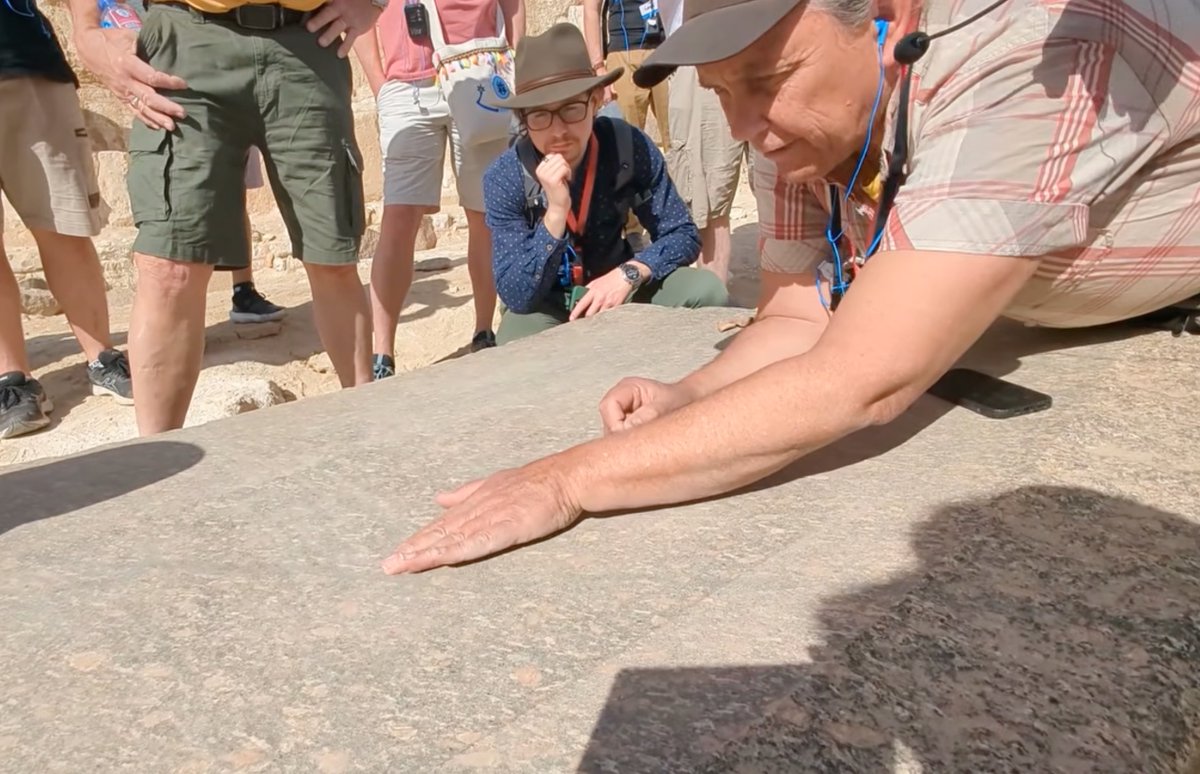
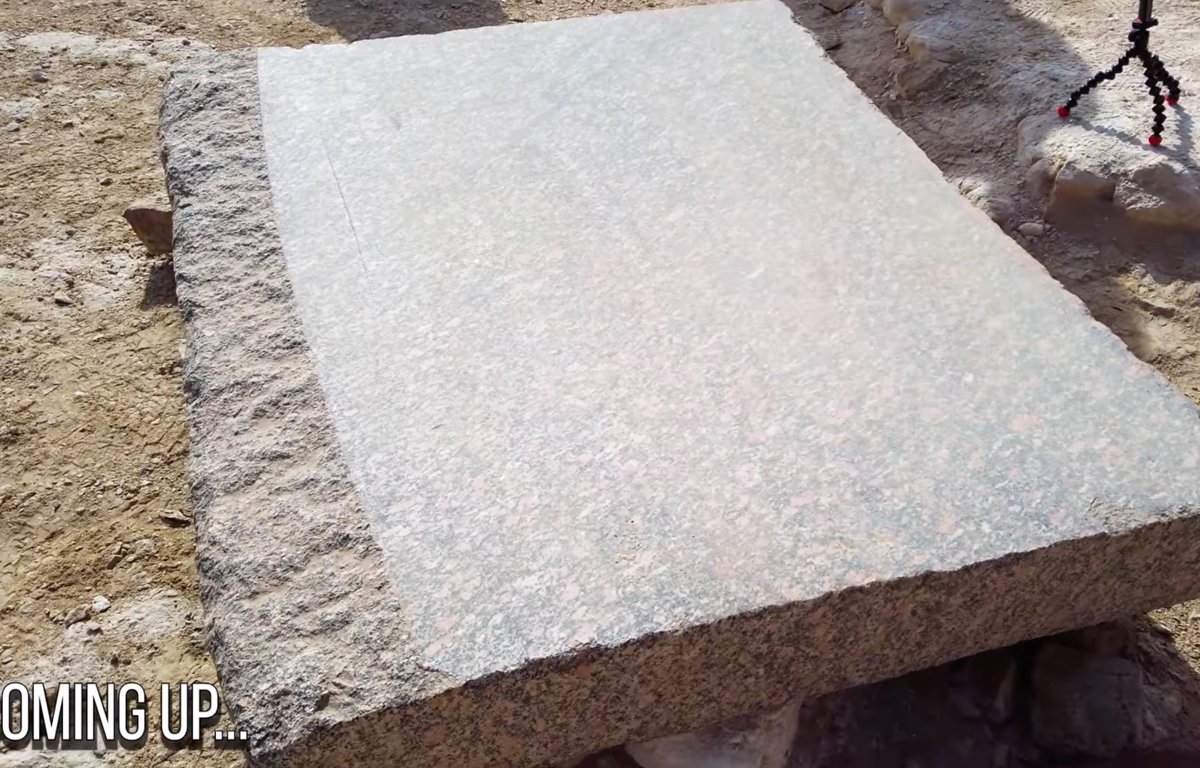
Ben from UnchartedX just released 2 full hours on 1 slab of granite.
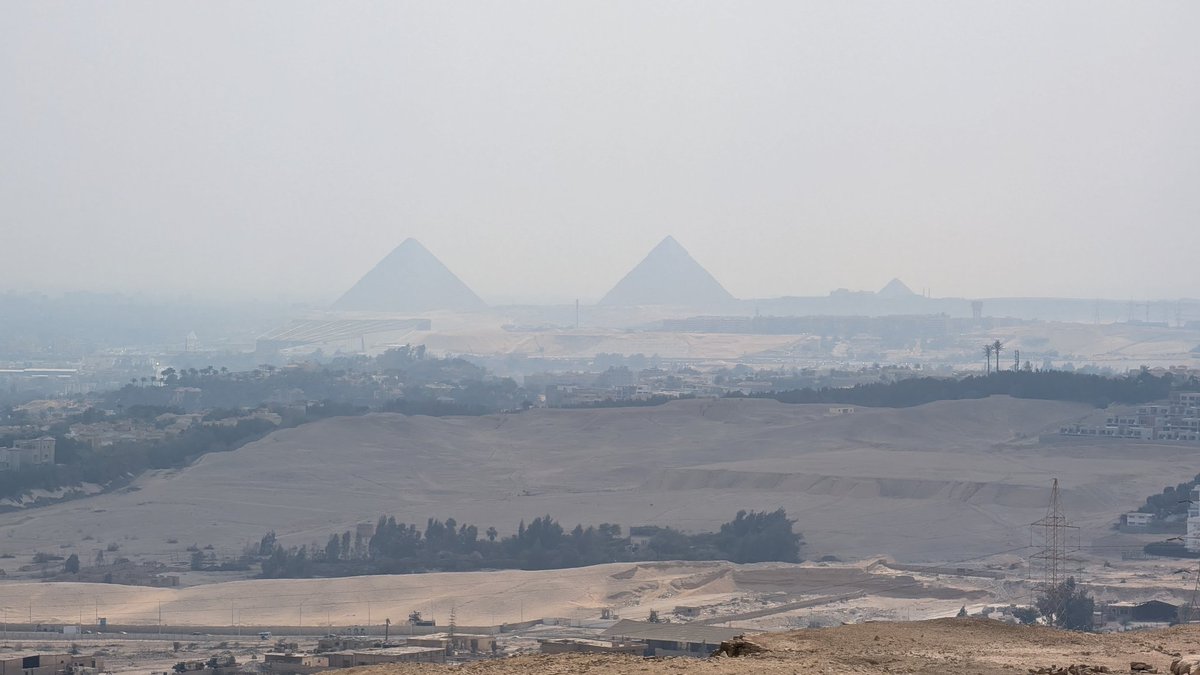
It sits at Abu Rawash, a hilltop pyramid site 5 miles north of Giza, its face carrying a curved cut no straight blade can produce.
Chris King founded Chris King Precision Components and has machined hard materials his entire adult life. The documentary puts him in front of the block, and the words smoking gun follow within minutes.
He called it the witness of a spinning cutter.
🔹Cut spans 2 axes
🔹Grooves 0.03 to 0.06 in apart
🔹Snapped edge follows the cut radius
🔹Engineer Chris Dunn calculated a 37.5 ft saw
🔹Quarried at 300 camel loads a day in the late 1800s
Flinders Petrie, later called the father of scientific archaeology, examined granite here in 1883 and named jewelled saws as the builders' tools.
In the same survey he measured grooves 1/100th of an inch deep and wrote that saw teeth were beyond question. That was 3 years before the first motor car was even patented.
Christopher Dunn, Petrie, and King all reached the same verdict, a cutting tool and not grinding. The standing rebuttal is still copper, sand, and patience.
143 years apart, and the verdict never moved.
What would it take for mainstream to put a machinist in front of this stone on record?
Highly recommend watching Ben's full video.
📷 @UnchartedX1
It's a common question. I understand it's a whataboutism however there are also precisely zero copper drag bars or copper tubes found, and zero depictions/scenes on walls/ documentation of the ancient Egyptians using those techniques on stone. They did for wood. That method doesn't match the witness marks. I just don't think they did the work with that primitive toolset. They did do a lot of work, but not the stuff with the witness marks I discuss.
New video! A deep dive into the evidence for ancient machining - centered around a remarkable granite piece at the rarely seen Old Kingdom pyramid site of Abu Rawash. Spans 4th dynasty context, connecting evidence, witness marks, expert opinions, and speculates on function and the possibilities for the full machining process, from quarry to polished stone.
Well that's been quite a grind. New video drops next day or so. Already up for channel members, patrons etc. pics are related. Except the Photoshop. That just a Photoshop, got lots of em. My discord thinks it's funny.