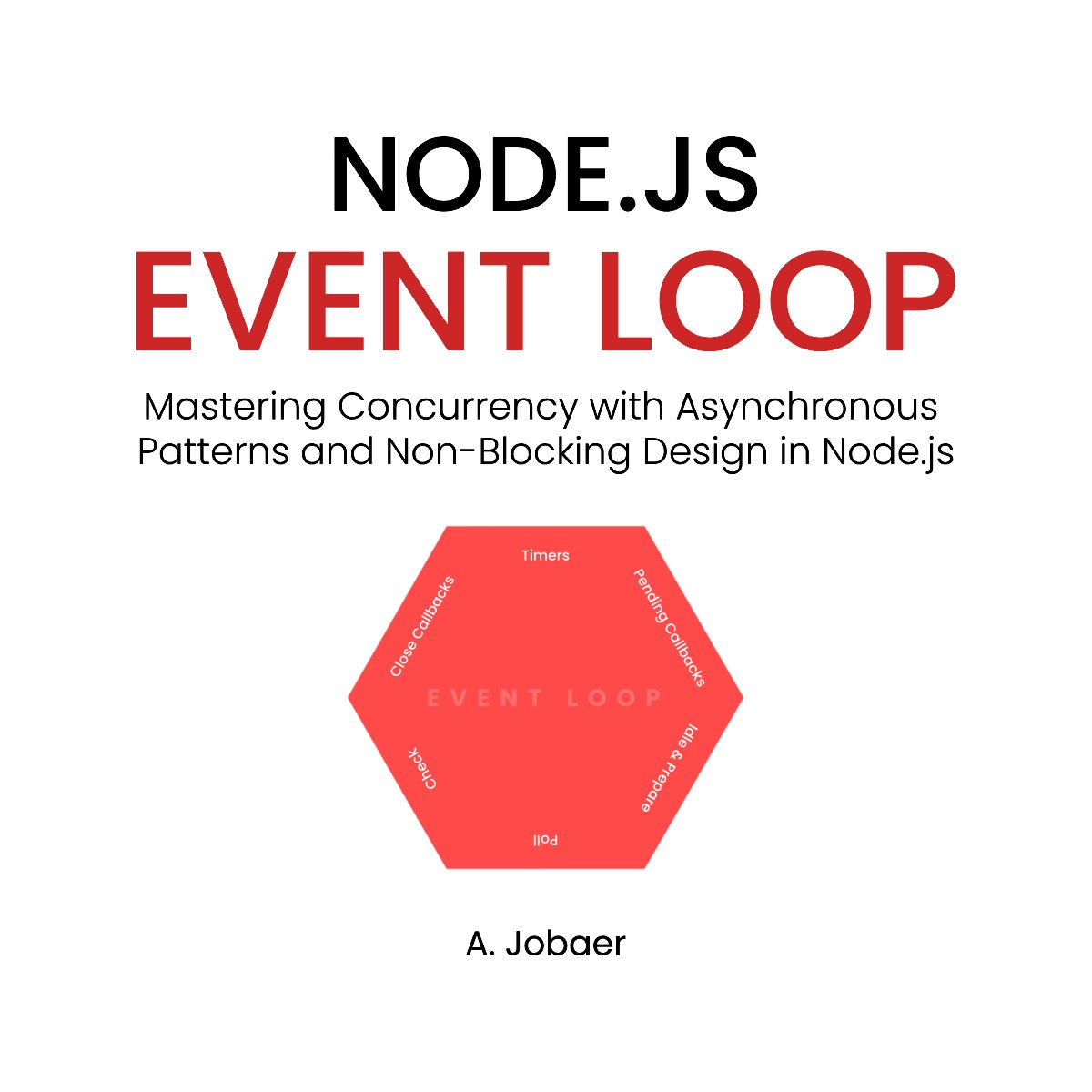
Whether you're in a bootcamp or learning solo, the Event Loop can be intimidating.
This books breaks down the concept with beginner-friendly examples and plain English — no fluff, no assumptions.
Finally understand how Node.js manages asynchronous code.
process.nextTick() is for invariants and internal consistency
setImmediate() is for letting the event loop breathe
Together both can do interesting jobs
Curious? How?
Check it here: https://t.co/P6dE9Bocjs
#js#javascript#nodejs
If you've ever wondered why your async code "feels" slow!
It's often not your code.
It's how you interact with the event loop.
That's what my book Node.js Event Loop dives deep into.
Link in comment
#js#nodejs#NodejsEventLoop
When you need a log manager
- you import, instantiate, and use it
When you need a config manager
- you import, instantiate, and use it
You do the same for DB connection, Cache manager, or other services.
Soon your code is scattered with imports and instantiations.
What if all those commonly used services lives in one shared place?
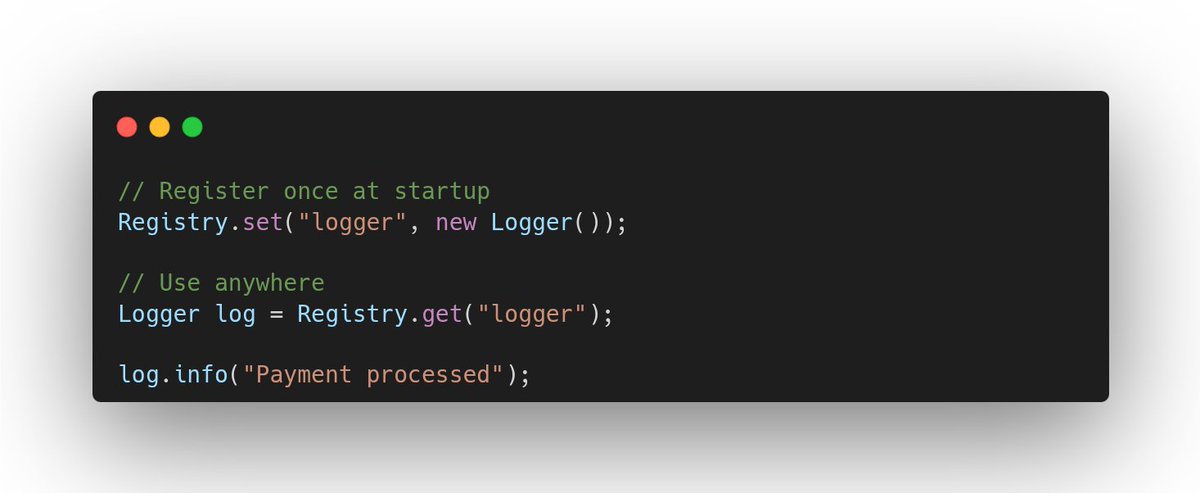
That's where the Register Pattern can help you - a simple central hub for your core services.
Register Pattern is perfect for small systems where clarity matters.
Read full breakdown here: https://t.co/PAJhXgScHA
#SoftwareArchitecture #DesignPatterns #SystemDesign #ProgrammingTips #DevCommunity #CodingBestPractices
Most developers think they know the difference between process.nextTick() and setImmediate().
But here's the truth:
- process.nextTick() runs before the event loop continues.
- setImmediate() runs typically after the poll phase ends.
Mix them incorrectly…
And you can starve the event loop or accidentally create execution bottlenecks.
Try this:
Most developers use Node.js. Few understand what happens under the hood.
This book breaks down the Event Loop and how Node.js schedules everything behind the scenes.
If you want to build highly performant Node.js apps, this is the deep-dive you've been missing.
Whether you're in a bootcamp or learning solo, the Event Loop can be intimidating.
This books breaks down the concept with beginner-friendly examples and plain English — no fluff, no assumptions.
Finally understand how Node.js manages asynchronous code.
Slow endpoints? CPU spikes? Weird async behavior?
Understanding the Event Loop gives you the power to diagnose performance issues with confidence.
This book teaches practical, real-world optimization techniques every backend engineer should know.
Quietly, Java 25 just killed the last excuse for rewriting services in Rust or Go:
Java 25 (Sept 2025) finalized Project Panama’s Vector API and Foreign Function & Memory API. Developers can now achieve genuine native SIMD performance in pure, safe Java no JNI, no Unsafe, no native builds. Real-world 2025 benchmarks from Alibaba, Goldman Sachs, and ad-tech firms show 6–20× speedups on JSON parsing, image processing, and cryptography while remaining fully portable and GC-friendly. Several planned Rust rewrites have already been cancelled.
Think of the Node.js Event Loop as a traffic controller.
It decides when timers, I/O callbacks, promises, and immediates get executed.
Once you know its phases, performance optimization stops being guesswork.
Node.js timers don't run when you think they do.
You can ask for 10ms.
You might get 110ms.
And nothing in your code is "broken".
This happens because the event loop can't fire your timer until the call stack is free, even if the timer technically expired long ago.
If you block the event loop, your timers, promises, and even HTTP responses will ALL be delayed.
Try this:
I couldn't wait any longer - Both paper and Kindle, will be a day or three to show up - we'll see what transpires.
This was a heavy piece of work and hanging around my neck since I was really unsatisfied with the preview version, happy it is out and moving.
setTimeout(fn, 0) ≠ run immediately.
It schedules "fn" after the current call stack is empty & the timer phase arrives.
That's why "0 ms" isn't zero. It's minimum delay.
Use setTimeout(fn, 0) when you need to defer execution, but NOT when you need something to run right away.