Join us in Doha.
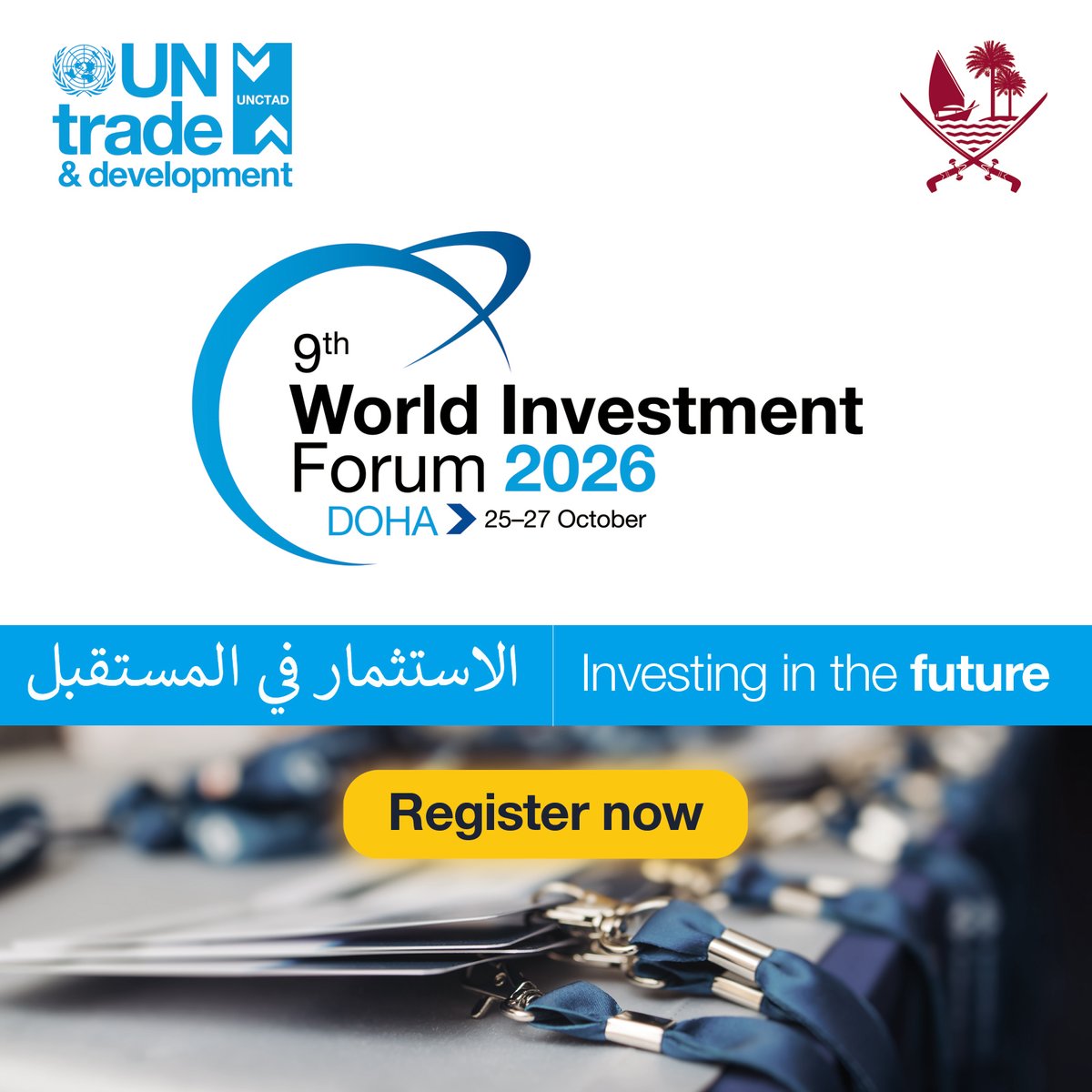
The World Investment Forum 2026, 25–27 October. Ministers and investors from more than 160 countries, on climate, artificial intelligence and where the world's capital goes next.
Be there for the conversation.
➡️ https://t.co/TaxbvkEppL
#WIF2026
📍Next stop: #DohaWIF2026!
EIF ED Aissatou Diallo will join two discussions:
✅25 Oct: Investing in Peace: From Policy Foundations to Capital Impact
✅26 Oct: Partnerships, Investment & Trade: Advancing Sustainable Development & Prosperity in LDCs
https://t.co/2NwJfhbWUj
Ahya is excited to announce our participation in the 9th edition of the World Investment Forum, organized by UN Trade and Development (UNCTAD) in partnership with the Ministry of Commerce and Industry of Qatar.
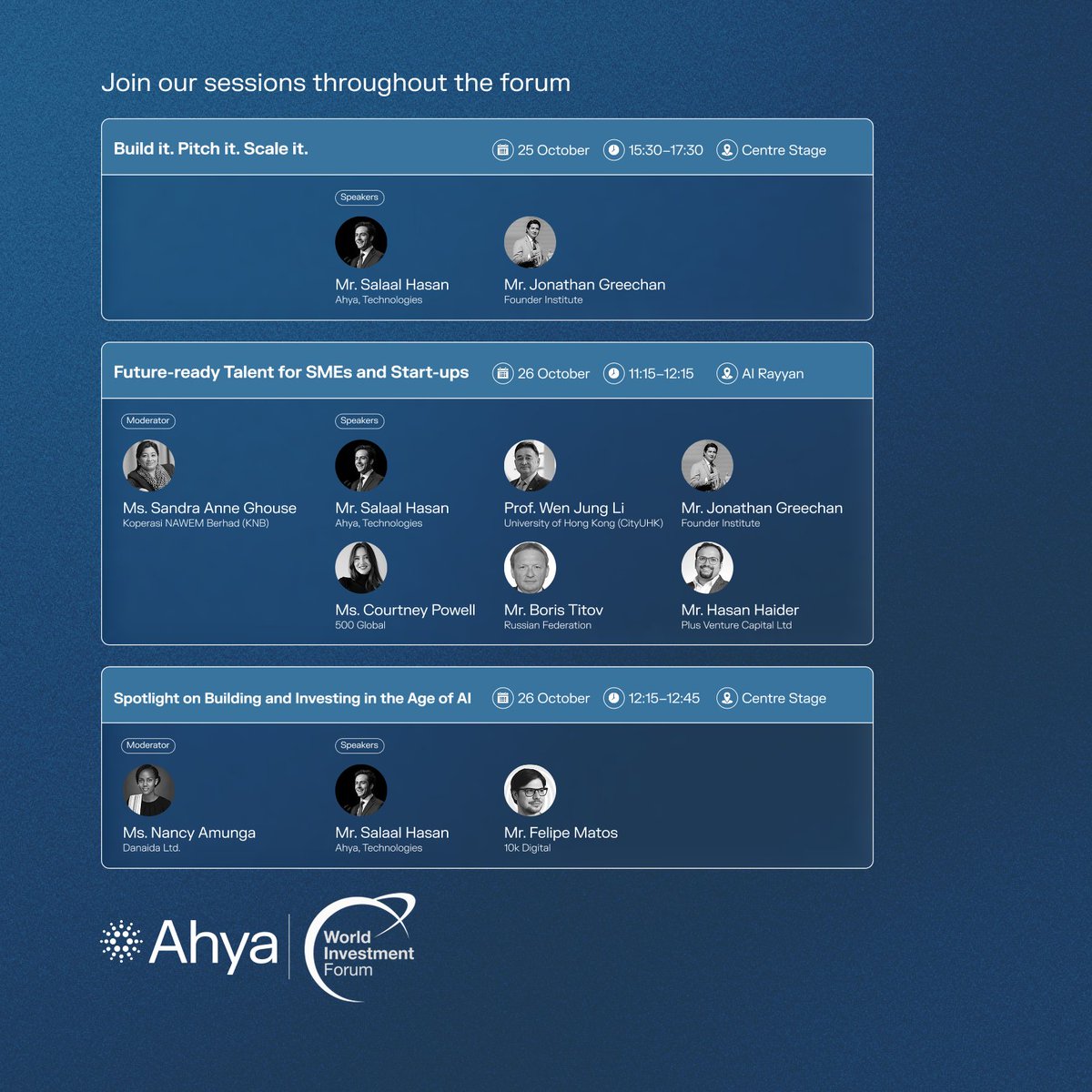
Our founder & CEO, Salaal Hasan, will take the Center Stage to explore how frontier AI models are reshaping sustainable development and bridging critical institutional voids across the Global South, in the following sessions.
Session 1 - Build. Pitch. Scale. Showcase
Session 2 - Future-ready Talent for SMEs and Start-ups
Session 3 - Building & Investing in the Age of AI
Register here: https://t.co/KIShoDgygG
@UNCTAD | @MOCIQatar
#WIF2026 #Reenliven
Strategically positioned at the crossroads of Africa and the Middle East, #Somalia offers significant opportunities across its natural resources, and it has the potential to attract investment, mobilise capital, and build new trade partnerships that drive sustainable economic growth.
Our CEO, Mr. @HassanDudde, will speak at the 9th @UNCTAD World Investment Forum 2026 in #Doha , #Qatar, contributing to discussions on innovative financing, mobilising capital for development projects, and strengthening international trade partnerships.
He will also explore how capital markets can help unlock investment, channel capital into productive sectors, advance sustainable finance, and support Somalia’s long-term economic transformation.
Somalia’s investment potential is significant. The opportunity is to connect that potential with capital, partnerships, and markets to turn ambition into action.
For more information about the programme, please visit: https://t.co/vYq33ydbIu
Join us at the UNCTAD World Investment Forum 2026, Sunday, 25 October 2026 | 11:15–12:45 (Doha time). Salwa 2, Sheraton Hotel, Doha, Qatar
#FirstNationalStockExchangeInSomalia
#SuuqaSaamiyadaSoomaaliyeed
#SomaliStockExchangeSince2015 Visit https://t.co/lwNpR06NKt
@AmbGamal@BihiEgeh@MoF_Somalia@MOFASomalia@AbdirahmanM_A@cbsomalia@UKinSomalia@QatarEmbassySO@SomEmbQatar@sombankltd@Dahabshil@IBSBankSo@somalibankers@SomaliDRB@qatar_fund@SSEinitiative
Next stop: Doha 🇶🇦
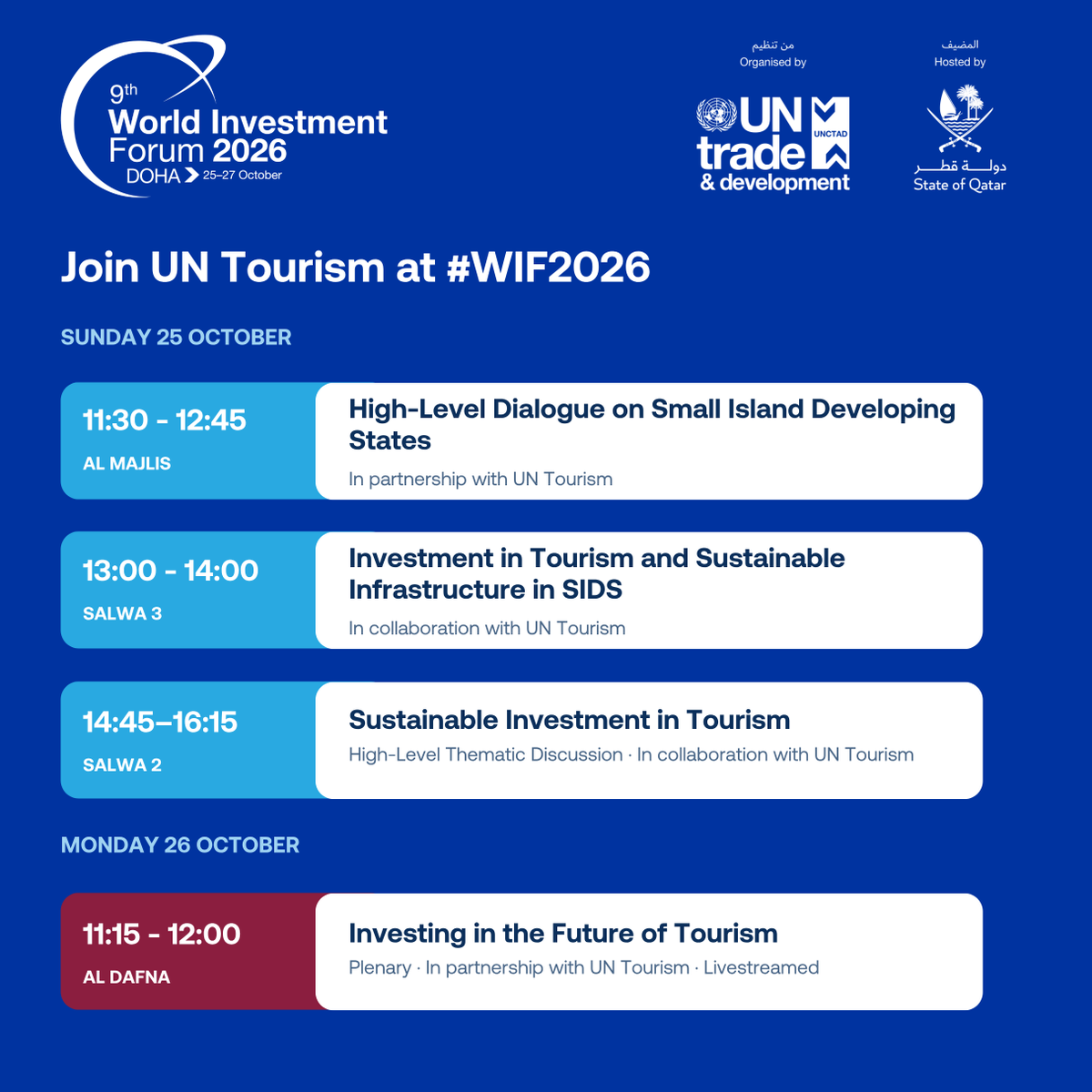
UN Tourism joins the 9th World Investment Forum (25–27 Oct), where tourism gets its first dedicated Track.
Follow our sessions on SIDS and sustainable investment in tourism.
#WIF2026#UNTourism#InvestInTourism
#WIF2026, Doha, Qatar, 25-27 Oct 2026.
Africa & Latin America hold 2/3rds of the 🌍's biodiversity, but capture just 14% of $3.8 trillion in global trade it generates
Learn more & watch live: 26 Oct, 15:15: https://t.co/RSQFRlOw0k
Global Trade Update: https://t.co/PYMReIcgv5
World Investment Forum, Doha, Qatar, 25-27 October 2026.
Tourism investment still hasn't recovered: just $7B in 2025, down from $48B in 2019, per the World Investment Report 2026.
Learn more at #WIF2026
➡️ Watch live, 26 Oct, 11:15 Doha time: https://t.co/ErCYGWLRbn
World Investment Forum, Doha, Qatar, 25-27 October 2026.
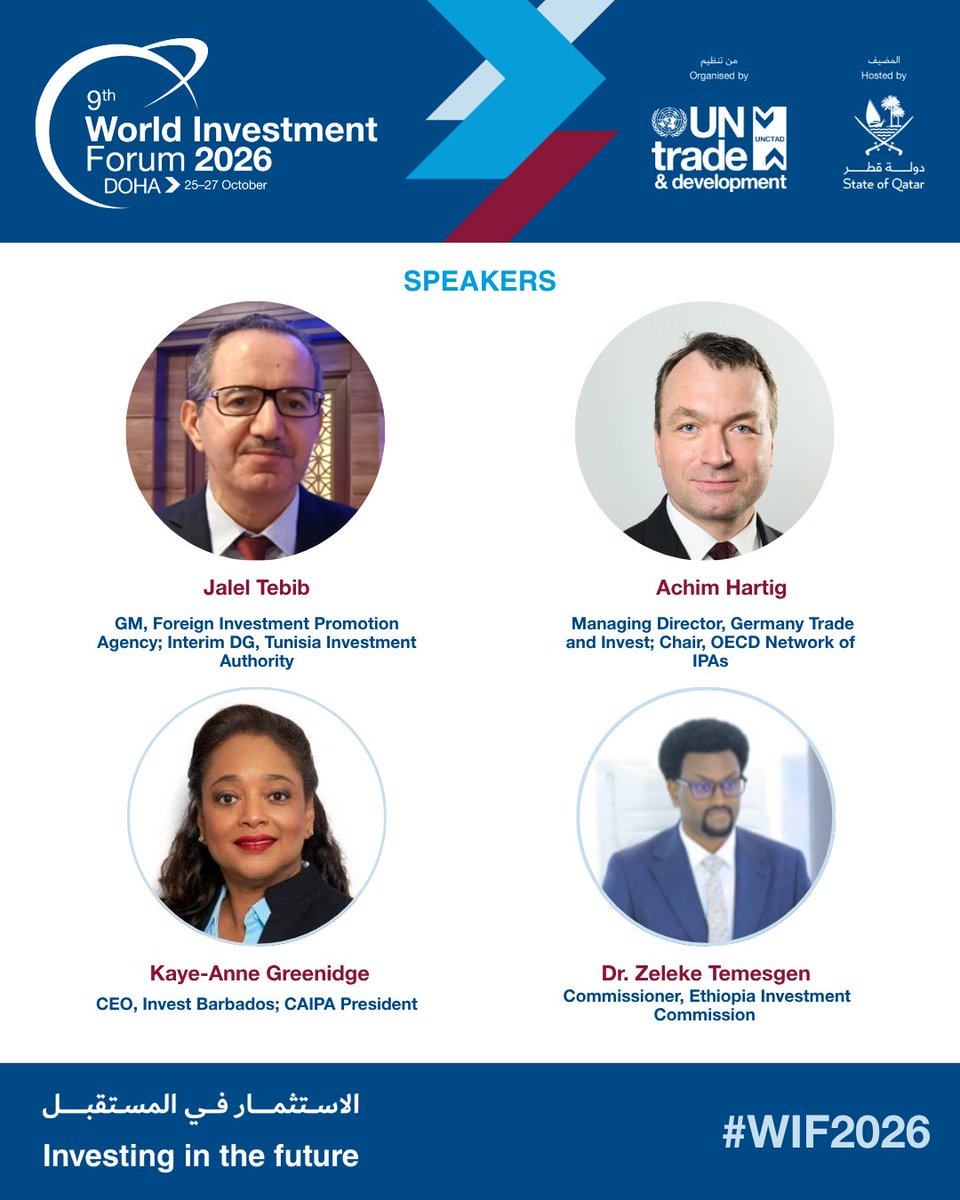
🎤 Joining #WIF2026: H.E. Jean-Jacques Bouya, Deputy Prime Minister in Charge of Coordination, Development Infrastructure, and Land Planning, Republic of Congo.
➡️ Meet the speakers: https://t.co/I9okMKIfig #DohaWIF2026
World Investment Forum, Doha, Qatar, 25-27 October 2026.
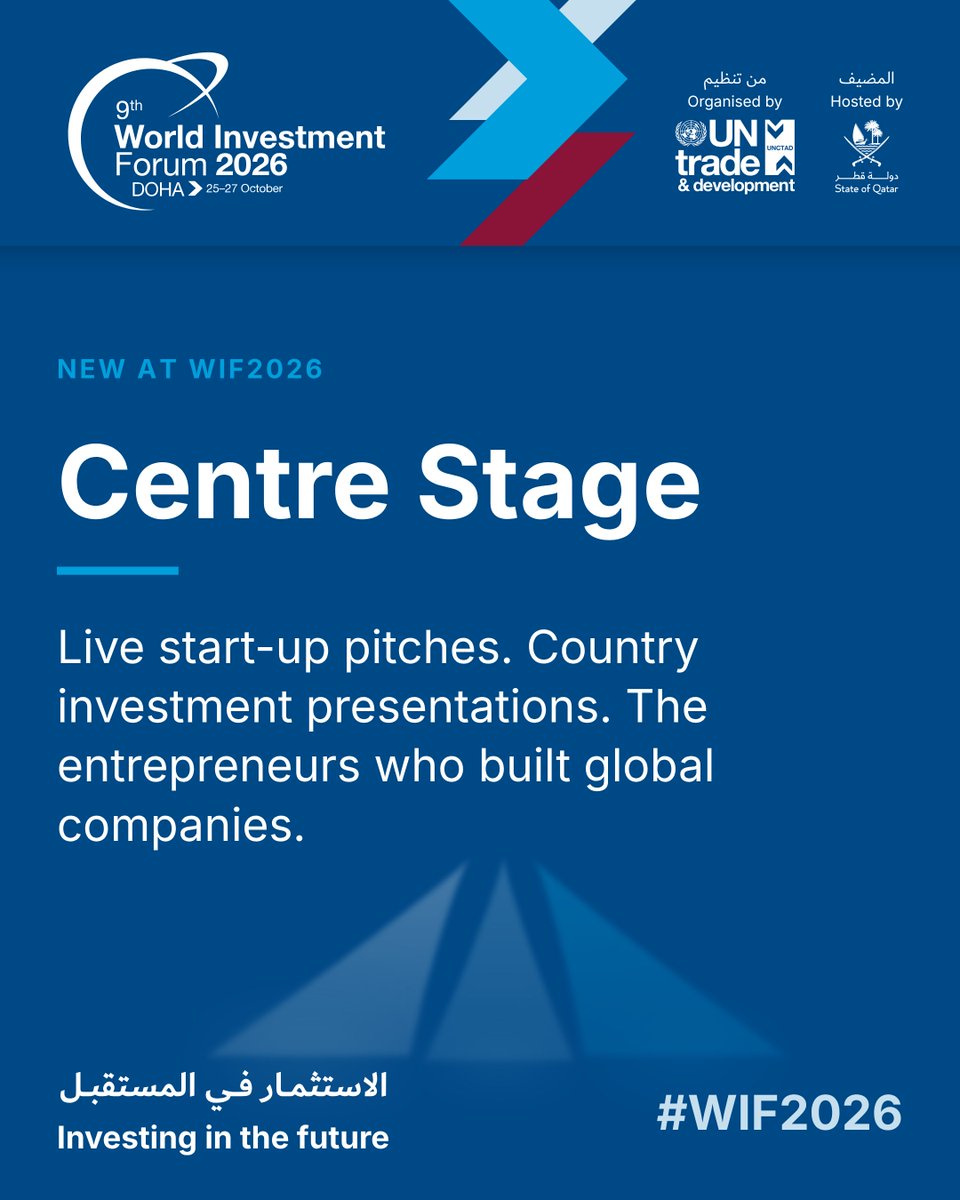
New at #WIF2026: Centre Stage – live start-up pitches, country investment presentations and founders who’ve built global companies. Come see it in the Doha Networking Village
➡️ https://t.co/XqL2Ie0CFn #DohaWIF2026
Shipping disruptions are raising freight and fuel costs, adding pressure to food and fertilizer prices.
@UNCTAD warns that vulnerable countries face growing food security risks amid market volatility and climate threats.
https://t.co/C6irqsXvXE
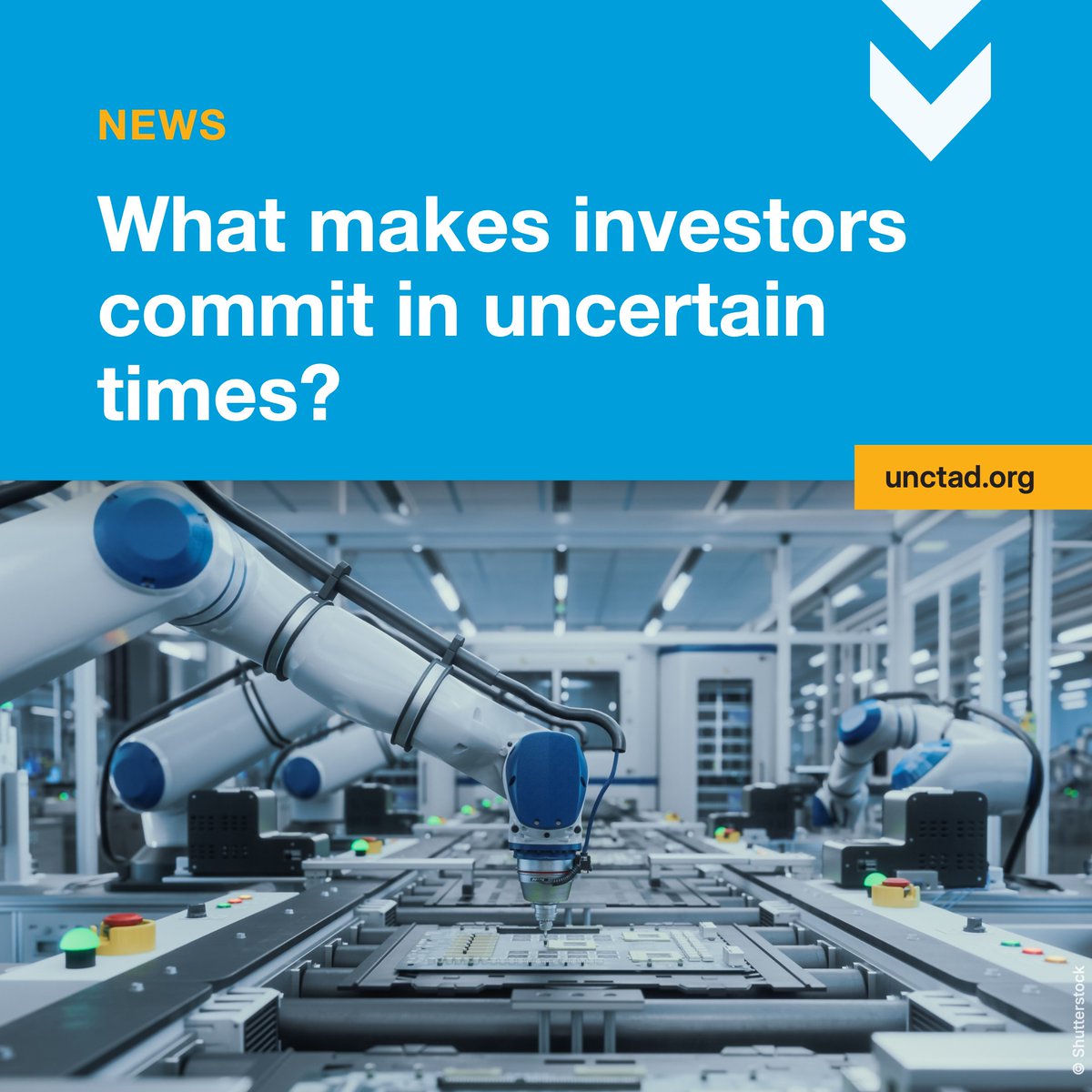
What makes investors commit in uncertain times?
Geopolitical tensions, technological change and shifting trade patterns are reshaping where companies invest and how they organize their global value chains.
Read the full story: https://t.co/FwMX7hHBzZ
#WIF2026#DohaWIF2026
Caribbean Export takes the Caribbean's investment priorities to the global stage!
Our Deputy Executive Director, @leonaut will represent Caribbean Export at the 9th World Investment Forum (#WIF2026) in Doha, Qatar, organised by @UNCTAD.
On 25 October, he will join international experts for a discussion on “Scaling up Investment in Climate Adaptation and Resilient Infrastructure in SIDS.”
The session will explore how to mobilise climate finance, develop bankable projects and attract private investment to strengthen climate resilience across Small Island Developing States.
Caribbean Export remains committed to connecting regional investment opportunities with global capital and advancing sustainable development across the Caribbean.
#WIF2026 #DohaWIF2026 #CaribbeanExport #ClimateFinance #SIDS
World Investment Forum, Doha, Qatar, 25-27 October 2026.
Africa attracted about $70 billion in investment in 2025. It's the backdrop for the Invest in Africa Round Table, 25 Oct, 13:00: https://t.co/6JSVC4CKb2 #WIF2026
Explore the data yourself: https://t.co/t27GtXN2MI
World Investment Forum, Doha, Qatar, 25-27 October 2026.
Honored to welcome H.E. Samuel Ntsokoane Matekane, Prime Minister of Lesotho, at #WIF2026 – delivering a special address Monday, 26 October, 15:00 Doha time.
Watch live: https://t.co/A7vBmAnUxJ
#DohaWIF2026
World Investment Forum, Doha, Qatar, 25-27 October 2026.
Honored to welcome H.E. Mamitiana Jeannot Ruffin Rajaonarison, Prime Minister of Madagascar at #WIF2026 – delivering a special address Sunday, 25 October 2026, 15:00 Doha time.
Live: https://t.co/k0VgPxibNc
#DohaWIF2026
World Investment Forum, Doha, Qatar, 25-27 October 2026.
Honored to welcome H.E. Abdul Hamid Dbeibah, Prime Minister of Libya, at #WIF2026 – delivering a special address Sunday, 25 October, 10:50 Doha time.
Watch live: https://t.co/Sp9uiSnY72
#DohaWIF2026
World Investment Forum, Doha, Qatar, 25-27 October 2026.
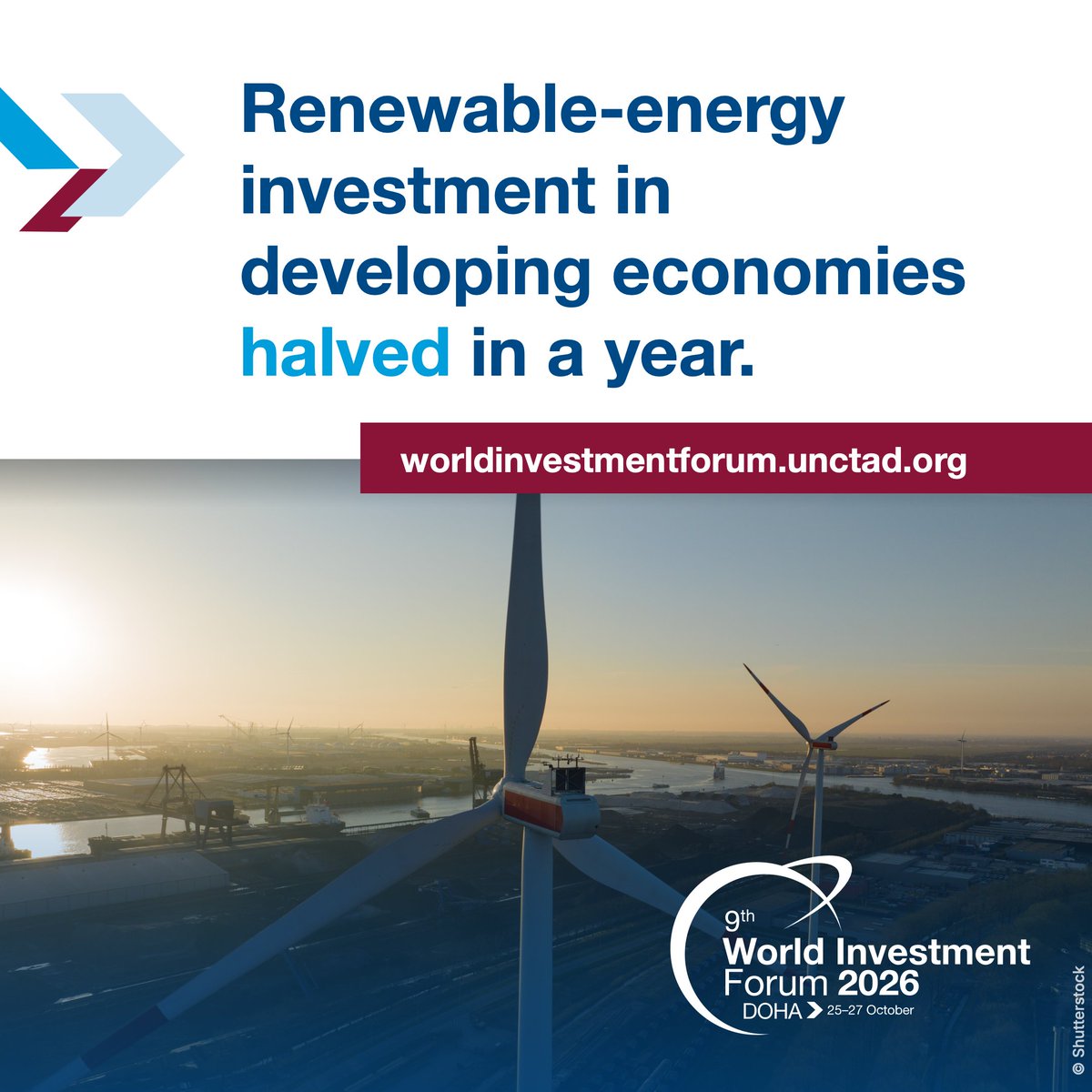
Renewable-energy investment in developing economies halved in a year – $109B (2024) to $55B (2025) (World Investment Report).
Learn more at #WIF2026's energy security session, 25 Oct, 15:00: https://t.co/YvP8YSwxSO
World Investment Forum, Doha, Qatar, 25-27 October 2026.
Collect your #WIF2026 badge at the UN Accreditation Tent: 23–24 Oct 9AM–7PM · 25–26 Oct 8AM–6PM · 27 Oct 8AM–12PM. Bring valid ID + your Indico approval QR code.
https://t.co/njqezU9yjH #DohaWIF2026@MOCIQatar
#WIF2026, Doha, Qatar, 25-27 October 2026.
A case study in moving beyond raw mineral exports: Our Madagascar report finds a critical-minerals strategy backing 124 priority products. https://t.co/Eo96xJdkcJ
See sessions:
https://t.co/KwuOrVsT6g
https://t.co/NGKHM0Bnto