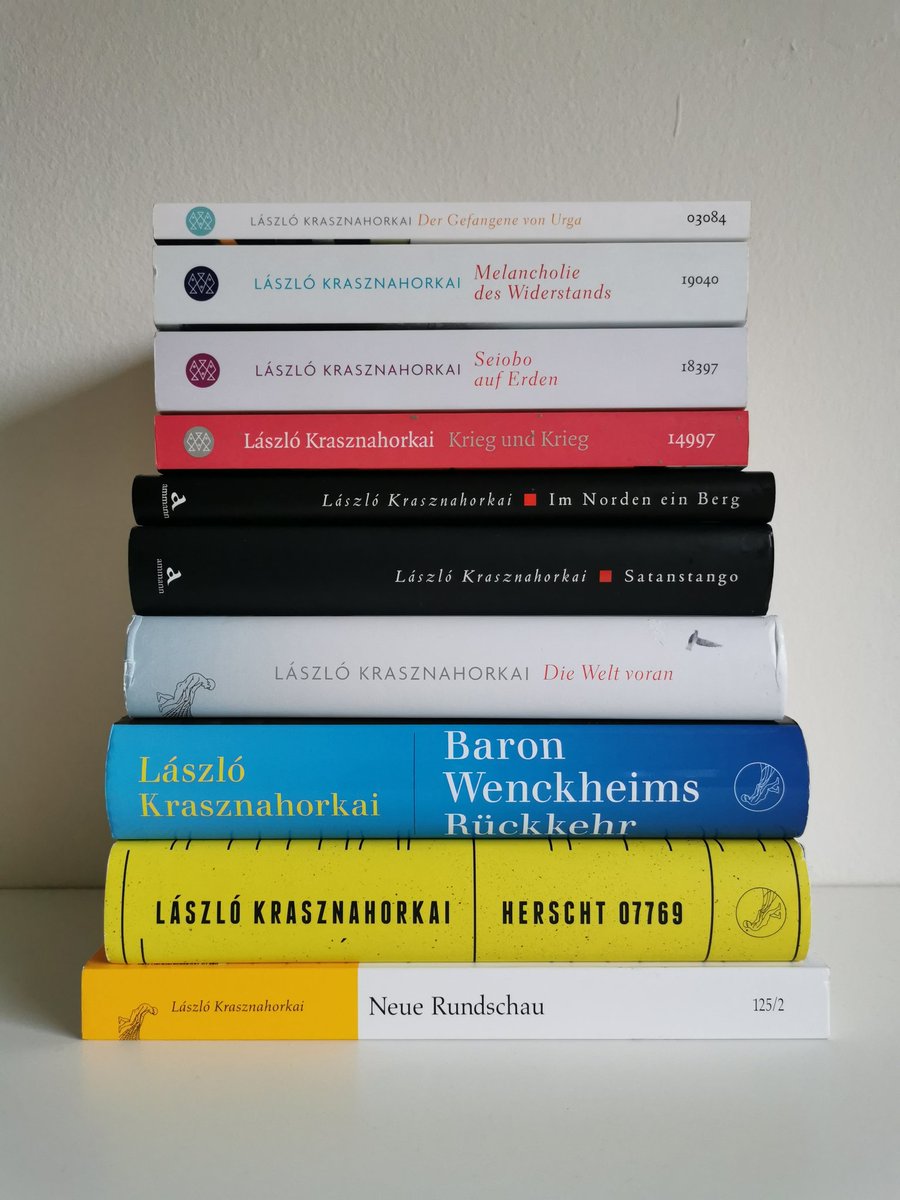
On the occasion of the upcoming English translation of László Krasznahorkai's novel Herscht 07769, I recorded a video in which I talk about my personal reading of his books including his core themes and recurring motifs. Hope is a mistake.
https://t.co/5pjYEURmFG
(Since @YaleBooks published Gitta Honegger's great translation of The Children of the Dead two years ago, I also compare some phrases with Jelinek's original.)
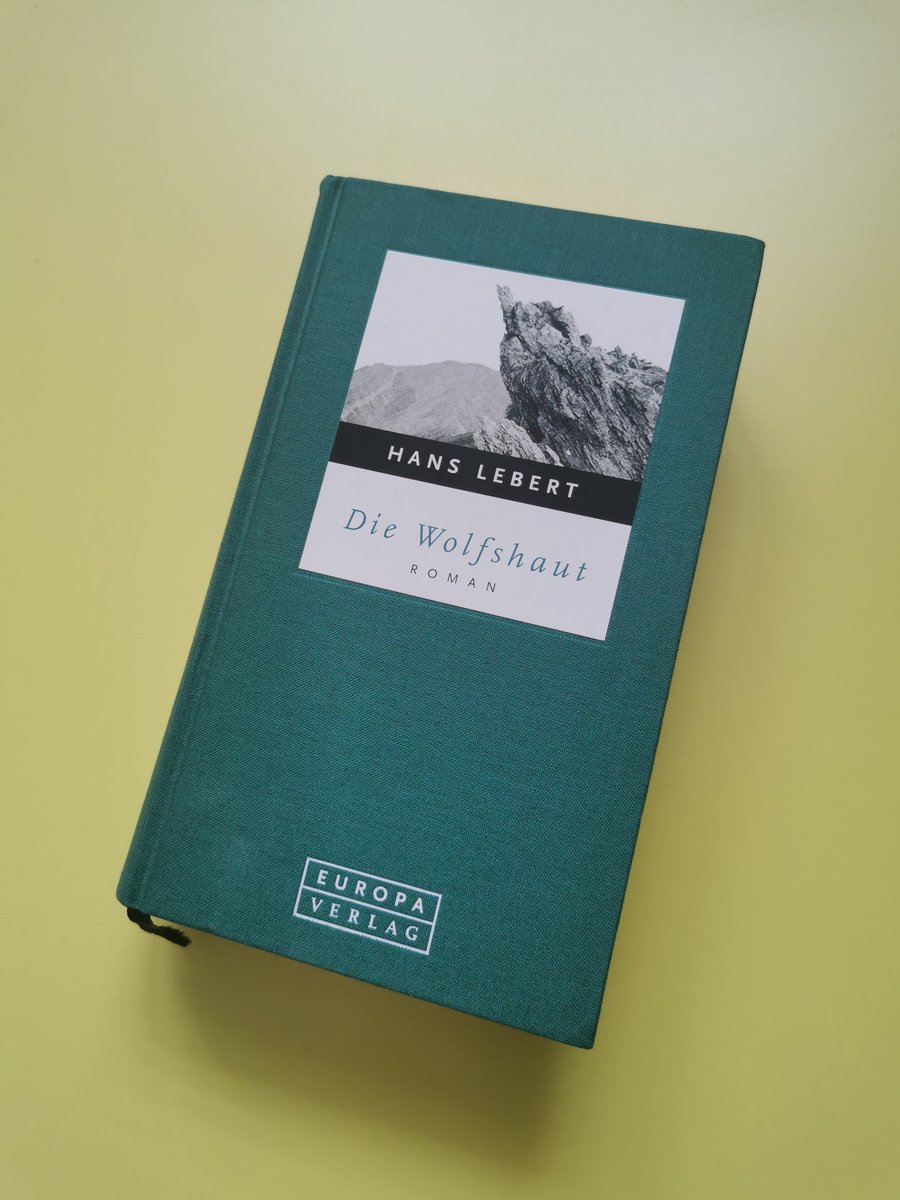
Back with a new project: I've spent the past few months reading Austrian writers whose novels are sometimes ambiguously described as "Anti-Heimatliteratur" and recorded my experience. In hopes of the rediscovery of some forgotten greats.
https://t.co/QckqoG59Da
Framed as a crime novel with bursts of expressionistic language (nature descriptions reminiscent of Jahnn), it balances the suspense of something unknown lurking with the boring everyday life of a village. At least CR has a review for English readers: https://t.co/Fy92A3lQ9s
A precursor to the likes of Elfriede Jelinek and Thomas Bernhard, one of the first writers to deal with repressed Austrian guilt after WW2, Hans Lebert is virtually forgotten today. There exist(ed) various translations of Die Wolfshaut, but even the German is out of print.
@xyzzzz__ No definite hard dates yet (the German one was supposed to be published 2017, it now took 15 years), but an overview of sold rights and publishers: https://t.co/bgAJVfSSDS
Apparently a new Italian edition/translation too.
70 years after the publication of the "Brazilian Ulysses" Grande Sertão: Veredas by João Guimarães Rosa, 2026 might finally be the year English and German readers get new translations by Alison Entrekin (Vastlands: The Crossing) and Berthold Zilly (Großer Sertão: Überquerungen)
For the weekend readers! My first publication of the year is a poetic essay with @MinorLits. It's a departure in style from all my previous work, indebted to writers like Paul Celan, Toni Morrison, and Matsuo Bashō.
I wrote to give myself a language to survive these times.
@ZIssenberg@TobiasvRyan Looking forward to your thoughts on the Hoffer and esp. the intertextuality of myth. Even until now, I haven't come to a conclusion as to what to make of it
The translation by Isabel Fargo Cole (who also translated Wolfgang Hilbig) is available from @seagullbooks and includes the sources for the paraphrases and quotes, among an afterword describing the tragic real background of the titular Biereschek.
A forgotten Austrian cult novel, and there even is an English translation. Strange traces of Kafka, Borges, Beckett, Vonnegut and more - literally: Hoffer infuses this blend of contradicting mythologies and fever dreams with dozens of paraphrases of other writers.
A singular, if very disturbing reading experience so far that fits well with the nearing season of ghosts. No coherence in time and space, undead main characters - then again, language itself seems to be the dissected main character eating itself.
Happy 70th birthday to the master of the apocalypse, the king of the endless sentence, the virtuoso of chapter titles and epigraphs, 2025 Nobel winner (?) László Krasznahorkai. So many thoughts on his work, so great the temptation to ditch all other reading plans in his favor.
"Nostalgia. What is remembered. What never existed except as remembrance."
"We listen to the music that is silence."
"Black birds across the watery sky, drowning."
"One wrestles, gently, with the end."
"Snow falls like music."
Really enjoyed Ava.
"It's time to consider learning to fly."
"To devour all that is the world."
"One feels the need in the end for hundreds of daughters"
"A love story where the beloved makes the mistake of not existing."
"Let's play a posthumous accordion solo together."
"Prolonging the world with song."
"You will use up the number of times assigned to you to articulate this or that hexameter and you will go on living. You will use up the number of times your heart has been assigned a heartbeat and then you will have died."
On the occasion of the upcoming English translation of László Krasznahorkai's novel Herscht 07769, I recorded a video in which I talk about my personal reading of his books including his core themes and recurring motifs. Hope is a mistake.
https://t.co/5pjYEURmFG