This is by far the absolute best book criticizing democracy as a strongly collectivist system and a new-age religion that I have ever read.
If you start with the tired phrase "democracy has its bugs, but we haven't figured out anything better yet", then this is the book for you!
It's only 98 pages, so you'll read it in a minute, it's concise, clear, to the point (I read it on the plane on the way from Madeira to Vienna).
I don't know of any other book that makes such a strong and apt case for democracy. It will explain to you with illustrative examples why democracy has nothing to do with individual freedom, on the contrary, it denies it on many levels and leads to the stagnation of society.
The book debunks the following myths:
* In a democracy, every vote "counts"
* In a democracy "the people rule"
* Most people are right
* Democracy is politically neutral
* Democracy leads to prosperity
* Democracy is necessary to distribute wealth fairly and help the poor
* Democracy is necessary for all of us to live in harmony
* Democracy means freedom and tolerance
* Democracy promotes peace and helps fight corruption
* People get what they want in a democracy
* We are all democrats
* There is no better alternative than democracy (or alternative only to totalitarianism)
I bought the book based on these two recommendations:
"Just finished reading the thing. Fantastic. Great work. Congratulations." Hans Hermann Hoppe
"This book has massive explanatory power. It can liberate your mind" Jeffrey Tucker
And when these two gentlemen agree on something (and I'll just join in), it really can't be bad.... :-)
And a couple of powerful quotes to go with it:
True freedom means the right not to participate in the system and not to pay for it.
"When the people find that they can "vote" with their money, it will mean the end of the republic" (Benjamin Franklin sometime in the 18th century).
Enforced solidarity is indeed a contradiction in terms. For solidarity to be real, it must be voluntary.
Democracy is a conventional way of offloading individual responsibility onto the masses.
Democracy is an organization in which membership is compulsory. Real community is based on voluntary membership.
If someone is being blackmailed by the mafia in Sicily, no one says "if you don't like it, leave".
Coercion is coercion, and it is irrelevant whether it is enforced by an autocrat or a democratic majority.
Freedom is that you don't have to do what the democratic majority dictates, but you can decide what you do.
The measure of freedom should not be whether we have the democratic right to vote. But what we vote on is not.
"Liberty is a well-armed lamb that refuses to vote on itself" Benjamin Franklin's addendum to his famous statement "Democracy is two wolves and a lamb voting on what's for lunch"
Democracy is just a more sophisticated form of socialism.
Decentralization, unlike the democratic nation-state, is really a "Live and Let Live" system.
People today can hardly imagine citizens accepting the authority of a king. The strange thing is that they, without retort, now accept the authority of the majority.
Democracy weakens individual freedom - technology strengthens it.
Technology represents a real "democratizing" force. More so than the democratic system itself.
Some may argue that most people can't be free or take care of themselves. That's why they need the state - the exact same argument was used against the abolition of slavery ("Black slaves can't take care of themselves after the abolition of slavery without a master").
The state is not a benevolent Santa Claus. It is a selfish, intervening monster that will never be satisfied. And in time, it will stifle the independence and autonomy of its citizens. And this monster is sustained by democracy - the belief that the life of every human being should be decided by the majority.
https://t.co/Qu0qtuCrCI
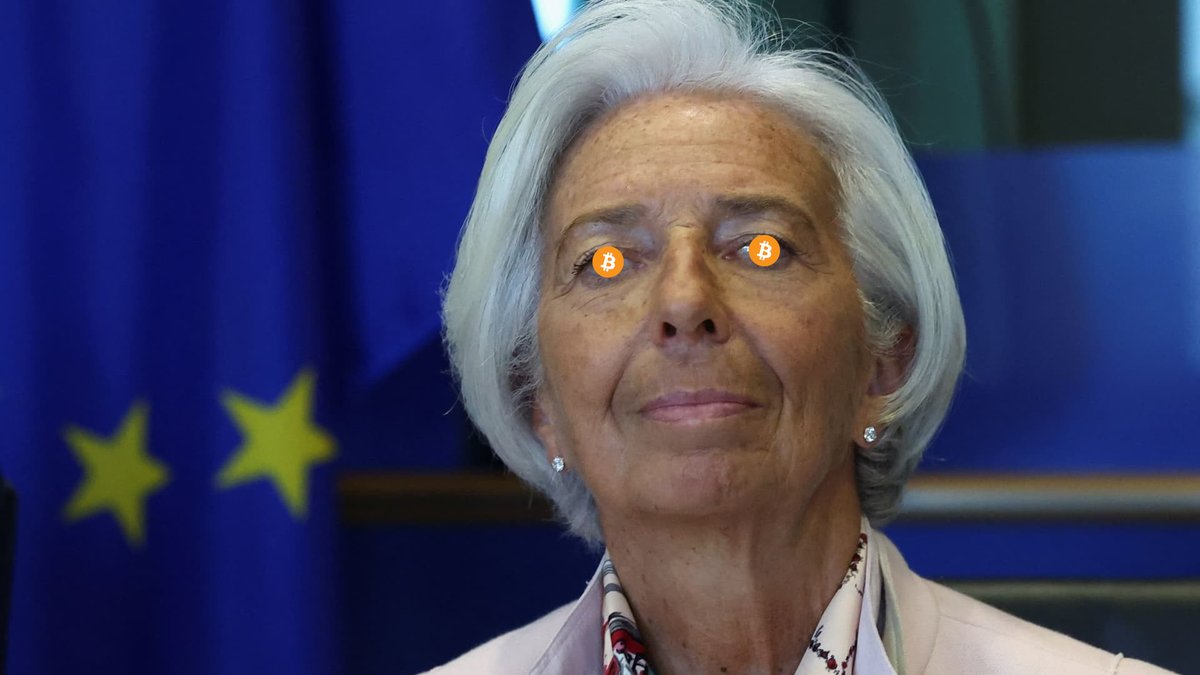
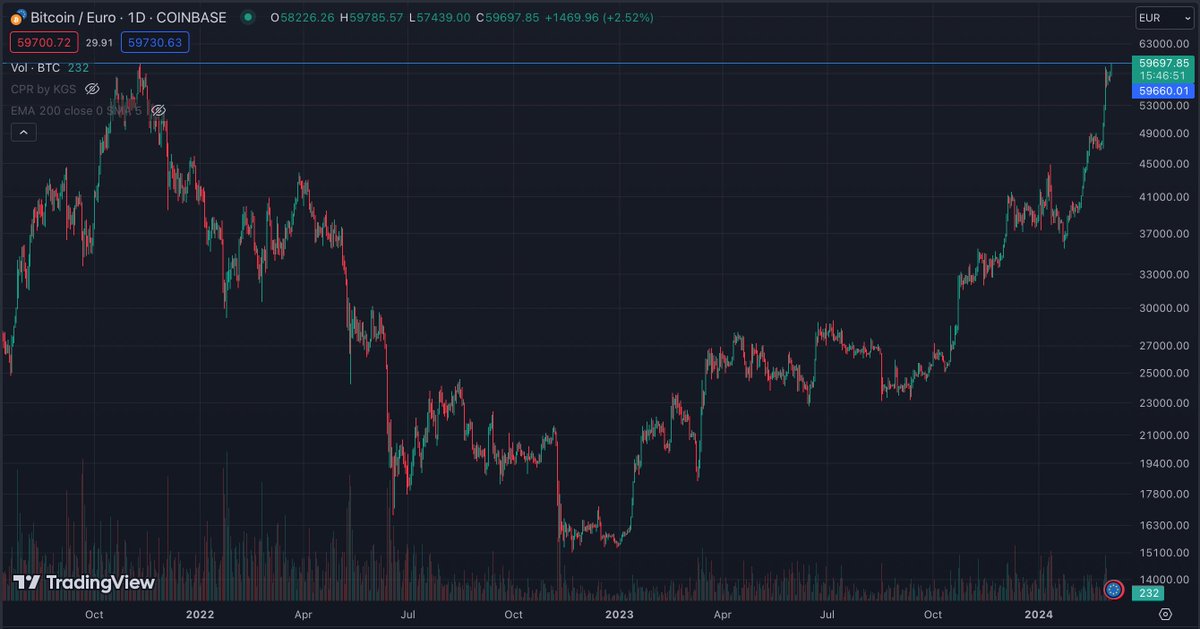
Cena bitcoinu vyjádřená v podvodném shitcoinu vydávaném institucí, kterou vede usvědčená defraudantka, právě překonává ATH. 🙂
Long #bitcoin, short fiat.
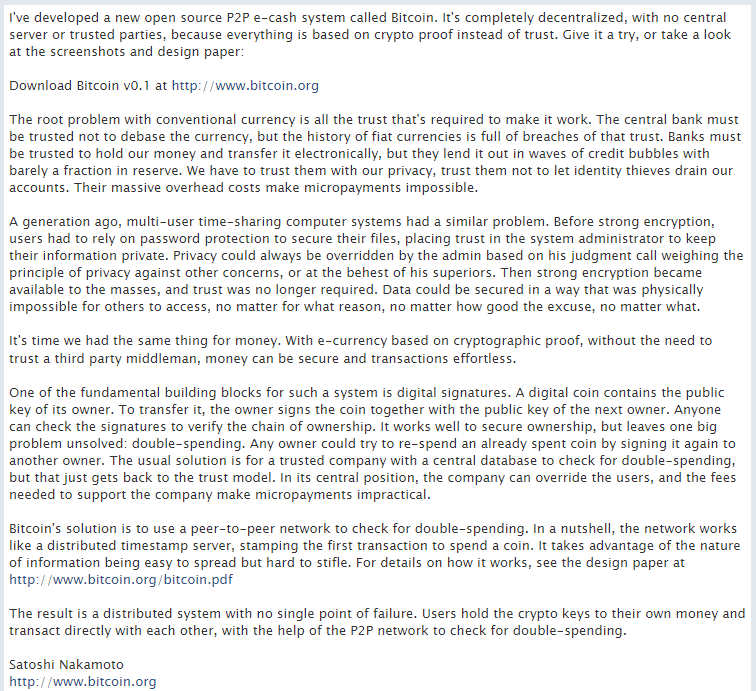
There have been countless articles and books written about bitcoin, but I don't think anyone has managed to describe the concept better than Nakamoto himself did back in February 2009:




![FarsideInsights's tweet photo. [1/4] Bitcoin ETF Flow - 12 March 2024
All data in. Record day with over $1 billion of net inflow. Blackrock with a record $849 million of inflow https://t.co/dKFmM3Qvaa](https://pbs.twimg.com/media/GIiDnVSXUAAl9w0.png)