SpaceXAI engineer on the Grok Bot team, Lauren Tan:
"if you don't have trust and you try to spawn 100 sub-agents or cloud agents, you're going to quickly find that you're just going to get a ton of slop pull requests and a bunch of regressions"
most people scale agents first and fix the mess later.
she does it backwards:
Verification Skills → Agent Checks Its Own Work → Trust → 100 Parallel Agents → Whole Team Ships
in this 37-minute talk, she shows how agents run the app themselves, take traces, find the hotspots and "hill climb to a better performance in our application automatically."
no babysitting every diff. no wall of slop PRs.
more useful than any agent course you'll pay for this year.
bookmark it and watch it now.
then read my full breakdown below on what Grok Bot routines really cost ↓
SpaceXAI engineer at Grok Bot Galaxy:
"every 3 a.m., my bot will start a research cloud agent across the whole surface of our monorepo. And when I wake up, I just have a set of PRs available."
The setup is basically a 24/7 agent team that only pings a human when it matters.
In this 21-minute workshop, you see how the bots handle research, CI fixes and on-call while nobody is watching.
This is more useful than 10+ surface-level Grok Bot / agent engineering guides.
Watch the workshop, then read the article below ↓
SpaceXAI engineer at Grok Bot Galaxy:
"every 3 a.m., my bot will start a research cloud agent across the whole surface of our monorepo. And when I wake up, I just have a set of PRs available."
The setup is basically a 24/7 agent team that only pings a human when it matters.
In this 21-minute workshop, you see how the bots handle research, CI fixes and on-call while nobody is watching.
This is more useful than 10+ surface-level Grok Bot / agent engineering guides.
Watch the workshop, then read the article below ↓
THIS IS ACTUALLY A F*CKING INSANE WAY TO CUT AI COSTS BY 90%
everyone's busy racing frontier models against each other. meanwhile, the expensive mistake happens before the model even gets a turn.
this support desk example is ridiculous:
100,000 messages a month, $7,950 in AI costs. then Kimi K3 and Jev enter the picture.
here's the trick:
→ 45% are order updates, handled by code
→ 25% are policy questions, answered from saved replies
→ 30% actually need Kimi K3 to think
→ Jev sorts the entire inbox for just $3.15
the big model never even sees 70,000 of those messages.
and the numbers get pretty stupid:
→ premium model alone: $7,950/month
→ Kimi K3 alone: $2,565/month
→ Jev + Kimi K3: $773/month
that's 90% off the bill in this modeled scenario, without making the hard questions somebody else's problem.
the part i like most is that Jev doesn't try to write anything. it makes the routing decisions, code handles the obvious stuff, and Kimi K3 gets the work that actually needs reasoning.
we spent years making models smarter. now the interesting engineering is deciding when to leave them alone.
want to build the decision layer yourself? ↓
↳ https://t.co/oiSIPz4x5e
the cheapest model call is the one you never make.
THIS IS ACTUALLY A F*CKING INSANE WAY TO CUT AI COSTS BY 90%
everyone's busy racing frontier models against each other. meanwhile, the expensive mistake happens before the model even gets a turn.
this support desk example is ridiculous:
100,000 messages a month, $7,950 in AI costs. then Kimi K3 and Jev enter the picture.
here's the trick:
→ 45% are order updates, handled by code
→ 25% are policy questions, answered from saved replies
→ 30% actually need Kimi K3 to think
→ Jev sorts the entire inbox for just $3.15
the big model never even sees 70,000 of those messages.
and the numbers get pretty stupid:
→ premium model alone: $7,950/month
→ Kimi K3 alone: $2,565/month
→ Jev + Kimi K3: $773/month
that's 90% off the bill in this modeled scenario, without making the hard questions somebody else's problem.
the part i like most is that Jev doesn't try to write anything. it makes the routing decisions, code handles the obvious stuff, and Kimi K3 gets the work that actually needs reasoning.
we spent years making models smarter. now the interesting engineering is deciding when to leave them alone.
want to build the decision layer yourself? ↓
↳ https://t.co/oiSIPz4x5e
the cheapest model call is the one you never make.
one tiny sorter model just made your AI support budget look like a f*cking scam
$7,950 a month down to $773, same 100,000 messages, same quality
the big model only wakes up when it actually matters
set it up once and stop paying premium prices ↓ https://t.co/YOL5ST3iW2
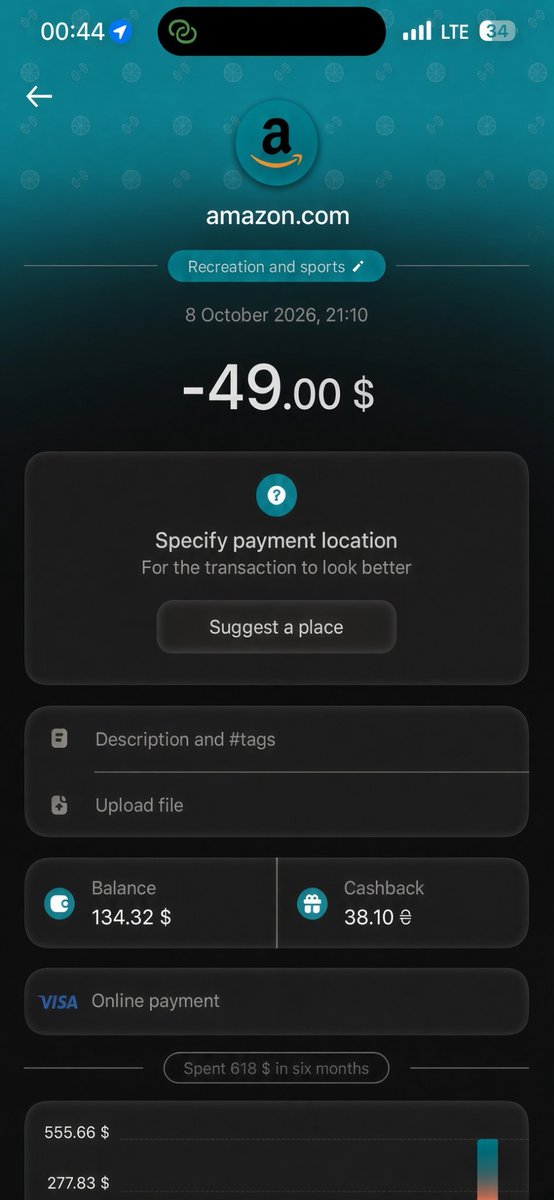
I gave Grok Bot $100. It bought me a CURSED doll. 💀
Elon Musk said Grok can buy literally anything for you.
So I decided to test it.
I gave it my credit card, shipping address, and a $100 budget.
Then I gave it ONE instruction:
"Buy the most absolutely UNHINGED thing you can find on the internet. Don't tell me what it is. I want it to be a complete surprise."
No suggestions.
No product photos.
No spoilers.
I wanted to see what happens when you give AI complete control over a purchasing decision.
Then I noticed a $49 charge from Amazon.
A few days later, a package showed up.
I opened it.
And THIS thing was inside.
A creepy, cursed-looking doll that looks like it's witnessed 200 years of human suffering.
I genuinely have no idea why AI decided this belonged in my house.
Think about how insane this is.
We've gone from asking AI simple questions to letting it spend our money and send actual nightmares to our front doors.
I'm starting to think giving AI access to my credit card was a terrible idea.
Should I give Grok another $100? 💀
Grok Bot running an entire AI team overnight sounds f**king insane until you see how much work it actually skips
most people keep adding agents, bigger context windows and endless schedules without asking whether anything even changed.
the real bottleneck isn't intelligence. it's the clock.
[one Chief of Staff, 5 independent routines]
→ X-MENTIONS checks activity every 5 minutes
→ CI-WATCH monitors code every 15 minutes
→ INBOX processes messages hourly
→ COMPETITOR runs daily research
→ DEPLOYS wakes only when a webhook fires
each agent follows its own schedule while the Chief decides what deserves a full run.
the overnight simulation:
→ 20 checks across the system
→ 16 skipped because nothing changed
→ 4 full agent runs
→ 1 risky action saved as a draft
the cost model gets even better:
→ full polling: $397/month
→ lightweight checks: $45/month
→ 89% less estimated spending
these are example API costs, not actual subscription charges.
the interesting part isn't keeping agents awake all night.
it's building a system that can finish the important work without waking you.
Grok Bot running an entire AI team overnight sounds f**king insane until you see how much work it actually skips
most people keep adding agents, bigger context windows and endless schedules without asking whether anything even changed.
the real bottleneck isn't intelligence. it's the clock.
[one Chief of Staff, 5 independent routines]
→ X-MENTIONS checks activity every 5 minutes
→ CI-WATCH monitors code every 15 minutes
→ INBOX processes messages hourly
→ COMPETITOR runs daily research
→ DEPLOYS wakes only when a webhook fires
each agent follows its own schedule while the Chief decides what deserves a full run.
the overnight simulation:
→ 20 checks across the system
→ 16 skipped because nothing changed
→ 4 full agent runs
→ 1 risky action saved as a draft
the cost model gets even better:
→ full polling: $397/month
→ lightweight checks: $45/month
→ 89% less estimated spending
these are example API costs, not actual subscription charges.
the interesting part isn't keeping agents awake all night.
it's building a system that can finish the important work without waking you.
SpaceXAI engineer Lauren Tan just showed a Grok Bot that literally audits its own agents and catches expensive routines
this is f**king useful...
in this 10-minute breakdown, she shows how her AI team checks its own work, builds new bots and learns when to stop wasting compute:
• 00:48 - cloud agents run evals before a PR lands
• 03:55 - Dr. Eggbot audits other bots and their routines
• 05:12 - an engineering lead delegates work across agents
• 08:12 - turning supervised tasks into reusable skills
the crazy part is that she doesn't just let agents run forever. she builds trust through verification, then gives them more autonomy.
watch the 10-minute breakdown, then read how to build cheaper, safer overnight routines in the article below ↓
Drex 2.0 just gave Jev a serious problem with only 3B active parameters.
two models go head-to-head in a live game. same board, constant decisions, and every bad move is right there on screen.
→ Drex 2.0: 61.0 Decision Index
→ Jev: 58.0
→ 60.9% head-to-head score across 256 games
→ up to 38% faster on 32K–128K inputs
the crazy part? @NaceAI built this to make decisions without dragging a massive model through every single step. $0.06 per 1M input tokens makes that pretty interesting.
think agent routing, tool selection, and hundreds of tiny decisions happening before the expensive model even wakes up.
the game is fun to watch. the real win is making AI agents stop paying full price just to decide what happens next.
SpaceXAI engineer Lauren Tan just showed a Grok Bot that literally audits its own agents and catches expensive routines
this is f**king useful...
in this 10-minute breakdown, she shows how her AI team checks its own work, builds new bots and learns when to stop wasting compute:
• 00:48 - cloud agents run evals before a PR lands
• 03:55 - Dr. Eggbot audits other bots and their routines
• 05:12 - an engineering lead delegates work across agents
• 08:12 - turning supervised tasks into reusable skills
the crazy part is that she doesn't just let agents run forever. she builds trust through verification, then gives them more autonomy.
watch the 10-minute breakdown, then read how to build cheaper, safer overnight routines in the article below ↓
xAI engineers just showed how Grok Bot can run an entire AI team 24/7
in a 25-minute session, they walk through persistent memory, cloud computers, integrations and bots working together without starting from scratch every time.
but here's the part most people miss:
one routine running every 5 minutes = 8,640 runs a month. at Grok 4.6 API rates, that's roughly $397 vs $33 for the exact same job running hourly.
same bot. same task. 12x the estimated cost just because of the clock.
this 25-minute walkthrough is worth watching. i also broke down the routines, triggers and approval mistakes in my full article below ↓
xAI engineers just showed how Grok Bot can run an entire AI team 24/7
in a 25-minute session, they walk through persistent memory, cloud computers, integrations and bots working together without starting from scratch every time.
but here's the part most people miss:
one routine running every 5 minutes = 8,640 runs a month. at Grok 4.6 API rates, that's roughly $397 vs $33 for the exact same job running hourly.
same bot. same task. 12x the estimated cost just because of the clock.
this 25-minute walkthrough is worth watching. i also broke down the routines, triggers and approval mistakes in my full article below ↓
Opus 5.5 looks overpriced right up until you count how many times Sonnet has to try again
same migration, very different path:
Sonnet 5.5
> 47 turns
> 3 retries
> 2.31M tokens
> $4.18 total
Opus 5.5
> 19 turns
> 0 retries
> 1.46M tokens
> $5.28 total
the interesting part is not that Opus costs more
it’s that the gap collapses once you price the finished task instead of the individual call
on paper, the model can look 2x more expensive
inside the real loop, this run lands around 1.26x
that happens because long jobs accumulate costs in places the pricing page does not show:
> repeated attempts
> extra tool calls
> growing context
> retries after bad plans
> more turns before the task actually passes
so the number I’d watch is not $/token
it’s how expensive the model is by the time the work is actually done
for clean, obvious tasks, Sonnet still makes sense
for messy work, fewer good turns can beat a pile of cheaper bad ones
price the outcome, not the token ↓
Opus 5.5 looks overpriced right up until you count how many times Sonnet has to try again
same migration, very different path:
Sonnet 5.5
> 47 turns
> 3 retries
> 2.31M tokens
> $4.18 total
Opus 5.5
> 19 turns
> 0 retries
> 1.46M tokens
> $5.28 total
the interesting part is not that Opus costs more
it’s that the gap collapses once you price the finished task instead of the individual call
on paper, the model can look 2x more expensive
inside the real loop, this run lands around 1.26x
that happens because long jobs accumulate costs in places the pricing page does not show:
> repeated attempts
> extra tool calls
> growing context
> retries after bad plans
> more turns before the task actually passes
so the number I’d watch is not $/token
it’s how expensive the model is by the time the work is actually done
for clean, obvious tasks, Sonnet still makes sense
for messy work, fewer good turns can beat a pile of cheaper bad ones
price the outcome, not the token ↓
Tesla's Optimus Gamer is learning to play Diablo. But gaming is just the beginning.
What if the same SI could eventually do your job?
Tesla is training SI to see a screen, make decisions, and control a keyboard and mouse. The goal is to build systems that can handle digital tasks without humans guiding every step.
4 predictions for what comes next:
- SI agents will take over repetitive office work.
- One person will be able to manage an entire team of SI workers.
- SI will operate entire software systems, not just write code.
- The same technology could eventually help robots perform complex tasks in the real world.
Today, it's playing Diablo. Tomorrow, it could be doing your job.
How long before SI can handle most tasks people do on a computer?
stop telling Opus 5.5 to make motion “smooth”
that word is doing almost no work
give it curves, springs, durations and actual motion systems instead and the output gets way more predictable
I pulled 10 GitHub repos that are useful for exactly that:
1. motion-canvas
TypeScript animations with generators + real-time preview. great when you want every beat tied to an exact timeline
https://t.co/Q7IrdmYmWo
2. theatre.js
high-fidelity motion graphics for HTML, SVG and 3D. code + visual editing in the same system
https://t.co/wVh5sNy6gg
3. mo.js
shapes, bursts, staggers and swirls. much better primitives than “make it feel dynamic”
https://t.co/Ggmt6qvxzN
4. mo.js curve editor
live editing for custom easing and property curves
https://t.co/xyJQsj1ETh
5. popmotion
keyframes, springs and decay animations for numbers, colors, strings and SVG paths
https://t.co/tlLkYDYkkP
6. react-spring
spring-physics-first animation for React, React Native and Three
https://t.co/N3k9KjnBAW
7. auto-animate
one-line transitions for DOM changes. simple enough for Opus to inspect and reuse fast
https://t.co/jfUVq3Vedf
8. barba.js
page-transition engine for fluid site navigation and state changes
https://t.co/N2xjnTL009
9. ant-motion
Ant Design’s motion specification + React animation components with tweening and Bezier motion
https://t.co/hkSh13XcIF
10. manim
a full programmatic animation engine built around precise, reproducible motion
https://t.co/yKLJtq0uRd
instead of:
> make it smoother
> make the bounce subtle
> make it feel cinematic
give Opus:
> 420ms duration
> 32px travel
> spring stiffness 170
> damping 22
> 80ms stagger
less adjectives, more numbers
that’s when the motion stops being a guess ↓
stop telling Opus 5.5 to make motion “smooth”
that word is doing almost no work
give it curves, springs, durations and actual motion systems instead and the output gets way more predictable
I pulled 10 GitHub repos that are useful for exactly that:
1. motion-canvas
TypeScript animations with generators + real-time preview. great when you want every beat tied to an exact timeline
https://t.co/Q7IrdmYmWo
2. theatre.js
high-fidelity motion graphics for HTML, SVG and 3D. code + visual editing in the same system
https://t.co/wVh5sNy6gg
3. mo.js
shapes, bursts, staggers and swirls. much better primitives than “make it feel dynamic��
https://t.co/Ggmt6qvxzN
4. mo.js curve editor
live editing for custom easing and property curves
https://t.co/xyJQsj1ETh
5. popmotion
keyframes, springs and decay animations for numbers, colors, strings and SVG paths
https://t.co/tlLkYDYkkP
6. react-spring
spring-physics-first animation for React, React Native and Three
https://t.co/N3k9KjnBAW
7. auto-animate
one-line transitions for DOM changes. simple enough for Opus to inspect and reuse fast
https://t.co/jfUVq3Vedf
8. barba.js
page-transition engine for fluid site navigation and state changes
https://t.co/N2xjnTL009
9. ant-motion
Ant Design’s motion specification + React animation components with tweening and Bezier motion
https://t.co/hkSh13XcIF
10. manim
a full programmatic animation engine built around precise, reproducible motion
https://t.co/yKLJtq0uRd
instead of:
> make it smoother
> make the bounce subtle
> make it feel cinematic
give Opus:
> 420ms duration
> 32px travel
> spring stiffness 170
> damping 22
> 80ms stagger
less adjectives, more numbers
that’s when the motion stops being a guess ↓
holy sh*t. Anthropic basically documented the exact reason most Claude Code setups waste Opus 5.5
the expensive mistake is not using Opus
it’s letting it sit inside work that never needed frontier reasoning in the first place
the clean setup is an escalation tree:
→ Sonnet 5.5 starts the task
→ checkpoint around turn 6
→ pass = keep Sonnet moving
→ fail = stop immediately
→ build a clean handoff
→ fresh Opus 5.5 session only for the hard branch
the math gets weird fast:
→ 20K context: Opus is 1.88x per turn
→ 150K context: 1.49x
→ 400K context: 1.26x
then comes the expensive part:
→ late switch at 300K = $1.50 just to rebuild cache
→ clean handoff at 20K = about $0.10
that means the real optimization is not “cheap model first”
it’s knowing exactly when Sonnet has earned another turn
- the full routing tree
> Sonnet owns scoped implementation
> compile/tests happen before the loop gets huge
> one clean pass keeps Sonnet running
> repeated failure triggers escalation
> Opus gets the task + failing check + relevant files
> the dead transcript stays behind
> completed work comes back with evidence attached
and at 150K context the difference gets almost stupid:
30 Sonnet turns = $1.76
20 Opus turns = $1.75
so stop asking:
“which model is cheaper?”
ask:
“does this task deserve another Sonnet turn?”
Sonnet explores
the checkpoint decides
Opus finishes the branches that actually need it
↳ https://t.co/oZI2UEsxFL