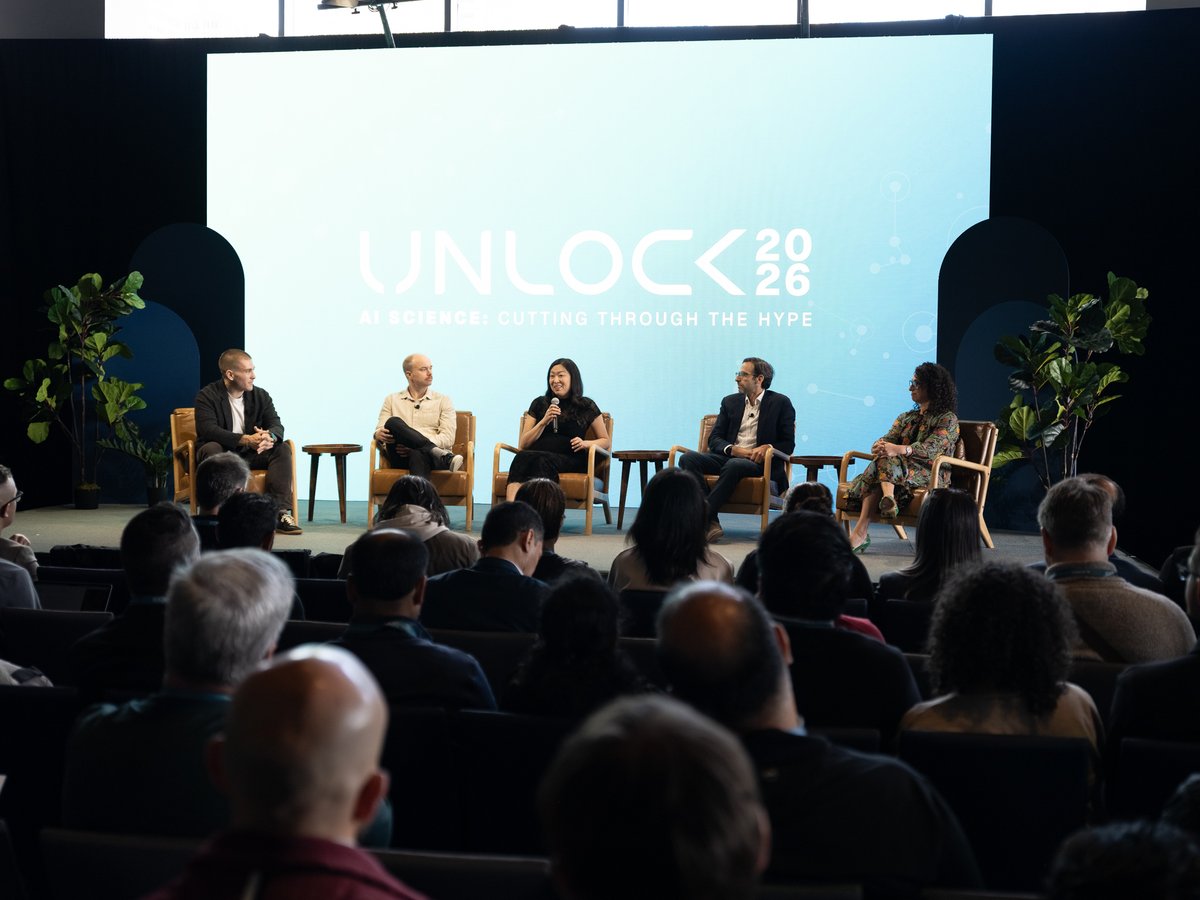
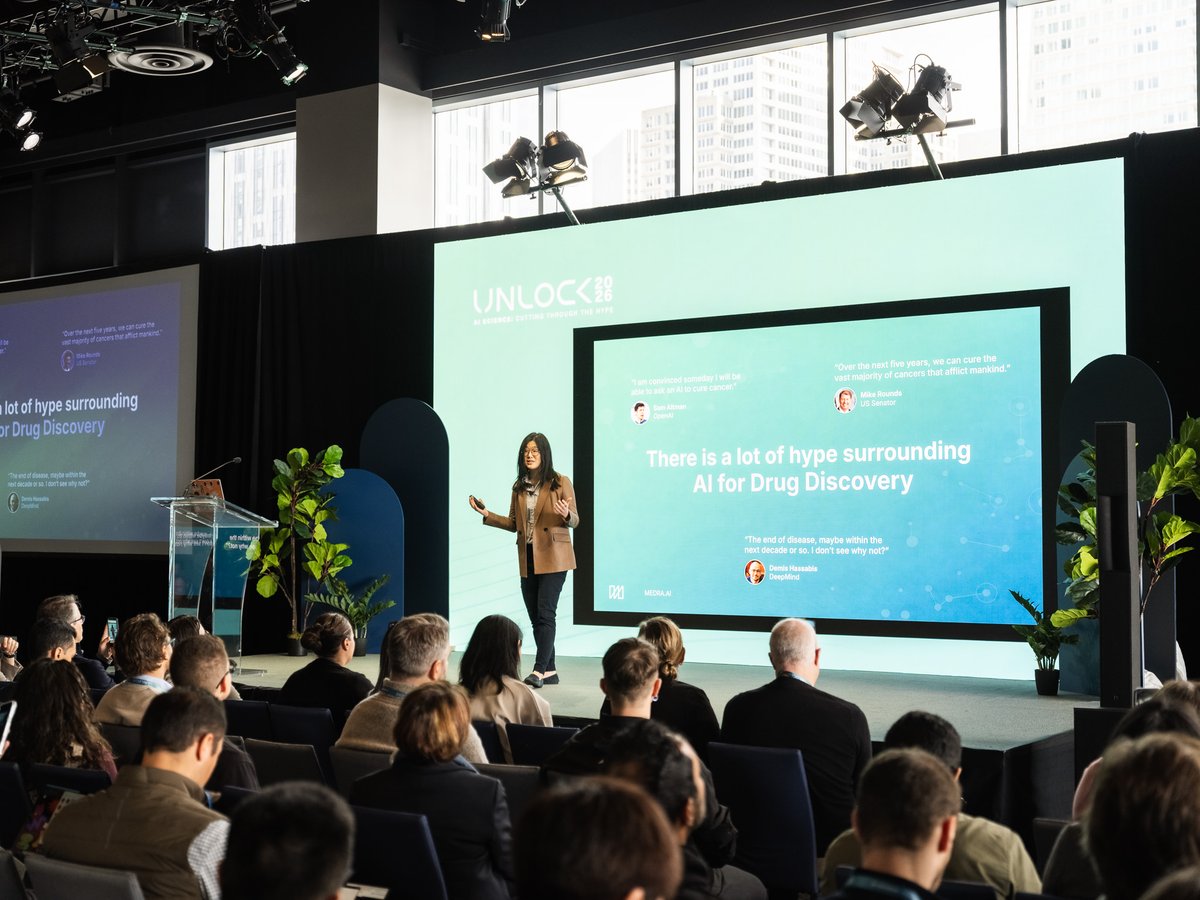
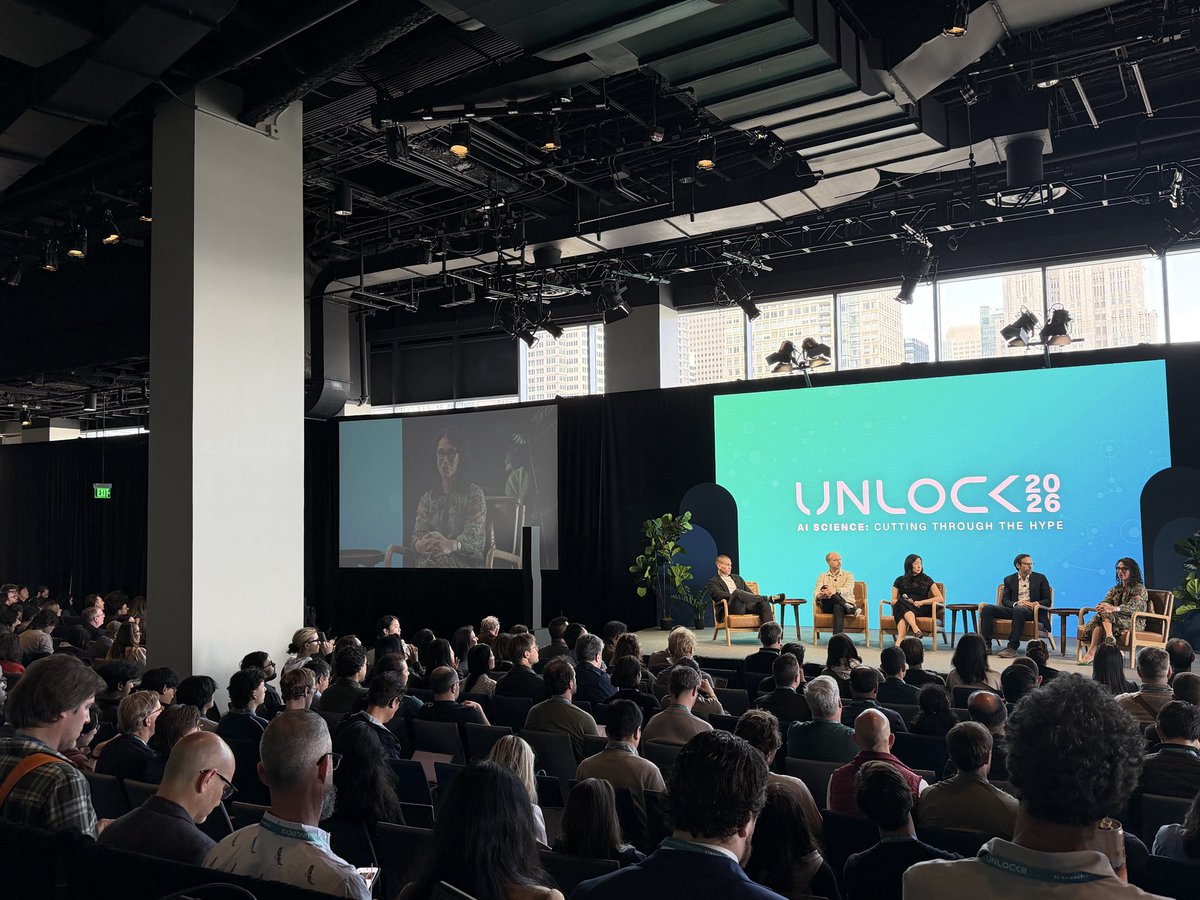
@michellearning@medra_ai@AstraZeneca@genentech@Ronalfa@NOETIK_ai 6/ Pattern across the day: real progress depends on tight loops between models, labs, and clinics. The full stack in biological discovery is changing. Learn how with all the sessions available here: https://t.co/ROKYyT0eqi
2027 Tickets drop here first.
1/ Want to revisit UNLOCK 2026? Sad you couldn’t make it?
Good news: the full recap and every session of the sold out day are now public. Highlights and full recordings in 🧵
@michellearning@medra_ai@AstraZeneca@genentech 5/ @Ronalfa, CEO & Co-Founder @NOETIK_ai:
"I don't think language models will solve the problem of how do we get to new biology. If we're going to cure cancer, we need models that are trained on raw biological knowledge."
UNLOCK2026 was something like a labor of love for the AIxScience community.
One founder told me it was the best event he’s attended since starting his company 8 yrs ago. Another said it felt like JPM 2.0 🤯
If you missed it, we’ll be sharing videos next week. Stay tuned.
Spent the last week in SF learning about AI x bio: 🧵
1. The vast majority of science is done on <100 organisms. Transferring some intervention you came up for e. coli to lactobacillus is incredibly hard, even though both are common bacteria. Think about how hard it is to port LLMs across accelerators even though the primitives are the same. Similarly, even when the genetic code is almost the same, the way in which those genes are expressed can be very different, the production of some protein may require cofactors that the second organism doesn't produce, etc. This problem is so hard that most people don't even bother trying to address it (s/o to the folks at Cultivarium for being one of the few and explaining this to me in detail).
2. AI will lead to pipeline abundance but maybe not outcome abundance. The two big bottlenecks are financing and regulation; for example, just because you can come up with more drugs does not mean you can test all of them in the real world, nor is it financially viable to do so. For these reasons, there probably won't be a ChatGPT moment in AI x bio. There's a small chance that regulation also changes to keep up with the tech, but industry folks aren't optimistic.
3. All the frontier labs are making a push into the bio space, some more so than others (see: Anthropic's recent acquisition of Coefficient Bio). Interestingly, I didn't get the sense that the latter was building its own foundation models. According to a cofounder, they seemed to be focused on context engineering and creating tools with good "ergonomics" for frontier models. This particular acquisition was even more surprising given that frontier labs typically partner with several different startups rather than picking winners and losers early on.
4. Biz dev is a huge problem. Big pharma companies are used to outsourcing risk and innovation to startups, but the terms used to be clear: come up with useful assets (e.g., a working drug), and we'll license it / buy it / buy you. It's not clear how deals should work with AI companies --- do they get a percentage of eventual product revenue? An ongoing subscription fee for using the tech? Equity investments and tight partnerships? There's no real template right now and most deals are being constructed as they go along. Common sentiment that tech transfer and systems integration is broken.
Many thanks to @michellearning and @medra_ai for hosting the Unlock event --- I learned a lot!
When the rockstar of biotech talks, we listen! Thank you Aviv Regev of @genentech for capping off an amazing day of talks, panels, and discussion.
#UNLOCK26
When Aviv tells you she’s made completely new slides just for your conference, she means it 😂 thank you for the shoutout and for the continued partnership 🫶
Only pharma embracing AI will survive the next wave - @AstraZeneca’s Chief of AI for Science Innovation Jorge Reis-Filho is telling us how they’re going to thrive - only at UNLOCK.
Moderator: @michellearning@medra_ai#UNLOCK26
very fun day in SF — absolutely packed with AI + science nerds!
caught the tail end of this talk but apparently new beta release tomorrow from @EdisonSci?