Agree with every word on this, unfortunately. @harishmenon80@scroll_in The fans made the word 'Lalettan' the most cringey Malayalam word!!
Honey, they shrunk the Mohanlal phenomenon into ‘Lalettan’ https://t.co/yYjp2stgM9
#HotTake365 The Final One
The biggest lie in Indian urban policy is that cities are “failing.” They aren’t. They’re being deliberately designed by disregarding the many and serve the few.
Congestion, pollution, unaffordable housing, unsafe streets, lack of and encroached pedestrian infrastructure, none of this is accidental.
It is the outcome of decades of policy that privileged:
• land speculation over developing liveable communities
• moving cars over moving passengers
• optics over outcomes
• no outcome assessment of provided services
Cities don’t become difficult to live on their own. They are dismantled by disregarding regulation, manipulating tender, disproportionate allocation of budget at a time.
History won’t ask what Indian cities built.
It will ask who were they built for.
How can we have money for long tunnels, extra-long Metro lines, elevated skywalks and ring roads, double-deckers and more but not for buses and footpaths, which are far cheaper and would serve people everywhere?
I took a walk in HSR Layout recently.
Here's what I realised:
1. Footpaths are inaccessible due to encroachment
2. Inaccessible footpaths aren't maintained
3. Unmaintained footpaths become dumping spots
4. Dumping spots become toilets
It all starts with encroachment.
@shantiswarup4u@icarindia@NHAI_Official@STAOdisha@odisha_police Unfortunately this is a problem across India. If we introduce strict fines & enforcement for all traffic violations in India, the budget deficit can be easily covered. A couple of years back Gadkari announced high fines, but had to roll back because of public pressure.
What Indian footpaths are for in descending order of importance:
1. Power junction boxes
2. Electrical poles
3. Hoardings
4. Food stalls
5. Darshini overflow
6. Parked vehicles
7. Trees
8. Potted plants
9. Pedestrians
10. Parents with strollers/differently-abled in wheelchairs
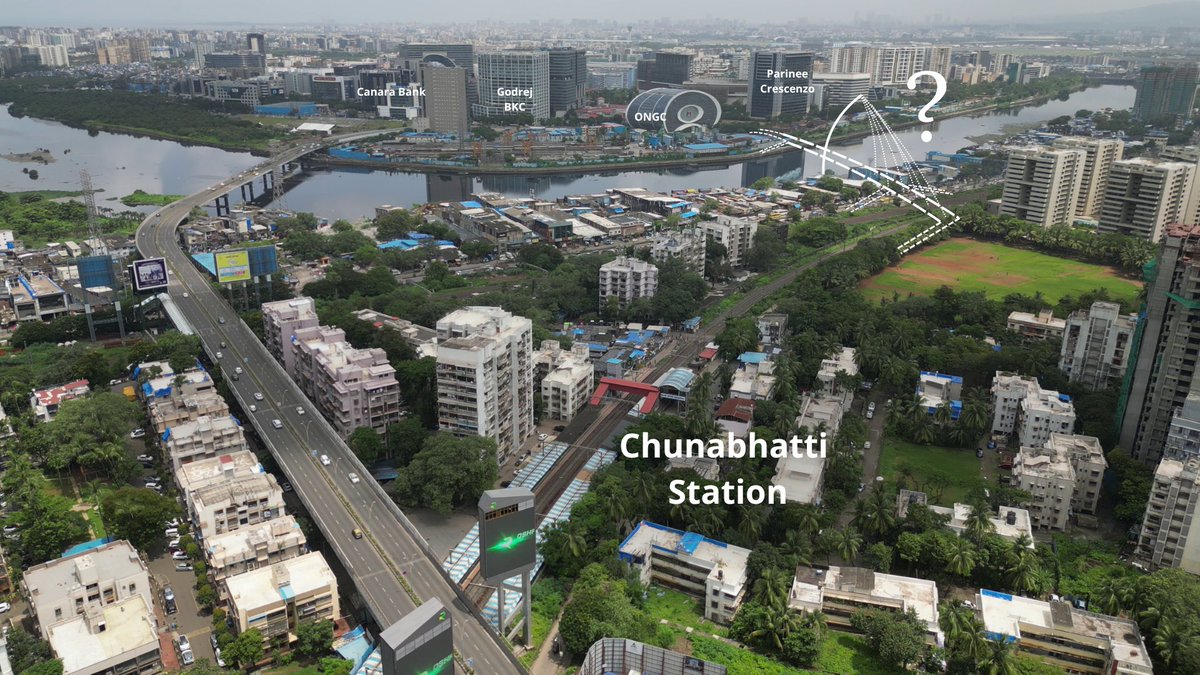
A well-designed pedestrian bridge across the Mithi would immediately cut down the 2.7 km walk from Kurla to ONGC to just about 1–1.5 km from Sion and Chunabhatti, respectively — roughly the same distance as between CSMT and Kala Ghoda or the Bombay High Court. Distances which thousands of people walk daily
#Walk2BKC
If there is just one thing India can do fast to improve quality of life- its footpaths.
Not Multi crore flyovers, not 8 lane highways, just a simple 10 feet wide footpath everywhere.
This is such a low hanging fruit, why can’t we do this.
(Let’s figure out problem of encroachments later).
We have the highest pedestrian population on earth but no footpaths…
@GHMCOnline@CommissionrGHMC #RoadSafety