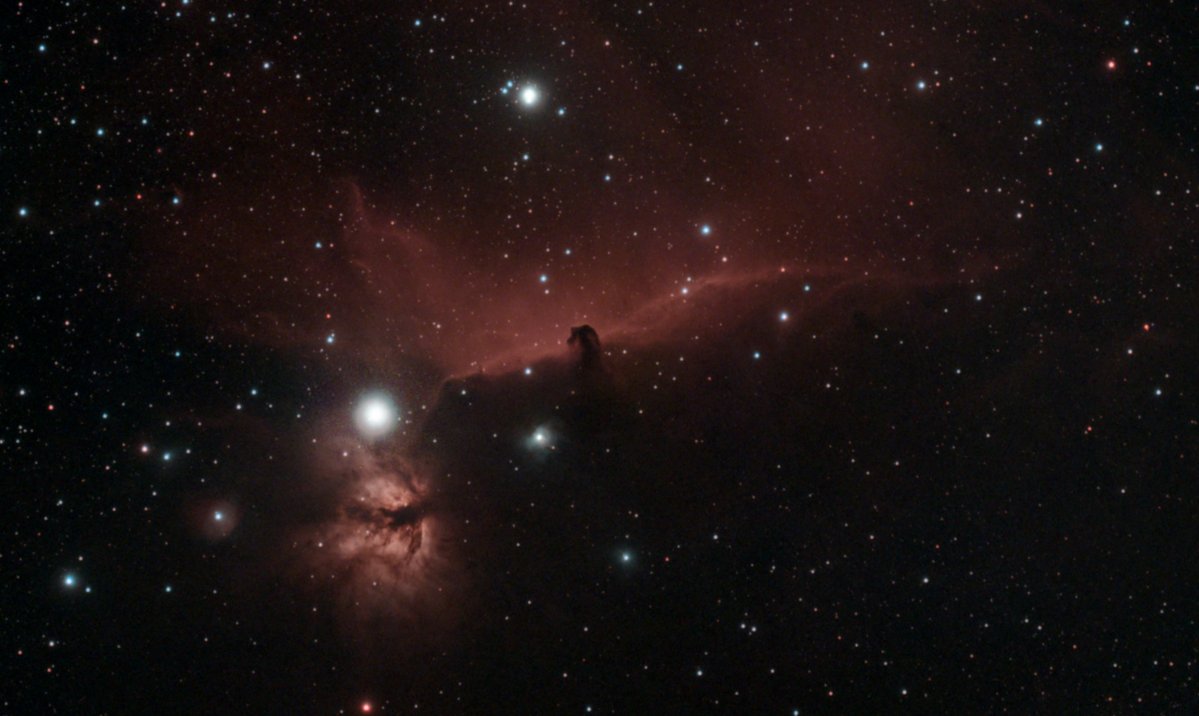
@xasofx Thanks! It's amazing what a little 30 mm telescope can capture with enough exposure time. This one took some patience (5 nights), but it was worth it! 🔭
The Horsehead Nebula, captured with our tiny 30 mm telescope. 🔭
Dense cloud of gas and dust, standing against glowing hydrogen some 1,300 light-years away.
Below it, Alnitak shines beside the Flame Nebula.
Our own view of Orion. 🌌
#Astrophotography#HorseheadNebula
The most dramatic thing about a Leonid meteor is how little time it needs. A grain of comet dust, invisible against the darkness of space, can cross the upper atmosphere and become a brilliant line of light in less than a second.
The Leonids peak around November 17–18, 2026. Here is when to watch, how many meteors to expect, and why some particles may have left their parent comet centuries ago.
https://t.co/qcFQlTVk3V
☄️ 13 meteor showers. 12 months. Speeds up to 71 km/s.
From the Perseids and Geminids to the lightning-fast Leonids, discover the spectacular shooting stars that illuminate Earth's skies throughout the year. 🌌
Which one have you witnessed?
#Astronomy#MeteorShowers
A rock accidentally crushed by NASA's Curiosity rover revealed the first confirmed native sulfur found on Mars. New research proposes a possible underground origin, but Gediz Vallis still holds a geological mystery.
https://t.co/HZhaF0BNCe
On November 18, 2026, NASA's Voyager 1 will become the first human-made object one light-day from Earth. Discover what the milestone means and the 27 tracks on its Golden Record.
https://t.co/IIQBR0UC4m
A meteor lasts a moment, but careful observations can uncover its direction, speed and possible origin. Here is how real meteor monitoring works.
https://t.co/aRzrdCp7Pq
A white water-ice cloud stretches downwind of an enormous Martian volcano. New modelling suggests its daily formation involves unusual ice physics
https://t.co/WwJ6PyuDw1
@konstructivizm The "alien face" is actually just a chance alignment of the filaments. Still one of the most beautiful supernova remnants we can image from Earth.
@konstructivizm This looks like a pretty slow-moving fireball. Anyone know if it was linked to the Taurids or something else? The fragmentation is really clear in the video.
NASA Tracks 47,000 MPH Fireball Over North Carolina and Tennessee
NASA tracked the fireball with four cameras and confirmed a surprising detail: despite arriving during the Taurid meteor shower, it was not a Taurid.
https://t.co/A6VKKwWXW1
The Fastest Star Near Our Black Hole
The star S301 races around Sagittarius A* at over eight percent of light speed. Its orbit offers a rare opportunity to test gravity near a black hole.
https://t.co/m5oaAcS7af