Just after midnight on March 8, 2014, Malaysia Airlines Flight 370 took off from Kuala Lumpur, bound for Beijing.
A Boeing 777. 227 passengers. 12 crew. Businessmen, families, kids, a group of Chinese artists coming home from an exhibition. A routine overnight flight.
About 40 minutes in, as the plane neared Vietnamese airspace, air traffic control told the cockpit to switch over to Vietnamese controllers.
A calm voice from the cockpit replied.
"Good night. Malaysian three seven zero."
Seconds later, the plane's transponder went dark. MH370 vanished from civilian radar.
The pilots never checked in with Vietnam.
Then Malaysia's military radar picked up something strange. An unidentified blip turning sharply back west, crossing back over Malaysia, flying up the Strait of Malacca toward the Indian Ocean.
Then it flew out of radar range.
For days, the world searched the wrong ocean.
Then investigators turned to a satellite company. Every hour or so, the plane's systems had automatically pinged a satellite, a digital "handshake." Those pings kept coming for about seven more hours.
The data pointed to one terrifying conclusion. MH370 had flown south, deep into the remote southern Indian Ocean, until it ran out of fuel.
Someone had to have turned it around.
What followed was the largest and most expensive search in aviation history. Australia, Malaysia, and China combed an area of seafloor bigger than some countries. Ships, planes, underwater drones.
They found nothing.
In 2015, a piece of the plane's wing washed up on a beach on Réunion Island, near Africa. More debris turned up in Mozambique and Madagascar over the next few years. It was MH370.
But the plane itself was nowhere.
Theories exploded. Hijacking. A fire. A deliberate act by someone in the cockpit. Investigators later found the captain had once mapped a route into the southern Indian Ocean on his home flight simulator. Nobody has proven what happened.
In 2018, Malaysia's final report said it couldn't determine the cause.
A private ocean search company went back out last winter with the best technology on Earth. In March 2026, it announced it had come up empty again. Malaysia just extended the search into 2027.
12 years later, 239 people are still missing.
A massive airliner flew off the radar, turned around in the dark, and flew for hours into the most remote ocean on the planet.
And nobody knows why.
On the night of June 4, 1960, four teenagers pitched a tent on the shore of Lake Bodom, a quiet lake in the forests outside Helsinki, Finland.
Two girls, Maila and Anja, both 15. Two boys, Seppo and Nils, both 18. Two young couples on a weekend camping trip. It was early summer in Finland, when the sun barely sets.
Sometime between 4 and 6 a.m., someone walked up to their tent.
The attacker never went inside. He slashed through the tent walls from the outside and attacked the teenagers in their sleeping bags with a knife and a blunt object.
Maila, Anja, and Seppo were killed.
Nils survived. He was found lying on top of the collapsed tent with a concussion and broken bones in his face.
Before noon, a passerby found the scene.
Some of the teenagers' belongings were missing. Their shoes had been taken and left in the woods hundreds of yards away. Keys were gone too.
Bird watchers on the lake that morning said they'd seen a blond man walking away from the campsite.
He was never identified.
The investigation was a disaster from the start. Police didn't properly seal the scene. Curious locals and even soldiers walked through it. Key evidence was mishandled.
Over the years, suspects came and went. A local kiosk keeper with a violent reputation was said to have drunkenly confessed. He drowned in the lake in 1969, before anything could be proven.
Then in 2004, 44 years later, police made a shocking arrest.
The survivor. Nils Gustafsson.
Prosecutors claimed new DNA evidence and blood patterns showed he'd killed his friends in a jealous rage, then hurt himself. Finland was riveted.
In 2005, the court acquitted him. The judges said there wasn't enough evidence. Finland even paid him damages for the trauma of the trial.
No one else has ever been charged.
66 years later, the Lake Bodom murders are still unsolved.
Four teenagers went camping by a quiet lake on a summer night when it never gets fully dark.
Only one walked away. And someone else did too.
On December 7, 1958, the Martin family of Portland, Oregon piled into their cream and red Ford station wagon for a Sunday drive.
Ken Martin was 54. His wife, Barbara. Their three daughters, Barbie, 14, Virginia, 13, and Susan, 11.
Christmas was coming. They told neighbors they were heading up the Columbia River Gorge to gather greenery for wreaths. Ken was the kind of guy who played Santa for the neighborhood kids every year.
Around 4 p.m., a gas station owner in the small town of Cascade Locks said Ken bought five gallons of gas.
That was the last confirmed sighting of the Martin family.
They never came home.
What followed was the largest missing persons search in Oregon history. Planes, boats, divers, hundreds of searchers combing the gorge and the river.
They found nothing. Not the family. Not the car.
Then in May 1959, the river gave something back.
The bodies of the two younger girls, Virginia and Susan, washed up along the Columbia River, miles apart.
Ken, Barbara, and Barbie were still missing. So was the station wagon.
For decades, theories piled up. Murder. Kidnapping. A family member. Some said the car went into the river. If so, why could no one ever find it?
The Martin family became one of Oregon's most famous unsolved mysteries.
Then a diver named Archer Mayo got obsessed.
For seven years, he searched the river on his own. In the fall of 2024, under 60 feet of murky water in the Cascade Locks canal, he found an old car buried in the mud.
In 2025, crews pulled up pieces of it. Mayo kept diving. Last summer, he found human remains in the wreck. A shoe. Seat belt buckles. And a camera case with Ken Martin's name and address on it.
This April, DNA testing confirmed it. Ken, Barbara, and Barbie Martin.
They had been in the river the whole time, just outside the town where they were last seen.
Investigators found no evidence of foul play. After 67 years, the case was officially closed.
A family went out to gather Christmas greenery and vanished.
It took nearly seven decades and one stubborn diver to bring them home.
At 11:38 p.m. on December 3, 2003, a federal prosecutor named Jonathan Luna drove his Honda out of the security gate of the federal courthouse in Baltimore.
He was 38, an Assistant U.S. Attorney. A married father of two young kids. He'd been working on a major drug case that had just wrapped up with a plea deal.
He never made it home.
Over the next few hours, his car took a strange, winding route. Through Maryland. Into Delaware, where his bank card was used at an ATM. Then up into Pennsylvania.
Around 5 a.m., a worker at a well-drilling company in rural Lancaster County, Pennsylvania noticed a car behind the business. Its nose was down in a small creek. The lights were off.
Lying face down in the water under the front of the car was Jonathan Luna.
He was still wearing his suit and tie. His court ID was around his neck.
He had been stabbed 36 times. Twenty-three wounds were in his neck. He had defensive-looking cuts on his hands and signs he'd been beaten.
There was blood inside the car and outside of it.
And the autopsy found something even more horrifying. He was still alive when he went into the water. He drowned.
His wallet and phone were never found.
He was about 70 miles from the courthouse. Nobody knows why he drove there.
The county coroner ruled it a homicide. He said it looked like Luna had been tortured.
Then federal investigators started floating a different theory. Leaks said they believed Luna did it to himself, with his own pocketknife. That he was under stress and in debt.
His family has never accepted that. Neither have many people who knew him.
For years, the autopsy records were sealed. Last December, on the 22nd anniversary, they were finally released. They confirmed the homicide ruling.
The case was handed to a new team at the Pennsylvania State Police. They've named no suspects.
23 years later, nobody has been charged in the death of Jonathan Luna.
A federal prosecutor walked out of a courthouse near midnight and drove into the dark.
And the government he worked for still won't say what happened to him.
On the evening of October 14, 1965, Mary Shotwell Little finished work at a bank in downtown Atlanta.
She was 25, a secretary at Citizens and Southern Bank, originally from North Carolina. Six weeks earlier, she'd gotten married. Her new husband was out of town on business that night.
After work, she drove to Lenox Square, a big new shopping center in Atlanta's ritzy Buckhead neighborhood. She picked up some groceries. Then she met a coworker for dinner at a cafeteria inside the mall.
Around 8 p.m., the two women said goodbye in the parking lot.
Mary walked toward her gray 1965 Mercury Comet.
She was never seen again.
The next morning, she didn't show up for work. Her boss got worried and called the mall.
Around lunchtime, her car was found sitting in the Lenox Square parking lot.
But something was wrong. The mall's security guards ticketed cars left overnight. Mary's car had never been ticketed. It looked like it had been driven away that night and brought back.
There were about 40 unexplained miles on the odometer. The car was covered in red Georgia clay dust.
And inside, there was blood. On the seats. On the steering wheel. Her underwear was found on the floorboard.
Coworkers then told police that in the weeks before, Mary had been getting strange phone calls. And someone had sent her flowers. She didn't know who.
Not long after, her gas credit card was used at service stations in Charlotte and Raleigh, North Carolina. One attendant remembered a woman with a man. She looked hurt. The license plate number written on the charge slip turned out to be stolen.
That was the last trace of her.
Two years later, another young woman who worked at that same bank was found murdered. Her killer was never caught either. Police have always wondered if the two cases are connected.
61 years later, Mary Shotwell Little has never been found.
A newlywed walked out to her car after dinner at a busy shopping mall.
And someone brought the car back without her.
On the evening of February 9, 1989, Tiffany Sessions stepped out of her apartment in Gainesville, Florida for a walk.
She was 20, a junior studying business at the University of Florida. Her family called her "Tiffy." She lived about two miles from campus.
Around 6 p.m., she headed out in red sweatpants and a white sweatshirt. She had her Walkman. And on her wrist, a gold Rolex watch.
It was a walk she took often. It was still light out.
She never came home.
Her roommate reported her missing. Her father, a successful real estate executive, rushed to Gainesville. Within days, it became the largest search for a missing person in Florida history.
Thousands of volunteers combed the woods and fields around her neighborhood. Helicopters flew overhead. Her father offered a $75,000 reward and hired private investigators. Her face was on TV across the country.
Nothing. Not a shoe. Not the Walkman. Not that Rolex.
For 25 years, the case went cold.
Then in 2014, the sheriff's office made an announcement. They believed they knew who took her.
His name was Paul Rowles. A convicted killer who'd been living near Tiffany's apartment in 1989. Years later, he murdered another young woman in Florida and went to prison for it.
He died behind bars in 2013, before investigators could question him about Tiffany.
But when they went through his belongings, they found a notebook. Inside was a cryptic notation.
"#2 2/9/89 #2"
February 9, 1989. The day Tiffany disappeared. Investigators believe it meant she was his second victim.
He never said where he left her.
Deputies have searched land near Gainesville more than once since then, following tips. In 2020, they cleared and searched a stand of pine trees. Nothing turned up.
Her mother says she's still hopeful.
37 years later, Tiffany Sessions has never been found.
Investigators say if that gold Rolex ever turns up, it could finally lead them to her.
She went for an evening walk two miles from campus.
And the man they believe took her carried the secret to his grave.
On the afternoon of Halloween, 1969, two teenage girls walked away from their high school in Oscoda, Michigan, a small town on the shore of Lake Huron.
Patricia Spencer was 16. Pamela Hobley was 15.
That night was the big homecoming football game, and then a Halloween party. Investigators think the girls skipped their afternoon classes to get ready.
They weren't even close friends. They just happened to leave together that day.
Around 2 p.m., they were seen walking away from the school down River Road.
A passing driver stopped and gave them a ride. He dropped them off at a gas station near the highway on the edge of town.
That was the last time anyone ever saw them.
They never showed up to the game. They never made it to the party. Neither girl had her purse or her ID with her.
Police assumed they'd run away, maybe to Flint, a few hours south. Their families never believed it. Weeks passed. Then months.
Nothing.
Then, a month later, Patricia's ex-boyfriend, a 15 year old boy, disappeared too. Police said it wasn't connected.
For more than 50 years, the case went nowhere.
Then this January, police in Flint were closing in on a man named Roni Collins. They said DNA had linked him to the 1983 rape and murder of a 16 year old girl.
Before they could arrest him, he took his own life.
As investigators across the Midwest went back through their cold cases, Michigan State Police confirmed something chilling. Collins had been in Oscoda on Halloween in 1969. He had a van. Police had questioned him back then as a person of interest in the disappearance of Patricia and Pamela.
He denied knowing anything.
He was never charged. Now he never will be.
57 years ago today, two girls walked away from their school to get ready for a Halloween party.
The man investigators now look at was in town that night.
And he took whatever he knew with him.
On Halloween night 2001, 21 year old Cindy Song went out dancing.
She was a senior at Penn State, an art major set to graduate in December. She'd come to America from South Korea at 15 to get a better education, living with her aunt and uncle in Virginia. She worked two jobs and got good grades. She usually didn't go out on weeknights.
But Halloween fell on a Wednesday that year, and she couldn't resist.
She and her friends went to a packed costume party at a nightclub in downtown State College. Cindy dressed as a bunny. Pink top, fuzzy rabbit ears.
She danced the night away.
Around 3:30 a.m., a friend gave her a ride home. She dropped Cindy off at her off-campus apartment complex shortly before 4 a.m.
That's the last time anyone ever saw her.
When police finally searched her apartment, they found clues she'd made it inside. The fake eyelashes she'd worn that night were sitting on the counter. Her backpack and her cell phone were there.
But her bunny costume was gone. So were her wallet, her keys, and her ID.
The door had been locked from the outside.
It looked like she'd come home, taken off her eyelashes, and then walked back out into the night, still in her costume.
Her roommates didn't realize anything was wrong for days. Friends finally reported her missing on November 4.
Searchers combed the woods and bike paths around campus. Her mother flew in from Seoul. Students formed a coalition to keep looking, saying the official search wasn't enough. Her smiling photo in bunny ears went up all over Penn State.
Tips came in from as far as Philadelphia, 200 miles away. None of them led to her.
Years later, a prison inmate claimed he'd killed her. Police found he'd researched the case online before he ever talked to them. It's never been proven.
Her case is still open.
25 years ago tonight, a college girl in bunny ears went home from a Halloween party, then walked back out her door.
And Cindy Song has never been seen again.
In August 2020, 19 year old c moved back to California to start college at UC Berkeley.
She'd grown up in the Bay Area before her family moved to North Carolina. She was tall, athletic, a former volleyball player. Friends called her Syd.
It wasn't the fresh start she'd pictured. That summer she'd suffered a serious concussion in an accident at a lake. Doctors told her to stay off screens. But it was 2020, and every class was online.
So she put school off until the next fall. She was staying with family friends in the Bay Area, figuring out her next step.
On the night of September 29, she talked with her family.
Early the next morning, around 6:45 a.m., she was spotted near Crissy Field in San Francisco, heading toward the Golden Gate Bridge.
Later, investigators found surveillance video from that morning. It showed her walking onto the busy bridge, where joggers, bikers, and tourists were crossing.
Thick fog and wildfire smoke hung over the bay that day.
In the footage, she walks into the fog.
And she's never seen again.
Her phone was gone. Her headphones were gone. No calls. No messages. No bank activity.
When her parents couldn't reach her, they reported her missing.
Police said she was at risk because of depression. Many assumed the worst, given where she was last seen.
But her family says that answer never added up. The bridge was crowded that morning. Nobody reported seeing anything happen. No one has ever come forward. And she was never found.
They hired a private investigator. They offered a $10,000 reward. They still ask anyone who crossed that bridge that morning to think back.
6 years later, Sydney West is still missing.
A 19 year old walked onto one of the most famous bridges in the world, in front of dozens of people, on a foggy morning.
And nobody can say where she went.
In March 2025, 20 year old Sudiksha Konanki flew to Punta Cana with five friends from the University of Pittsburgh.
She was a pre-med student from Northern Virginia. Born in India, raised in the U.S. Smart, driven, the kind of kid her family was proud of.
It was spring break. A beach resort. Sun and parties.
On the night of March 5, the group went out to a club. Around 4 a.m., a bunch of them wandered down to the beach.
Security cameras recorded Sudiksha walking toward the water, arm in arm with a 22 year old college student from Iowa she'd met at the resort.
Around 5:55 a.m., her friends headed back to their rooms.
Sudiksha stayed on the beach with him.
That was the last time anyone ever saw her.
He later told police they'd waded into the ocean together. A big wave knocked them both down. The current dragged them out. He said he struggled to help her, and somehow they both made it back to shallow water.
He said he threw up on the shore. She told him she was going to grab her things.
Then he passed out on a lounge chair.
When he woke up, she was gone.
Her clothes were still sitting on a beach bed nearby.
The search was massive. The Dominican Navy and Coast Guard, divers, drones, helicopters. U.S. agencies and Interpol got involved.
They found nothing. No body ever washed ashore.
The young man was questioned for days and kept from leaving the country. A Dominican judge eventually cleared him. He has never been accused of any crime.
Dominican officials concluded she most likely drowned. Her parents said they believe it was a tragic accident, and asked the government to declare her dead so they could grieve.
But back home, the sheriff in her Virginia county kept asking for all the evidence, including a video said to show the two of them in the water. He wasn't ready to close the book.
The ocean has never given her back.
19 months later, Sudiksha Konanki is still missing.
She walked down to a beach at dawn on spring break.
And only one person came back.
On March 27, 1985, 22 year old Karen Wilson was counting down to spring break.
She was a senior at the University at Albany in New York, a political science major originally from Utah. She was interning for the state Assembly. In a few days she'd be on a beach in Fort Lauderdale.
That afternoon, she left her dorm to get ready for the trip. She shopped for some new clothes. Then she went to a tanning salon on Central Avenue, a few miles from campus.
At 7:20 p.m., she walked out of the salon.
That's the last time anyone can say for certain that they saw her.
But three different people, who didn't know each other, all called police later with the same story.
Between 8:10 and 8:20 that night, they saw a young woman matching Karen's description walking alone down Fuller Road, heading toward campus. In a cream colored raincoat. White sneakers.
She was near a dark, quiet stretch by a small lake and an on-ramp to the interstate.
She was almost back to school.
She never got there.
Karen didn't come back to her dorm that night. She never went to Florida. She never called her family again.
Troopers and students searched the railroad tracks and woods along that road. Police divers searched the lake.
They found nothing.
Investigators believe someone may have pulled her into a car on that dark stretch, right by the highway, and been gone in seconds. Police later released a sketch of a person of interest.
He's never been identified.
Then, 13 years later, it happened again. Another student from the same school, Suzanne Lyall, stepped off a bus near campus and vanished. She was never found either.
41 years later, Karen Wilson would be 63.
Her parents spent the rest of their lives waiting for her to come home.
She was a few minutes from her dorm, walking back from getting ready for spring break.
Somebody saw her on that road.
On the afternoon of December 1, 1946, Paula Jean Welden finished her shift in the dining hall at Bennington College in Vermont.
She was 18, a sophomore art student from Connecticut. Bright, creative, a little restless. Friends said she'd been feeling down lately.
She told her roommate she was going for a hike on the Long Trail, the rugged path that runs through Vermont's Green Mountains.
She put on jeans and a bright red parka. She didn't bring much else. It was already getting late, and the weather was turning cold.
She hitchhiked out of town. A local man gave her a ride and dropped her off near the trail.
Later that afternoon, several people saw her on the trail. A girl in a red parka, walking deeper into the woods. One older man said she asked him how far the trail went.
As the sun went down, she kept walking.
Paula Jean Welden never came back.
That night, she didn't show up at her dorm. By the next day, the search was on.
Hundreds of people combed the mountains. College students, soldiers, volunteers, tracking dogs, planes overhead. Her father offered a reward. The governor got involved.
They didn't find a single trace. Not a scrap of red cloth. Not a footprint in the snow.
Vermont didn't even have a state police force back then. The chaotic search was so badly handled that the state created one the following year, partly because of Paula's case.
Here's what makes it even stranger.
Paula wasn't the only one. Between 1945 and 1950, several people vanished in that same stretch of mountains around Glastenbury. A 74 year old hunting guide who knew the woods perfectly. A man who disappeared from his seat on a bus. An 8 year old boy who vanished from his parents' truck.
Most were never found.
Locals started calling it the Bennington Triangle.
80 years later, Paula Jean Welden has never been found.
A college girl in a red coat walked up a mountain trail as night fell.
And the mountain kept her.
In the late 1960s, a killer stalked the San Francisco Bay Area and then dared the world to catch him.
It started on December 20, 1968, on a dark lovers' lane outside Vallejo. Two teenagers on their first date were shot to death beside their car.
On July 4, 1969, he struck again. A young couple parked at a golf course lot. He walked up with a flashlight and opened fire. The woman died. The man survived.
Less than an hour later, a man called the Vallejo police and calmly took credit for both attacks.
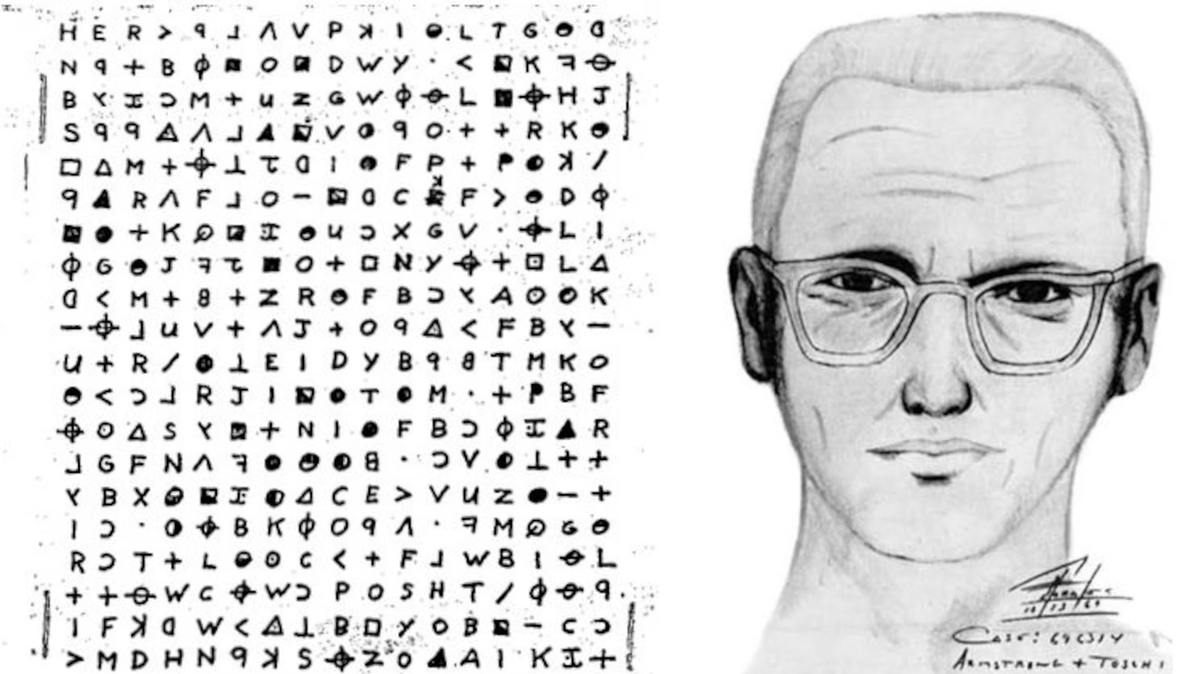
Weeks later, three Bay Area newspapers got letters. Each one contained a piece of a coded message. The writer demanded they print it on their front pages, or he'd go on a killing spree.
He signed it with a crosshairs symbol.
Then he gave himself a name.
The Zodiac.
In September 1969, at Lake Berryessa, he came out of the trees wearing a black hood with that crosshairs symbol sewn on the chest. He tied up a young couple and stabbed them both. The woman died. Then he wrote on the door of their car with a marker, listing the dates of his attacks.
In October, he shot a San Francisco cab driver in the head, and mailed a piece of the driver's bloody shirt to the newspaper.
The letters kept coming. Taunts. Threats to shoot kids getting off a school bus. More ciphers. He claimed he'd killed 37 people.
And in October 1970, a San Francisco reporter covering the case opened his mail to find a Halloween card. On it, the killer had written "Peek-a-boo, you are doomed!"
Police investigated thousands of suspects. Their top suspect died in 1992 without ever being charged.
One of his coded messages stayed unbroken for 51 years. In 2020, a team of amateur codebreakers finally cracked it. It didn't reveal his name.
Just this week, police in Riverside renewed their call for tips in a 1966 murder some have long tied to the Zodiac. They announced the writer of one creepy letter in that case had been tracked down through DNA. He was just a troubled teenager seeking attention back then. Not the Zodiac.
The FBI says the case is still open.
57 years later, the man who named himself, mailed his victims' bloody clothing to the papers, and taunted police for years has never been identified.
He wanted the world to know what he did.
He just never told us who he was.
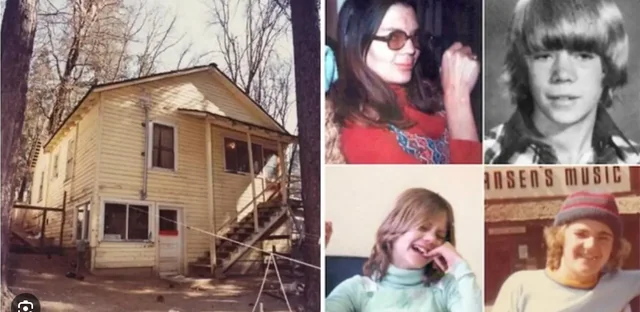
On the morning of April 12, 1981, a 14 year old girl named Sheila Sharp walked home from a sleepover in the tiny mountain town of Keddie, California.
Keddie was an old railroad resort tucked into the Sierra Nevada mountains. A few dozen small cabins. Quiet. The kind of place people moved to get away from things.
Sheila's family lived in Cabin 28. Her mom, Sue, was 36, a single mother of five who'd moved there to start over.
Sheila opened the door.
In the living room, she found her mother, her 15 year old brother John, and John's 17 year old friend Dana. All three had been bound and brutally killed. Hammers and knives had been used.
The curtains were closed. The lights were off. The phone was off the hook.
And somehow, in a back bedroom just feet away, Sheila's two little brothers and a young friend had slept through the whole thing. They were unharmed.
But one person was missing.
Sheila's 12 year old sister, Tina.
She was nowhere to be found.
For three years, nobody knew what happened to her.
Then in 1984, a man collecting bottles about 30 miles away found part of a human skull. Then an anonymous caller phoned the sheriff and said the remains belonged to Tina Sharp.
They did.
Suspicion quickly fell on a neighbor and his friend. Years later it came out that the neighbor had written a letter to his estranged wife, claiming he'd paid for her love with four people's lives.
He was questioned. He passed a lie detector test. Neither man was ever charged. Both are now dead.
The investigation was a mess from the start. Evidence was lost. Files went missing.
In 2016, a hammer that matched one the neighbor reported missing was found in a pond near the cabins. In 2018, investigators said DNA from tape found at the scene was linked to a living person.
They haven't named who.
The cabin was torn down in 2004.
45 years later, nobody has ever been charged with the Keddie murders.
Four people died in a little cabin in the mountains while three kids slept down the hall.
And somebody took a 12 year old girl with them when they left.
Early on the morning of December 26, 1996, Patsy Ramsey walked down the back staircase of her family's large home in Boulder, Colorado.
On the steps, she found a note.
It was two and a half pages long, handwritten. It said her 6 year old daughter, JonBenét, had been kidnapped by "a group of individuals that represent a small foreign faction."
It demanded $118,000. Almost exactly the amount of the bonus her husband John had received that year.
It warned them not to call the police.
Patsy called 911 anyway. Then she called friends, who came over to help. Within hours, the house was full of people. Cops, friends, a pastor. Walking through rooms, touching things, cleaning up.
Police didn't fully search the house.
That afternoon, a detective asked John Ramsey to look around the house with a friend for anything unusual.
He went down to the basement. He opened the door to a small room off the wine cellar.
JonBenét was lying on the floor, under a white blanket. There was duct tape over her mouth and a cord around her neck. She'd suffered a severe blow to the head.
She had been in the house the entire time.
And the investigators soon realized something else. The ransom note had been written on a notepad from inside the house. With a pen from inside the house.
The world went wild. JonBenét had competed in child beauty pageants, and her face was on every magazine cover and TV channel in America. Suspicion fell hard on her family.
In 1999, a grand jury voted to indict her parents. The district attorney refused to sign the indictment, saying there wasn't enough evidence.
Then came the DNA. Testing found an unknown male's DNA in JonBenét's underwear and under her fingernails. It didn't match anyone in her family.
In 2008, the district attorney formally cleared the Ramseys.
Patsy died of cancer in 2006 without ever knowing who killed her daughter.
Police say they've followed up on more than 21,000 tips and interviewed more than 1,000 people. They say they're still retesting evidence. John Ramsey, now in his 80s, keeps pushing them to use the same genetic genealogy that's cracked hundreds of other cold cases.
This December marks 30 years.
Someone wrote a ransom note at that family's kitchen table, while a little girl lay dead in the basement.
And they've never been caught.
I love when people say stuff like this as if I’m supposed to have any idea what you’re mysteriously alluding to lol. Just say the version you believe and why
On December 17, 1944, during the opening days of the Battle of the Bulge, a column of German SS tanks rolled through a crossroads near Malmedy, Belgium.
They captured more than 100 American soldiers. The Americans were disarmed and herded into a snowy field.
Then the Germans opened fire with machine guns.
84 American prisoners of war were killed. Survivors later said SS men walked among the bodies, shooting anyone who moved.
The tanks belonged to a battle group led by SS Lieutenant Colonel Joachim Peiper. He was 29, a former aide to Heinrich Himmler, and one of the most decorated and feared tank commanders in the German army. His units had already been linked to massacres of civilians in Italy and on the Eastern Front.
After the war, the U.S. Army put Peiper and dozens of his men on trial at Dachau for the Malmedy massacre.
In 1946, he was sentenced to death by hanging.
He never hanged.
As the Cold War heated up, the trial came under fire over claims that interrogators had used abusive tactics. Sentences were reduced. Peiper's death sentence was commuted to life.
In December 1956, after about 11 years in prison, Joachim Peiper walked free.
He went to work for Porsche, then Volkswagen. In the early 1970s, he quietly moved to a house in the woods near the tiny village of Traves, in eastern France. He made a living as a translator.
For years, nobody knew who he was.
Then in June 1976, he walked into a shop in a nearby town to buy fencing for his dog. He paid with a check.
It had his real name on it.
A former member of the French Resistance recognized it. Within days, a French communist newspaper ran a story asking what a Nazi was doing living in France.
Leaflets went up around the village. Graffiti appeared on walls, promising Peiper a July 14th he'd never forget. Bastille Day.
His wife left for Germany. Peiper stayed.
On the night of July 13, 1976, someone attacked his house and set it on fire.
When firefighters finally got inside, they found a badly burned body.
A group calling itself "The Avengers" claimed responsibility.
Some refused to believe the body was even his. Rumors spread that Peiper had faked his own death and escaped.
French police investigated. Nobody was ever identified. Nobody was ever charged.
50 years later, the murder of Joachim Peiper is still unsolved.
The man the U.S. Army sentenced to hang for killing 84 American prisoners walked out of prison a free man.
Then somebody else decided to settle the score.