Margin Velocity Planner: Finally...A tool to help you build a credible, velocity -based growth plan for your emerging CPG brand.
#food#beverage#brands. #CPG
Can your CPG brand survive a 30% operating profit decline that is brought about by insufficient price increases and volume declines?
"Even, if CPG price increases subside from a prevailing 12-15% rate to a range of 7-9%, these an…https://t.co/UmI2MYthQs https://t.co/2boPxzyMKi
The Bud Light saga and "cultural wedge" that socio-political grifters are fomenting has had an obvious impact on Bud Light sales. Yet, the success of Modelo Especial should not just be ascribed to the woes of Bud Light.
The premium light category has bee…https://t.co/JdDA3i4yv8
For emerging CPG brands, chasing growth that, geographically, is a mile wide and an inch deep is a flawed strategy that can quickly deplete constrained cash resources. It is unsustainable and can lead to failure.
The smart alternative is the a) inch-by-i…https://t.co/KFL79lgg0t
A great example illustrating the importance of pricing integrity across channels or retailers from Jennifer Barney!
See part 1 too.
#cpg#pricing#cpgindustry#emergingbrands https://t.co/YfBNpxvK74
Developing & pursuing retailer-specific (and even channel-specific ) brands for value offerings is smart and profitable for brand owners & retailers.
We will see a lot more of these charter brands, as I call them, in key categories where product integrity is at the forefront.
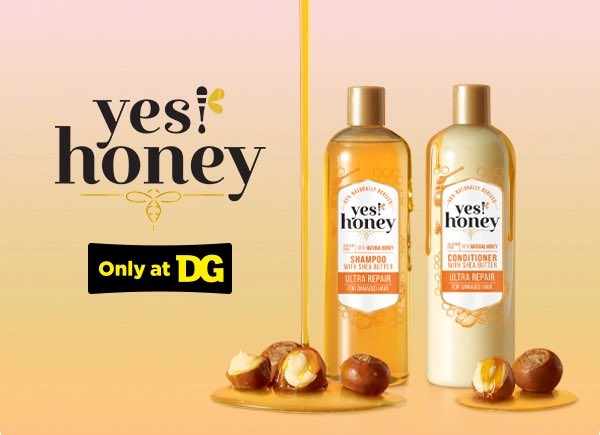
Interesting to see Unilever quietly launch this hair care brand exclusive to Dollar General.
The brand “Yes! Honey” is intended to fill a gap in Dollar General’s beauty assortment by offering affordable clean beauty lines.
In other words, this is a way for Dollar General to play in a space that does not devalue Unilever’s main brands.
Unilever wants the volume that DG can offer.
It can still be very profitable.
But the cheaper prices (and to some extent the discount shopping experience) that DG would offer consumers might devalue their brands in the eyes of consumers.
Plus they don’t want to leave a door open for a competitor to gain a foothold in the market.
They needed an alternative approach.
The answer: this new brand, Yes! Honey.
And what’s more, it’s a dream for a retailer to have an exclusive brand.
It means when consumers want to restock, they have to come to Dollar General.
Just like a good private brand, it drives loyalty.
So it’s a win for DG and a win for Unilever.
Smart business.
Reminds me of a story I’ve told before about an experience with Aldi:
https://t.co/yBt01da74v
Recently I was intimidated and mocked in broad daylight simply because I’m disabled. I challenged them but when I got home I was heartbroken. It’s prompted this blog series all about ableism - written in my usual simple terms. Pls share if it’s helpful ♿️🙏🏼https://t.co/zchwffTIkl
• Balance Sheet Structure
The structure of a balance sheet is:
Assets = Liabilities + Equity
This formula is intuitive when you remember,
A company has to pay for what it owns (assets) by either:
• borrowing money (liabilities), or
• bringing on investors (equity)
Beware the algorithm! Take a step back from the day-to-day grind.
@ianbremmer's TED talk is the 15min video to watch this weekend!
#cpgindustry#fmcgindustry https://t.co/RZ8EJQKEj6
Another lesson that building consumer brands is not just about widespread brand recognition, distribution reach and Prime Day fire sales. ( I am looking at you Bed Bath and Beyond, Amazon etc.)
You have to be profitable and generate cash too! Sustainably…https://t.co/lBpSLQAl83
SLO-UPs (nice name @intertwinegroup 👍 ) are also smart-ups. For way to long, many emerging CPG brands have been chasing the wrong scaling and funding business models.
Elliot, shares alternative funding approaches. https://t.co/KRjeGsCtk8
In many categories, large CPG brand volume growth has been stagnating for a while.
Incubating a few small brands will not make a dent. Even if 10 were incubated and all were successful, it would still take a no. of years before a meaningful profit contribution can be realized.
Successful beverage brands can achieve big valuations because beverage hits are like catching lightening in a bottle.
The big players have a hard time innovating that effectively because the structure of a corporate environment is not a natural place for the risk taking of innovation.
I.e. people are rewarded for reliable and effective execution.
This includes making no mistakes.
In a big corporate nobody wants to stick their neck out for an idea that might be a hit but also might be flop.
So you put forward ideas that everyone will agree with and the blame is shared.
Design and innovation by committee results in products that are similar to what already exists because most people have little imagination.
They can’t see something new working unless they’ve seen something similar before.
So the end result is big beverage companies want to buy what is already working.
Not let their competitors buy it.
It becomes a strategic imperative to own the hot brand.
Furthermore, the big beverage companies can achieve SO much more distribution than an independent can ever achieve.
So they have ways to justify higher prices in a competitive bidding process.
@Wynn_Austin, your "just focus on 1 point at a time" comment is powerful, but not just for how you approach business (or tennis!).
It's evident in how your label design captures attention in a shelf of clutter. Instantaneously, you know what it is! The…https://t.co/E1jeTCB2Jl
Recruiting and retaining supply chain team members within the CPG industry has been a massive challenge for the past five to six years.
Anna Wong, Chief U.S. Economist for Bloomberg, presented and discussed (amongst other topics) a fascinating chart at…https://t.co/ZP2yLtjWAE
Sustainable brands are built over decades.
Celebrities fade quicker than that.
To grow, Prime needs to also be relevant and memorable to potential category buyers who have never heard of Logan Paul and who don’t care anyway.
That depth of brand-building is the hard part.
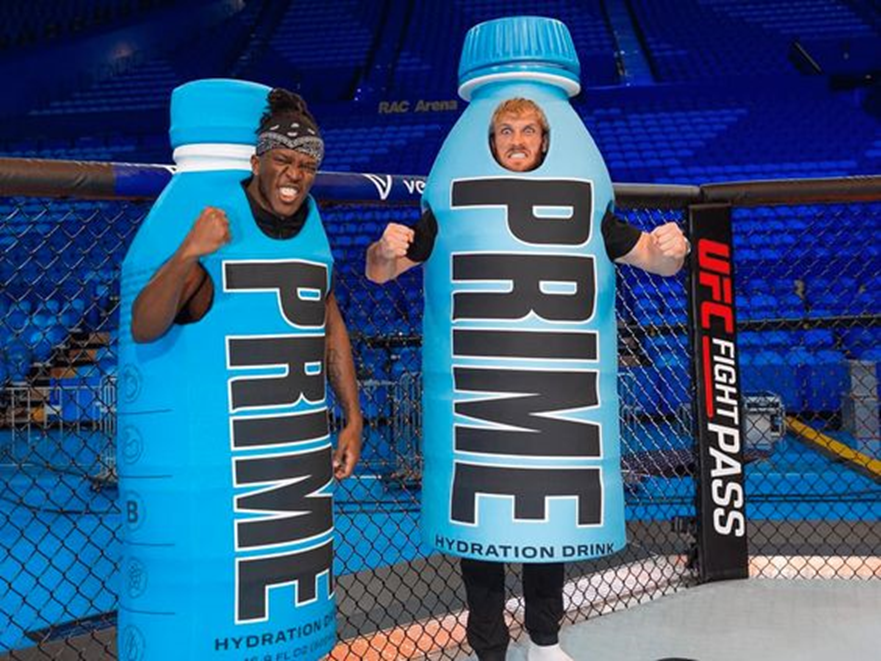
Prime Hydration, co-founded by youtubers Logan Paul and KSI has become a big deal in a very short time.
With retail sales of $250M in 2022 and now over $50M/month it has experienced an incredible rise to prominence.
But Prime is destined to fail spectacularly unless they make drastic changes:
Here's why:
First, some background.
The company behind Prime Hydration is Congo Brands in Kentucky.
Established in 2019 by a pair of young entrepreneurs, Trey Steiger and Max Clemons.
Congo Brands seems to have had limited success with some niche energy drink products.
That is, until striking a deal with Logan Paul and KSI in 2021.
But it was enough experience with product formulation, ingredients, manufacturing and distribution to put them in a good position to break out with Prime.
Let me be clear, this is not just an influencer deal.
Logan Paul’s name can be seen on the business filings for Prime Hydration LLC in Kentucky.
Along with his manager Jeffrey Levin.
So Congo has bet the farm on Logan Paul and KSI by giving them a presumably substantial piece of the equity of the business.
Which was clearly a good idea, because without their involvement, there would be no farm!
But…it could also be the stick in their spokes that sends the business over the handlebars.
Let me explain.
Logan Paul has publicly stated he would like to sell the business for $5B.
There are really only two players at that end of town for big beverage acquisitions.
Coca-Cola and Pepsi.
Now, consider this:
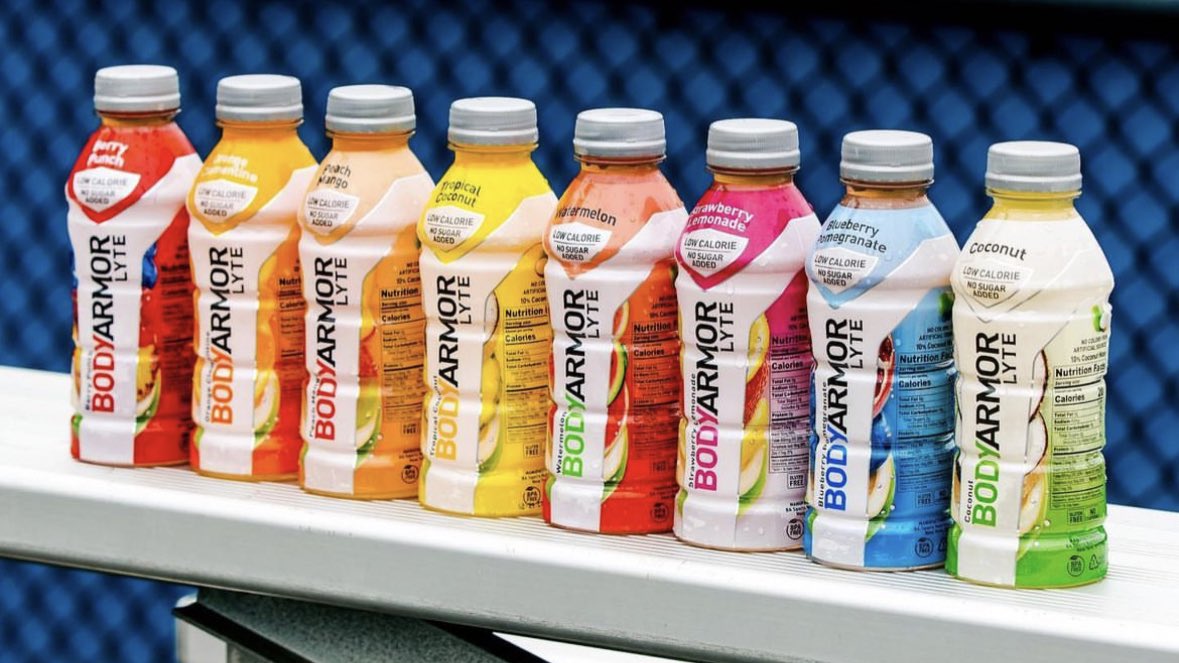
1. Coca-Cola recently in 2021 completed their acquisition of Body-Armor, the most similar product to Prime.
2. Pepsi owns Gatorade, the grandaddy of sports drinks.
Pepsi has shown they are not averse to experimenting with the Gatorade brand.
3. Coca-Cola and Pepsi are not dummies.
They have made mistakes in the past by paying for hype.
Notably, Coca-Cola’s acquisition of vitaminwater was done hastily at peak hype before it’s growth plateaued.
They overpaid for forecasts of continued hockey stick growth.
Neither will be in a rush to buy something in a hype cycle.
They both want strong, sustainable and defensible brands.
They have time to both see how this plays out and counterattack with their own brands.
4. If you were Coke or Pepsi, would you want to buy a brand completely reliant on two stars who would ride off into the sunset if sold?
Or at least be far less motivated than they are right now to promote the brand.
It’s like buying an advertising agency with a charismatic founder.
Once she gets her check, she’s checked out.
5. Because of the hype cycle, the empty shelves and queues for product, the rate of repeat purchase is still unproven.
Is this purely early marketing hype or is it a product that consumers will continue to buy over and over again?
The formulation is very sweet unlike the more chuggable competitors in this space.
When they’re thirsty on a hot day after working outside or exercising, will consumers reach for a sickly sweet Prime, or a reliable Gatorade?
Time will tell.
6. Because Prime has grown so fast and continues to grow fast, they are almost certainly making big mistakes.
Missing orders, unfulfilled stock to big retailers, hiring poorly, mismanaging employees.
Pissing off their customers.
Nothing out of the ordinary for a fast-growing company.
Just growing pains.
But they are so very much in the spotlight that they don’t have time to figure this out at a more natural pace.
The big players will see opportunities to capitalize on their mistakes and go in for the kill.
Take out big accounts with exclusive deals, win sponsorship deals.
7. Which brings me to the final point.
Competition.
Forget Coke or Pepsi buying Prime.
Their first order of business is to crush them.
Or at least, squeeze them.
Make life difficult.
Suck the oxygen out of their hype balloon.
These two are big slow-moving beasts that haven’t indicated their response yet.
And they will respond.
With new sub brands under Gatorade, Powerade and Body Armor.
New formulations.
New Sponsorships with huge $$$.
Big names.
______
And all of this resistance will make life hard for Prime.
They will lose accounts.
Their huge sales from the hype will be very hard to cycle.
Meaning, how will they beat huge sales next quarter or year in a given account?
Once rate of sale begins to decline, shelf space gets reduced.
Distributors start losing interest and focus on the next new product in their portfolio.
They may have over committed to suppliers and stocked up.
There might be overhang of stock and they’ll need to discount.
Massive cash flow pressure means employees let go, further customer service deterioration and the beginning of a downward spiral as quick as the up ramp of the hype cycle.
Before you know it the brand is circling the drain.
Logan Paul and KSI don’t really care at that point.
The lustre has come off the brand and they are now focused on new projects, a vodka seltzer or a clothing range. Who knows.
But right now its not too late.
There are a number of strategic steps that come to mind that would put them in a much stronger position as they move in to battle with Coke and Pepsi.
1. Be clear on the intended outcomes they would be happy with in the future, which could be:
a. Operate in perpetuity
b. Sell to private equity
c. Engage with an ambitious beverage company not currently in sports drinks – e.g. Monster or a beer company
2. Introduce new celebrity talent
a. Nothing could make this more saleable in future than introducing new talent and diversifying that perceived risk.
b. The challenge might be in the equity agreement, would Logan Paul and KSI be willing to equally dilute alongside Congo Brands or would they be stubborn on ownership?
Egos might be bruised.
But it could be done more like an influencer or sponsorship deal if they can find the funds.
3. Hire incredible talent at every level.
Young guns, poach from McKinsey et al.
As well as hot talent from Coke and P&G.
Employ market leading systems.
Attract some experienced beverage executives to use experience and relationships in shoring up manufacturing, distribution and retail arrangements.
Prime needs to shoot the lights out on execution.
Everywhere, all at once.
Not easy.
4. Expand offering:
a. Keep refreshing with new and limited time flavors
b. Expand into protein drinks
c. Potentially expand to other product categories long term
_____
I love the energy Logan Paul and KSI have brought to the beverage space.
It’s something we’ve really never seen before.
And I’m hoping they can take it all the way and not fall for the traps that are hidden in plain sight.
But if it does happen to go pear-shaped, I would appreciate if they could make it a spectacular and dramatic collapse.
Something the WWE would be proud of.
The GOLDEN CASE for CPG brands and brand owners. It represents a specific profit contribution value for a full case of retail selling units, as sold to distributors or retailers.
More significantly, it represents the Sales Contribution $/case level that,…https://t.co/nOopSbQfj2
There are newsletters...and then there are must-read newsletters. Jennifer Barney, articulates crisp thoughts and insights for emerging CPG brands.
This newsletter on working with Kehe offers great precautionary tips those brands…https://t.co/zBslbJ1B0b https://t.co/XjVqanDDlZ
Emerging CPG brands don't just need innovative offerings. To cut through the competitive clutter they also need to innovate new business models that are core to that brand.
Looks like Tony's Chocolonely is certainly doing that! Satiating indeed! https://t.co/PHKP5b6v0P
Are large, established CPG brands reversing an era of brand commoditization?
COVID and the inflationary/recessionary knock-on effect has certainly boosted the outlook for large brands. It could be said that the prevailing climate has allowed them to rese…https://t.co/pQmlyU54SO
Growing profitability, volume and share in this inflationary environment is a rare feat. An accolade reserved for strong brands.
I have been following this global CPG food and beverage company, and its competitors, for a while. Highly disciplined, it is…https://t.co/2sOQvqkj6l
For many large consumer goods and consumer packaged goods companies, growing the top line off a very large sales base is hard, even under normal conditions.
Innovation, is also tougher as nimbler emerging brands inflict pain via a thousand of cuts. Iner…https://t.co/UTR7oW9SMl