A trick for high-stakes agent coding.
Agents see code through grep and rg. Those tools are their eyes — every match returns the whole line, every character on it. Nothing on that line gets dropped. So when a calling convention really has to land, I put it inline on the signature, not in the block comment above. Every grep for that function returns the rule with it.
Same for sensitive env vars. The usage rule rides on the access line, however long it gets.
No formal eval, just one observation: after I switched, the violations stopped.
I hope tricks like this become less and less useful over time.
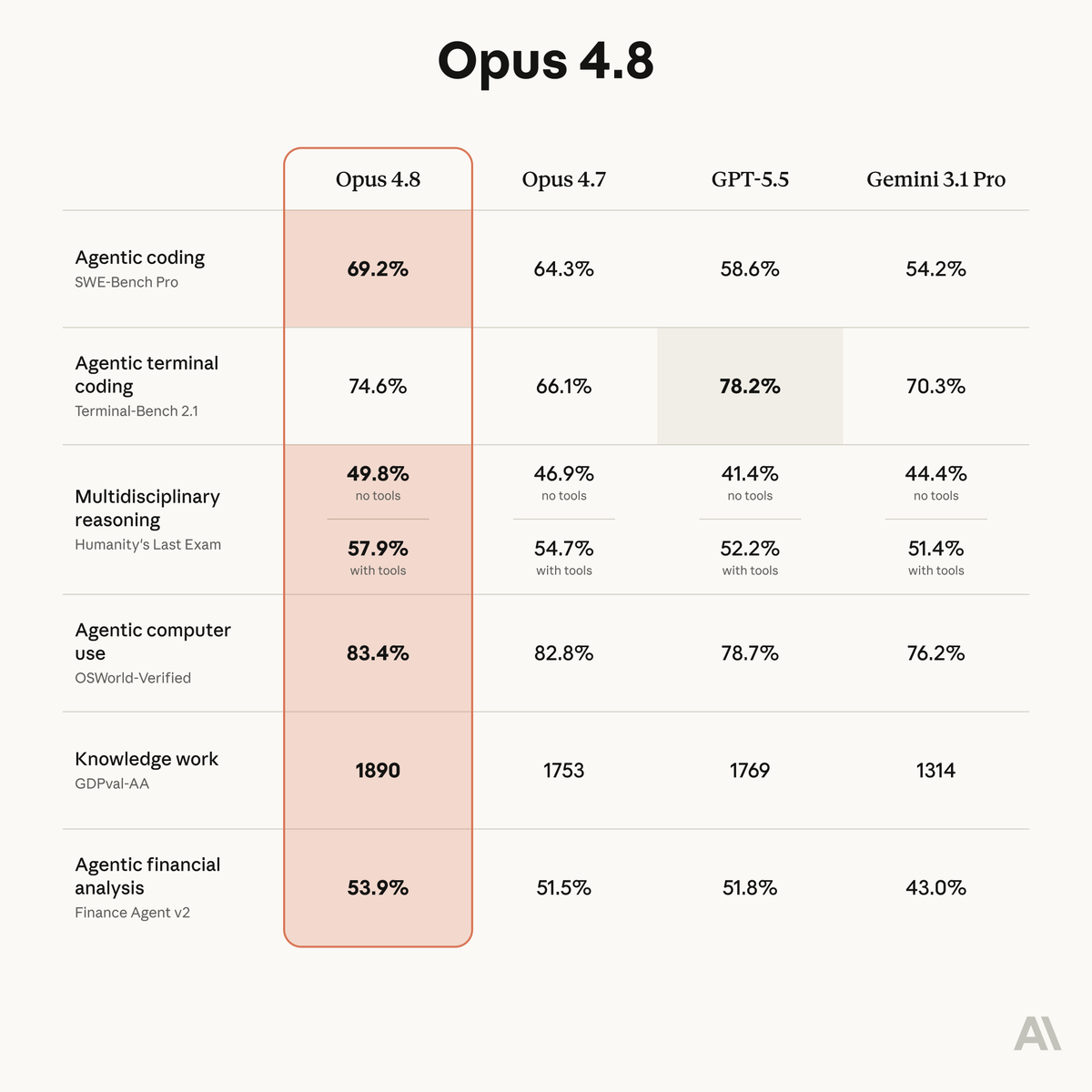
Introducing Claude Opus 4.8: it builds on Opus 4.7 with sharper judgment, more honesty about its own progress, and the ability to work independently for longer than its predecessors.
Available today at the same price.
3/ Try using one long-running implementer session for the entire project. Mine routinely run for days or even weeks continuously, compacting many, many times. Compaction works now. Long sessions remember your conventions and patterns and you stop needing to re-explain things.
Claude Code can now autonomously test your entire iOS app.
Every screen. Every flow. Debug logs included. Structured bug report at the end.
One prompt. No scripts. No setup.
CODEX SKILL THAT FINDS COMPLEXITY HOTSPOTS IN YOUR CODEBASE!
I made a Codex skill that analyzes your codebase and reports where performance can be improved safely.
Scan your project while Codex checks loops, repeated lookups, render-heavy code, N+1 patterns, and places where complexity can potentially be reduced without breaking behavior.
-> codebase complexity analysis
-> O(n²), O(n*m), repeated scan detection
-> before/after complexity estimates
-> safe optimization suggestions
-> risk level + tests needed
-> report-only mode by default
-> one-command install
Install: npx --yes codex-complexity-optimizer
100% open source.
Repo in Bio.
I'd like to apply for Cursor credits. I've been using Cursor for years — from the early days of code completion all the way to today's agent mode. Cursor has been with me through it all, and I'll be sticking with it for the long haul. @edwinarbus@cursor_ai#cursor
seems pretty fucking big
as someone said already:
> 1. rotate all env vars and secrets in your vercel dashboard right now
> 2. regenerate any github tokens connected through vercel's git integration
> 3. check build logs for cached secrets from old deployments
> 4. revoke API keys for stripe, databases, anything sitting in that dashboard