Congratulations to Sam Archie on receiving the Francis Small post-graduate scholarship and his groundbreaking research on sustainability and urban planning with the Christchurch and Invercargill city councils.
https://t.co/A2kPfpmFju
The impact of climate change on our infrastructure is undeniable. As a PhD student and Full Stack Developer & Analyst at Urban Intelligence, Logan is doing his part to model the cascading effects of natural disasters on our utilities and households.
https://t.co/hkjRhMhAHy
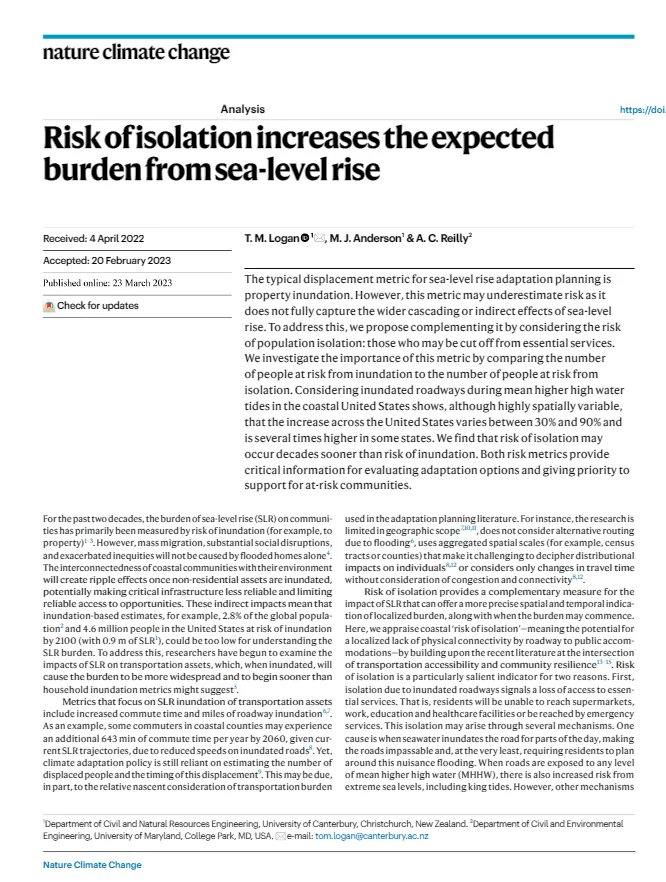
Dr. Tom Logan, Mitchell Anderson and Dr. Allison Reilly have a recent publication in the top climate change journal in the world (impact factor of 32.440).
Click here to read the full paper: https://t.co/sv0KQeSvoh
#ClimateAction#Risk
OPINION: The debate about housing intensification should have prompted the question: what type of city should Christchurch be in the future? Take a look at this article to learn more!
https://t.co/HBkRCjePC4
Have you seen this article on the '15-minute City' and the positive impacts on individuals and the planet?
Our very own Dr Tom Logan was interviewed for his opinion.
https://t.co/DfaOJbJLLn
Check out how our X-Min City Dashboard is being used to compare urban areas in New Zealand and the United States in terms of their walkability.
https://t.co/E67pYUnUGc
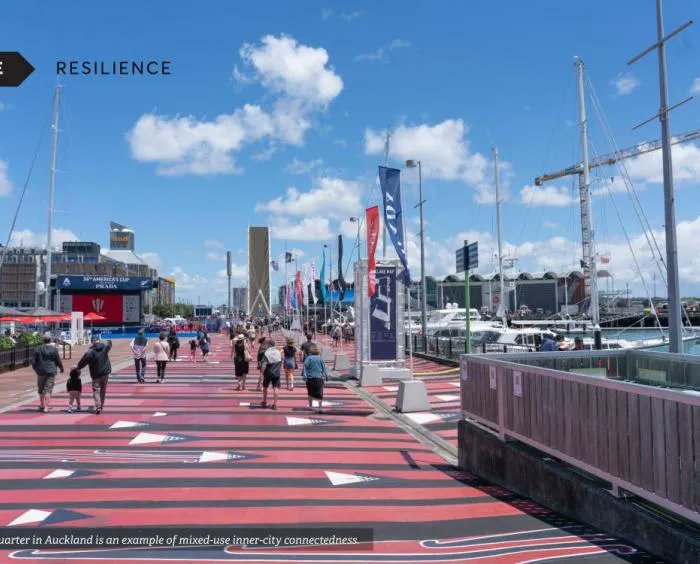
@BRANZlive article on design that improves community resilience, authored by @Urban_Intel_NZ founder and UC Civil Systems Engineering lecturer Dr Tom Logan.
Read more below:
https://t.co/uLPf6mSe7F
Register for Dr Logan's webinar on how modern planning requires an adaptive approach.
10:30 – 11:15am, Tuesday 18th October
To register: please email [email protected]
See the link for more details:
https://t.co/XYD2b1sD9u
Director and UC Civil Systems Engineering lecturer Dr Tom Logan has received a $1million MBIE Smart Idea grant to support the research as part of the partnership.
Read more below:
https://t.co/h0wKSdUxOa
Big costs associated with erosion and seal level rise on the Hawkes Bay Coast; How can we make sure we don't repeat the same mistakes?
https://t.co/2V60IiMmYW
Building “15-minute communities,” where basic needs like good schools and fresh foods are within a 15-minute walk or bike ride, is one way for cities to reduce transportation emissions.
Learn more about the future of low-carbon cities ⬇️ https://t.co/r46LqWjFpz
As technology is changing we have the ability to communicate science in better ways. Rather than producing a niche 200 page technical report (that no one wants to read), we work to provide interactive, easy to understand websites that make technical knowledge accessible to all 🌏
To create an equitable future we need to bridge the knowledge gap between technical specialists and the everyday person by making technical information more accessible.
Resilience is more than being physically safe from natural hazards or future changes. The MSD's report on 'what matters' and 'what works' for community resilience shows us the key to resilience is people and culture.
🔗 https://t.co/A9gKcvXNM1
What does resilience mean to you and your whanau?
In the past, we have tried to build resilience through future planning and risk assessments focused on physical resilience e.g. where is physically safe from natural hazards. But that alone doesn't create thriving communities.
Published in Nature, Dr Tom Logan and collaborators unpack how our modern understanding of risk is key to supporting resilience frameworks. At Urban Intelligence, our goal is to ensure local decision making is informed by the most up to date research. 🌏
https://t.co/wk9UP2cpBB
As Aotearoa's provincial areas grow it is important our investments are #futureproofed.
Dr Tom Logan talks with NewstalkZB's Kate Hawkesby about how development in our rural/urban landscape will shape the #future.
Full article: https://t.co/q8M5j60YJz