Ślązaczka; PhD Student at DTU Aqua; working on quantification of bycatch using eDNA; interested in fish biology, marine (fish) ecology and fisheries 🐟🐟
Want to quantify eDNA metabarcoding for fish abundance like trawls do? Read our research on how linking eDNA with trawl catch can enable managers to estimate 🐟 abundance using eDNA alone. #eDNA#FisheriesManagement
Thnx @KPraebel@Invertdna @eDNAcollab
https://t.co/AIXEf9igIX
I am defending my PhD on the practical implementations of the eDNA concept for marine resources monitoring this Friday at 1 pm (CET). The defence can be followed online with a link on DTU Aquas website: https://t.co/E1kdtq8rqp
I cant get enough of eDNA applications to fishery catches! 🧬🐟
Now, the third manuscript on our concept, applied to the spat fisheries from the Baltic Sea is out in scientific reports 🎉
In the study we:
1) repeat previous experiments on biomass-to-eDNA translation for another season
2) test DNA-metabarcoding alongside qPCR on the experimental samples
3) apply the concept to real fisheries samples
Our new #MOOC course together with Kristy Deiner @alpineedna and Aline Frossard @wsl on the application of environmental DNA #eDNA for biodiversity sensing and management is open and #free: register now to follow it with a cohort of >500 students worldwide https://t.co/TtLhdzn6ti
Are you hungry for more information on eDNA-based bycatch estimation? 🧬🐟 Wait no longer and read our new publication "Scaling from eDNA to biomass: controlling allometric relationships improves precision in bycatch estimation" published @ICES_ASC @OxfordJournals
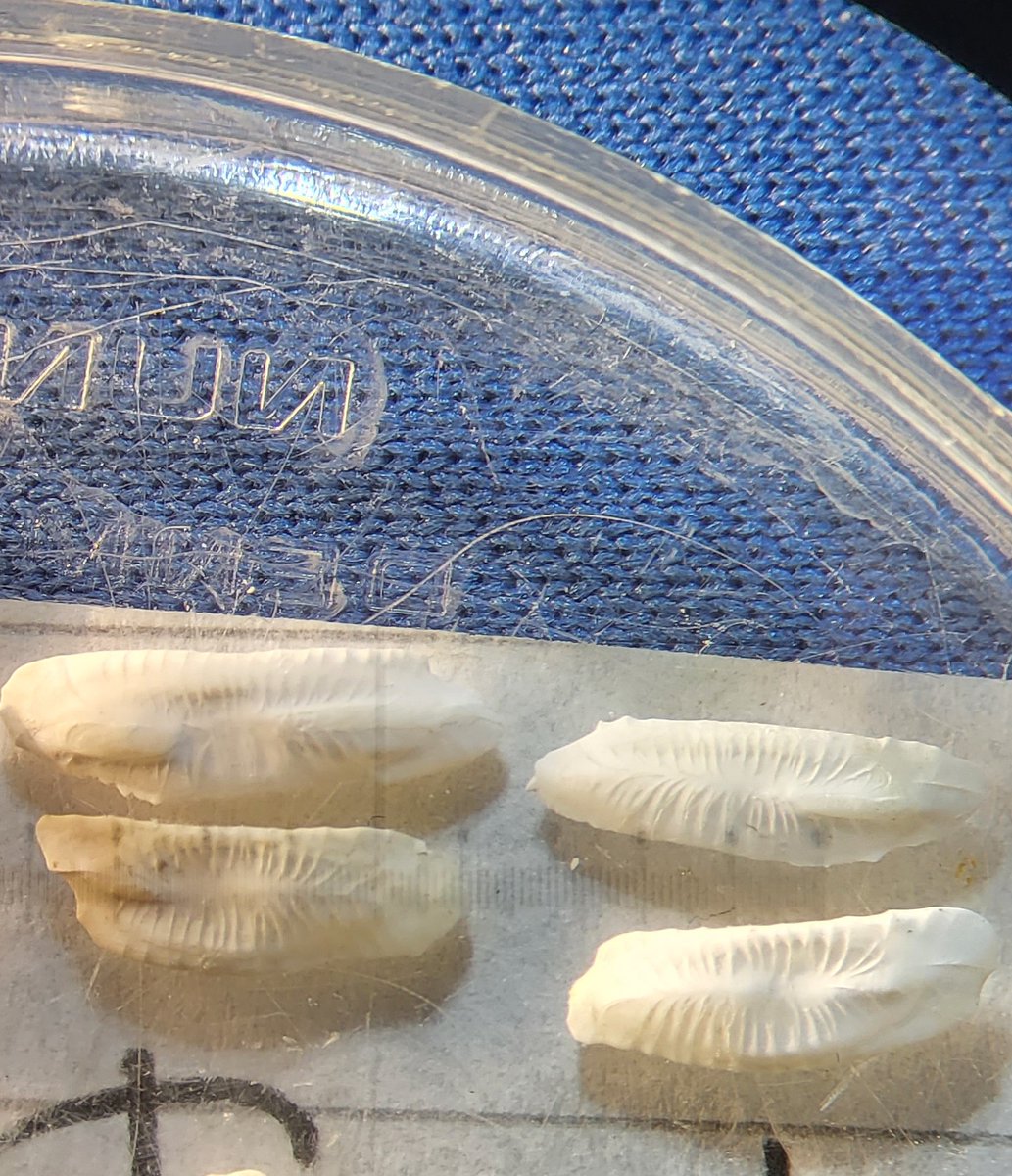
Hey Twitterrati, NEED YOU HELP. We have some degraded otoliths from a fish stomach we can't identify. They are found in a marine fish and are 7-10 mm long. You can see them in the picture. Tell what fish they are from and I will tell you what fish species that ate them😉
For all of you that wondered what more we can do with eDNA: Hello eDNA application for estimating biomass of bycatch in fisheries! 🧬🧬🐟🐟🐠🎣@DTUtweet@Einar_Eg_Niels 1/6
A new scientific study concludes that unexpectedly large numbers of fin and humpback whales in the previously ice-infested waters of East Greenland indicate a tipping point in the marine ecosystem from one regime to another that may be irreversible. #H2020 https://t.co/ucmDVao3gT