An 800-year-old oak door in the undercroft of Wells Cathedral, England.
Dated to around 1265–1266, it once protected one of the cathedral’s most secure spaces — the undercroft, used to store treasures, valuables, and manuscripts.
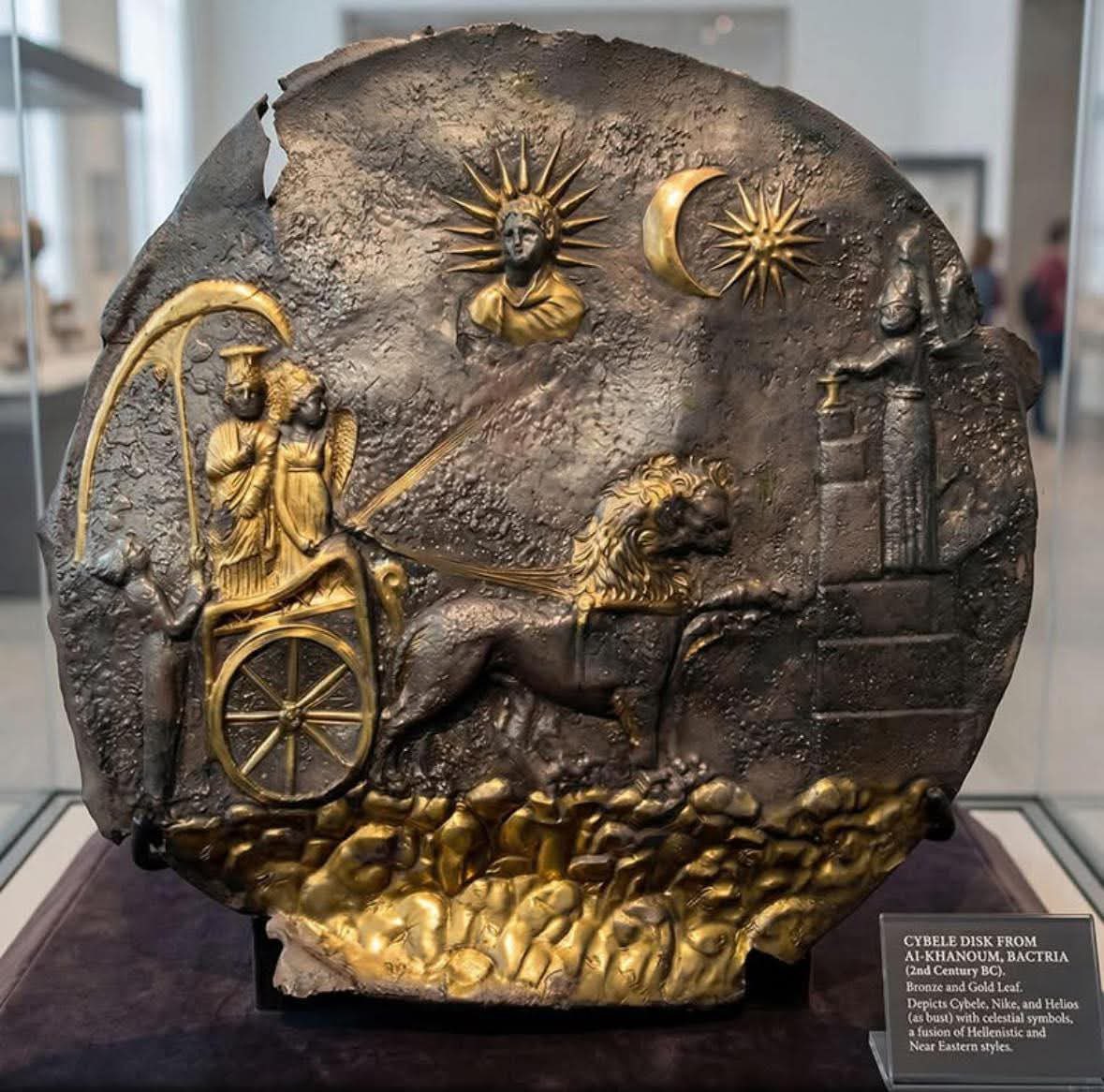
Deep in the heart of ancient Bactria, where the rugged mountains of modern-day Afghanistan meet the legacy of Alexander the Great, an artisan poured their soul into a masterpiece. This is the Cybele Disk of Ai-Khanoum, a breathtaking 2nd-century BC relic forged from bronze and gilded with whispers of gold leaf.
More than just metal, it is a living bridge between worlds. Look closely, and you can almost feel the desert wind as the great Anatolian mother goddess, Cybele, rides a chariot pulled by powerful, majestic lions. Beside her stands Nike, the winged goddess of victory, while overhead, the sun god Helios shines his radiant light upon a crescent moon and a star.
This disk is the emotional heartbeat of a forgotten multicultural empire—a place where Greek settlers and Near Eastern cultures didn't just coexist, but beautifully fused their faiths, dreams, and art into one timeless story.
Al contemplar el icono del Pantocrátor (s. VI) del Monasterio de Santa Catalina del Sinaí en un documental sobre Iconos cristianos, inmediatamente pienso en como me recuerda a algunos rostros del Greco y en lo mucho que pesaba la herencia bizantina en la cultura visual del cretense. Ahora os dejo el enlace del documental: https://t.co/lJnZVAkU5v
Doors that look like pulled curtains — but they’re bronze.
This is the west portal of St. Jacobi Church in Hamburg, created in 1966 by sculptor Jürgen Weber. Set within the historic church’s stone entrance, the bronze doors fold like heavy fabric while carrying detailed relief scenes across their surface.