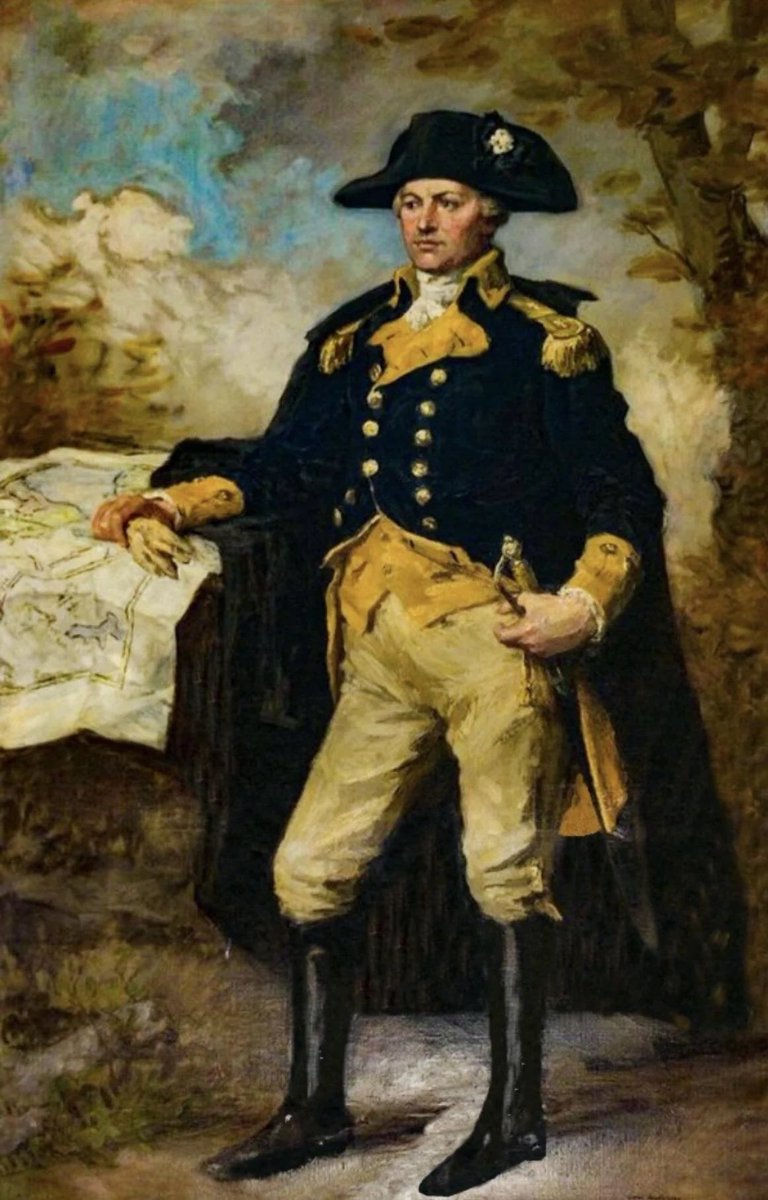
“Henry Knox”
Artist: Gilbert Stuart
Revolutionary War Hero: Originally a Boston bookseller, Henry Knox (1750–1806) became the Chief Artillery Officer of the Continental Army and one of George Washington's most trusted generals.
The "Noble Train of Artillery": In the winter of 1775–1776, Knox famously led an expedition to transport 60 tons of captured cannons over 300 miles from Fort Ticonderoga to Boston. Placing these cannons on Dorchester Heights forced the British to evacuate the city.
First Secretary of War: Following the war, Knox served as the very first United States Secretary of War under President George Washington from 1789 to 1794.
Fun detail: In the full painting at the Museum of Fine Arts, Boston, Stuart posed Knox resting his left hand on a cannon—a clever trick to hide the two fingers he lost in a 1773 hunting accident.
Honoring the Sacrifice of Military Veterans. They Live! We are ever Grateful.
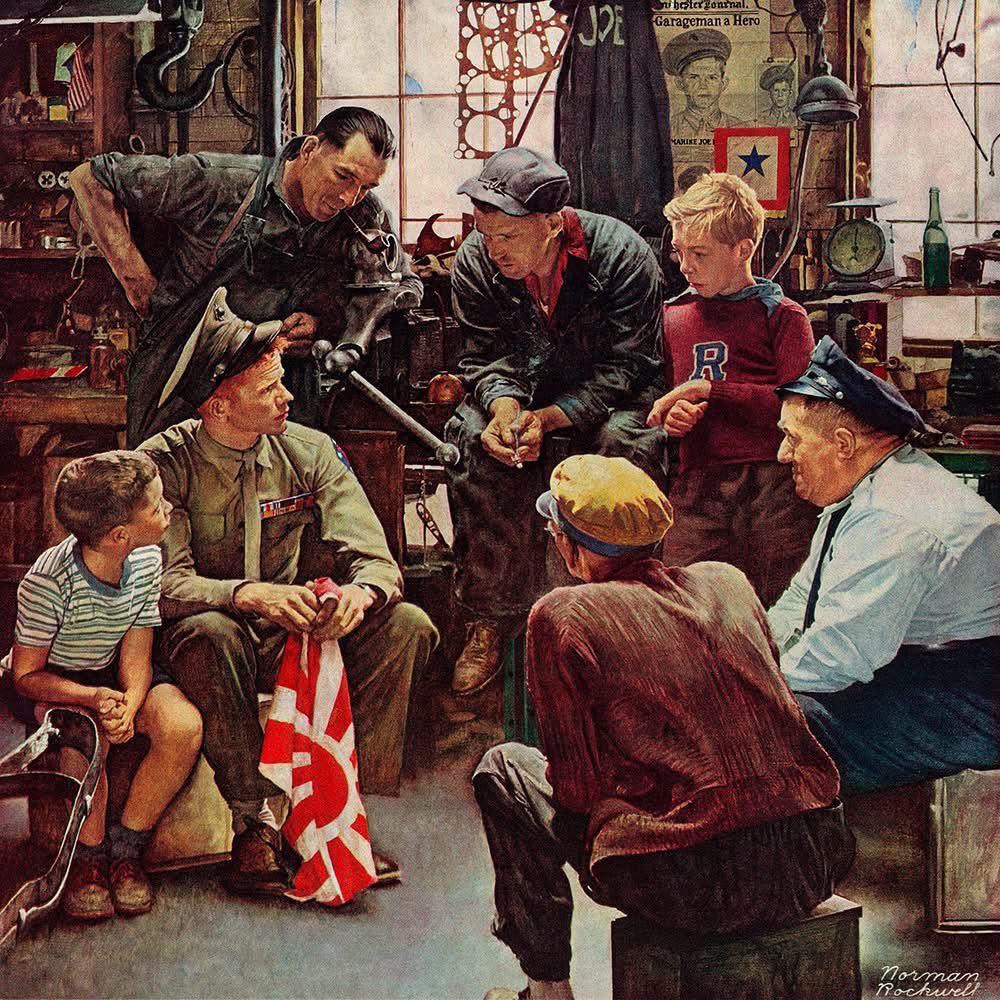
"Homecoming Marine"
Artist: Norman Rockwell
Rather than painting a loud, triumphant victory celebration, Rockwell captured the quiet emotional reality of returning to civilian life. While the local newspaper clipping calls him a hero and neighbors lean in to hear war stories, the Marine sits quietly with a distant, restrained expression.
Originally titled The War Hero, the painting debuted on October 13, 1945—just weeks after the end of World War II and nearly a decade before Armistice Day was officially renamed Veterans Day in 1954.
#USacana #VeteransDay2026
“The Domes of the Yosemite (1867)”
Artist: Albert Bierstadt
In the style of the Hudson River School and its sub-movement, Luminism. This style is defined by an emphasis on natural light, atmospheric mist, and awe-inspiring, epic landscapes meant to capture a sense of spiritual grandeur.
#USacana
“Coin Toss (also known as The Referee or The Toss)”
Artist: Norman Rockwell
Painted in 1950 and featured as the cover art for the October 21, 1950 issue of The Saturday Evening Post
#USacana
"Newburgh, 3 May 1783"
Artist: H. Charles McBarron Jr.
General George Washington bestowing the newly created Badge of Military Merit (the precursor to the modern Purple Heart) upon Sergeants Elijah Churchill and William Brown at his headquarters in Newburgh, New York. Issued on May 3, 1783, these were the first known instances of the award being presented to ordinary enlisted soldiers for extraordinary acts of gallantry. The artwork was originally commissioned and published in 1974 by the U.S. Army Center of Military History as part of their "Soldiers of the American Revolution" print set.
General Orders, 7 August 1782 - establishing the Badge of Military Merit—the precursor to the modern Purple Heart
https://t.co/2rwIJ2FC3J
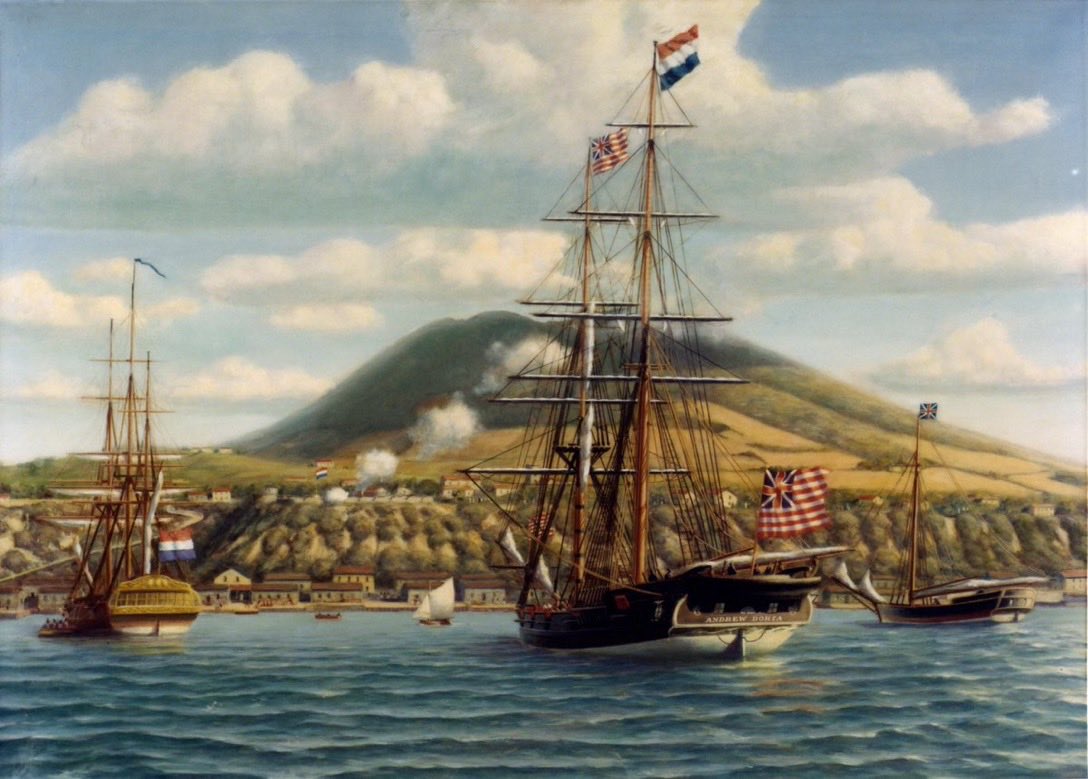
“First Official Salute to the American Flag (or First Foreign Salute to the American Flag)”
Artist: Phillips Melville
Collection: U.S. Navy Art Collection, Washington, D.C.
The Andrew Doria sailed into the harbor of St. Eustatius in the West Indies, flying the early American "Grand Union" flag at its stern and peak. Upon her arrival, she fired a 13-gun salute. The Dutch fort ashore (Fort Oranje) fired its cannons in reply, returning a formal 11-gun salute. Marking the very first official recognition and salute given to an American flag by a foreign power.
“General Nathanael Greene”
Artist: Gari Melchers
Famous Quote, "We fight, get beat, and fight again".
Washington's Top Lieutenant: Emerging from a pacifist Quaker upbringing in Rhode Island, he taught himself military tactics and rose to become George Washington's most trusted and capable commander.
The original oil painting hangs in the State Reception Room at the Rhode Island State House.
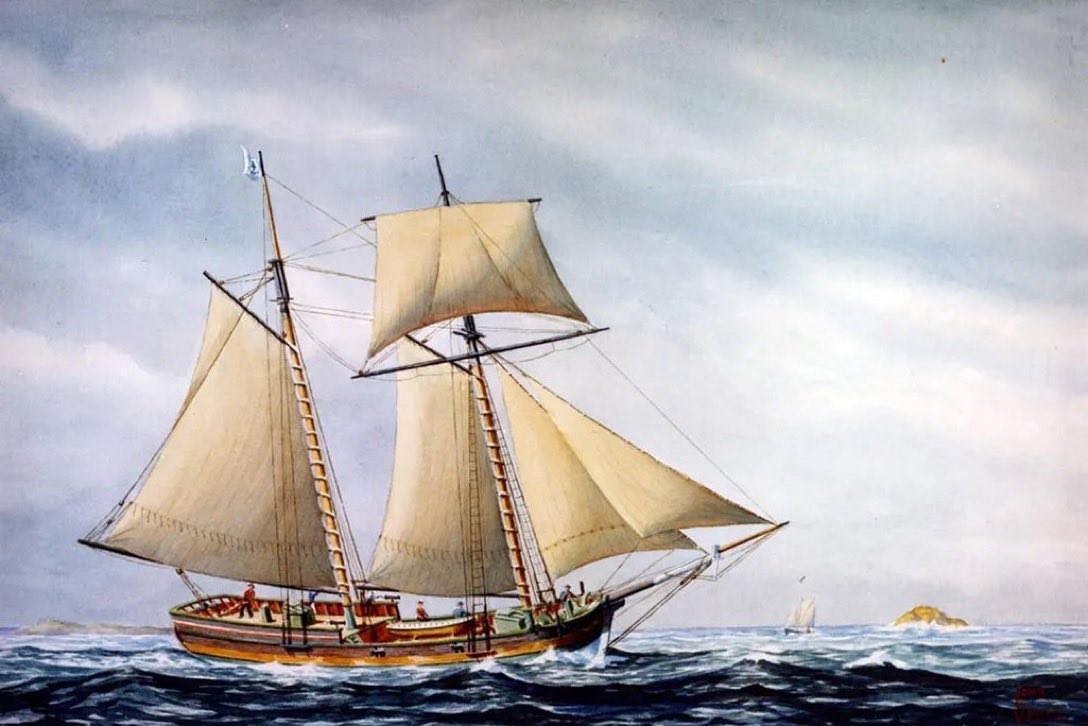
“The Alfred (or USS Alfred)”
Artist: Al Mettel (sometimes Al Mattal)
a merchant ship originally named Black Prince that was purchased by the Continental Congress in 1775. It became the first flagship of America's first Navy squadron. Notably, on December 3, 1775, Lieutenant John Paul Jones hoisted the Grand Union Flag aboard the Alfred in Philadelphia, making it the first time the American flag was raised on a Continental warship.
#USacana #USnavy
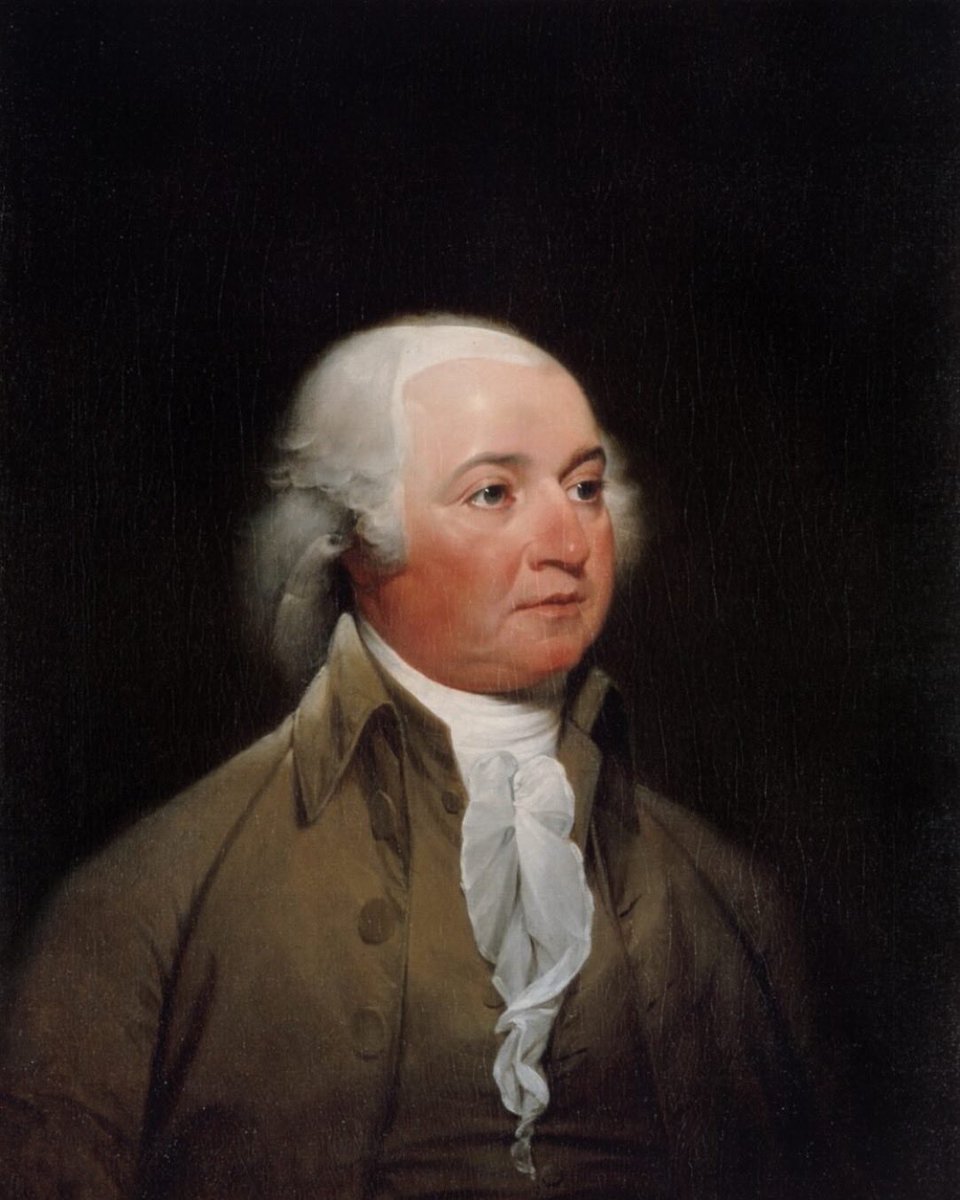
“John Adams”
Artist: Gilbert Stuart
October 30, marks John Adams' birthday. Born on October 30, 1735, in Quincy (then Braintree), Massachusetts, today is the 291st anniversary of his birth.
“John Adams” (1792–1793)
Artist: John Trumbull
October 30, marks John Adams' birthday. Born on October 30, 1735, in Quincy (then Braintree), Massachusetts, today is the 291st anniversary of his birth.
“Washington as Captain in the French and Indian War”(1854)
Artist: Junius Brutus Stearns
Other titles: “The Life of George Washington: The Soldier” ~or~ “Washington at the Battle of the Monongahela)”
A young, 23-year-old Colonel George Washington mounted on a white horse during the Battle of the Monongahela (July 9, 1755).
Part of the Braddock Expedition during the French and Indian War. A combined force of French, Canadian, and Native American warriors ambushed British regulars and colonial militia regulars.
A British defeat, Washington is shown remaining calm and rallying the broken lines after British General Edward Braddock was mortally wounded (shown being carried away in the center background). Washington famously had two horses shot out from under him and four bullets pierce his coat during this engagement, yet emerged unhurt—cementing his early reputation for bravery and divine protection.
“Continental Schooner Hannah, 1775”
Artist: John Faunce Leavitt
This painting depicts the Hannah, widely recognized as the first armed vessel fitted out in the service of the United States. Originally a Marblehead fishing schooner owned by Colonel John Glover, she was hired by General George Washington in late August 1775. Her primary mission was to aid in the Siege of Boston by intercepting and capturing British provision and supply ships. Because of this historic role, she is widely celebrated as the founding vessel or precursor to the United States Navy.
#USacana #USNavy
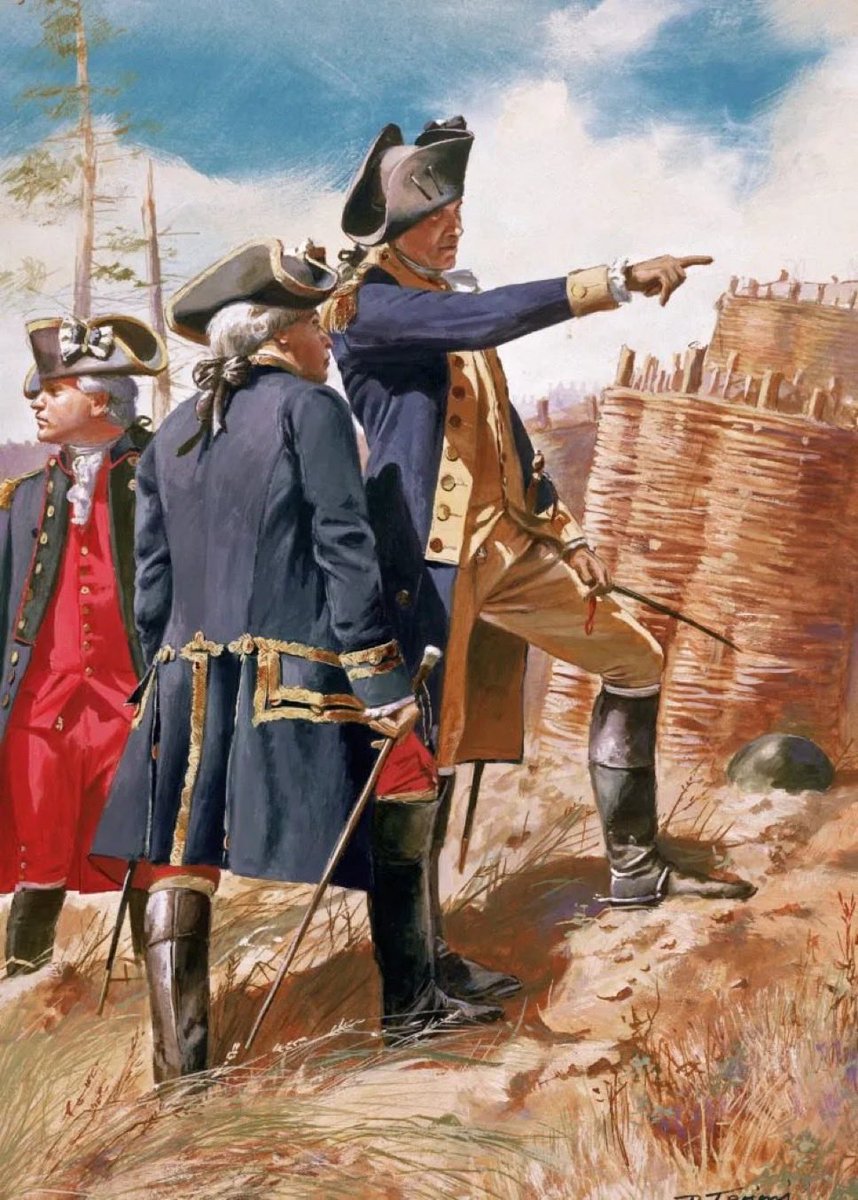
"Washington and Rochambeau, Siege of Yorktown, Virginia, 1781"
Artist Don Troiani - 2002
General George Washington alongside French commander Jean-Baptiste Donatien de Vimeur, comte de Rochambeau, inspecting Allied positions during the pivotal Siege of Yorktown.
“John Jay” First U.S. Chief Justice.
Artists: Gilbert Stuart
Current Location: National Portrait Gallery, Smithsonian Institution in Washington, D.C.
#USacana
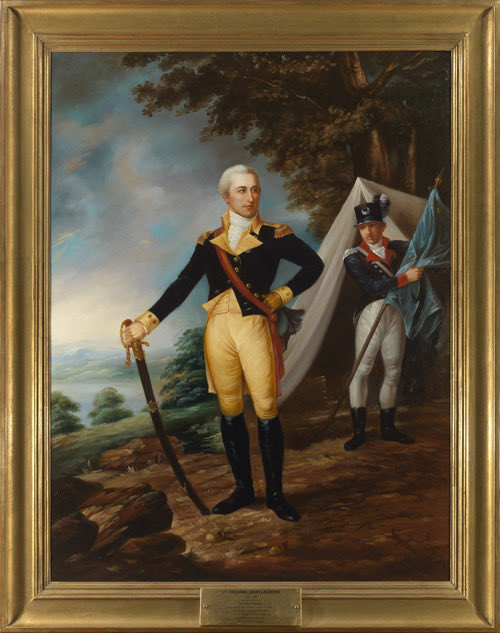
“Lieutenant Colonel John Laurens” Posthumous portrait
Artist: Charles Fraser
John Laurens in his Continental Army uniform. He was an aide-de-camp to General George Washington and a close friend of Alexander Hamilton. Laurens is historically recognized for his passionate advocacy to recruit enslaved Black men to fight in the Continental Army in exchange for their freedom.
#USacana