Get CBG for the whole family!
Morning energy & focus:
In the first human trial of CBG, a single 20 mg dose reduced anxiety and stress. Participants showed small improvements on verbal learning tasks. Lower stress plus better learning can translate to a clearer, more focused morning!
Immune support you can feel good about:
New research suggests CBG can reduce inflammation by lowering inflammatory markers and symptoms.
BREAKING: VA MOVE Program Linked To Lower Risk Of Type 2 Diabetes
1. What This Is:
MOVE is a national lifestyle program from the U.S. Department of Veterans Affairs.
It is modeled on the Diabetes Prevention Program and focuses on healthy eating, daily movement, and steady weight loss.
Researchers followed veterans over multiple years to see whether program participation changed the chance of developing type 2 diabetes.
2. What The Study Found:
Veterans who engaged in MOVE had a lower rate of new type 2 diabetes than similar veterans in usual care.
More sessions and greater weight loss produced larger benefits.
Improvements in blood pressure, cholesterol, and fitness were common in people who stayed active in the program.
3. How To Use This Today:
- If you receive VA care, ask your team about enrolling in MOVE. Many sites offer in person and virtual groups.
- If you are not in the VA, look for a **CDC recognized Diabetes Prevention Program** through your health system, YMCA, or insurer.
- Set a first goal of **5 to 7 percent** weight loss over several months, if advised by your clinician.
- Aim for **150 minutes** of weekly activity plus 2 short strength sessions.
- Track food or protein and fiber targets so satiety stays high.
- Weigh once a week, same day and time, to watch the trend.
4. What To Expect In The Program:
Group coaching, simple meal strategies, walking plans, problem-solving for travel and holidays, and regular check-ins.
You will learn to handle setbacks and restart quickly rather than waiting for Monday.
5. Why This Matters
About one in three U.S. adults has prediabetes. Lifestyle change can delay or prevent type 2 diabetes, reduce medications, and improve energy and mood.
Programs like MOVE and the Diabetes Prevention Program give structure, coaching, and accountability that help people stick with change.
WHAT DO YOU THINK? COMMENT NOW!
(U.S. Department of Veterans Affairs MOVE program publications)
#Type2Diabetes #Prediabetes #VeteransHealth #LifestyleMedicine #WeightLoss #PhysicalActivity #DiabetesPrevention #PublicHealth #HealthNews #USAMedical
BREAKING: Multi-Cancer Blood Test Shows Added Detections In Adults 50 Plus
1. What This Is:
A blood test looks for tiny fragments of DNA that may carry cancer signals.
PATHFINDER 2 is a large registrational study that added the Galleri blood test to standard screening in adults 50 and older.
The question is practical. If you add this test to routine screening, do you find additional cancers that standard screening might miss
2. What The Study Found:
Topline results report that adding the blood test detected extra cancers on top of regular screening like colon, breast, and lung programs.
Many of the detected cancers are types that do not have routine screening today.
The study used a stepwise follow-up plan. A positive blood test was followed by imaging and other standard diagnostics to confirm or rule out cancer.
This is an **adjunct** test. It is not a replacement for colonoscopy, mammography, low dose CT for high risk smokers, or other guideline screenings.
3. How To Use This Today:
- If you are 50 or older and curious, start with your clinician. Ask about benefits, limits, and what a positive result would mean.
- Discuss follow up plans. A positive screen usually means imaging and sometimes a biopsy. False positives can happen.
- Check cost and coverage. This test is currently a lab developed test and many people pay out of pocket.
- Keep doing routine screenings on schedule. The blood test is an add-on, not a substitute.
4. Reality Check:
No blood test can see all cancers. Performance differs by cancer type and stage.
A negative test does not guarantee that you are cancer-free.
Early commercialization can create hype. Decisions should fit your personal risk, values, and budget.
5. Why This Matters
Many deadly cancers do not have established screening programs. A blood-based option that adds detections could help some people find cancer earlier, when treatment works better.
Used thoughtfully and alongside routine screening, this approach may expand the safety net.
WHAT DO YOU THINK? COMMENT NOW!
(GRAIL; OncLive; Nature)
#CancerScreening #EarlyDetection #Oncology #PreventiveHealth #PrimaryCare #HealthTech #PATHFINDER2 #Galleri #HealthNews #USAMedical
BREAKING: Earlier Bedtime Is Linked To More Next-Day Activity
1. What This Is:
Researchers analyzed millions of nights and days of wearable data from adults who tracked both sleep and movement.
They asked a simple question that matters in real life:
If you go to bed earlier than your usual time, do you move more the next day?
2. What The Study Found:
Yes. Nights with an earlier bedtime were followed by more minutes of moderate to vigorous activity the next day.
Later-than-usual bedtimes were followed by less movement and lower step counts.
Small shifts mattered. Moving lights-out earlier by about 30 to 60 minutes created a measurable bump in activity.
Sleep timing and daytime activity feed each other. Better nights set up better days, which set up better nights.
3. How To Use This Week:
- Pick a target bedtime that is 30 to 60 minutes earlier than your current average.
- Set phone downtime, blue light limits, or app locks 1 hour before that time.
- Do a short wind-down ritual at the same time each night. Stretching, hot shower, reading, or breathwork.
- Aim for morning light. A 10-minute outdoor walk after waking helps your body clock.
- Caffeine cutoff in the early afternoon. Alcohol close to bedtime reduces deep sleep.
- Lay out shoes and a water bottle so a short morning walk actually happens.
4. Reality Check:
This is an observational wearable study. It shows strong links, not cause and effect.
Aim for a consistent sleep window most nights. If you miss it, reset the next evening rather than chasing long catch-up naps.
5. Why This Matters
Better sleep improves blood sugar, blood pressure, hunger control, and mood.
You do not need a perfect routine to see benefits. A small, earlier shift tonight can start a positive loop tomorrow.
Try it for seven nights. Track your steps or active minutes and see what changes.
WHAT DO YOU THINK? COMMENT NOW!
(European Medical Journal)
#Sleep #Bedtime #Exercise #DailyMoves #Wearables #DeepSleep #CircadianHealth #HealthyHabits #HealthNews #USAMedical
Magnesium Glycinate For Sleep. What Science Says + A 7-Day Play
1. What This Is:
Magnesium is a mineral your body uses to relax muscles, steady nerves, and support deep sleep. Magnesium glycinate is magnesium bound to the amino acid glycine.
That pairing is well absorbed and gentle on the stomach. Glycine itself can support calm. Together they make a popular bedtime choice.
2. What The Research Suggests:
Clinical trials and reviews report small to moderate improvements in sleep quality and time to fall asleep when people with low magnesium or high stress supplement consistently.
Benefits are most reliable when magnesium status is suboptimal, when diet is low in magnesium rich foods, or when sleep is fragmented by stress.
Magnesium is not a knockout pill. It is a steady helper that works best when paired with smart sleep habits.
3. The 7-Day Play:
Day 1. Baseline. Log bedtime, wake time, caffeine timing, alcohol, and screen use. Write down your average lights out.
Day 2. Clear conflicts. If you take antibiotics, thyroid medication, or osteoporosis medication, plan to separate magnesium by at least 2 hours. If you have kidney disease or are pregnant or nursing, talk with your clinician first.
Day 3. Start low. Take 100 to 200 mg elemental magnesium glycinate 60 to 90 minutes before bed with a small snack or warm beverage. Keep your normal bedtime.
Day 4. Lock in routine. Set phone downtime 1 hour before bed. Dim lights. Read or stretch for 10 minutes. Keep the same magnesium dose.
Day 5. Adjust timing. If you feel wide awake, take magnesium 2 to 3 hours before bed. If you wake to use the bathroom, move fluids earlier in the evening.
Day 6. Nudge the dose. If you have no loose stools and want more support, increase toward 200 to 300 mg elemental magnesium. Stay consistent. Keep the wind down.
Day 7. Review. Compare your sleep notes with Day 1. Look at time to fall asleep, night awakenings, morning refresh, and mood. Keep what worked for the next week.
4. How To Take It:
Most adults use 200 to 400 mg elemental magnesium daily in one evening dose or split doses. Take with food if your stomach is sensitive.
Separate from antibiotics, levothyroxine, and certain bone health medications by at least 2 hours. Combine with core sleep habits. Earlier bedtime by 30 to 60 minutes. Morning light walk. Cool, dark bedroom. Consistent schedule.
5. Safety Notes:
Avoid megadosing. Too much can cause diarrhea and cramps.
People with kidney disease, heart rhythm conditions, or on medications that affect magnesium should get clinician guidance first.
Stop if you feel worsening GI symptoms or unusual fatigue.
6. Why This Matters:
Better sleep touches everything. Blood sugar, blood pressure, hunger control, training recovery, and mood improve when nights are solid.
Magnesium glycinate is affordable, easy to try for a week, and fits well into a simple bedtime routine.
Read the full blog here: https://t.co/TB45TCIf9X
WHAT DO YOU THINK? COMMENT NOW!
#Sleep #MagnesiumGlycinate #SleepHealth #InsomniaHelp #Recovery #StressRelief #HealthyHabits #Wellness #HealthNews #USAMedical
BREAKING: HEPA Air Purifiers Lower Blood Pressure
1. What This Is:
High blood pressure is a leading driver of heart attacks and strokes.
A randomized trial tested whether running true HEPA air purifiers at home could lower blood pressure in adults who started with elevated readings.
Participants used either real HEPA units or sham units that looked the same but did not filter the air.
2. What The Study Found:
Homes with working HEPA purifiers saw lower systolic blood pressure compared with sham.
The benefit was stronger in homes with higher indoor or outdoor air pollution, including traffic exposure and cooking particles.
Blood pressure improvements appeared within weeks and required no medications, clinic visits, or complex training.
3. How To Use This Today:
- Choose a true HEPA purifier, ideally H13 or higher.
- Match unit size to your room using the CADR number on the box.
- Put one in your bedroom and one where you sit the most.
- Run continuously on low or auto mode. Do not "save it" for later.
- Keep doors and windows closed during rush hours and wildfire smoke.
- Replace filters on schedule. Set a reminder on your phone.
- In the kitchen, use your range hood while cooking and crack a window if the outdoor air is clean.
4. Reality Check:
Purifiers are not a cure for hypertension. They are one tool that lowers exposure to fine particles that stress the heart and blood vessels.
Avoid ozone-producing ionizers. Stick with mechanical HEPA filtration.
Keep taking your prescribed medications unless your clinician changes the plan.
5. Why This Matters
Cleaner air is a home upgrade you can feel and measure. For many families near highways or wildfire zones, it is a practical way to bring risk down while you work on sleep, movement, and nutrition.
Pair purifiers with daily walking, less salt, and routine blood pressure checks for the biggest wins.
WHAT DO YOU THINK? COMMENT NOW!
(JACC; American College of Cardiology)
#HeartHealth #BloodPressure #AirQuality #HEPA #Prevention #CardiovascularHealth #PublicHealth #HealthyHabits #HealthNews #USAMedical
BREAKING: Minimally Processed Meals Led To More Weight Loss
1. What This Is:
Ultra-processed foods are factory-made items with long ingredient lists and additives, designed to be hyper-tasty and easy to overeat.
A tightly controlled, randomized crossover feeding study compared minimally processed meals with ultra-processed meals while researchers monitored weight, hunger, and intake.
2. What The Study Found:
Participants lost more weight on minimally processed meals and tended to gain weight on ultra-processed meals.
When meals were built from simple ingredients, people ate fewer calories without trying! Likely due to higher protein, fiber, and slower eating.
Satiety improved, snacks dropped, and body weight moved in the right direction over a short window. When the same people switched diets, their weight trend also switched.
3. How To Use This Today:
- Build plates around eggs, fish, beans, vegetables, fruit, oats, potatoes, rice, plain yogurt, nuts, olive oil.
- Aim for protein + fiber at every meal. Think salmon and greens, beans and brown rice, Greek yogurt with berries.
- Swap ultra-processed snacks for handful-of-nuts + fruit or hummus + carrots.
- Drink water, unsweetened tea, or coffee. Skip sugary drinks.
- Slow your bites. Give your brain 15 minutes to register fullness.
- Plan two simple batch meals for the week to reduce last-minute takeout.
4. Reality Check:
No single food makes or breaks progress. Consistency wins.
You can keep favorite treats in rotation. Make them occasional and savor them.
Add a daily walk or short strength circuit to multiply results.
5. Why This Matters
Minimally processed meals make it easier to trust hunger and fullness signals, which drive natural calorie control without counting everything.
Simple cooking and smart pantry swaps help most people stick with it.
WHAT DO YOU THINK? COMMENT NOW!
(Randomized Crossover Feeding Trial; Nutrition and Metabolism Research Centers)
#WeightLoss #Nutrition #WholeFoods #Satiety #Protein #Fiber #HealthyEating #MetabolicHealth #HealthNews #USAMedical
BREAKING: Frequent Exercise Is Linked To Better Deep Sleep
1. What This Is:
Researchers tracked months of wearable data in adults who logged their activity and sleep.
They asked whether more frequent exercise, even 10 minutes a day, related to more restorative non-REM sleep and better next-day mood.
2. What The Study Found:
People who exercised more often had more deep, non-REM sleep and woke up with better mood and energy.
The pattern showed up even with short daily bouts like brisk walks, cycling, or body-weight routines.
Long gaps between workouts were linked to lighter sleep and more sluggish mornings.
3. How To Use This Today:
Schedule 10–20 minutes of movement every day, such as a brisk walk, bike ride, mobility flow, or quick body-weight circuit.
- Keep a consistent time. Morning sunlight walk or a post-dinner lap works well.
- Finish vigorous workouts at least 3 hours before bed.
- Pair movement with light in the morning, low light at night, and a regular wind-down.
- Track sleep depth on your wearable, but focus on how you feel the next day.
4. Reality Check:
This is an observational wearable study. It shows strong links, not cause and effect.
If you have insomnia, pain, or sleep apnea, talk with your clinician. Exercise helps many people, but a personalized plan is best.
5. Why This Matters
Better sleep improves blood sugar, blood pressure, hunger control, and mood.
Short, frequent movement is doable for busy people. It stacks benefits fast and makes nights more restful.
WHAT DO YOU THINK? COMMENT NOW!
(UT Austin News; Journal of Physical Activity & Health; PubMed)
#Sleep #Exercise #DailyMoves #DeepSleep #Recovery #MentalHealth #CircadianHealth #HealthyHabits #HealthNews #USAMedical
BREAKING: Vitamin D Trial Signals Slower Biological Aging
1. What This Is:
VITAL is a large U.S. clinical trial that followed tens of thousands of adults for several years.
A prespecified analysis asked whether daily vitamin D3 at 2,000 IU could influence telomere change.
Telomeres are protective caps on DNA that tend to shorten with age and with chronic inflammation.
2. What The Study Found:
People assigned to vitamin D3 for about 4 years showed less telomere shortening than those on placebo.
On average, the difference aligned with roughly three “biological years” preserved in this analysis.
The signal was strongest in people who began with lower vitamin D levels and in those who took the study pills consistently.
This does not prove vitamin D makes anyone live longer, but it supports vitamin D as one piece of healthy aging.
3. How To Use This Today:
- Talk with your clinician about a simple 25-OH vitamin D blood test.
- Many adults use 1,000 to 2,000 IU D3 daily if needed; personal levels matter.
- Take vitamin D with a meal that contains fat for better absorption.
- Add food sources like salmon, sardines, egg yolks, and fortified dairy or alternatives.
- Get short, safe mid-day sun when possible, and avoid burns.
4. Safety Notes
Avoid megadosing. Very high vitamin D can raise calcium and harm the kidneys.
People with kidney stones, hyperparathyroidism, sarcoidosis, or on certain medications need medical guidance before supplementing.
Common safe upper limits for adults are often listed as 4,000 IU daily, but your clinician may set a different target.
5. Why This Matters
Vitamin D is low-cost and widely available.
Steady, moderate, personalized use may help slow a biological marker of aging while supporting bone and immune health.
The win is in consistency, not extremes.
WHAT DO YOU THINK? COMMENT NOW!
(WBUR Aug 2025; VITAL trial)
#VitaminD #HealthyAging #Telomeres #Longevity #Supplements #BoneHealth #ImmuneHealth #HealthNews #PublicHealth #USAMedical
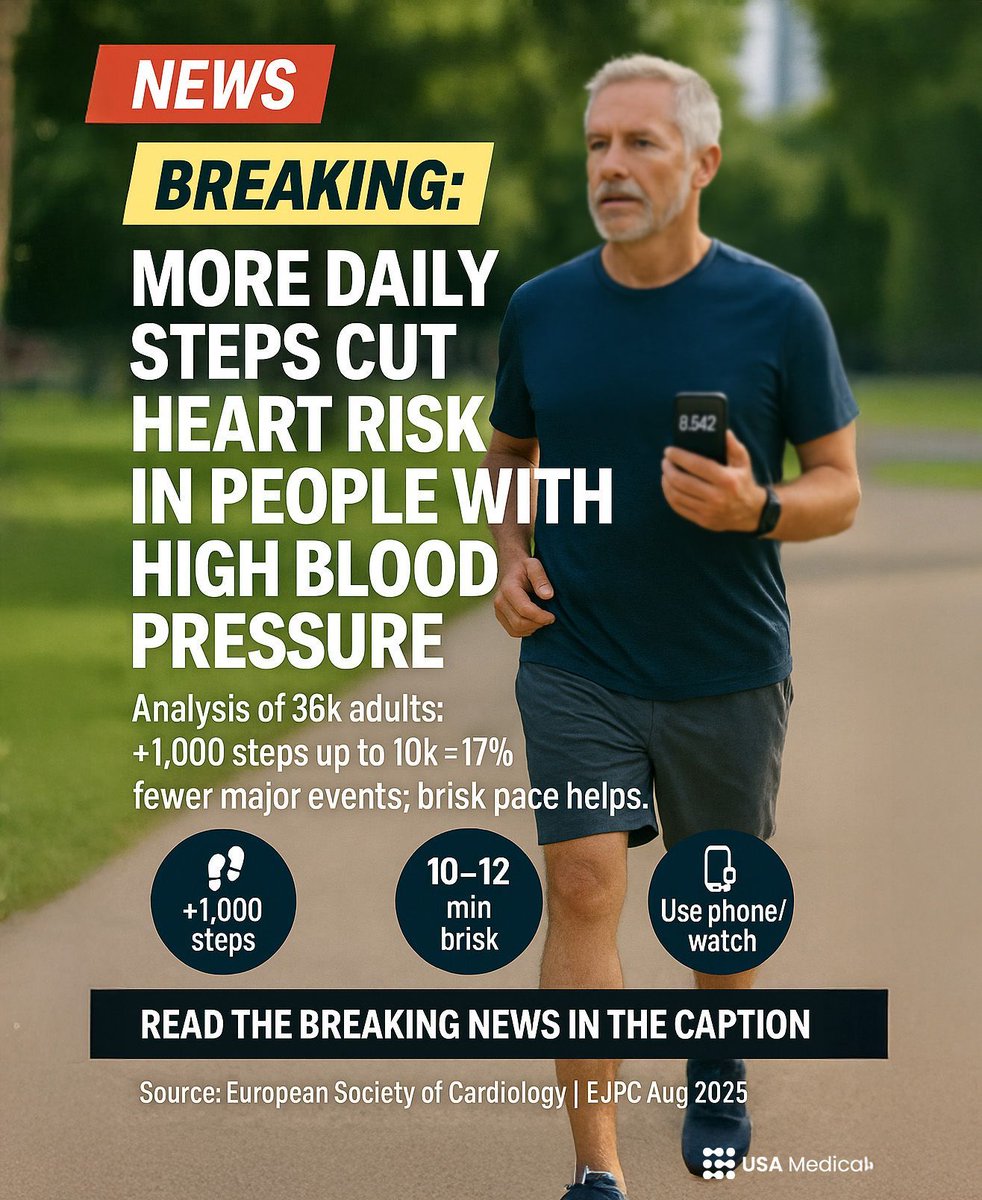
BREAKING: More Daily Steps Cut Heart Risk For People With High Blood Pressure
1. What This Is:
Researchers analyzed real-world walking patterns in more than 36,000 adults who already have high blood pressure.
They tracked daily steps and later heart outcomes to ask a simple question.
If people with hypertension add steps, do major heart problems go down
2. What The Study Found:
Each extra 1,000 daily steps, up to about 10,000, was linked to a 17 percent lower risk of major cardiovascular events.
A faster, “brisk” pace added extra benefit.
Major events included heart attacks, strokes, procedures to open clogged arteries, hospitalizations for heart failure, and deaths from heart and blood vessel disease.
The pattern held across ages and starting fitness levels. Small increases added up. Bigger increases helped more.
3. How To Use This Today:
- Add +1,000 steps to your current average.
- That is roughly a 10 to 12 minute walk for most people.
- Do it in one block after a meal or split into two short blocks.
- Use your phone or watch to count.
- Aim for a pace where you can talk but not sing.
4. Coaching Cues That Work:
- Walk right after dinner to help blood pressure and blood sugar.
- Keep elbows bent to raise cadence.
- Shorten your stride slightly and quicken your steps for “brisk.”
- Turn on stand reminders on your phone or watch.
- Invite a friend and text a daily check mark.
5. Why This Matters
High blood pressure drives heart attacks and strokes worldwide.
Medications help, but movement is a lever you control.
You do not need a gym. You need a plan that fits your day and a way to count it. Steps are simple and built into most phones.
WHAT DO YOU THINK? COMMENT NOW!
(European Society of Cardiology; European Journal of Preventive Cardiology Aug 2025)
#HeartHealth #Hypertension #Walking #Steps #ExerciseIsMedicine #CardiovascularHealth #Prevention #PublicHealth #HealthNews #USAMedical
New Article: Why Do I Have IBS (Or IBD)?
IBD means inflammatory bowel disease.
The lining of the intestine is inflamed. That shows on scopes and lab tests. The two main types are ulcerative colitis and Crohn’s disease.
Red flags include bleeding, fever, unexplained weight loss, nighttime symptoms, and severe anemia. Those point away from routine IBS and toward IBD symptoms that require medical care.
IBS means irritable bowel syndrome.
The tissues look normal on scope. The problem lives in the gut brain axis, motility, and sensitivity.
Pain, bloating, urgency, constipation, and alternating bowels are classic IBS symptoms. IBS is miserable, but it is not the same as IBD.
Use this rule: if you see blood, treat it like IBD symptoms until proven otherwise. That sends you to the right pathway of care faster.
READ MORE: https://t.co/cpTIKKuMrT
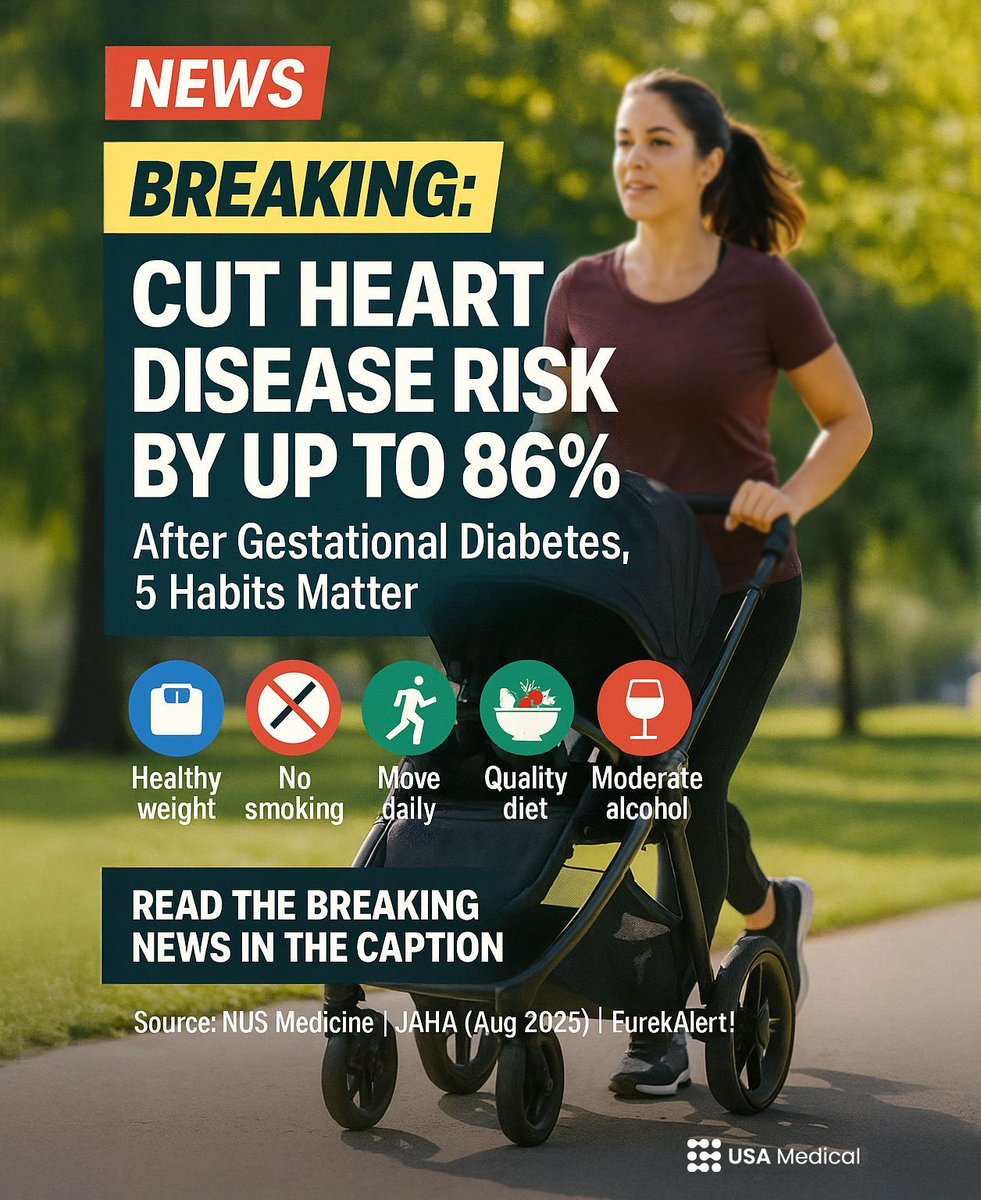
BREAKING: New Women’s Study Finds Up To 86% Lower Heart Risk After Gestational Diabetes
1. What This Is:
Gestational diabetes is high blood sugar that starts during pregnancy.
Researchers tracked more than 4,300 women who had gestational diabetes and checked their health for almost 28 years.
The study looked at long-term heart outcomes and how daily habits influenced risk.
2. What The Study Found:
Women who kept five healthy habits over time had up to an 86 percent lower chance of major cardiovascular problems compared with women who kept none.
In the subgroup that kept all five habits, the researchers did not record heart attacks or strokes during follow up.
This was an observational study. It cannot prove cause and effect, but the signal is strong and consistent with decades of heart science.
3. The Five Habits:
- Maintain a healthy weight that your clinician agrees is right for you
- Do not smoke or vape nicotine
- Move regularly on most days of the week
- Choose a high-quality diet with more whole foods and fewer ultra-processed snacks
- If you drink, keep alcohol consumption moderate
4. How To Start Today:
- Add a 20-minute walk after dinner.
- Swap one packaged snack for fruit and nuts.
- Add one serving of leafy greens at lunch.
- Plan two alcohol-free nights this week.
- Set bedtime 30 minutes earlier so your morning movement happens.
5. Why This Matters:
If you had gestational diabetes, your baseline heart risk is higher.
Risk is not destiny. The habits you keep most days can move that risk a lot over the years.
Share this with a friend who had GDM and start a two-person streak today!
WHAT DO YOU THINK? COMMENT NOW!
(JAHA Aug 2025; NUS Medicine; EurekAlert)
#WomensHealth #GestationalDiabetes #HeartHealth #CardiovascularHealth #Prevention #HealthyHabits #PublicHealth #HealthNews #LifestyleMedicine #USAMedical
BREAKING: New Lab Test Finishes In Less Than 15 Minutes
1. What This Is:
Scientists at Arizona State University built a small, portable test that can read a tiny bit of blood and return results in about 15 minutes.
The parts are inexpensive, and the team estimates just two dollars per test. Early studies show the device can correctly distinguish COVID-19 from other infections.
The design is 'modular', which means the same platform could be adapted for targets like Ebola, HIV, and Lyme by swapping the capture chemistry.
It is not in clinics yet, but the direction points to faster and cheaper testing almost anywhere.
2. How It Works In Simple Terms:
At the core are gold nanoparticles, which act like tiny golden beads that light can “see.” Scientists attach special molecules to those beads that are chosen to stick to one disease protein.
A small blood sample mixes with the beads. If the target protein is present, the beads bind and change how light passes through the liquid.
The device reads that change electronically. No large laboratory machines. No refrigeration. No trained technician. A quick, clear signal.
3. Why It Matters
Speed helps people start treatment sooner, and low cost helps clinics and public health teams test more people more often.
Access helps rural areas, shelters, schools, and emergency teams bring testing to the community. Modularity allows the same device pivot to new threats by swapping the target.
4. Reality Check
This is an early-stage research device. It needs larger trials, real-world testing, and regulatory review. Price estimates can change at scale. Performance in a quiet lab can look different in a busy clinic.
Even so, the path is clear. Faster, cheaper, lab-free testing can shorten the time between symptoms and decisions.
5. Where This Could Help Most
- Outbreak hotspots where minutes matter
- Rural clinics far from full labs
- Disaster zones and mobile medical teams
- School and workplace screening during surges
- Resource limited settings that need simple tools
WHAT DO YOU THINK? COMMENT NOW!
(ASU News Aug 12, 2025; ACS Nano)
#HealthTech #Diagnostics #PointOfCare #PublicHealth #COVID19 #MedicalResearch #GlobalHealth #Nanotechnology #HealthNews #USAMedical
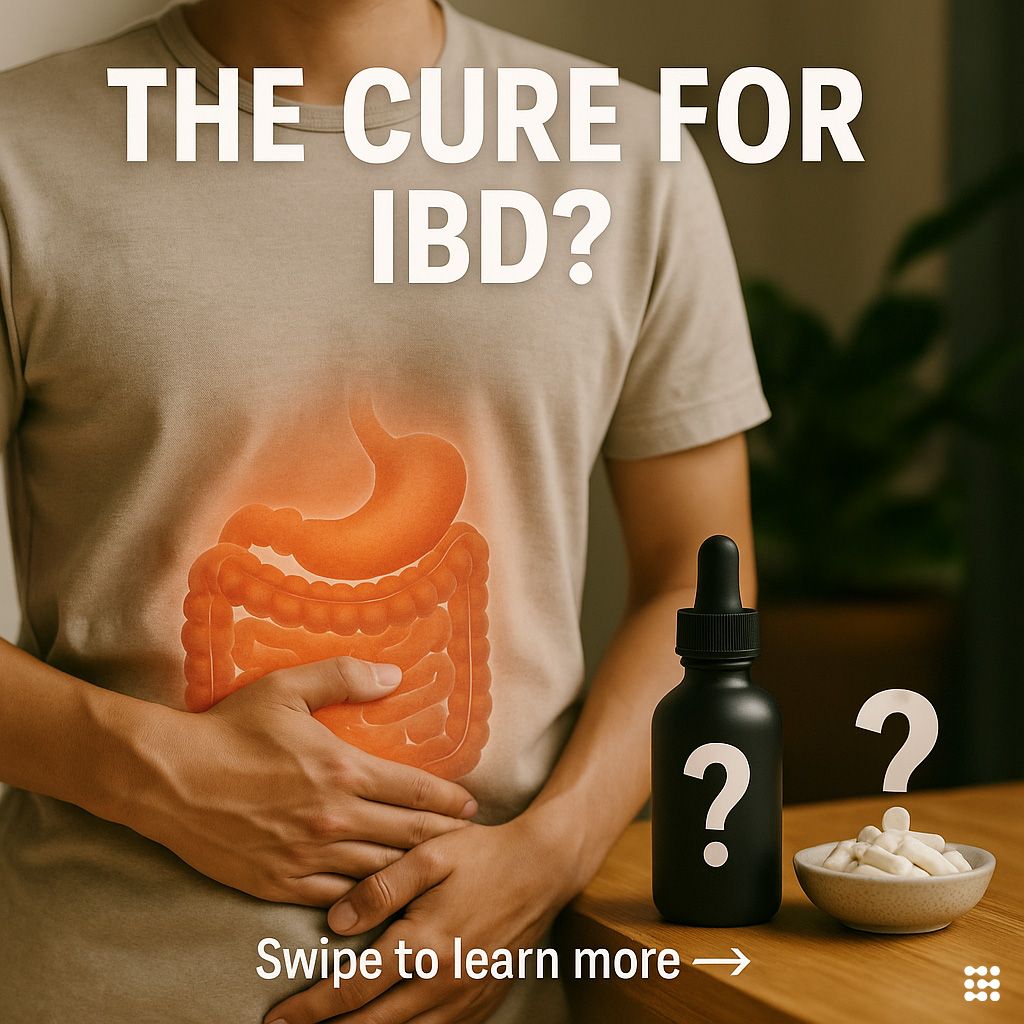
IBS Week starts now at USA Medical!
Why this stack:
• CBG helps calm gut pain, urgency, and the gut-brain overreaction that keeps flares spinning.
• Magnesium glycinate supports smooth, regular motility without the harsh laxative feel.
• Together, they help you feel normal again while your doctor treats the condition.
How to take it:
Morning - Take your CBG Oil first thing in the morning.
Evening - Take your magnesium 30 to 60 minutes before bed.
What to expect:
Many people feel cramping ease and urgency dial down quickly. Sleep improves. Mornings feel calmer and more predictable.
Why it works fast:
Sublingual CBG absorbs quickly and engages receptors tied to pain and nausea.
Magnesium glycinate is highly tolerated and supports muscle relaxation, which can steady motility.
The combo hits pain, urgency, and stress at the same time.
This week only:
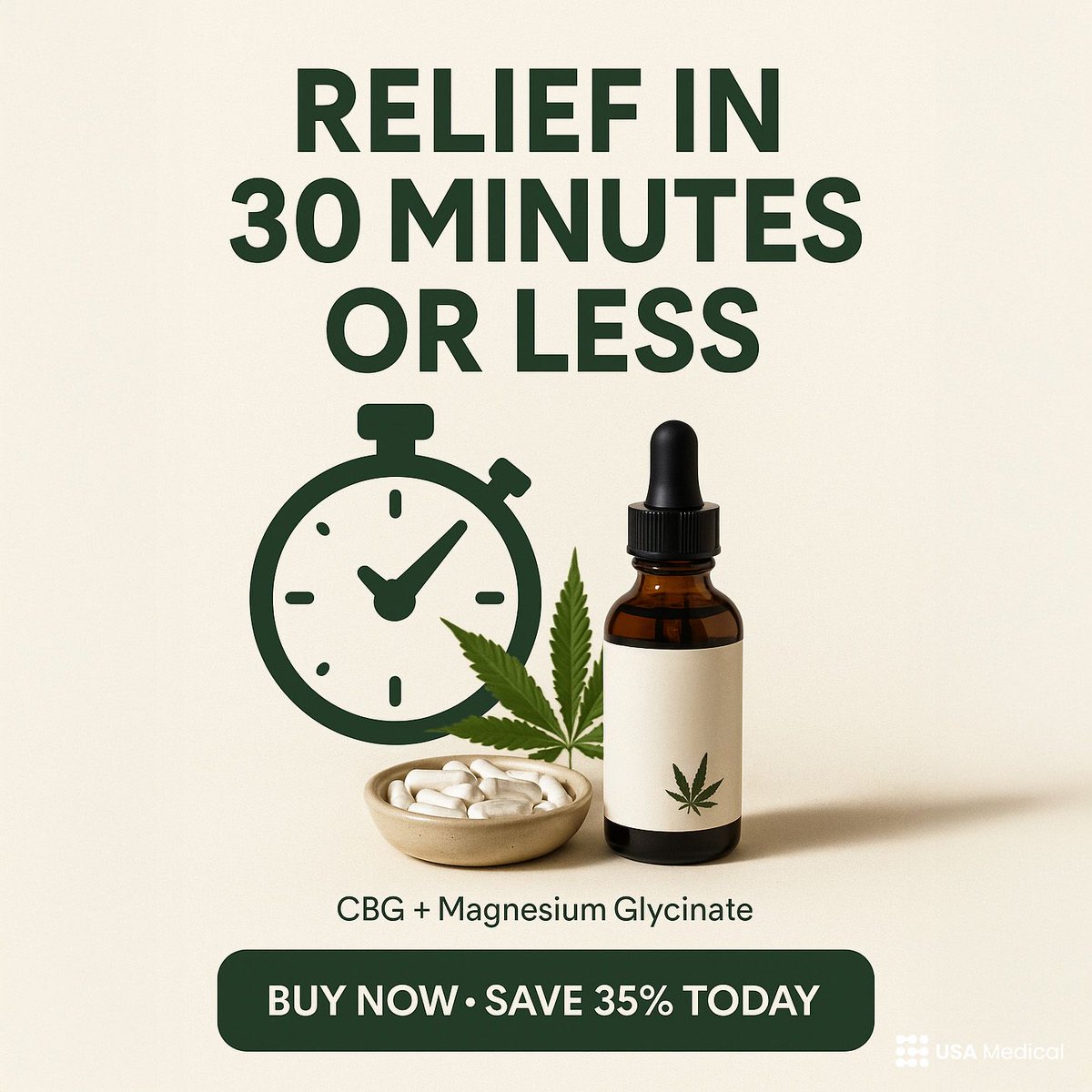
Save 35% on CBG + Magnesium Glycinate.
Comment RELIEF if you want a DM with more information!
⏱️ Relief in 30 minutes or less
🌿 All natural
💊 Easy to take
Let’s make today easier together!
#IBDRelief
#IBSRelief
#CrohnsDisease
#UlcerativeColitis
#GutHealth
#DigestiveHealth
#CBG
#MagnesiumGlycinate
#30MinuteRelief
#USAMedical
NEW study, SAME takeaway: your body is built to move.
Researchers tracked 8 million adults over multiple decades and found a simple truth: people who stay physically active slash their risk of dying early by 30–40 percent.
Even couch-sitters who get moving later in life still cut risk by roughly a quarter.
Here’s what that means for you:
• Consistency wins. A brisk walk, bike ride, dance break—whatever keeps your heart rate up—done most days is enough to unlock huge health dividends.
• It’s never “too late.” Participants who started exercising in their 40s, 50s, even 60s still saw major benefits.
• 150 minutes a week (≈ 22 min/day) is the sweet spot. Hit it and you’re already ahead of ¾ of the population.
• Movement beats medicine. Regular activity lowers blood pressure, tames inflammation, and improves mood better than many prescriptions.
That’s why today’s carousel hammers the message: MOVE MORE, LIVE LONGER.
So let’s make this real, right now.
Stop scrolling, stand up, and walk for two quick minutes. Pace the living room, circle the office, climb the stairs - just go!
When you’re back, drop a “DONE” in the comments.
Little movements → daily habit → longer, stronger life. Start with those steps.
#usamedical
30 MINUTES OR LESS: EXPERIENCE CBG POWER
You’ve heard the whispers, now feel the rush! CBG is the “mother cannabinoid” your body’s been craving for clean energy, razor-sharp focus, and sweet relief from everyday aches.
All it takes is one dropper, one half-hour, and one click before this 50% flash sale disappears.
WHAT YOU GET IN EVERY DROP
- Broad-spectrum hemp oil grown in the U.S., third-party tested for purity
- Pure potency to dial in your perfect dose (start with 15 mg)
- Orange-citrus flavor so smooth you’ll actually look forward to taking it
REAL RESULTS, REAL QUICK
One user called it “focus you can hear.” Another said, “I swapped out my afternoon latte and never looked back.”
From soothing post-workout muscle tension to powering through spreadsheets, USA Medical CBG Oil keeps showing up where other pick-me-ups fade out.
(And yes, all of that is now HALF OFF because it’s CBG Week and stock is moving fast.)
Shake. Drop. Relax. See you on the brighter side of 30 minutes!
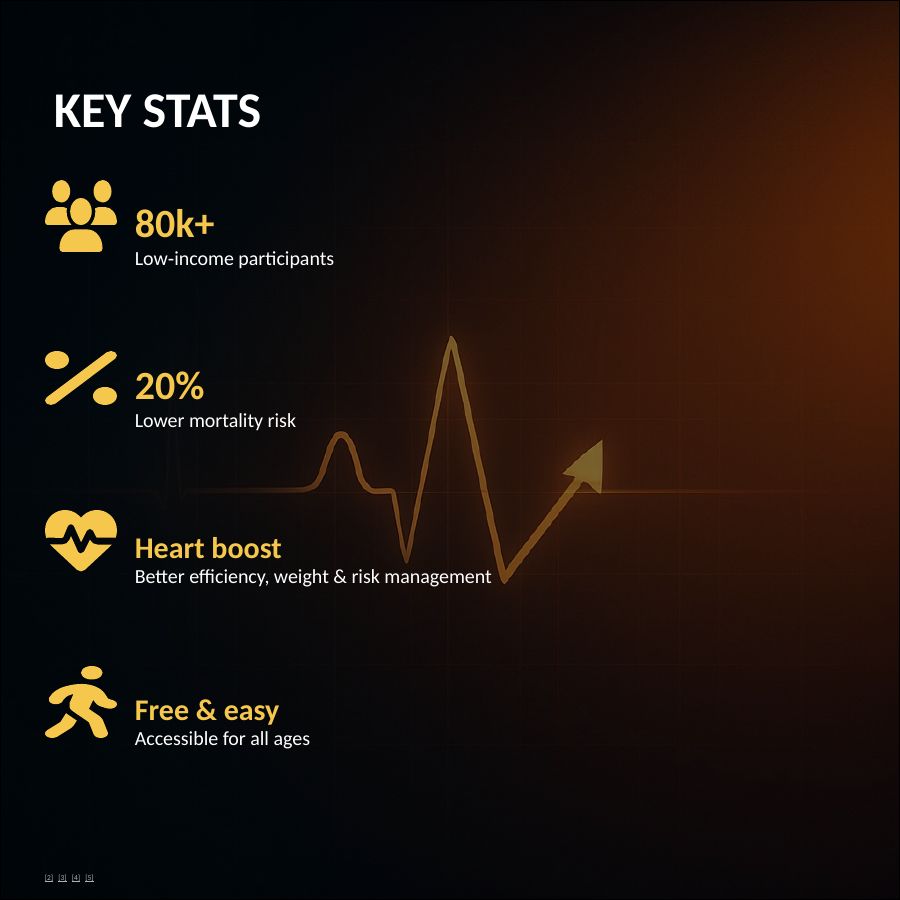
🏋️ 🐿 Fast walkers live longer! A new study of more than 80,000 participants found that just 15 minutes of brisk walking a day can lower mortality risk by nearly 20%.
Fast walking improves heart health, helps reduce weight and cardiovascular risk, and is free and accessible to all ages!
Swipe through to see the key stats and expert quotes on why moving faster matters!
(Then drop a comment telling us how you plan to add a quick power walk into your day.)
Let’s step toward better health together! 💪💚
#BriskWalk #HeartHealth #Wellness #StayActive