$MOBE is officially live.
CA: 0xd96bfa490e7ac3d72bf4b2c5749fde47a1a16812
12 vaults live on Robinhood Chain. TSLA, NVDA and SPY, call and put, weekly and daily.
Deposit a Robinhood Stock Token, the vault writes the option and pays you in USDG the day it sells.
$MOBE has one job: own the premium stream. Stake it and receive the 10% protocol fee on every premium plus the Pons creator fee, both in USDG. No emissions.
https://t.co/KnGwbIIlmd
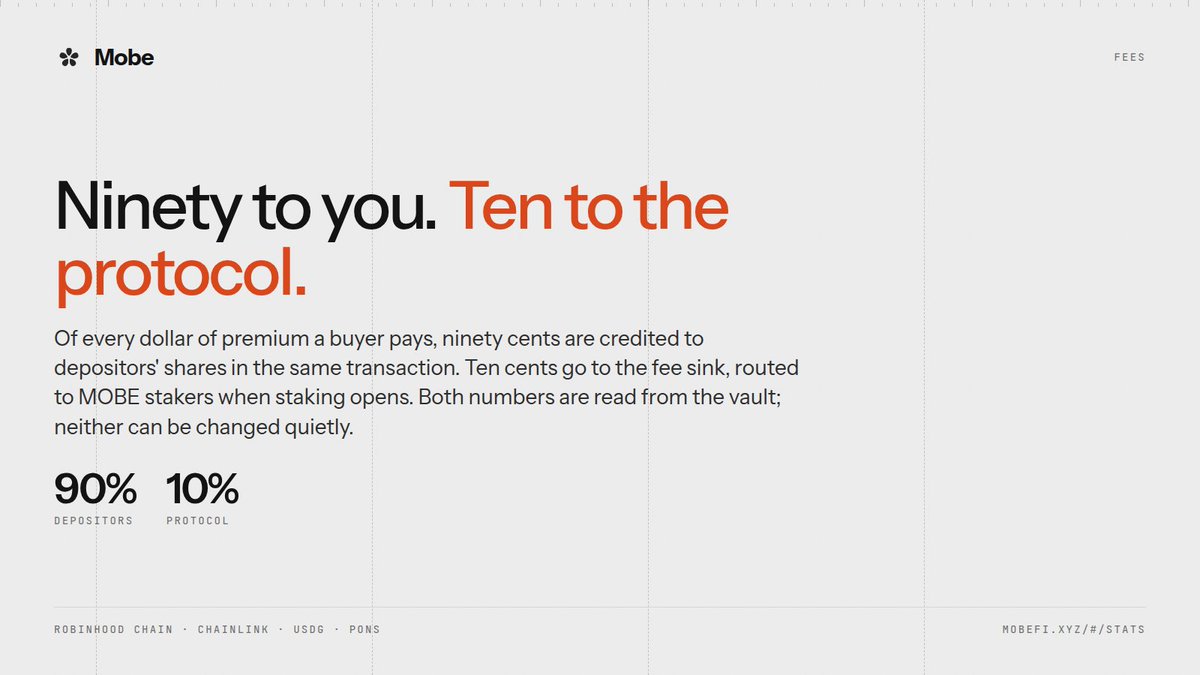
Ninety to you. Ten to the protocol.
Of every dollar of premium a buyer pays, ninety cents are credited to depositors' shares in the same transaction. Ten cents go to the fee sink, routed to MOBE stakers when staking opens.
Both numbers are read from the vault. Neither can be changed quietly.
https://t.co/hiS1i3wDcW
Getting ETH on Robinhood Chain.
Gas is ETH, like any Arbitrum Orbit chain. Bridge a few dollars from Arbitrum or Ethereum with a bridge that supports Robinhood Chain, or withdraw from a venue that does. A few dollars covers months of deposits and claims.
Mobe sells nothing and runs no bridge.
https://t.co/Mdx0V6ZQFv
Introducing Mobe Lab.
Replay any vault on five years of real prices, in your browser. Pick the stock, call or put, weekly or daily, how far out the strike goes and where the auction fills. The Lab runs the exact settlement rule over every trading day since 2021 and shows both lines: the vault, and simply holding.
Assignments. Premium. Worst drawdown of each. All twelve vaults side by side. A link for every setup.
Some years the vault wins. Some years holding does. Both are on the page.
https://t.co/deUlchXrgs
We do not know who you are.
No email, no sign-up form, no analytics cookies. The site reads your wallet address to show your positions and stores nothing about you anywhere but your own browser.
Robinhood knows its customers. We only ever see addresses.
https://t.co/KSa9g0Qo3F
The week the dip arrives.
NVDA closes 6% below the strike of your put vault. The vault pays the difference in USDG to option holders; you keep the rest plus the premium.
You were paid to wait for that dip, and it came. That is the trade working, not failing.
https://t.co/z9jwQjcezW
The week nothing happens.
TSLA drifts 1%. The call expires worthless, the premium was credited on Monday, your tokens never moved. No notification, no action, no drama.
Most of the value of this strategy is made in weeks like this, and they are boring by design.
https://t.co/z9jwQjcezW
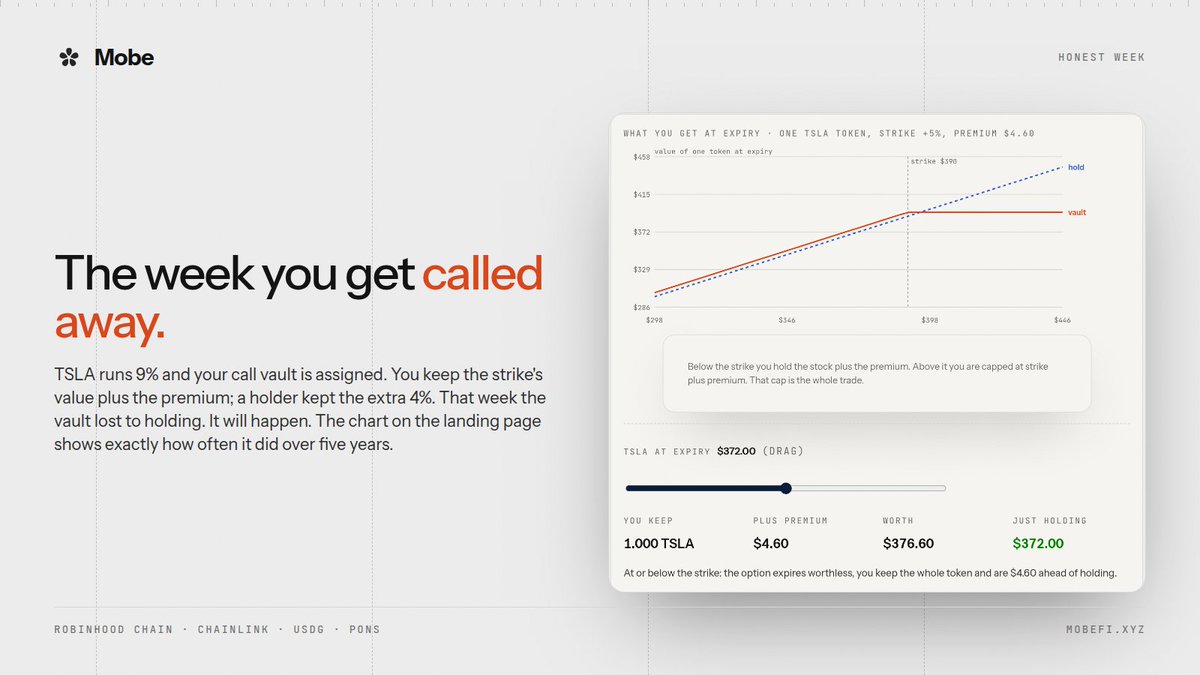
The week you get called away.
TSLA runs 9% and your call vault is assigned. You keep the strike's value plus the premium; a holder kept the extra 4%. That week the vault lost to holding.
It will happen. The chart on the landing page shows exactly how often it did over five years.
https://t.co/KnGwbIITbL
Why the strike is not closer.
A tighter strike pays more premium and gets called away more often. One standard deviation out is the compromise the keeper runs: paid every epoch, assigned some weeks, never a lottery ticket.
The history page shows how often each side wins.
https://t.co/z9jwQjcezW
Zero admin functions over your tokens.
There is no pause button on withdrawals, no emergency drain, no upgrade proxy. The owner key can tune the fee and the bounds and name the keeper. It cannot reach collateral.
We designed it so that even we would have to ask the contract.
https://t.co/AhKGzzsm1J
The depositor's loop, four pages.
Compare: pick a vault by temperament.
Vault page: deposit.
Portfolio: claim premium, see what you hold.
History: every epoch your tokens wrote.
Calendar tells you when to look. Status tells you whether to worry.
https://t.co/twHHI5zssS
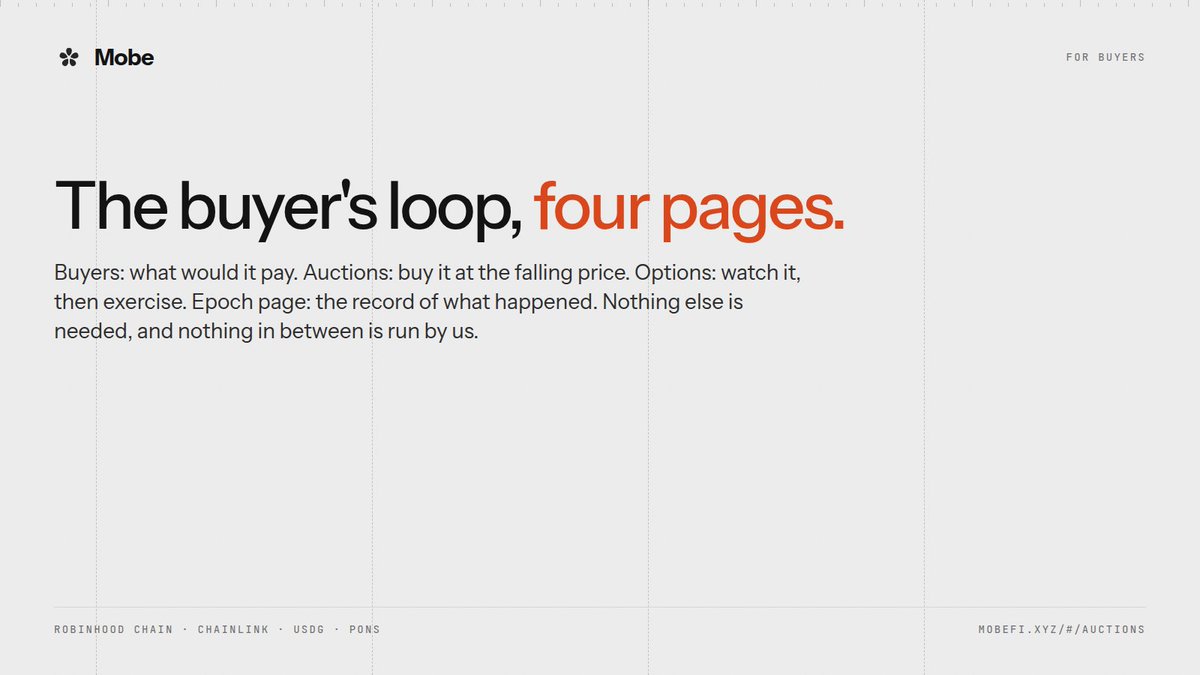
The buyer's loop, four pages.
Buyers: what would it pay.
Auctions: buy it at the falling price.
Options: watch it, then exercise.
Epoch page: the record of what happened.
Nothing else is needed, and nothing in between is run by us.
https://t.co/wWOedr890Q
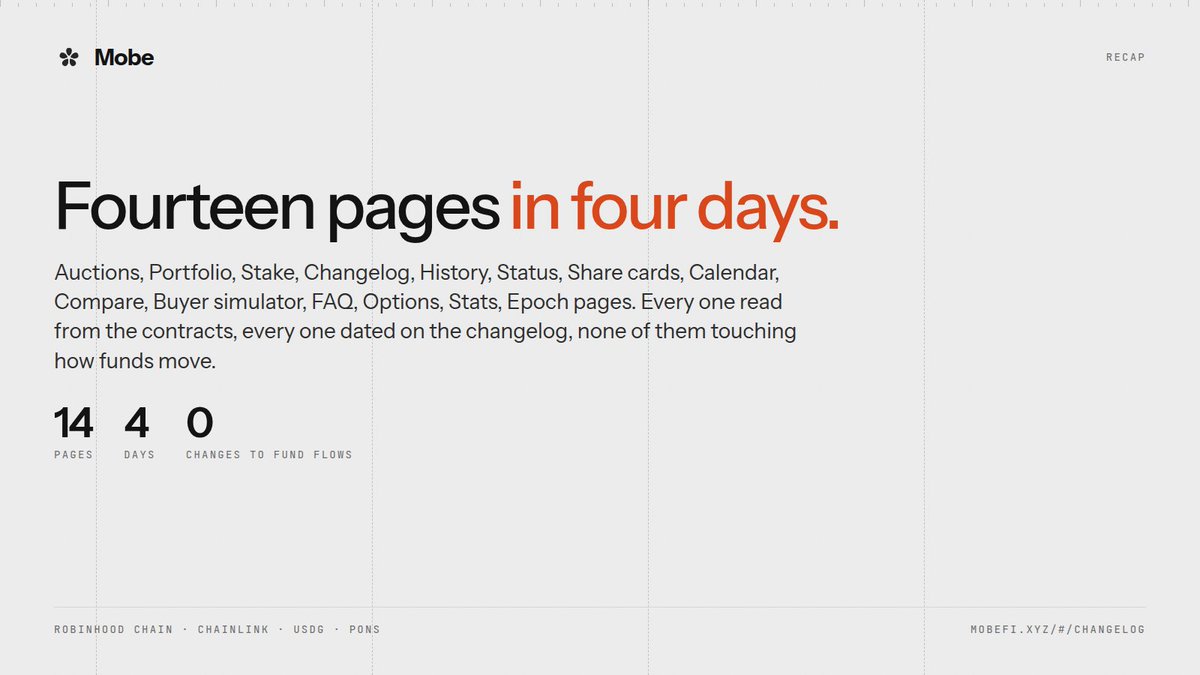
Fourteen pages in four days.
Auctions, Portfolio, Stake, Changelog, History, Status, Share cards, Calendar, Compare, Buyer simulator, FAQ, Options, Stats, Epoch pages.
Every one read from the contracts, every one dated on the changelog, none of them touching how funds move.
https://t.co/0ikYnh6gsp
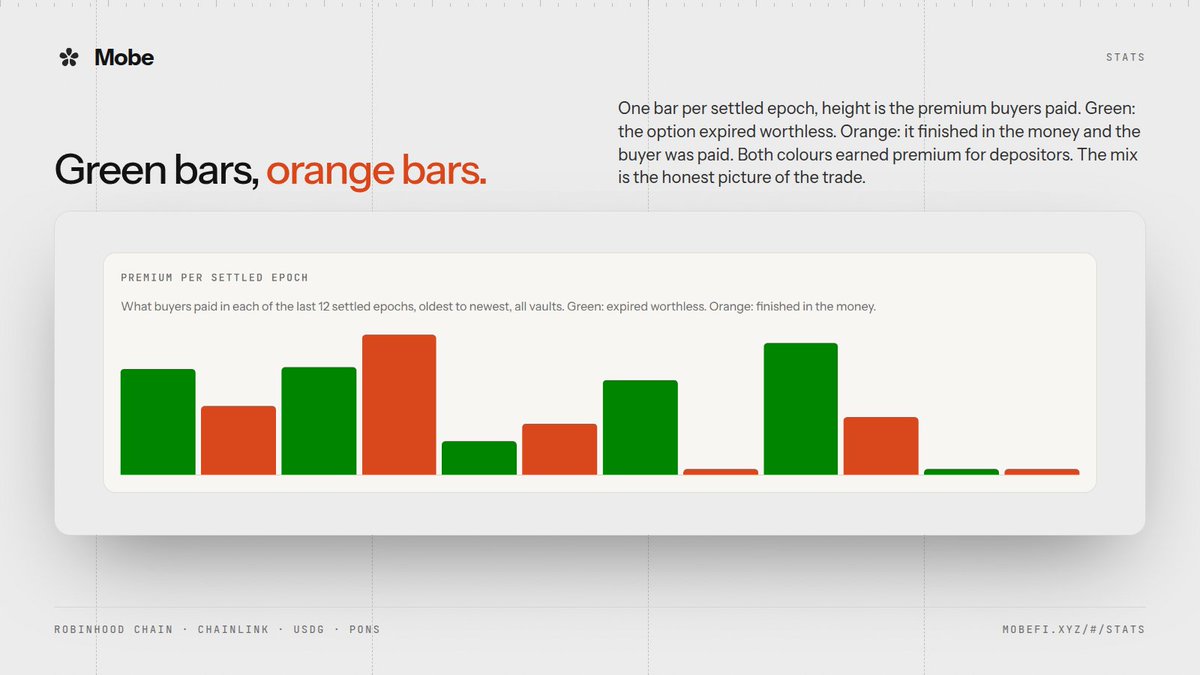
Green bars, orange bars.
One bar per settled epoch; height is the premium buyers paid. Green: the option expired worthless. Orange: it finished in the money and the buyer was paid.
Both colours earned premium for depositors. The mix is the honest picture of the trade.
https://t.co/hiS1i3xb2u
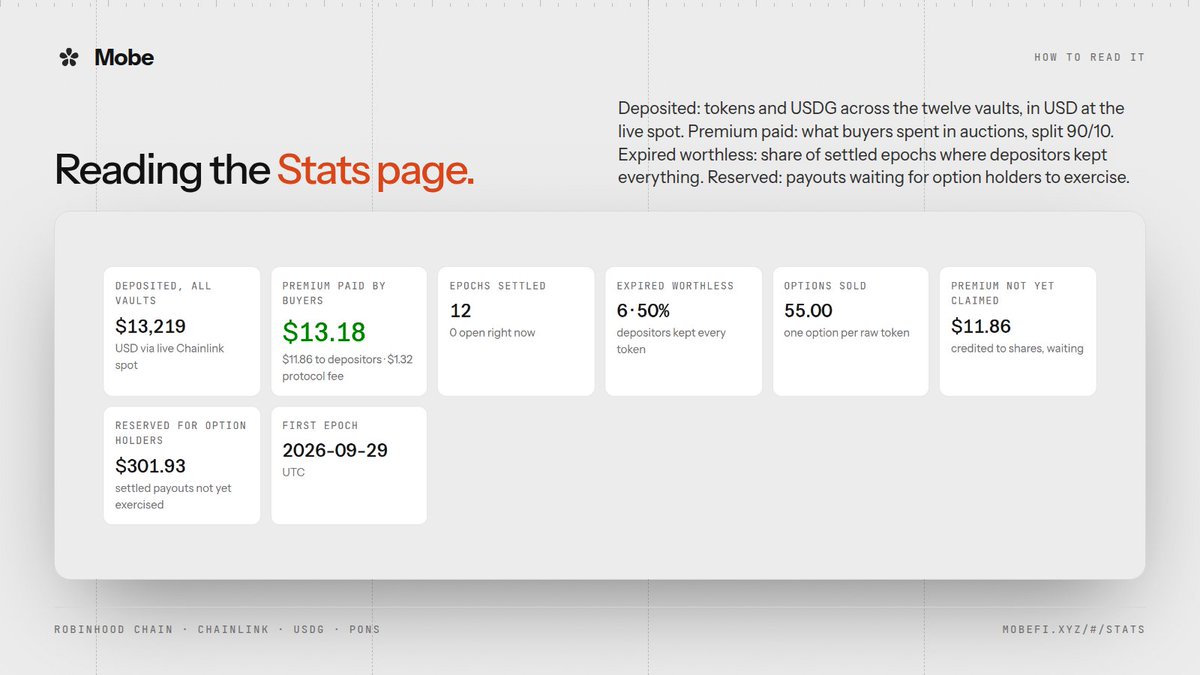
Reading the Stats page.
Deposited: tokens and USDG across the twelve vaults, in USD at the live spot.
Premium paid: what buyers spent in auctions, split 90/10.
Expired worthless: share of settled epochs where depositors kept everything.
Reserved: payouts waiting for option holders to exercise.
https://t.co/hiS1i3xb2u
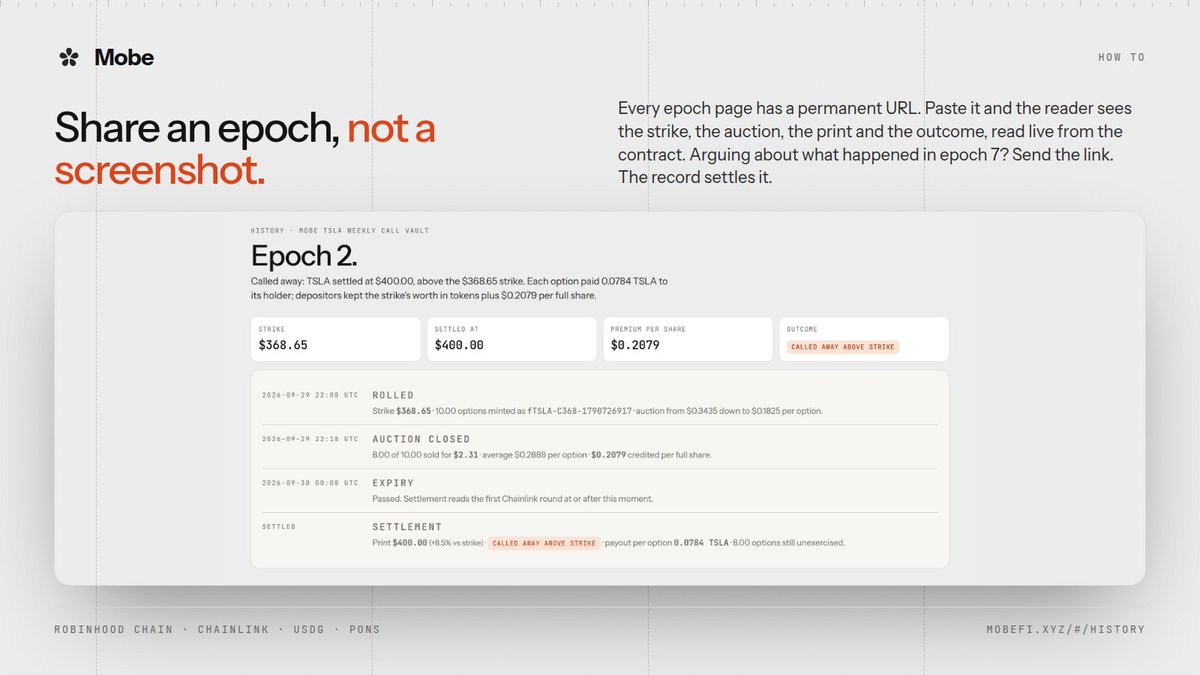
Share an epoch, not a screenshot.
Every epoch page has a permanent URL. Paste it and the reader sees the strike, the auction, the print and the outcome, read live from the contract.
Arguing about what happened in epoch 7? Send the link. The record settles it.
https://t.co/z9jwQjbGKo
Every epoch has a link.
Rolled, auctioned, expired, settled: the contract's record at each step, in order, with a plain sentence on what it meant for depositors and for buyers.
Linked from every row of History. The URL is permanent; the record cannot be edited.
https://t.co/z9jwQjcezW
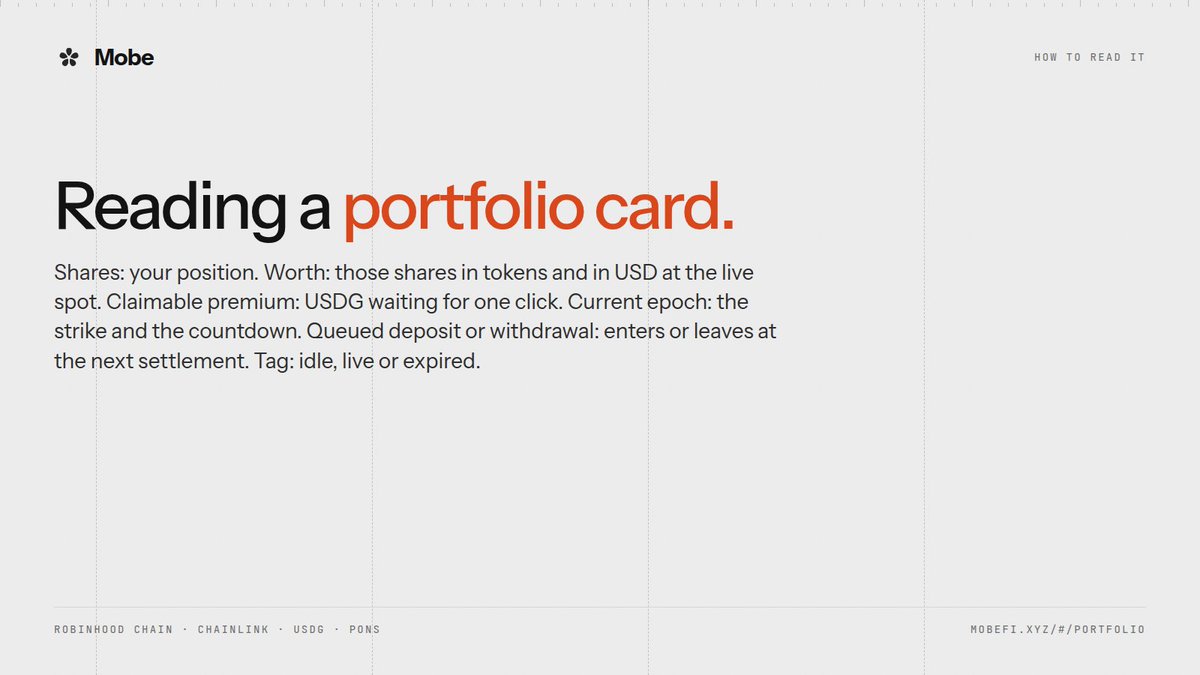
Reading a portfolio card.
Shares: your position. Worth: those shares in tokens and in USD at the live spot. Claimable premium: USDG waiting for one click. Current epoch: the strike and the countdown. Queued deposit or withdrawal: enters or leaves at the next settlement.
Tag: idle, live or expired.
https://t.co/bSL0ZXoTF7
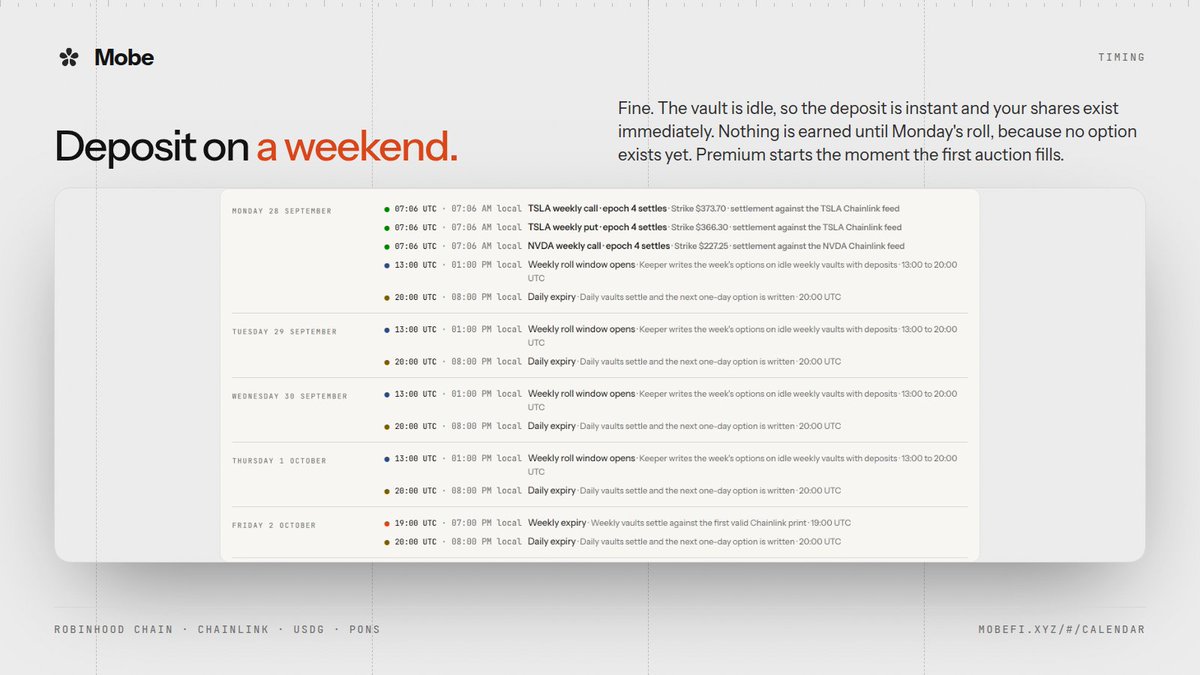
Deposited on a weekend? Fine.
The vault is idle, so the deposit is instant and your shares exist immediately. Nothing is earned until Monday's roll, because no option exists yet.
Premium starts the moment the first auction fills.
https://t.co/iunpyglZ5M
Built. Tested. Hidden. Switched on.
New pages ship in the bundle behind a flag that is off, so nothing appears until it is verified. Turning one on is a one-line change and a deploy; the nav link, the route and the changelog entry appear together.
No half-shipped features.
https://t.co/0ikYnh5ICR
Every update runs on a fork first.
Before a page reaches https://t.co/BnaymSL1XZ it runs against a local copy of the chain with real epochs: deposits, auctions, settlements, claims, exercises. The screenshots in our posts come from those runs.
What you see is what we tested.
https://t.co/0ikYnh6gsp