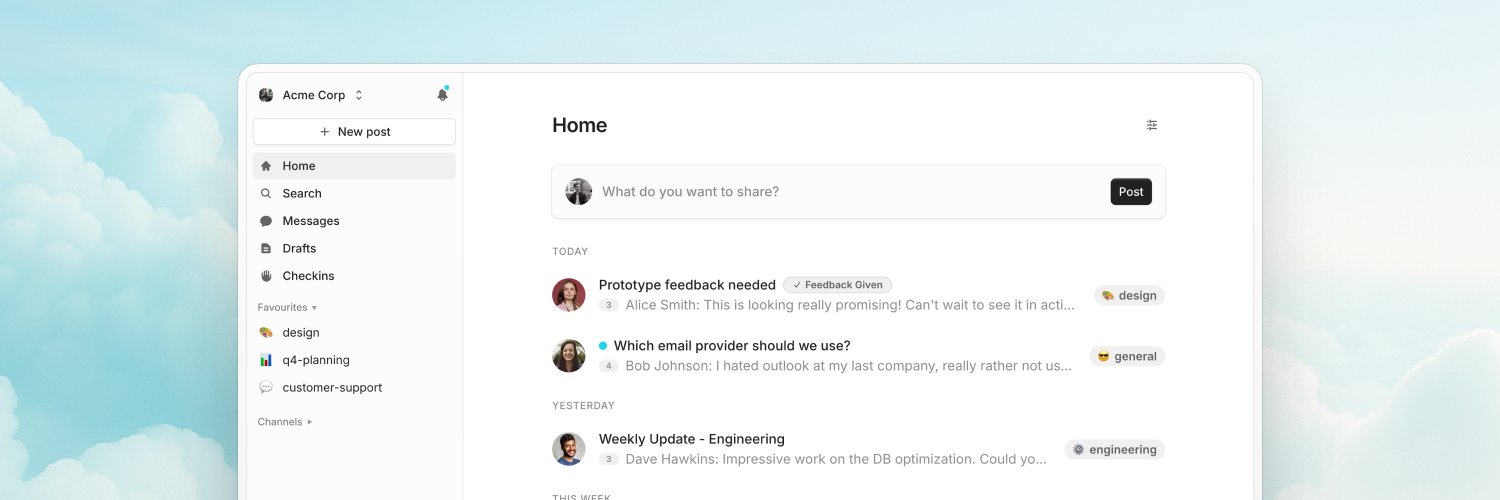
Cushion is the workplace communication app for distributed teams who want to get organised, stay in flow, and ditch chat chaos ✨
Everything is based around 3 simple ideas:
📝 Posts for group conversations, keeping everything threaded and organised by default
👋 Async Checkins keep everyone in sync when on a project without juggling schedules
💬DMs for private, 1:1 conversations when you need them
If you've got Slack fatigue, drowning in emails, or just want to try something new - sign-up for a free 30-day trial.
Link below 👇
Got clients or other team members still stuck on Slack?
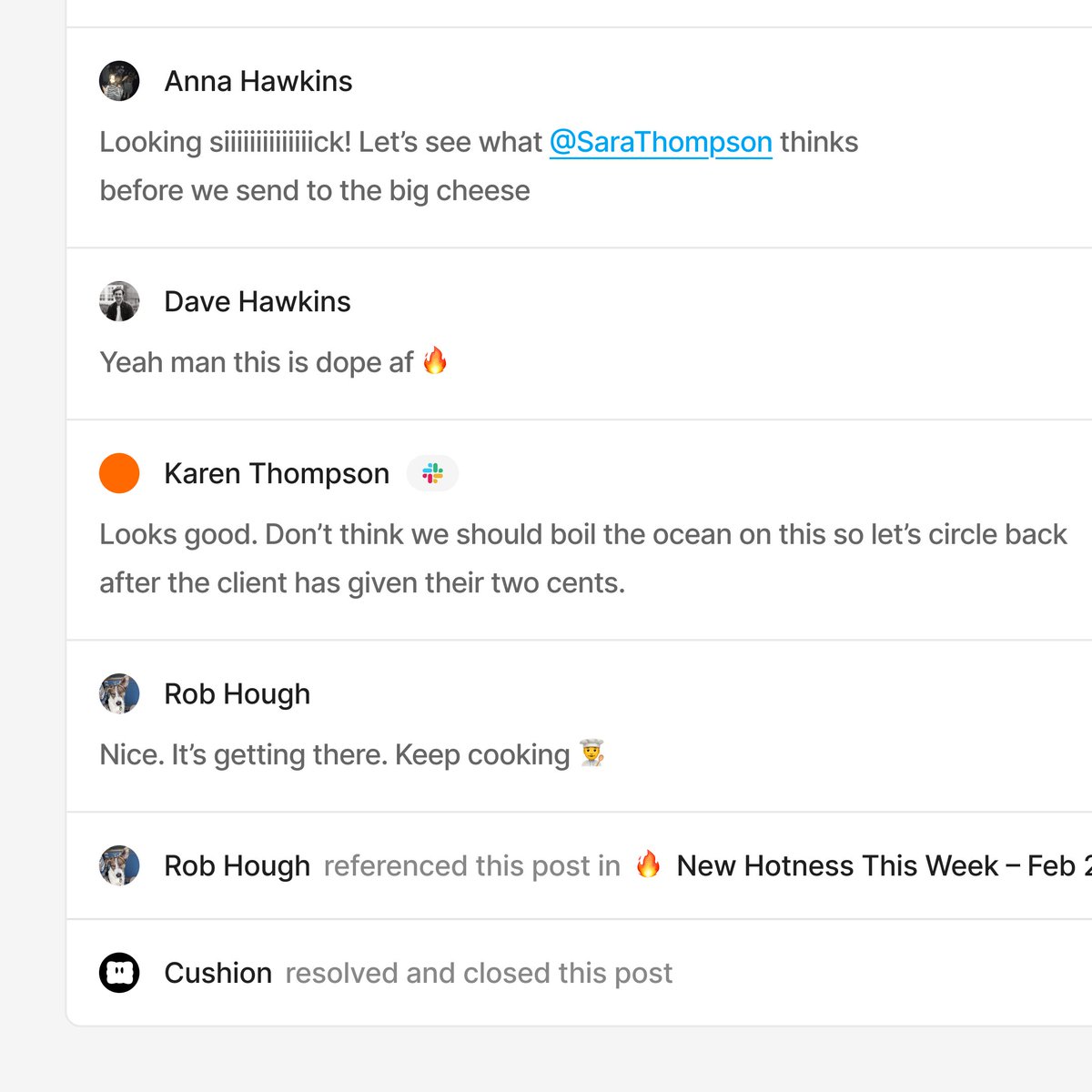
No worries. You can sync Cushion posts with Slack messages, so every reply on Slack comes to Cushion (and vice versa).
External Slack users have a little marker so you know if the user is on Cushion or not.
Now you don't need to worry about missing that feedback from the suits upstairs who just don't get the whole async thing.
Also handy if you have customers in Slack connect or just want to try out Cushion for a new project.
Enjoy ✌️
We're shipping our new Inbox, which helps teams stay on top of all the conversations going on in their projects.
🧵 Rolls up your conversations reducing noise and mess
👀 Side peek for a quick view of conversations without leaving the page
⚡ Lightning fast experience with handy keyboard shortcuts
↩️ Inline reply for quick responses
⌛ Follow up on threads with 'Remind me later...'
Keeping track of conversations in most chat apps is a nightmare.
You're either bouncing between tons of channels or having to scroll through a giant list of threads to find that one reply you need.
The new Inbox makes it super easy to keep on top of what matters the most.
We've shipped a ton of stuff since the winter break in @usecushion 🚀
Our goal is to help small teams, indie hackers, and side-hustlers do the best of work of their lives by collaborating together in tool that works like they do.
📥 Focused Inbox so you can stay on top of what's going on without drowning in notifications
🍎 Mac app with realtime notifications and all the good desktop stuff (Linux and Windows soon)
🎹 Lots of keyboard shortcuts to make things snappier
💅 Post page glow up, everything is tighter and easier to read
💬 Cushion <> Slack mirror so you can communicate with your team that still haven't seen the light yet ;)
👟 Huge speed improvements. Everything feels rapid and instant.
30-day free trial. No CC. Link in replies ⬇️
All large companies are remote companies.
People on the 1st floor don't know people on the 3rd floor.
If you're in office but work via slack, GitHub, gmeet, docs - you're not working in person.
After 10+ people, you are a remote company.
Benefits of accepting reality:
1) When focus is on OKRs, people can't fake work.
2) Access to more talent and less competition.
3) People don't have 8 straight hours of creative output. Remote lets you get all bursts.
4) Much lower cost structure (fiber, HVAC, security, office staples, rent)
5) It's more difficult to retain people in NY or SF.
6) If done correctly, you have someone watching the castle 24/7.
7) You can start fixing problems as soon as they arise.
8) The system forces you to document everything.
9) You get a more objective hiring process.
10) At 1,000 employees, you save 500,000hs/yr otherwise spent in a tube.
11) You can choose when you meet.
12) Remote is a natural filter for high-agency people, if you can spot them.
Why:
• Slack creates pseudo-urgency and stress
• Replaces higher-fidelity real-time communication (meetings, calls)
Alternative tools for team coordination:
• Email for formal communication
• Google Docs for knowledge base (replacing Slack’s poor docs)
• GitHub and Figma for deep work
• 📞
Goal: less notifications, higher signal communication.