Lot of things are said about love...
My learning says that the journey towards it, is long & circular. It starts with fear.
Rage, pain, joy, and silence are occasional companions.
And when all these highs and lows end, love gushes out to heal all the crevices!
"Words do not lead to new aspects of reality. but in most therapeutic work, there is a tone or atmosphere or "feel" in the room that is more important. Words, after all, do not merely involve the exchange of information - they are part of the "exchange" of states of being."
Hope is that part ot you
which, despite the loss,
courageously chooses to
keep loving.
It's never'easy, just like
flying, it's the effect of
persistent trying.
Hope, lives within
this loving.
Without it, it has no home
and without that, neither
do you.
“There must always be two kinds of art: escape-art, for man needs escape as he needs food and deep sleep, and parable-art, that art which shall teach man to unlearn hatred and learn love.”
W.H. Auden
I don't think that counsellors and psychotherapists are made through training courses and study of theories.
I believe they are forged through their own personal therapy that then enables a self awareness of one's own process. Any theory is then experienced through that lens.
"One of the functions of art is to give people the words to know their own experience... Storytelling is a tool for knowing who we are and what we want."
The irreplaceable Ursula K. Le Guin on storytelling and the power of language to transform and redeem our experience https://t.co/GiZJSB9XW3
Master therapists are in the pattern recognition business.
@JonathanShedler
They don't focus on the presenting problem and symptom reduction, but search for patterns.
It's not what patients tell us, it's what they show us in our relationship with them.
Training in psychotherapy begins in earnest when it finally sinks in that giving advice doesn't help
And it sinks in that common-sense solutions haven’t helped and won’t help now
Meaningful psychotherapy is not an extension of common sense. It is something else entirely.
The book not only explores romantic relationships but those we form with family, friends, our social groups, & our religious institutions. Hollis notes that all the relationships you form reflect the one you have with yourself which is why doing inner work is so important.
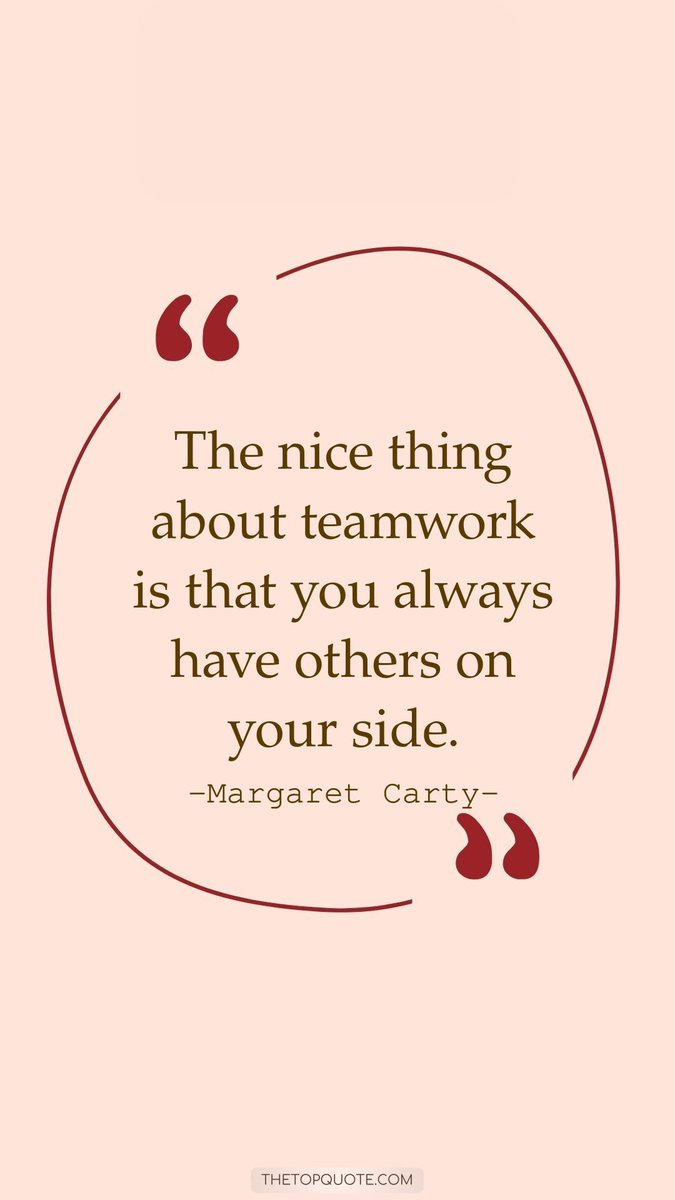
Too often when we talk about "leaders", we focus on people who have "manager" or "director" in their job titles. We can end up undervaluing the role of informal leaders - team members who influence outcomes by the tone they set, their conduct & how they interact with others in the team. They often play an outsize role in how teams perform. In this article from @HarvardBiz, sporting superstar @TomBrady & Harvard Professor Nitin Nohria distil seven behaviours from the best team leaders (informal & formal):
1) Put the team first, even in situations where you don't get the outcomes you want personally
2) Show appreciation for unsung colleagues
3) Set the standard and support others to do better
4) Recognise that each teammate is unique & work out their motivations & preferences
5) Understand and complement the style of the formal leader
6) Recognise & counteract the external forces that can cause selfish behaviour
7) Create shared experiences with other team members outside the daily work environment
https://t.co/xDQ9vTmqYr. I paired the article with a quote from Margaret Carty.
„We can disagree and still love each other unless your disagreement is rooted in my oppression and denial of my humanity and right to exist.“
James Baldwin
James Hollis: "All of us suffer from some PTSD, for life is traumatic, existentially overwhelming, flooding us with a magnitude of experiences too large to wholly assimilate. No wonder we have to repair to sleep to allow the psyche to keep processing that material and metabolizing its toxins. When people are deprived of sleep, and #dreaming especially, in laboratory settings over time, they will tend to hallucinate, so urgent is it for that material to be processed.
As we know, an elemental treatment for PTSD is to tell one's story over and over, in the company of another trusted other, until that material has been metabolized by the soul again. Without diminishing the encounter with evil that some of our clients have suffered, the therapist has to continuously support the idea that what happen to us is not about us, as such, though it occupies a regnant portion of our experience. Beneath the level of #ego #consciousness, we all exercise the mechanism of magical thinking, with paranoid tendencies toward embroidering. 'I am what happens to me,' we conclude as we internalize our world as a statement to us about us and continue serving that charged 'message.'
If we look at humanity's dark side, we are obliged in the name of philosophical honesty to consider whether the idea of dark, the idea of evil itself, is not primarily an 'ego' problem, the problem of splitting when the universe itself is not split – it simply is."
~James Hollis, Ph.D., Prisms: Reflections on This Journey We Call Life, pp. 138-139
📲 Remember to record those #dreams! Use the free app: https://t.co/ELM5XnKpNo
▶️ Hear my interview with Dr. Hollis about this book on Speaking of Jung's YouTube channel: https://t.co/XiPlWfc5JH
Meaning is produced not only by the relationship between the signifier and the signified but also, crucially, by the position of the signifiers in relation to other signifiers.
- Jacques Lacan