256 vertical channels enable two times the angular sampling density of a standard OS1. That means twice as many laser returns are stacked into the same vertical field of view. In practice, that's the difference between sampling a mural with broad horizontal stripes and resolving the figures inside it.
This is a Rev8 OS1 Max driving Clarion Alley in San Francisco. Clarion has continuous murals from sidewalk to roofline, hand-painted text, and fine pattern detail at every height. The kind of scene where you need much higher resolution to see what's actually there.
Realistically @ousterlidar should offer Amazon significant discounts for volumes as high as 1 million sensors.
Ouster’s gross margin is 46% at a $5,000 ASP for its Rev 7 sensors, implying a unit cost of roughly $2,700. Rev 8 has been described as a “low-cost” sensor designed for “high-volume production” and is said to be comparable to Rev 7 in pricing.
Assuming an ASP of $4,000 per sensor for Amazon, the potential revenue opportunity from Proteus alone could reach $4 billion.
That would translate to approximately $1.4 billion in gross profit.
And that’s just Proteus. Amazon also deploys third-party products powered by Ouster sensors, such as Digit from Agility Robotics.
How is $OUST only $3B market cap?
Sensors are mainly built by Benchmark in Thailand and production capacity should be able to scale very quickly. I sort of recall they mentioned years ago that the production capacity at that time was already 100k sensors per year and it could be even higher now. 1M sensors to Amazon in a few years won’t be a huge challenge.
This article actually gives out so much information:
“The original Proteus operates in dock areas within fulfillment centers, navigating safely around people and transporting heavy carts that can weigh close to 400 kilograms—work that requires employees to push carts, lift heavy items, and cover long distances during a shift. It’s currently deployed at 25 fulfillment centers in the United States.
The next generation of Proteus is designed to go much further. Rather than operating only in dock areas, the new system can work anywhere items need to be moved. This includes transporting containers as they arrive at a site, transferring them between workstations, and assisting employees across Amazon’s fulfillment centers and delivery sites.”
With the original Proteus, the demand would just be 100-300 robots because they only work in loading docks. The new Proteus is clearly aiming to replace all the robots moving the carts today, and there are about 3000-4000 such robots at each of the 300 fulfillment centers.
That means Amazon’s demand for LiDAR will eventually reach 1 million sensors.
All the 3.2M $OUST warrants will be vested by the end of Q3 if not earlier. When Amazon exercise those warrants at $50/share, @ousterlidar will receive $160M cash.
You are not bullish enough.
This is actually huge news, as it suggests @ousterlidar’s sales to Amazon could multiply.
Amazon’s 3.2M $OUST warrants become fully vested once cumulative revenue surpasses $100M, and roughly 2.8M warrants have already vested.
If the next-generation Proteus robots are deployed at scale and require multiple LiDARs per unit, the potential revenue opportunity from Amazon alone could reach hundreds of millions of dollars. $OUST
This is actually huge news, as it suggests @ousterlidar’s sales to Amazon could multiply.
Amazon’s 3.2M $OUST warrants become fully vested once cumulative revenue surpasses $100M, and roughly 2.8M warrants have already vested.
If the next-generation Proteus robots are deployed at scale and require multiple LiDARs per unit, the potential revenue opportunity from Amazon alone could reach hundreds of millions of dollars. $OUST
News from $AMAZN featuring its Proteus robot with the eyes of a LiDAR sensor from the $OUST Ouster. Amazon owns over 3M warrants with the price over $50.
Street high target for OUST is $75 per share https://t.co/xNz4p7VEtx
@crux_capital_ We spoke to $OUST management today, I think they were well positioned across AVs, robotics, drones, transportation/logistics and industrials 👍🏻
They have some big things happening with Amazon.
Investing in $AEVA is a high-risk gamble with a real possibility of failure. https://t.co/G8egxRK9bt
$OUST rules the LiDAR industry with its superior technology and strong financials.
I can never understand why people throw their hard-earned money into $AEVA $INVZ $LIDR $MVIS
Not a financial advice. Do your own DD.
$AEVA just did a $100M equity offering—not great timing for a company that badly needs cash. Excluding additional debt from Sylebra, that runway arguably buys only about a year.
Meanwhile, $OUST held strong during today’s session, yet some people decided to panic in after-hours trading based on $AEVA news—likely a mistake.
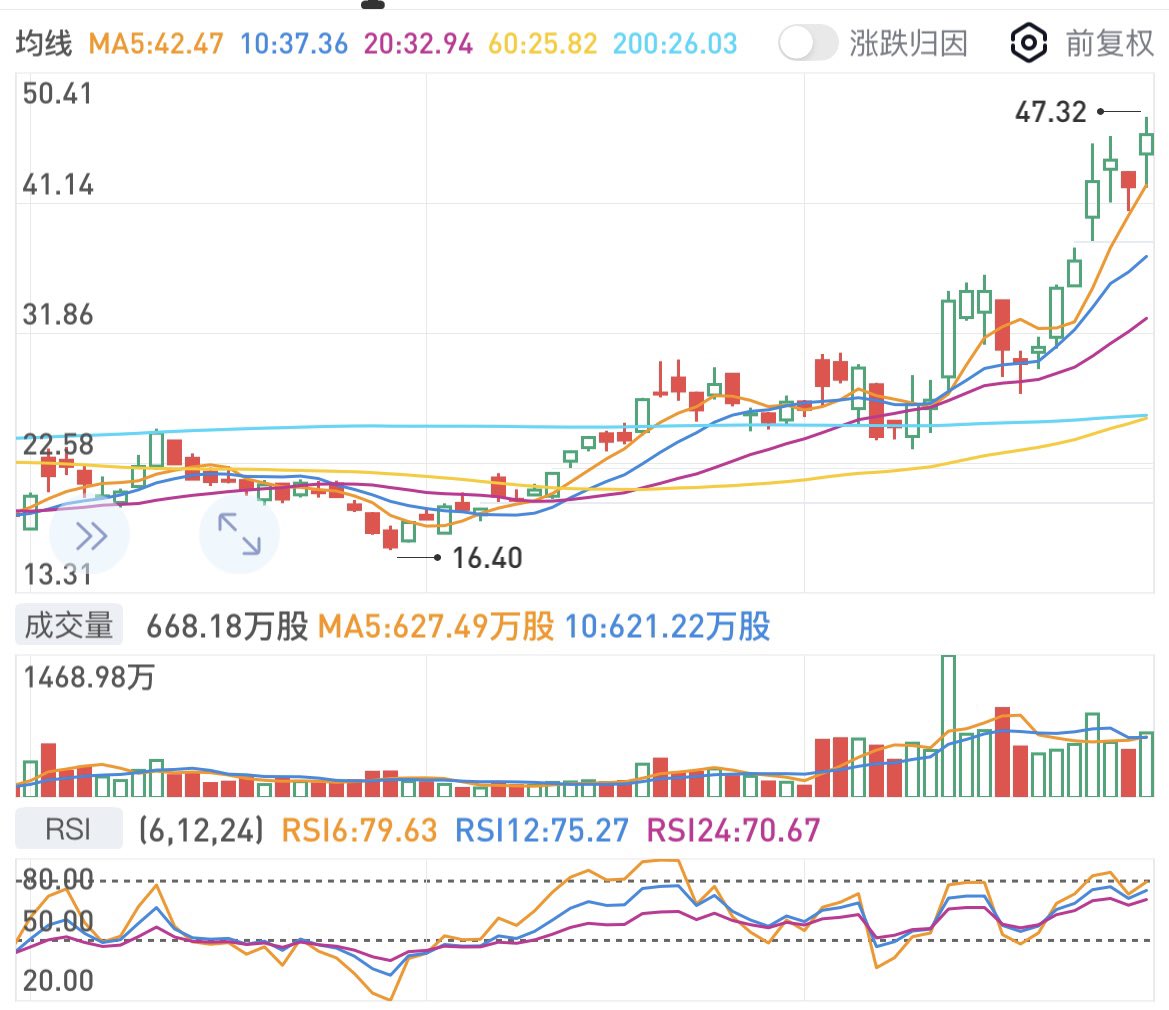
$OUST hit a 52-week high yesterday and traded at $41 in after hours today. Street high target sits at $75, but $100 by year-end is still possible if execution continues.
Aeva is not in the same league as Ouster; do not assume things about FMCW as unique and new technology. It is not.
A ton of growth names are down big today.
But even after a 90%+ run over the last 3 weeks, $OUST is down just 5% at the moment.
Gotta admire the strength. 💪
$OUST Hyundai Rotem has secured two government-backed physical AI robotics projects, strengthening its position in autonomous systems for defense and industrial applications.
The robot dog has an Ouster OS sensor and the HR-Sherpa vehicle has two Ouster VLP sensors.
Hyundai and Amazon have so many ties with Ouster. I wonder if Hyundai will ever take a stake in $OUST . Its subsidiary Hyundai Mobis did sign a strategic partnership with Velodyne yeas ago. https://t.co/J0398FN0HZ
San Francisco's Chinatown is notoriously busy. Hand-painted, colorful signage, awnings stretched across every storefront, vendors, pedestrians and traffic all moving through narrow streets. It's an environment with high visual density, high motion, and high information per square meter.
This is a Rev8 OS1 Max. We stacked the reflectivity channel on top and the RGB (native color) channel on the bottom, both captured at the same time.
Reflectivity picks out what stands out, while native color tells you what those things are. A bright return becomes a readable sign, while a car ahead becomes a white sedan with its left brake light lit.
🚨 $OUST and @fieldai_ announce collaboration to scale autonomous perception for general-purpose robots using Ouster’s Rev8 native color lidar.
FieldAI is the leader in deploying general-purpose robots in unstructured environments, providing frontier autonomy software as a universal "brain" that works across many robots and many tasks.
https://t.co/sxWFNFJYfU
$OUST A Golden Cross is forming between the 60-day and 200-day moving averages.
On vacation in different time zones for the next three weeks. Postings might be light, but I’m more bullish than ever.
See you at $76.