SILENT ASSASSIN
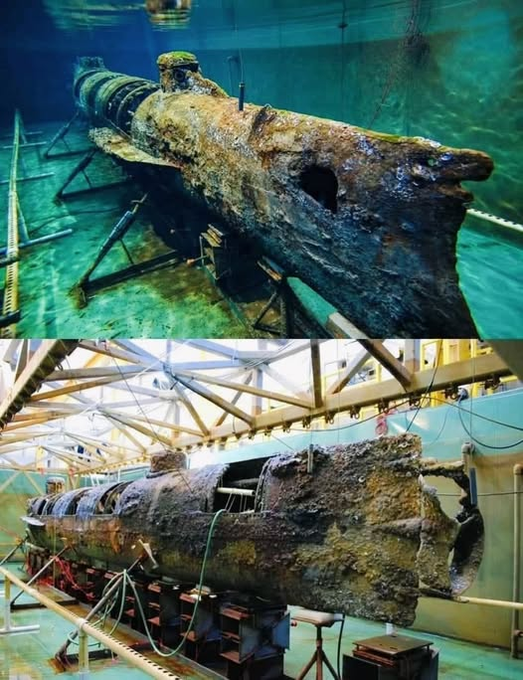
The H. L. Hunley was a Confederate submarine about 40 feet long and operated by a crew of 8 using a hand cranked propellor, it became the first submarine to sink an enemy ship during combat.
On February 17 1864, it attacked the USS Housatonic in Charelston Harbor using a spare torpedo mounted on a long pole, sinking the Yankee vessel within minutes.
Despite the success, the Hunley never returned from that mission. It sank for the third time killing all on board bringing its total death toll to 21 men.
The wreck was finally discovered in 1995 and raised in 2000. Today the Hunley is preserved at Warren Lash Conservation Center in South Carolina.
BIBLE HUMOR
What excuse did Adam give to his children as to why he no longer lived in Eden?
Your mother ate us out of house and home.
What kind of cell phone did Delilah use?
A Samson.
How many people can fit into one Honda?
Well, the Bible says that all 12 disciples were of one Accord.
Where is medicine first mentioned in the Bible?
When God gave Moses two tablets.
What's a dentist's favorite hymn?
Crown him with many crowns.
What kind of car does Jesus drive?
A Christler.
Did you know baseball was mentioned in the Bible?
It starts off, "In the big inning."
What kind of man was Boaz before he got married?
He was Ruthless.
What is the missionary's favorite type of car?
A convertible.
William Tyndale
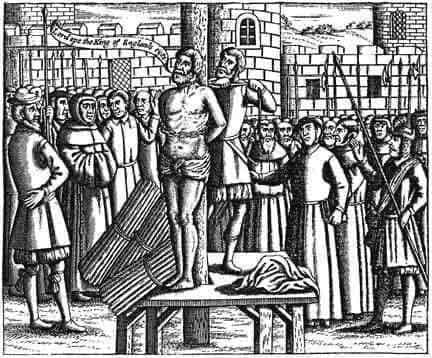
On October 6 1536 Tyndale was strangled and burned at the stake for translating the Bible into English for the common man. He was accused of heresy and given an opportunity to recant but used his last words to pray with a loud voice, "Lord open the King of England's eyes!"
Within four years of his death, several English translations of the Bible were published in England at the Kings request, all based on Tyndale's work.
God moves in mysterious ways...🙏
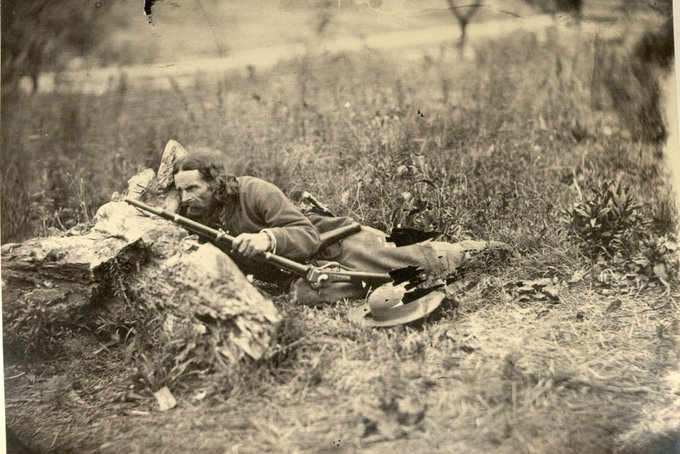
California Joe
1st U. S. Sharpshooters
Civil War
A 50-year-old man who left his California mining fortune to fellow soldiers and brought his own sharps rifle into battle.
It was said he never missed...
SILENT ASSASSIN
The H. L. Hunley was a Confederate submarine about 40 feet long and operated by a crew of 8 using a hand cranked propellor, it became the first submarine to sink an enemy ship during combat.
On February 17 1864, it attacked the USS Housatonic in Charelston Harbor using a spare torpedo mounted on a long pole, sinking the Yankee vessel within minutes.
Despite the success, the Hunley never returned from that mission. It sank for the third time killing all on board bringing its total death toll to 21 men.
The wreck was finally discovered in 1995 and raised in 2000. Today the Hunley is preserved at Warren Lash Conservation Center in South Carolina.
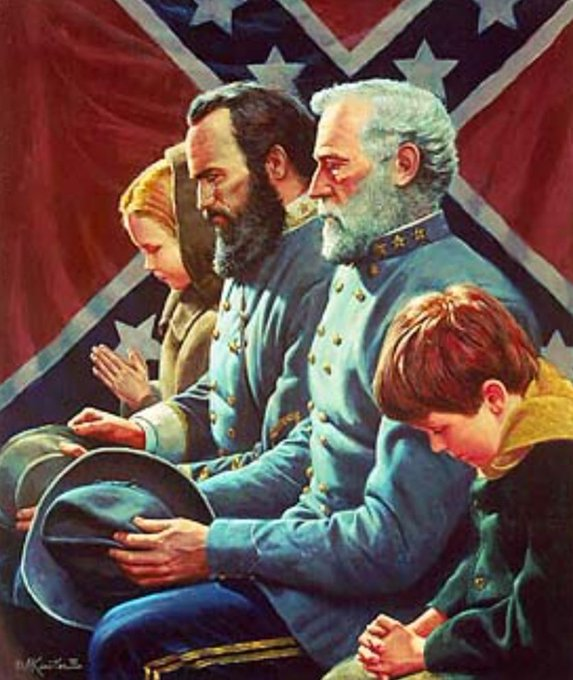
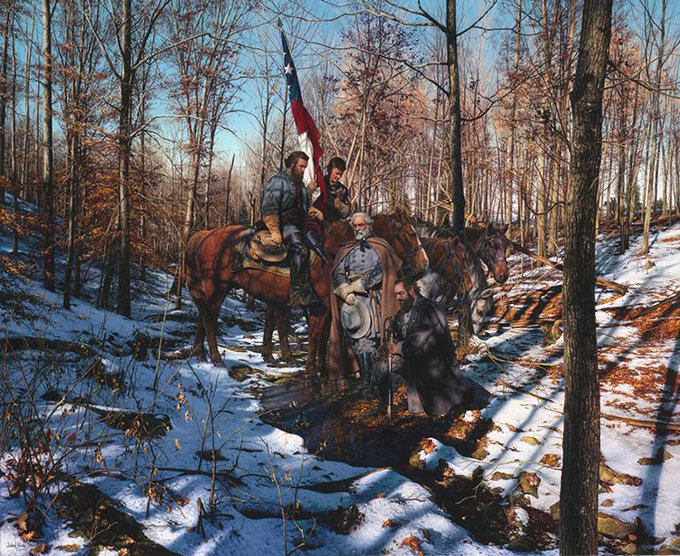
"I have fought against the people of the north because I believe they were seeking to wrest from the south its dearest rights. But I have never cherished toward them bitter or vindictive feelings and have never seen the day when I did not pray for them."
ROBERT E LEE
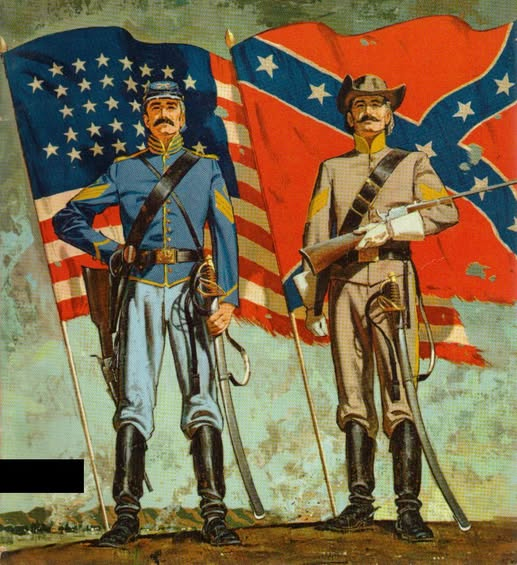
BROTHER Against BROTHER
Over 620,000 soldiers died during the American Civil War 1861-1865. You think the casualties we suffer today are bad, just look at these Civil War battles:
Gettysburg: 51,112
The Seven Days: 36,463
Chickamauga; 34,624
Chancellorsville: 30,099
Spotsylvania: 27,399
Antietam: 26,134 (Bloodiest day in American history)
The Wilderness: 25,416
Second Bull Run: 25,251
Stones River: 24,645
Shiloh: 23,741
"But in a larger sense, we cannot dedicate-we cannot consecrate-we cannot hallow-this ground. The brave men, living and dead, who struggled here, have consecrated it, far above our poor power to add or detract..."
Abraham Lincoln 1863
In the brutal chaos of the Civil War in 1862, Union soldier Samuel Decker's misfired gun tore away half of both of his arms.
Refusing to be defined by his injury, Decker by 1865 designed and supervised the construction of prosthetic limbs that were nothing short of revolutionary, machines that combine both brilliance and practical use in ways unseen before.
Never give up!
Slaughter
COLD HARBOR
Civil War
June 1-7 1864
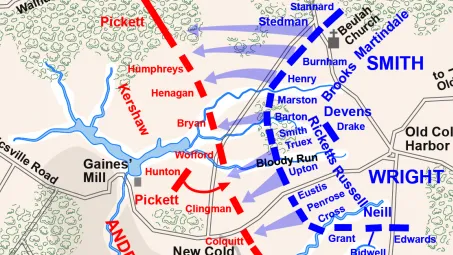
Cold Harbor was neither chilly nor a port but a crossroads taking its name from a tavern that served only cold food. It was near the 1862 battlefield called the Seven Days. Fighting on June 1 and 2 hadn't been fierce. On the first the Yankees didn't launch their assault until 6 pm and made some gains in the beginning but by then the Johnny Reb defenses stiffened and both Union corps entrenched in their advanced position.
On the second Grant had scheduled his attack for early morning, but after constant delays and the approaching rain he called off the attack. These first two days Lee wasn't his usual aggressive self and Grant concluded that Lee was beaten. Accordingly, he scheduled an all-out assault for June 3.
Lee was far from being beaten and was very confident. The fact that he had 60,000 against Grant's 110,000 didn't daunt him and he had given no sign of offensive operations because of Cold Harbor's natural defensive features and was content to remain there.
Without the imposing fortifications of Spotsylvania and North Anna, Lee believed he could beguile Grant into believing that he confronted a vulnerable foe. Actually, there was seven miles of Butternut front integrated, linked and joined with overlapping fields of fire. Neither Grant or Meade had reconnoitered Lee's front, unpardonable oversight in both. The Yankee's were deceived.
The soldiers in the Union army had a sense of foreboding. The night of the second, they were writing their names and addresses on slips of paper and pinning them to their tunics so their bodies could be identified and their fate made known to their families.
The next morning the bluebellies advanced shouting, "Hurrah! Hurrah!" and in that seemingly silent landscape ahead of them erupted with flame and smoke and a scything rain of lead struck them. "It seemed more like a volcanic blast than a battle," one survivor recalled, "and it was just about as destructive."
Grant was attacking all along the line rather than massing at a single point, even at this late date in the war, he still failed to grasp of the new and awesome superiority of the defense, like Lee at Gettysbug. Charge after charge was broken up, some in less than a quarter hour. Taken in their flank by Reb fire, some Union formations collapsed one upon another like falling dominoes.
Across the entire front all the Bluebellies could see was the black hats of the Rebels and their muzzle flashes piercing the smoke. Whenever that withering fire seemed to ease off, the pinned down Yankees started scratching out a depression in the earth with their bayonets and gradually sank out of sight and when couriers came crawling out to them with orders to renew the assault they refused to go forward.
And with good reason, in less than an hour Grant had lost 7,000 men against 1,500 for Lee, and he finally called off the assault. It was a shocking defeat, the cries of, "Water, water, for God's sake water!" from the wounded in his army outside the Confederate lines couldn't be retrieved because of the Reb sharpshooters. Lee was anxious to compel Grant to admit defeat and refused to call them off.
Finally, after bickering back and forth for four days, on the 7th, Lee and Grant agreed upon a truce but by then it was too late, almost all of the Federal wounded were dead. Grant's refusal to ask for a truce wasn't calloused indifference to the suffering of his troops, but rather his unwillingness that a white flag be misconstrued as an admission of defeat that would encourage the northern peace movement and discourage Lincoln supporters.
The real tragedy of Cold Harbor was that gallant young men in Blue were sent into battle without plan or preparation, and it was one of those apprehensive soldiers who wrote the night before that awful carnage. The last entry in his blood stained diary read:
"June3. Cold Harbor. I was killed today."
Many years later Grant would finally admit: "I have always regretted that the last assault at Cold Harbor was ever made."
Image 1: Yankee's charging.
2. Union attack, 3rd day.
3. Lee and Grant.
4. Union burial details.
BROTHER Against BROTHER
Over 620,000 soldiers died during the American Civil War 1861-1865. You think the casualties we suffer today are bad, just look at these Civil War battles:
Gettysburg: 51,112
The Seven Days: 36,463
Chickamauga; 34,624
Chancellorsville: 30,099
Spotsylvania: 27,399
Antietam: 26,134 (Bloodiest day in American history)
The Wilderness: 25,416
Second Bull Run: 25,251
Stones River: 24,645
Shiloh: 23,741
"But in a larger sense, we cannot dedicate-we cannot consecrate-we cannot hallow-this ground. The brave men, living and dead, who struggled here, have consecrated it, far above our poor power to add or detract..."
Abraham Lincoln 1863